Blockchain Development for Government

Blockchain Development for Government

We build permissioned ledgers for agencies, municipalities and the GovTech companies and system integrators that serve them. Records become tamper-evident, agencies can share data without handing over control, and every change to a registry, contract or payment leaves an audit trail an independent auditor can verify. Personal data stays in your systems; the ledger holds the proof.

Book a call
Our Services

Blockchain for Government Development Services

Tap into different applications of crypto governance, leveraging different mechanics of blockchain. Devox specialists will consult you on what solution suits best early in the advisory stage.

  • Digital Identity and Verifiable Credentials

    Build digital credential systems that let citizens, businesses, and public employees prove qualifications or entitlements without repeatedly requesting paper documents from the issuing agency. We can design solutions around W3C Verifiable Credentials, decentralized identifiers, and EUDI Wallet-compatible identity flows under eIDAS 2.0 where applicable.

    Personal information remains off-chain. The ledger can store credential status, revocation information, issuer references, and cryptographic proofs that allow another organization to verify authenticity.

  • Registry Integrity for Land, Property, and Business Records

    Add a tamper-evident verification layer to registries without moving sensitive records onto a blockchain. Each important registry event can generate a cryptographic proof that is anchored to the ledger, creating an independent history of title transfers, ownership changes, amendments, approvals, or other actions.

    The government registry remains the legal source of truth. Blockchain provides evidence that the record history has not been silently modified after the fact.

  • Public Procurement Audit Trails

    Create a verifiable timeline for the full procurement process, from tender publication through bid submission, evaluation, award, contract changes, and completion. Blockchain can record hashes, timestamps, approval events, and document versions without exposing commercially sensitive bid contents to unauthorized parties.

    This makes it easier to prove that a tender was published at a particular time, bids were received before a deadline, evaluation records were not changed retrospectively, and contract amendments followed the required workflow.

  • Grants and Benefits Disbursement Tracking

    Track how public funds move from allocation through intermediary agencies and onward to approved recipients. Smart contracts can record workflow states, approvals, payment events, and conditions that must be satisfied before a disbursement proceeds.

    Eligibility decisions should remain with the responsible public authority or case worker. The blockchain layer provides a shared history of what was approved, when funds moved, and which organization was responsible at each stage.

  • Document Notarization and Records Integrity

    Anchor cryptographic hashes of official documents to a ledger so future users can verify that the document they received matches the version originally issued. This can support regulations, council minutes, public decisions, certifications, legal notices, permits, archival records, and other documents where authenticity matters.

    The document itself can remain in your document-management or archival system. Blockchain stores only the proof needed to verify its integrity.

  • Inter-Agency Data Exchange

    Enable several public bodies to exchange information while preserving their own systems, permissions, and data ownership.Each agency keeps the underlying data in its existing environment. The blockchain layer can record who requested information, which organization approved the request, what legal or operational basis applied, and when the exchange occurred. This creates a shared audit trail without requiring all participating organizations to move their data into one centralized platform.

  • Public Asset and Supply Chain Tracking

    Track public equipment, medical stockpiles, infrastructure components, emergency supplies, or other government-owned assets across their lifecycle. Blockchain can record procurement, custody transfers, maintenance events, location changes, inspection records, and final disposal. The same approach can support chain-of-custody workflows where several organizations handle an asset and each handoff needs to be independently verifiable.

Benefits

Benefits of Custom Blockchain for Government Development

Integrating your citizens, voters, decision-makers, public servants, and other stakeholders in blockchain allows your public entity to take advantage of saved time, reduced costs, and general process simplification. Let’s dive deeper into what will be different.

  • Provide Transparency and Eliminate Corruption

    Don’t let fraud and corruption get through: once data is entered into the blockchain, it cannot be altered without detection. It’s a transparent and auditable system where all transactions are recorded and visible to authorized parties. Providing a chance to keep an eye on public spending, procurement, social aid distribution and ensuring a transparent election process, you will win citizen’s trust and high engagement rates.

  • Build a Stronghold for Your Citizen’s Data

    Managing citizen identities is a significant challenge, with implications for security and access to services. Blockchain can secure personal data and provide a reliable verification mechanism, reducing identity theft and simplifying access to government services. Blockchain's decentralized nature and cryptographic techniques make it highly resistant to tampering and fraud. Each transaction is verified within the network, reducing the risk of unauthorized data alterations and hacks.

  • Voter Disenfranchisement and Fraud

    Concerns about voting integrity continue to be a significant issue. Blockchain can safeguard the voting process by ensuring that votes are tamper-proof and verifiable, potentially increasing voter turnout by making voting more accessible and trustworthy.

  • Organize Supremely to Streamline

    Save your record-keeping and management processes from paperwork, manual handling, and bureaucratic red tape that lead to delays once and forever. Blockchain brings much-needed automation through smart contracts and secure digital records, unvulnerable to error, losses and tampering unlike traditional methods of record keeping. are vulnerable to errors, loss, and tampering. Blockchain provides a permanent, unchangeable ledger of transactions, which is ideal for maintaining land registries, legal documents, and other official records.

  • Tackle Inter-agency Data Silos

    Lack of coordination between different government agencies often results in inefficiencies and duplicated efforts. Blockchain facilitates secure and efficient data sharing across various departments without compromising data integrity, promoting better inter-agency collaboration.

  • Ensure Compliance and Enforcement

    Ensuring compliance with regulations and the enforcement of laws can be challenging. Blockchain can automate and enforce compliance through smart contracts that execute automatically when conditions are met, ensuring consistency and adherence to rules without manual oversight.

  • Tap into Inclusiveness and Accessibility

    Leveraging both simple digitalization and cutting-edge blockchain promise, your government or public organization will win more citizen participation thanks to streamlined processes and the availability of digital procedures. Rely on Web3 to facilitate more accessible digital services, making it easier for all citizens to access government resources and information.

How It Works

Reference Architecture

01

Existing Government Systems Stay in Place

Registries, case-management systems, ERP platforms, procurement tools, identity systems, document repositories, and other government applications remain the authoritative systems for operational data. They connect to the blockchain layer through controlled APIs and integration services. This avoids unnecessary replacement of stable government infrastructure and allows blockchain functionality to be introduced incrementally.

02

Personal and Sensitive Data Stays Off-Chain

Personally identifiable information, confidential case records, classified information, and other sensitive data remain in agency-controlled infrastructure, approved government cloud, sovereign cloud, or on-premises environments. The blockchain stores only the information required for verification and shared coordination. This may include hashes, references, credential status, workflow events, timestamps, or pseudonymous identifiers rather than the underlying record itself.

03

Participating Agencies Operate the Permissioned Ledger

A permissioned ledger such as Hyperledger Fabric or Hyperledger Besu can be operated by participating agencies or approved infrastructure providers. Nodes can be distributed across ministries, municipalities, regulators, or other consortium members so no single organization controls the entire shared history.


04

Smart Contracts Apply Agreed Rules

Smart contracts can encode agreed workflow rules between participating organizations. They may determine whether required approvals have been recorded, whether a disbursement condition is satisfied, whether an organization has permission to perform an action, or whether a transaction can move to the next stage. The rules remain transparent to participating organizations and can be versioned and governed according to the consortium’s operating model.

05

Auditors and Citizens Receive Appropriate Read-Only Access

Oversight organizations can receive read-only access to relevant records and proofs without being able to modify them. Where public transparency is appropriate, citizen-facing interfaces can allow anyone to verify selected records, documents, procurement events, or other published information without exposing personal or restricted data. The result is a layered architecture where government systems continue running the business process while blockchain provides a shared verification and accountability layer.

Key Features

Key Features of Custom Blockchain for Government

01

Security and Encryption

Given the sensitive nature of government data, Devox includes advanced encryption techniques to custom blockchains so that your governmental body can protect data from unauthorized access and breaches. We employ robust cryptographic algorithms to secure all transactions on the network.

02

Scalability

Government blockchains must be able to handle large volumes of transactions and data without performance degradation. This is crucial for nationwide applications such as voting, tax collection, and social service management.

03

Transparency and Auditability

While maintaining security, government blockchains also need to provide transparency to ensure public trust and accountability. This includes mechanisms for auditing and verifying transactions that can be accessed by authorized external auditors and regulators.

04

Privacy and Anonymity

While transparency is crucial, protecting individual privacy is equally important. Custom blockchains for government should include features that allow for anonymization of personal data where necessary, complying with privacy laws and regulations such as GDPR.

05

Consensus Mechanism

The consensus mechanism must be chosen based on the specific needs of the government application. For example, Proof of Authority (PoA) or Practical Byzantine Fault Tolerance (PBFT) are more suitable for governmental use due to their efficiency and low energy consumption compared to Proof of Work (PoW).

06

Smart Contract Functionality

Government blockchains often incorporate smart contracts to automate processes and ensure compliance with regulations automatically. These contracts execute automatically based on predefined rules and conditions, reducing manual intervention and potential human error.

07

Regulatory Compliance

Government blockchains need to be designed with regulatory compliance built-in, ensuring that all operations adhere to national and international laws relevant to data protection, financial transactions, and public administration.

08

Decentralization with Control

While blockchain promotes decentralized data management, government applications may require a certain level of centralized control to enforce policies and manage sensitive operations. Custom solutions often blend decentralization with controlled access permissions.

09

Customizable Permissions

Different levels of data access and permissions are essential for a government blockchain, allowing various stakeholders (e.g., citizens, officials, auditors) different levels of access and capabilities within the network.

10

High Availability and Fault Tolerance

Government systems are a part of critical infrastructure; hence, the blockchain must be designed for high availability and resilience against faults or failures, ensuring continuous operation.

Baseline Principles of Blockchain Development for Government

Compliance and Security

01

Built for Public-Sector Requirements

Public-sector blockchain systems must be designed around privacy, data sovereignty, accessibility, security accreditation, and long-term operational control.

02

Data Protection and Residency

Personal data can remain outside the blockchain so agencies retain the ability to correct, restrict, or delete it where required. We design data flows around GDPR, jurisdiction-specific data-residency requirements, access boundaries, encryption, retention rules, and agency ownership.

03

Digital Identity

Where the project involves citizen or organizational credentials, the architecture can support eIDAS 2.0, the EUDI Wallet, W3C Verifiable Credentials, decentralized identifiers, and EBSI-compatible approaches where applicable.

04

Security Framework Alignment

Security controls can be mapped to frameworks such as NIST SP 800-53 and NIS2, depending on the project and jurisdiction. Deployment options can include on-premises infrastructure, sovereign cloud, Azure Government, AWS GovCloud, or environments authorized under relevant government security programs.

05

Accessibility

Citizen-facing portals and verification tools can be built around accessibility requirements such as WCAG 2.1 AA, Section 508, or EN 301 549, depending on geography and procurement requirements.

06

Accreditation Support

We can prepare architecture diagrams, control mappings, security documentation, test evidence, operational procedures, and other materials needed for an Authority to Operate or national security accreditation process

How We Work

Our Blockchain for Government Development Process

When we develop governance blockchain applications, we’re not simply following SDLC - we conduct detailed consulting and thoroughly pick the best Web3 can offer for your individual case. Take a look at how we work.

01.

01. Discovery and Initial Consultation

We begin by understanding your specific needs and challenges. Our team engages with your stakeholders to identify the key areas where blockchain can add value, conducting a thorough assessment of your existing systems and the desired outcomes.

02.

02. Feasibility Analysis

Once our team has a clear understanding of your requirements, we conduct a feasibility study to evaluate the technical and economic viability of a blockchain solution for your government body. This includes analyzing potential risks and benefits to ensure the proposed solution aligns with your strategic goals.

03.

03. Solution Design

Our engineers design a tailored blockchain architecture, choosing the right type of blockchain (public, private, or consortium) and determining the most suitable consensus mechanism. We focus on creating a scalable, secure, and interoperable system that integrates seamlessly with your existing infrastructure.

04.

04. Prototyping

Devox develops a prototype of the proposed solution, which allows us to demonstrate the core functionality and gather feedback from end-users and stakeholders. This iterative process helps refine the solution to better meet your specific needs.

05.

05. Development and Implementation

Our development team builds the blockchain solution according to the specifications refined during the prototyping stage. We focus on implementing robust smart contracts, ensuring data integrity, and providing a user-friendly interface for both administrators and citizens.

06.

06. Integration and Testing

It’s now time to bond the freshly-made solution with your existing infrastructure. We ensure seamless data flow and functionality across platforms. Extensive testing, including security audits, performance tests, and user acceptance testing, is conducted to ensure the system is reliable and effective.

07.

07. Deployment

Devox Software manages the deployment of the blockchain solution, starting with a pilot phase to monitor performance and user interaction. Based on the pilot results, we proceed with a full-scale rollout, ensuring minimal disruption to existing services.

08.

08. Support and Maintenance

Post-deployment, we provide ongoing support and maintenance to address any technical issues and update the system as needed to adapt to new requirements or technological advancements.

  • 01. Discovery and Initial Consultation

  • 02. Feasibility Analysis

  • 03. Solution Design

  • 04. Prototyping

  • 05. Development and Implementation

  • 06. Integration and Testing

  • 07. Deployment

  • 08. Support and Maintenance

Technology

Our Public-Sector Blockchain Stack

Permissioned Ledgers

Hyperledger Fabric with Raft-based ordering Hyperledger Besu with permissioned Ethereum-compatible consensus models such as QBFT or IBFT 2.0

Identity and Credentials

- W3C Verifiable Credentials - decentralized identifiers - OpenID for Verifiable Credentials - EUDI Wallet-compatible credential flows where required

Privacy

- pseudonymous references - selective disclosure - cryptographic hashes - controlled data channels - private collections - zero-knowledge techniques where justified

Infrastructure

- agency-owned data centers - sovereign cloud - Azure Government - AWS GovCloud - Kubernetes - hybrid environments

Security

- HSM-backed key management - certificate rotation - node access controls - secrets management - smart contract review - penetration testing - centralized logging - SIEM integration - infrastructure monitoring - backup and disaster-recovery procedures

Case Studies

Our Latest Works

View All Case Studies
Web 3 White-label PaaS NeoBank Web 3 White-label PaaS NeoBank
  • Web3
  • Fintech

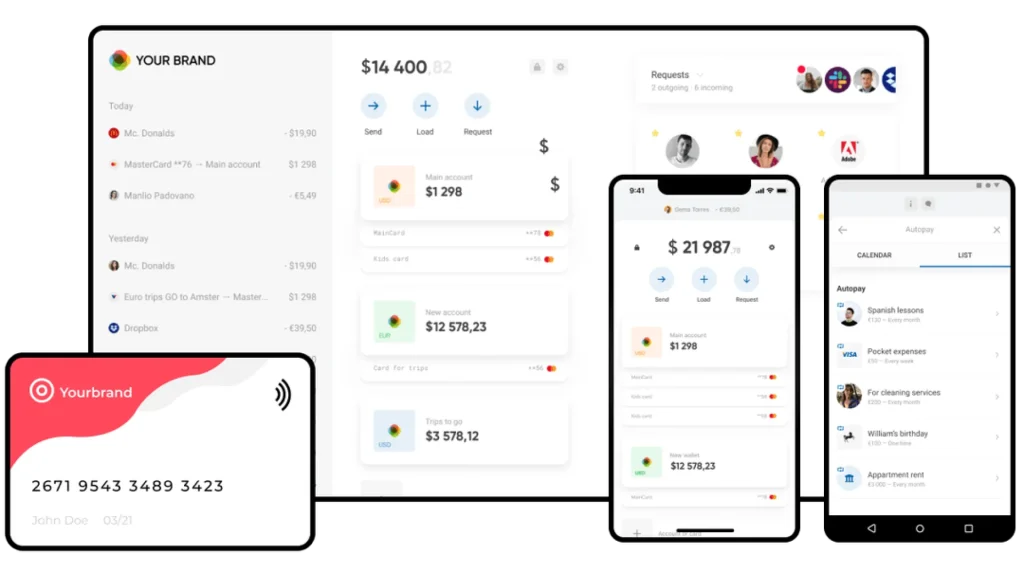
Web3 PaaS Ecosystem for Next-Gen NeoBanking, RegTech, and Secure Data Vaulting

A blockchain-powered PaaS ecosystem enabling financial providers to launch custom neobanking solutions with secure infrastructure.

Additional Info

Core Tech:
  • Blockchain
  • .NET
  • Node.js
  • AWS
  • Docker
  • PostgreSQL
  • React Native
Country:

USA USA

Social Media Screening Platform Social Media Screening Platform
  • Backend
  • Frontend
  • Cloud Services
  • DevOps & Infrastructure

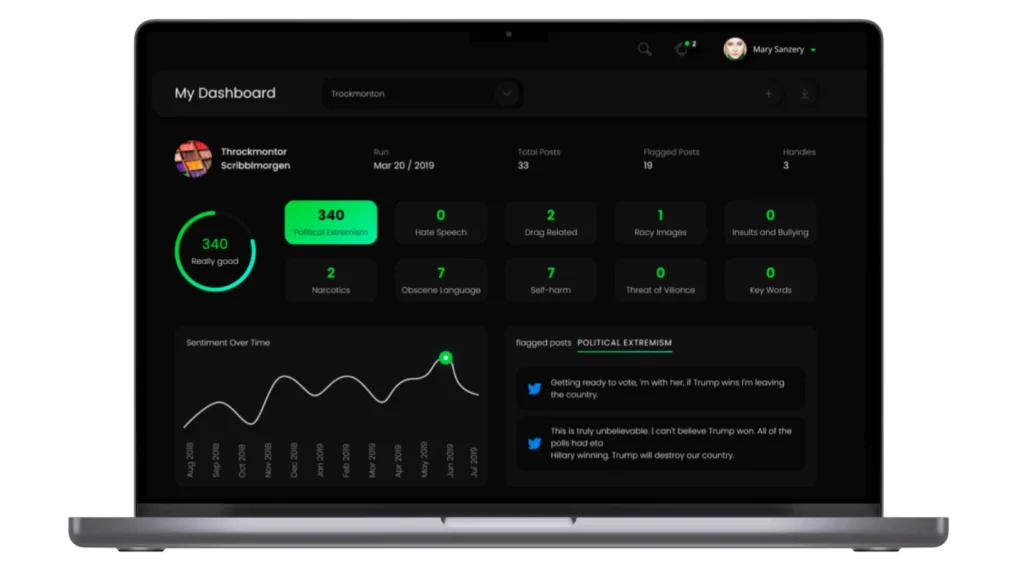
AI-Powered Social Media Background Check Platform for Risk-Free Hiring

An AI-driven platform for HR teams to automate social media background checks and mitigate hiring risks.

Additional Info

Core Tech:
  • .NET Core
  • Angular
  • Azure
  • Docker
  • GitLab CI/CD
  • Selenium Web Driver
Country:

USA USA

Modular LMS for Multi-Domain Learning: SwissMentor’s Enterprise-Grade Online Platform Modular LMS for Multi-Domain Learning: SwissMentor’s Enterprise-Grade Online Platform
  • Backend
  • Frontend
  • Cloud
  • E-Learning

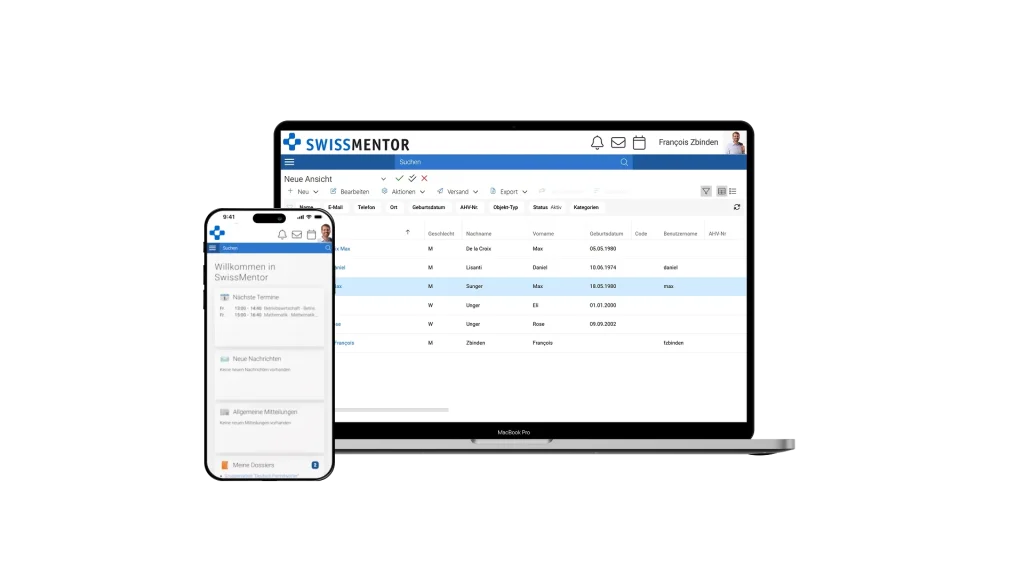
Modular LMS for Multi-Domain Learning: SwissMentor’s Enterprise-Grade Online Platform

A full-featured learning management system built to digitize education workflows, manage courses, and support online learning at scale.

Additional Info

Core Tech:
  • .NET Core
  • PostgreSQL
  • Angular
  • Docker
  • Kubernetes
  • Azure
  • SCORM
Country:

Switzerland Switzerland

Testimonials

Testimonials

Carl-Fredrik Linné                                            Sweden

The solutions they’re providing is helping our business run more smoothly. We’ve been able to make quick developments with them, meeting our product vision within the timeline we set up. Listen to them because they can give strong advice about how to build good products.

Darrin Lipscomb Darrin Lipscomb
Darrin Lipscomb United States

We are a software startup and using Devox allowed us to get an MVP to market faster and less cost than trying to build and fund an R&D team initially. Communication was excellent with Devox. This is a top notch firm.

Daniel Bertuccio Daniel Bertuccio
Daniel Bertuccio Australia

Their level of understanding, detail, and work ethic was great. We had 2 designers, 2 developers, PM and QA specialist. I am extremely satisfied with the end deliverables. Devox Software was always on time during the process.

Trent Allan Trent Allan
Trent Allan Australia

We get great satisfaction working with them. They help us produce a product we’re happy with as co-founders. The feedback we got from customers was really great, too. Customers get what we do and we feel like we’re really reaching our target market.

Andy Morrey                                            United Kingdom

I’m blown up with the level of professionalism that’s been shown, as well as the welcoming nature and the social aspects. Devox Software is really on the ball technically.

Vadim Ivanenko Vadim Ivanenko
Vadim Ivanenko Switzerland

Great job! We met the deadlines and brought happiness to our customers. Communication was perfect. Quick response. No problems with anything during the project. Their experienced team and perfect communication offer the best mix of quality and rates.

Jason Leffakis Jason Leffakis
Jason Leffakis United States

The project continues to be a success. As an early-stage company, we're continuously iterating to find product success. Devox has been quick and effective at iterating alongside us. I'm happy with the team, their responsiveness, and their output.

John Boman John Boman
John Boman Sweden

We hired the Devox team for a complicated (unusual interaction) UX/UI assignment. The team managed the project well both for initial time estimates and also weekly follow-ups throughout delivery. Overall, efficient work with a nice professional team.

Tamas Pataky Tamas Pataky
Tamas Pataky Canada

Their intuition about the product and their willingness to try new approaches and show them to our team as alternatives to our set course were impressive. The Devox team makes it incredibly easy to work with, and their ability to manage our team and set expectations was outstanding.

Stan Sadokov Stan Sadokov
Stan Sadokov Estonia

Devox is a team of exepctional talent and responsible executives. All of the talent we outstaffed from the company were experts in their fields and delivered quality work. They also take full ownership to what they deliver to you. If you work with Devox you will get actual results and you can rest assured that the result will procude value.

Mark Lamb Mark Lamb
Mark Lamb United Kingdom

The work that the team has done on our project has been nothing short of incredible – it has surpassed all expectations I had and really is something I could only have dreamt of finding. Team is hard working, dedicated, personable and passionate. I have worked with people literally all over the world both in business and as freelancer, and people from Devox Software are 1 in a million.

Insights

Our Experts' Insights

Agile 101: How To Quicken Software Development Naturally

Transparent Consulting Over “Cheap Outsourcing”: How We Integrate AI into the Client’s SDLC

How Much Does It Cost To Build A Web App

FAQ

FAQ

  • What is blockchain technology, and how can it be applied in government operations?

    Blockchain technology is a decentralized digital ledger that securely records transactions across many computers so that the record cannot be altered retroactively without altering all subsequent blocks. This technology holds the potential to revolutionize government operations through increased security, transparency, and efficiency. For government applications, blockchain can be used to manage secure voting systems, streamline public records management such as land registries, enhance identity management, and improve the integrity of government supply chains. The immutable nature of blockchain ensures that once data is recorded, it can be trusted by all parties involved, facilitating more transparent and efficient governmental processes.


  • How does blockchain technology promote transparency in government services?

    Blockchain promotes transparency in government services by creating an unalterable record of transactions and interactions. This means every transaction processed on a blockchain is recorded in a way that is accessible to all stakeholders, enabling real-time auditing without compromising the privacy of the individuals involved. Governments can apply this to various services, including financial transactions, procurement processes, and public records maintenance, thus reducing corruption and increasing accountability. Citizens can verify the authenticity of government information, fostering trust in public institutions by providing a clear, auditable trail of government activities.

  • From a citizen's perspective, what are the tangible benefits of using blockchain in government services?

    From a citizen’s perspective, crypto governance offers tangible benefits like enhanced data security, faster service delivery, and increased trust in public administration. Secure blockchain systems protect personal information from identity theft and fraud, while the efficiency gained through automation and streamlined processes reduces waiting times for governmental procedures. Furthermore, the transparency inherent in blockchain fosters trust, as citizens have better visibility into governmental processes and decisions. This technology also facilitates easier access to services, with digital identities and documents that can be securely verified online, greatly benefiting those in remote areas or those who cannot easily access physical government offices.

  • How does blockchain support regulatory compliance and data privacy in government operations?

    Blockchain supports regulatory compliance and data privacy through its inherent design, which ensures that all data transactions comply with established rules coded directly into the blockchain. This automated compliance is crucial for adhering to strict government regulations, particularly in sectors like healthcare and finance. Moreover, blockchain provides enhanced data privacy features by allowing data to be encrypted and controlled through permissioned access. This means that sensitive information can be made accessible only to authorized entities like stakeholders in blockchain under specific conditions, aligning with privacy laws and regulations such as GDPR.

  • How can blockchain technology facilitate inter-governmental cooperation?

    Blockchain technology facilitates inter-governmental cooperation by creating a secure and efficient platform for data sharing between different government agencies and international bodies. This interoperable framework allows for seamless exchange of information without the risk of data tampering or loss, fostering transparency and trust among participating entities. For example, blockchain can be used to track and manage cross-border transactions, aid distribution, or shared infrastructure projects, ensuring that all parties have real-time access to consistent and accurate data. This not only enhances operational efficiencies but also strengthens diplomatic relations by building trust through transparent and reliable data exchanges.

Book a call

Want to Achieve Your Goals? Book Your Call Now!

Contact Us

We Fix, Transform, and Skyrocket Your Software.

Tell us where your system needs help — we’ll show you how to move forward with clarity and speed. From architecture to launch — we’re your engineering partner.

Book your free consultation. We’ll help you move faster, and smarter.

Let's Discuss Your Project!

Share the details of your project – like scope or business challenges. Our team will carefully study them and then we’ll figure out the next move together.


    By sending this form I confirm that I have read and accept the Privacy Policy

    Thank You for Contacting Us!

    We appreciate you reaching out. Your message has been received, and a member of our team will get back to you within 24 hours.

    In the meantime, feel free to follow our social.


      Thank You for Subscribing!

      Welcome to the Devox Software community! We're excited to have you on board. You'll now receive the latest industry insights, company news, and exclusive updates straight to your inbox.