- Carrier Rate Control. This centralized approach forms the foundation of an agentic AI supply chain. We build a centralized carrier registry with real-time rate comparison across all your contracted partners; the system automatically selects the best option based on price, transit time, and each carrier’s historical performance.
- Multi-Modal Route Planning. The planning engine handles road, rail, ocean, and air freight simultaneously, building the most cost-efficient multi-modal route while respecting delivery windows and capacity constraints.
- Freight Invoice Automation. Every carrier invoice gets automatically matched against contracted rates and actual shipment data; discrepancies are flagged, and dispute reports are generated without anyone touching a spreadsheet.
- Customs Compliance Suite. The system generates country-specific shipping documents (CMR, bill of lading, and SAD) and validates all required fields before submission, so shipments don’t get held up at the border over paperwork errors.
- TMS Analytics Dashboard. A drill-down reporting suite that tracks on-time rate, cost per mile, and carrier scorecards, from the fleet-wide summary all the way down to a single shipment.

Logistics Software Development Company
-
ACCELERATE
Launch a production-ready routing, rating, and manifesting core in weeks, not quarters. Replace manual clicks with AI that keeps every load on the fastest lane.
-
UNIFY
Fuse WMS, TMS, GPS pings, tariff feeds, and carrier APIs into one self-healing backbone. Surface OTIF, dwell time, and cost-per-mile in real time on a single pane.
-
SCALE
Absorb peak-season surges with cloud-native microservices and automated failover. Lock in compliance from ISO 27001 to the EU AI Act with end-to-end encryption and audit trails.
Why Devox Software
Most logistics platforms we get brought in on weren’t bad when they were built — they just weren’t built for where the business ended up. A TMS that handled 500 shipments a month starts showing cracks at 5,000. A WMS that worked fine for one warehouse becomes a liability when you add three more. We’ve done this enough times to know where the problems usually hide, and our job is to fix the actual issue, not paper over it.
Since 2018, we’ve completed 70+ projects for mid-size and enterprise companies across the US, Canada, and Western Europe — 82% of those clients are still working with us today. In an industry where vendors get swapped out after the first rough patch, staying on that long means the software held up, the team communicated straight, and the business actually moved forward.
What separates us from a typical software shop is how we staff and how we deliver. Every engagement runs on mid-to-senior engineers from day one — the architect who designs your system is the same person your CTO is on calls with six months later. We use AI tooling across the full delivery lifecycle to handle the parts that used to eat weeks: legacy code analysis, dependency mapping, test generation, deployment pipelines. That lets our senior engineers spend their time on the decisions that actually require judgment — architecture, integration logic, edge cases, and the things that go wrong in ways no one anticipated. Faster delivery, cleaner handoff, and a system your team can own without calling us every time something needs to change.
Why choose Devox Software for logistics software development service?
- Modernize
- Build
- Innovate
Legacy monolith freezing at peak season?
We refactor into a cloud-native, high-throughput stack that scales when orders spike, not when servers crash.
APIs drop packets, dashboards go dark?
Self-healing retry logic and real-time observability keep every status update — and every promise — intact.
Data buried in silos, managers blind to KPIs?
Our BI layer lights up OTIF, dwell time and cost-per-mile in a single live pane of glass.
Need a TMS-WMS platform yesterday?
We ship a production-ready core — routing, rating, manifesting — in weeks, not quarters.
Green-field fulfillment app?
Architecture, DevOps, UI, and domain experts arrive as a single squad on Day 1.
Carrier APIs choking rollout?
We fuse WMS, TMS, GPS pings, and live tariff feeds into a self-healing AI backbone and digital twin—so integrations click, data stays clean, and launch risk disappears.
Manual slotting, load-building, dispatch?
AI handles the clicks, your ops team handles the exceptions.
Supply-chain blind spots?
A real-time digital twin predicts bottlenecks, labor needs, and inventory shifts before they hit.
Compliance drag (ISO, GDPR, customs)?
Encryption, audit trails, and role-based access are baked in from sprint zero.
Our Services
Software for logistics management can take different shapes: from management systems to ERP systems, Devox professionals will craft and tailor the given software to your business’s figure. Expect to see custom features, unique and vibrant UI/UX, as well as the latest tech stack.
-
Transportation Management System (TMS) Development
-
Warehouse Management System (WMS) Development
- Slotting Optimization Engine. SKU placement is calculated based on pick frequency, weight, and product compatibility; the right items end up in the right locations, cutting average travel distance per pick by up to 40%. By leveraging this agentic AI logistics logic, we cut average travel distance per pick by up to 40%.
- Wave Batch Picking. Orders are grouped into waves by priority, warehouse zone, and shipment type, with tasks automatically assigned to specific staff or AGV robots, no manual coordination needed.
- Automated Put-Away. Inbound goods are identified via barcode or RFID scan, and the system instantly assigns a storage location and updates inventory—no manual data entry, no misplaced stock.
- Inventory Cycle Counting. Instead of shutting down for a full inventory count, we implement rolling cycle counts where the system determines which locations to audit each day based on turnover rate and historical discrepancy risk.
- 3PL Multi-Client Billing. For third-party logistics operators, we build a billing module that automatically calculates storage, handling, and outbound fees for each client based on their individual rate cards.
-
Route and Demand AI
- Dynamic Route Reoptimization. This uses a sophisticated AI agent logistics solver that rebuilds the plan mid-operation without disrupting active deliveries. Routes are recalculated in real time as new orders come in, traffic conditions change, or drivers become unavailable, using a CVRP-based solver that rebuilds the plan mid-operation without disrupting active deliveries.
- Demand Forecasting Engine. An ML model trained on historical sales, seasonality, holidays, weather, and promotional calendars produces 7-90 day demand forecasts at the SKU level, including confidence intervals so planners know exactly how much to trust each prediction.
- Driver Behavior & Fuel Scoring. Telematics data, hard braking, rapid acceleration, and route deviation get translated into a per-driver score that feeds directly into coaching programs and helps cut fuel costs and insurance exposure.
- Load Consolidation AI. The system identifies which shipments can be combined into a single run without violating delivery windows, maximizing vehicle fill rate before dispatch rather than after the fact.
- Predictive Delay Detection. By combining live vehicle position, weather feeds, and traffic data, the model flags likely delays before they happen, giving dispatchers time to act instead of just react.
-
Real-Time Tracking
- Multi-Carrier Tracking Aggregator. We connect to the APIs of dozens of carriers, FedEx, DHL, UPS, and regional players, and pull all shipment statuses into one interface so your team stops logging into five different portals. This acts as an AI agent for logistics that keeps your team from logging into five different portals.
- IoT-Based Asset Tracking. GPS trackers, BLE beacons, and RFID readers feed precise location data for every container, pallet, or piece of equipment, updated every 30 to 60 seconds, not just at scan points.
- Proactive Event Notification Engine. Customers and ops teams get automatic push, SMS, or email alerts at every status change, including picked up, cleared customs, delayed, and delivered, without anyone manually monitoring a screen.
- Customer-Facing Tracking Portal. A branded self-service portal gives end customers a live map view, a real estimated delivery window, and the ability to reschedule, which directly reduces inbound calls to your support team.
- Supply Chain Control Tower. A single-command dashboard that pulls data from suppliers, warehouses, carriers, and customs into one view, with automated alerts whenever something deviates from the plan.
-
Logistics AI solutions Development
- Cold Chain Monitoring. Temperature and humidity sensors are connected to shipments and refrigerated units, with configurable alert thresholds and automatic data logging that satisfies FDA and GDP compliance requirements out of the box.
- Smart Pallet & Container Tracking. IoT tags on pallets and containers record location, shock, tilt, and unauthorized opening throughout the entire journey, not just at origin and destination. We provide expert AI solution development for logistics to ensure your platform maintains high performance and observability.
- Predictive Equipment Maintenance. Vibration and temperature sensors mounted on forklifts and conveyor systems feed a machine learning model that flags likely failures 3 to 7 days before they occur, so maintenance is scheduled rather than reactive.
- Yard Dock Optimization. Sensors at gates and loading docks capture arrival, docking, and departure times for every vehicle, eliminating the guesswork around dock scheduling and cutting idle time.

- Edge Computing for Offline Resilience. For facilities with unreliable connectivity, we deploy edge devices that process and store data locally, then sync with the cloud automatically once the connection is restored: no data loss, no manual reconciliation.
-
Fleet Management Software Development
- Real-Time Vehicle Telematics. These insights are processed through AI-driven logistics solutions surfaced in a live dispatcher dashboard. We integrate with OBD-II devices and onboard computers to collect speed, fuel consumption, engine RPM, and GPS position all surfaced in a live dispatcher dashboard.
- Compliance and Safety Suite. Hours of service are tracked automatically for each driver against FMCSA or EU tachograph rules, with warnings triggered before a violation occurs rather than after.
- Maintenance Scheduling Automation. Based on mileage, engine hours, and service history, the system generates maintenance schedules automatically, notifies the shop, and maintains a full digital service record for every vehicle in the fleet.
- Fuel Management & Cost Analytics. Fuel card transactions are cross-referenced with telematics data to surface abnormal consumption patterns and potential misuse, broken down by driver, route, and vehicle.
- Driver Mobile App with Task Management. The driver app covers turn-by-turn navigation, stop lists, electronic POD with photo and signature, dispatcher chat, and full offline functionality—everything in one place, no paper involved.
-
ERP Integration Hub
- SAP / Oracle / NetSuite Connector. We build bidirectional integrations between your logistics platform and ERP via REST APIs or EDI X12/EDIFACT; orders, invoices, and status updates sync automatically with no duplicate data entry. We provide robust custom AI solutions for logistics to ensure seamless, automated data flow.
- E-Commerce Integrations. Amazon, Shopify, WooCommerce, and other storefronts are connected so new orders flow directly into WMS or TMS the moment they’re placed: no manual imports and no lag.
- Carrier API Hub. A single gateway handles booking, tracking number retrieval, POD document downloads, and live rate shopping across all your carrier partners, one integration to maintain instead of dozens.
- EDI Gateway Implementation. We set up EDI transaction flows (850, 856, 810, 214) with trading partners and retailers, including field mapping, validation rules, and automated error handling so bad data doesn’t silently break your operations.
- Integration Monitoring & Error Handling. A monitoring layer, built on Kafka, MuleSoft, or a custom middleware stack, watches every integration flow and alerts your team to failures before they cascade into operational problems.
-
Mobile Apps for Drivers & Warehouse Staff
- First Architecture. Tasks, routes, and order data are stored locally on the device and synced when connectivity returns, essential for basement warehouses, loading docks, and rural delivery routes where signal is unreliable. Our AI solutions development services for logistics ensure that tasks and order data are stored locally for reliable offline performance.
- Barcode & QR Scanning Engine. The built-in scanner uses the device camera to read 1D/2D barcodes, QR codes, and DataMatrix without extra hardware, with serial scan support for high-volume receiving and picking operations.
- Electronic Proof of Delivery (ePOD). Drivers capture delivery confirmation via on-screen signature, cargo photo, and GPS stamp; the record is instantly attached to the order in the back-end system and visible to the customer in real time.
- Push-Based Task Assignment. Dispatchers can reassign or update tasks in real time via push notifications; the driver or warehouse worker sees the updated list immediately, no app refresh required.
- Glove-Friendly & Rugged UI. The interface is designed for industrial conditions: large tap targets, high-contrast visuals, minimal text input, and f
-
Last-Mile Delivery Platform Development
- Dynamic Dispatch Engine. Orders are automatically assigned to couriers based on their real-time location, current load, and vehicle type; no manual dispatcher intervention is needed for routine assignments.
- Customer Delivery Experience Portal. Buyers get a live courier map, a delivery window accurate to 30 minutes, and the ability to change their address or reschedule on their own, without calling support.
- Failed Delivery & Re-Delivery Workflow. When a delivery attempt fails, the system automatically prompts the customer to pick a new time slot or nearby pickup point and routes the courier accordingly for the next attempt.
- Contactless & Multi-Format POD. The platform supports QR door codes, PIN confirmation, leave-at-door photos, and traditional signatures, each tied to GPS coordinates to provide legally defensible proof of delivery.
- Last-Mile Analytics & SLA Monitoring. The reporting suite tracks on-time delivery rate, average time per stop, cost per zone, and SLA breaches with drill-down to the individual courier or route so problem areas are obvious, not buried in averages. With our logistics AI solutions development services, we help you identify problem areas before they impact your averages.
Technologies / Expertise
As a logistic software development company, we have a crucial brand promise: this promise is using the most innovative and efficient technology to build our products. We strive to update the legacy stack, as well as continuously explore novice possibilities to ensure impeccable logistics software. See what we work with.
Internet of Things (IoT)
IoT devices, such as sensors and RFID tags, are used for real-time tracking and monitoring of shipments and assets. They provide valuable data on location, temperature, humidity, and other factors that are crucial for the effective management of the supply chain.
Artificial Intelligence/Machine Learning
AI and ML are used for predictive analytics, demand forecasting, and optimization of routes and inventory levels. AI algorithms can also assist in automating decision-making processes and enhancing customer service through chatbots and virtual assistants.
Blockchain
In logistic software solutions, blockchain enhances transparency, security, and traceability in the supply chain. It can be used for tracking product provenance, ensuring the integrity of transaction records, and automating contracts with smart contracts.
Big Data Analytics
Among the IT solutions for logistics, big data tools are used to analyze vast amounts of logistics data to extract actionable insights, identify trends, optimize routes, and improve overall operational efficiency. When paired with logistics custom software development, these insights don’t just sit in dashboards — they trigger automation, real-time decisions, and measurable ROI across the entire supply chain.
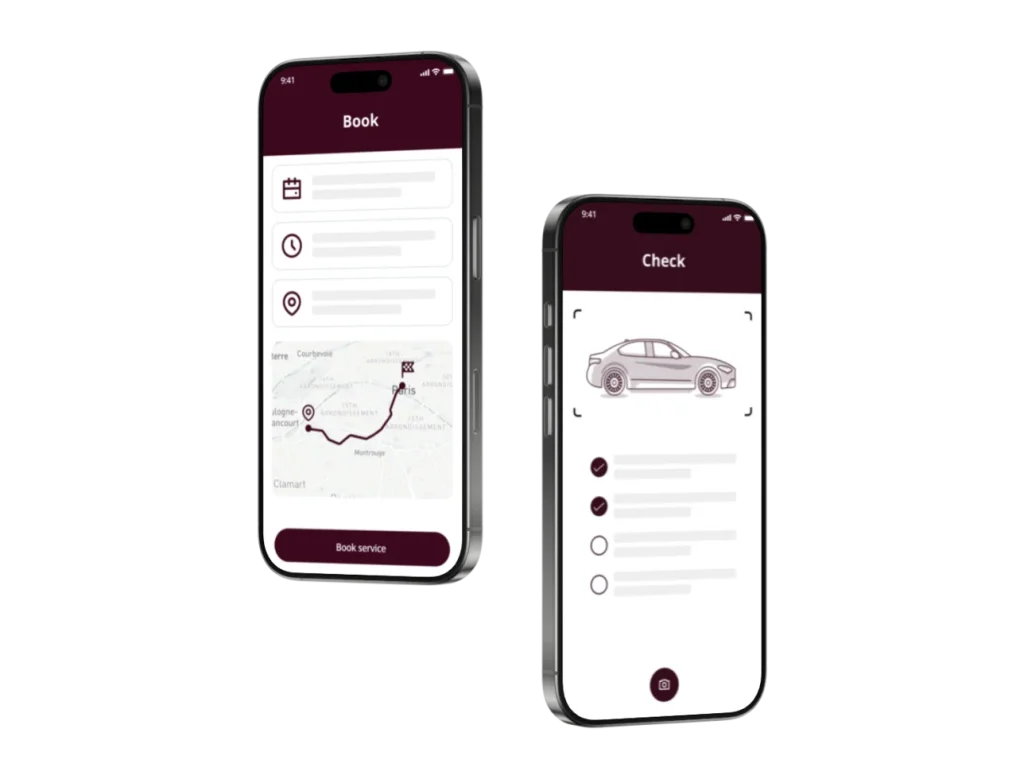
Otoqi: Custom Fleet Management System and Driver App for Pan-European Car Logistics
A turn-key transport management solution (TMS) that helps deliver cars throughout Europe.
Additional Info
- Angular
- Node.js
- PostgreSQL
- REST API
- AI algorithms
- Keycloak
- Selenium
France
Trusted by
Industry Contribution Awards & Certifications
Testimonials
Our Experts' Insights
FAQ
-
We already have an ERP and several carrier contracts in place. How disruptive is the integration process?
Integrations are mapped out in full during the architecture phase, before a single line of application code is written. Every touchpoint with your ERP, whether that’s SAP, Oracle, or NetSuite, gets documented: which data flows in which direction, at what frequency, and what the fallback behavior looks like if a connection drops. The same applies to carrier APIs and any EDI relationships you have with trading partners.
The actual integration work runs in parallel with core development, and everything gets tested against your live data structures in a staging environment before it touches production. Most clients run both systems side by side for two to four weeks during go-live; the legacy system stays active as a safety net while the new platform takes on real volume. By the time the cutover is complete, your team has already been working with the new system long enough that the transition feels routine rather than jarring.
-
What makes a custom-built solution worth the investment over an off-the-shelf platform like SAP TM or Oracle TMS?
Off-the-shelf platforms are built around the most common logistics workflows, which works well until your operation diverges from that baseline. The moment you need a specific carrier integration, a custom billing structure for 3PL clients, or a routing algorithm that accounts for your particular delivery constraints, you’re either paying for expensive customization within the vendor’s framework or working around limitations that slow your team down every single day.
A custom-built system is designed around how your operation actually runs, your carrier mix, your warehouse layout, and your customer SLAs. The total cost of ownership over three to five years tends to be comparable to enterprise licensing fees, but you end up with a system your team actually uses at full capacity rather than one where half the features sit untouched because they were built for someone else’s business. Companies that have made the switch consistently report transportation cost reductions in the range of 25 to 40 percent and order processing times cut by more than half.
-
Our IT team is small. Can we realistically manage a custom logistics platform after it's built?
This is one of the most common concerns, and it’s a fair one. The answer depends heavily on how the system is architected from the start. When we build on a cloud-native stack, containerized services on AWS, Azure, or GCP with a proper CI/CD pipeline, day-to-day maintenance becomes a matter of monitoring dashboards and handling routine updates, rather than managing servers or coordinating complex deployments. Your IT team gets a system that’s built to be operated by a lean team, with full documentation and runbooks from day one.
Beyond architecture, we offer structured post-launch support plans that cover everything from SLA-backed bug fixes to a dedicated team that handles ongoing development. Quarterly business reviews keep your IT lead and our delivery team aligned on system health, upcoming needs, and any changes in your infrastructure. A lot of our clients start with a heavier support engagement right after launch and gradually transition to a lighter plan once their team is fully comfortable.
-
We've had bad experiences with offshore development teams before. What's different here?
The most common failure point with offshore engagements is a communication structure that puts too many layers between the client and the people actually building the product. You end up talking to a project manager who relays information to a team lead who relays it to developers, and by the time feedback makes it back, something else has already been built on top of a misunderstanding. Our model puts a dedicated project manager and a senior engineer in direct, daily contact with your team throughout the engagement.
Every two weeks, you’re in a sprint review with the people who wrote the code, asking questions, giving feedback, and making decisions in real time. The sprint cadence creates natural accountability: if something is off track, it surfaces within two weeks, not after a three-month delivery. Beyond that, all IP is transferred to you in full at the end of the engagement: source code, documentation, architecture diagrams, everything. You own the system completely, with no vendor lock-in.
-
Can the platform scale as our operation grows, with more volume, more carriers, and more warehouses?
Scalability is an architecture decision, and it gets made at the beginning of the project. Building on a microservices foundation means individual components, routing, tracking, billing, and notifications can be scaled independently based on where the load actually is. If your shipment volume doubles but your billing module stays flat, only the routing and tracking services need additional resources. That’s a fundamentally more efficient scaling model than a monolithic system where everything scales together.
On the data side, the platform is designed to handle the volume growth that comes with adding carriers, warehouses, and geographies without requiring a re-architecture. New carrier integrations are added through the existing API hub, new warehouse locations are configured rather than rebuilt, and new geographies are handled through the compliance module’s country-specific rule sets. Growth adds configuration, not complexity.
-
What does the ROI actually look like, and how quickly can we expect to see it?
The clearest ROI signals show up earliest in the areas where manual work is heaviest. Companies that automate freight audit and invoice matching typically recover the cost of that module alone within the first six months, just from catching billing discrepancies that were previously going unnoticed. Route optimization tends to show up in fuel and carrier cost reductions within the first quarter of live operation; the industry average sits around 15 percent in logistics cost reduction for operations that implement AI-driven routing.
Longer-term ROI comes from the compounding effect of better data. When your dispatchers, warehouse managers, and finance team are all working from the same real-time system rather than reconciling spreadsheets, decisions get faster and more accurate. Inventory levels drop because demand forecasting actually works. Customer service costs go down because buyers can track their own shipments. On-time delivery rates improve because delays get flagged before they happen. These aren’t dramatic single-event gains; they’re consistent operational improvements that add up to a fundamentally more efficient business over twelve to twenty-four months.
-
How do you handle a situation where our requirements change mid-project?
Requirements change on every project of meaningful size; that’s a given in logistics, where a new carrier partnership or a regulatory update can shift priorities overnight. The sprint-based delivery model is specifically designed to absorb that kind of change. At the start of each two-week sprint, the backlog is re-prioritized based on current business needs. If something new becomes urgent, it gets slotted in and something lower-priority gets deferred; the scope adjusts, but the delivery rhythm stays consistent.
For larger scope changes, a new integration partner, an additional module, or a shift in the core data model, we handle those through a formal change request process. The impact on timeline and budget is assessed transparently, documented, and agreed upon before any work begins. There are no surprise invoices at the end of the project. Every change is a visible, deliberate decision made jointly with your team, with full cost and timeline implications on the table before you commit.
Want to Achieve Your Goals? Book Your Call Now!
We Fix, Transform, and Skyrocket Your Software.
Tell us where your system needs help — we’ll show you how to move forward with clarity and speed. From architecture to launch — we’re your engineering partner.
Book your free consultation. We’ll help you move faster, and smarter.
Let's Discuss Your Project!
Share the details of your project – like scope or business challenges. Our team will carefully study them and then we’ll figure out the next move together.
Thank You for Contacting Us!
We appreciate you reaching out. Your message has been received, and a member of our team will get back to you within 24 hours.
In the meantime, feel free to follow our social.
Thank You for Subscribing!
Welcome to the Devox Software community! We're excited to have you on board. You'll now receive the latest industry insights, company news, and exclusive updates straight to your inbox.