React JS Development Services

React JS Development Services

Devox Software builds React front ends that stay maintainable as the product grows. Architecture, state handling, and rendering performance are decided in the first sprint.

Arrange a Call
We Provide

React JS Development Services We Offer

We build interfaces from the component level up. Architecture and data flow are defined before development starts, so the interface stays predictable as features are added to it.

  • Custom React Development

    Our team uses React development for custom user interfaces since it ensures flexibility, efficiency, and scalability. We tend to follow these steps: designing the architecture, creating and organizing components, handling data, and testing the app.

  • Angular to React Migration

    Migrate Angular applications to a more flexible React architecture when framework complexity, difficult upgrades, development costs, or hiring constraints are slowing your roadmap. We can move individual modules and routes first, allowing Angular and React to coexist during the transition instead of requiring a high-risk big-bang replacement.

  • Vue to React Migration

    Move from Vue to React when your product strategy calls for a broader React ecosystem, shared web and mobile expertise, Next.js adoption, or easier access to React engineering talent. We preserve existing business logic and API integrations where appropriate while rebuilding the presentation layer around reusable React components.

  • jQuery and Legacy JavaScript to React

    Replace tightly coupled jQuery interfaces and legacy JavaScript with component-based React architecture. We identify DOM-heavy logic, duplicated UI behavior, obsolete dependencies, and difficult-to-test workflows, then migrate them into reusable components with TypeScript, automated testing, and modern state and data-management patterns.

  • Single Page Applications

    A single-page application loads one document and handles routing on the client, so screens update without a full reload. We build SPAs where the interface has to stay responsive under frequent state changes — dashboards, admin panels, operational tools.

  • React Consulting

    We review the existing application or the requirements and return a written recommendation on stack, architecture, and effort before development is committed to.

  • Architecture Building

    We choose state management based on how data actually moves through the product: Context API for local state, Redux Toolkit or Zustand where state is shared and long-lived.

  • Performance and Architecture Audit

    We review an existing React codebase and report on rendering performance, state handling, test coverage, and where the technical debt sits. The output is a prioritized list of fixes with effort estimates.

Our Services

Services We Deliver on React JS

React JS development is the process of building interactive web applications and user interfaces with React, a JavaScript library for component-based frontend development. It typically includes UI architecture, reusable component development, state management, API integration, routing, testing, performance optimization, and frameworks such as Next.js for server-side rendering and full-stack React applications. New web applications built on React 19 and TypeScript, with a Vite or Next.js setup chosen according to how the product needs to render. Architecture, state handling and performance budgets are set in the first sprint, so the codebase stays predictable as features are added. React work rarely stays inside the front end. These are the adjacent areas we cover on the same project.

  • Custom React Development

    We build new web applications with React 19 and TypeScript, using Vite or Next.js depending on how the product needs to render, scale, and serve users. During the first sprint, we define component boundaries, routing, API contracts, state management, error handling, testing strategy, and performance budgets instead of allowing these decisions to emerge inconsistently over time. Typical work include:

    • SaaS platforms
    • customer portals
    • internal business systems
    • marketplaces
    • dashboards
    • data-heavy applications
    • enterprise web interfaces
    • customer-facing digital products

    We also establish reusable components and shared frontend conventions so additional developers can extend the application without introducing unnecessary architectural drift.

  • Next.js Development

    We build production applications with Next.js and the App Router, selecting the rendering strategy according to the requirements of each part of the product rather than forcing the entire application into one model. We use:

    • Static Site Generation (SSG) for marketing, documentation, and content pages that benefit from pre-rendering
    • Server-Side Rendering (SSR) for personalized, frequently updated, or request-dependent content
    • React Server Components to move suitable rendering and data-fetching work to the server and reduce unnecessary client-side JavaScript

    The same application can combine these approaches where different routes have different performance, SEO, or interactivity requirements.

    Our Next.js work also covers:

    • metadata and canonical configuration
    • XML sitemaps
    • structured data
    • image optimization
    • font optimization
    • caching strategies
    • route-level loading and error states
    • authentication
    • API and backend integration
    • server actions where appropriate
    • monitoring and performance measurement

    We can deploy to Vercel, AWS, or client-controlled infrastructure, depending on security, scalability, and operational requirements.

  • Remix/React Router 7 Application Development

    We build and modernize data-heavy React applications around the data-loading and mutation patterns now available through React Router 7. This architecture can be a strong fit for applications with forms, nested routes, server-driven data flows, and transactional workflows where adding large amounts of client-side state would create unnecessary complexity. We implement:

    • route loaders
    • actions and form mutations
    • nested routing
    • progressive enhancement
    • server-side data loading
    • error boundaries
    • pending and optimistic UI states
    • authentication and authorization flows

    For existing products, we can also migrate Remix v2 applications to React Router 7, reviewing routes, data APIs, deployment configuration, and framework-specific dependencies as part of the upgrade.

  • Angular to React Migration

    We migrate Angular applications to React when the existing frontend architecture, upgrade burden, talent availability, ecosystem requirements, or long-term roadmap makes React a better fit. Rather than rebuilding the entire application in one high-risk release, we can migrate it incrementally. A typical phased approach includes:

    • auditing the Angular architecture and dependencies
    • defining React application boundaries
    • creating a shared application shell
    • moving individual routes or feature areas
    • rebuilding shared components
    • preserving backend APIs
    • running Angular and React functionality in parallel where required
    • removing legacy modules only after replacement functionality is validated

    This keeps the product operational throughout the migration and lets the business continue releasing features while modernization is underway.

  • Vue to React Migration

    We migrate Vue applications to React when teams need stronger alignment with the React ecosystem, Next.js, React Native skills, or an existing React engineering organization. The migration can proceed feature by feature instead of requiring a complete rewrite. We review the current Vue architecture, state management, routing, component library, API layer, and build tooling, then establish equivalent React patterns before moving individual areas. Where practical, both frameworks can coexist temporarily so production releases continue during the transition.

  • jQuery and Legacy JavaScript to React

    We modernize applications built around jQuery, server-rendered pages with heavy JavaScript, or tightly coupled legacy frontend code without requiring an immediate rewrite of the entire system. React components can first be embedded inside existing pages and used to replace the highest-maintenance or most interactive areas. As each feature is migrated, we can:

    • introduce TypeScript
    • separate UI logic from DOM manipulation
    • establish reusable components
    • improve API boundaries
    • add automated tests
    • remove duplicated event handling
    • gradually retire legacy JavaScript

    This approach lets teams modernize incrementally while preserving the stable parts of the existing application.

  • Create React App and Legacy Build Migration

    Create React App is deprecated, and many older React applications also rely on outdated Webpack configurations, unsupported dependencies, or build pipelines that have become increasingly difficult to maintain. We migrate CRA and legacy React projects to Vite or Next.js, depending on whether the application should remain a client-rendered SPA or adopt server-rendered capabilities. The work includes:

    • removing CRA dependencies
    • replacing custom Webpack configuration
    • migrating environment variables
    • updating asset handling
    • rebuilding proxy and development-server configuration
    • updating testing tools
    • reviewing third-party packages
    • configuring CI/CD for the new build
    • measuring bundle size before and after migration

    We can combine the build migration with upgrades from React 16–18 to React 19, resolving deprecated APIs, library compatibility issues, and legacy application patterns in the same modernization program.

  • Performance and Architecture Audit

    We audit existing React applications when performance problems, technical debt, slow development, or architectural inconsistency begin affecting delivery. The review covers:

    • rendering behavior
    • unnecessary re-renders
    • client and server state management
    • component architecture
    • routing
    • API usage
    • bundle size
    • code splitting
    • lazy loading
    • caching
    • Core Web Vitals
    • dependency health
    • TypeScript usage
    • test coverage
    • accessibility
    • build and deployment configuration

    We then provide a prioritized list of findings, separating urgent production risks from longer-term modernization opportunities. As a result, you get: an architecture assessment, performance findings, technical debt map, prioritized remediation plan, and effort estimate for the recommended changes.

  • React Consulting

    Use React consulting when you need the architecture decisions before you need a full delivery team. We assess the product requirements, existing stack, expected scale, SEO requirements, team structure, and operational constraints, then provide a written technical recommendation. Typical decisions include:

    • SPA vs Next.js
    • client rendering vs SSR or SSG
    • whether React Server Components make sense
    • Vite vs Next.js
    • TanStack Query vs custom server-state handling
    • Context vs Zustand vs Redux Toolkit
    • monolith vs modular frontend architecture
    • component-library strategy
    • testing approach
    • migration strategy
    • deployment architecture
    • team composition

    The result is a documented technical direction, implementation roadmap, and effort estimate that your internal team or Devox engineers can execute against.

Our Process

How We Build React JS Applications: Delivery Process

New web applications built on React 19 and TypeScript, with a Vite or Next.js setup chosen according to how the product needs to render. Architecture, state handling and performance budgets are set in the first sprint, so the codebase stays predictable as features are added.

01.

01. Discovery and Scope (1–2 weeks)

We start by understanding the product, target users, business goals, technical constraints, integrations, and delivery priorities. For a new application, this means defining the core workflows, expected traffic, data requirements, security needs, and what belongs in the first release. For an existing React application, we begin with a codebase and architecture audit.

02.

02. Architecture Decisions

We define how the React application should be structured before the codebase grows around accidental decisions. Depending on the product, we choose between a traditional SPA, Next.js with SSR or SSG, or React Server Components where they provide a clear architectural advantage. We also decide how server and client state should be separated, how APIs are consumed, how authentication works, and how components are organized.

03.

03. Estimate and Engagement Model

Once the scope and architecture are clear enough to estimate responsibly, we prepare a detailed delivery plan. The estimate breaks the work into features, technical tasks, integrations, QA, infrastructure, and release activities. We also identify dependencies that can affect sequencing or timeline.

04.

04. Iterative Development (2-week sprints)

Development runs in short, visible iterations rather than disappearing into a long implementation phase. We typically work in 2-week sprints, with planning at the start and a working demo at the end. Features are deployed to a staging environment as they are completed, so stakeholders can review actual behavior rather than relying on screenshots or status reports.

05.

05. Testing and Quality Gates

Testing is part of the delivery pipeline, not a phase left until the end. We combine unit, component, integration, and end-to-end testing based on the risk of each feature. Depending on the stack, this can include Vitest or Jest, React Testing Library, and Playwright for critical user journeys. We also include automated accessibility and performance checks where appropriate.

06.

06. Release and Production Readiness

Before launch, we prepare the application for real production traffic rather than treating deployment as the final technical task. We verify environment configuration, caching, analytics, monitoring, error reporting, authentication flows, SEO behavior where relevant, rollback procedures, and release readiness. For Next.js applications, we also validate rendering behavior, server-side dependencies, edge or server deployment configuration, and production caching.

07.

07. Post-Launch Optimization and Support

After release, we monitor how the application behaves under real usage and continue improving it based on production data. This can include fixing edge cases, optimizing slow user flows, reducing bundle size, improving Core Web Vitals, updating dependencies, extending test coverage, and delivering new features. For long-term engagements, we also keep the architecture and component system consistent as more developers and features are added.

  • 01. Discovery and Scope (1–2 weeks)

  • 02. Architecture Decisions

  • 03. Estimate and Engagement Model

  • 04. Iterative Development (2-week sprints)

  • 05. Testing and Quality Gates

  • 06. Release and Production Readiness

  • 07. Post-Launch Optimization and Support

Why Choose React JS

What React Maintainability Depends On

React is a library, and most of its long-term value depends on how it is used. These are the practices we hold to on every project.

01

Functional Components

Functional components with hooks are easier to read, test, and replace than class components, and they keep state logic reusable across the app.

02

Typed Component Contracts

Props and API responses are typed in TypeScript. Type errors surface at build time instead of in production.

03

CSS Modules

CSS Modules are a way to scope CSS styles to a particular component. Our team uses CSS Modules to avoid leaking into other components and keep the code organized.

04

Predictable State Updates

State changes go through reducers or Immer, so a change on one screen cannot silently mutate data another screen relies on.

05

Component boundaries

One component does one thing. Smaller components are cheaper to test and cheaper to hand over to a new developer.

06

Scoped styles

Styles are scoped per component through CSS Modules, so a change in one part of the interface stays there.

07

A rendering budget

Bundle size and Core Web Vitals are measured on each build. A regression is caught before release rather than reported by users.

Our Best Practices

How We Keep React Codebases Maintainable

01

Functional components and hooks

All new code uses functional components and hooks. They're easier to read, test and replace than class components, and state logic can be reused across the app.

02

One component, one job

Small components with clear responsibilities are cheaper to test, easier to review, and easier for a new developer to take over.

03

Typed contracts

Props, API responses and form schemas are typed in TypeScript, with runtime validation such as [Zod] at the API boundary. Type errors show up at build time, not in production.

04

Server state separated from UI state

Data from the API lives in TanStack Query (or in Server Components in Next.js), not in global stores. UI state stays local. This one decision removes most of the "stale data" bugs in large React apps.

05

Predictable state updates

Where global client state is needed, updates go through Zustand or Redux Toolkit with immutable updates, so a change on one screen can't silently break another.

06

Compiler-ready code

We write code that follows the Rules of React, so the React Compiler can handle memoization automatically. Existing codebases get linted for compiler compatibility during upgrades.

07

Scoped, consistent styling

Tailwind CSS with shared design tokens, or CSS Modules, depending on the team. Either way, a style change in one part of the interface stays there.

08

Tested at every level

Unit and hook tests: Vitest or Jest Component tests: React Testing Library, testing behavior rather than implementation End-to-end tests: Playwright on critical user flows (sign-up, checkout, key forms) Visual and accessibility checks: Storybook and axe for WCAG 2.1 AA Tests run on every pull request, and a failing test blocks the merge.

09

A performance budget

Bundle size and Core Web Vitals (LCP, INP, CLS) are measured on every build with Lighthouse CI or similar. A regression is caught before release, not reported by users.

Case Studies

Our Latest Works

View All Case Studies
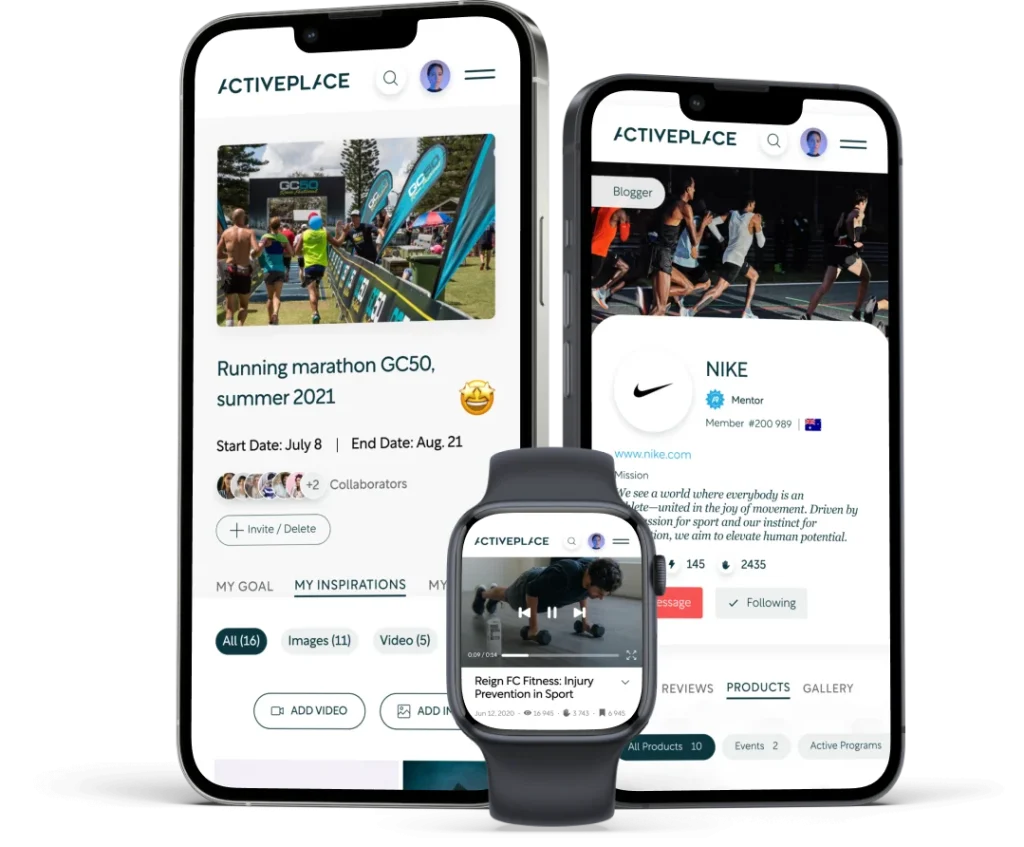
ActivePlace ActivePlace
  • health
  • fitness
  • marketplace

ActivePlace: Wellness-Focused Social Marketplace Platform

A wellness-focused social media and marketplace platform for active lifestyle communities.

Additional Info

Core Tech:
  • Jenkins
  • Angular
  • Ruby
  • Figma
Country:

Australia Australia

Sport Info Solution Sport Info Solution
  • Backend
  • Frontend
  • Cloud
  • Metrics & Data

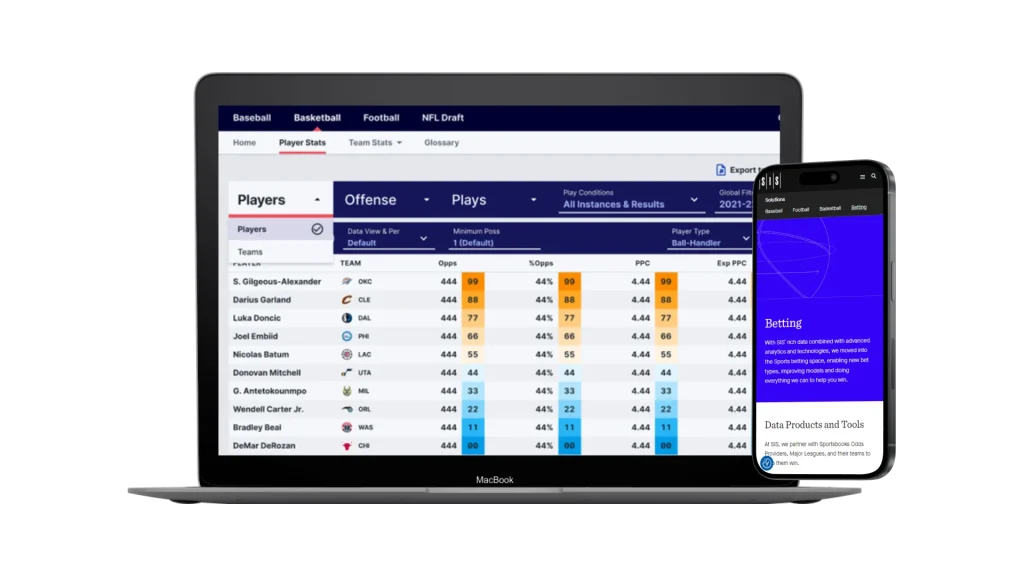
Sports Info Solutions: Real-Time Sports Data Platform for Betting, Leagues & Fans

A high-performance analytics system for sports organizations to optimize team performance in real time.

Additional Info

Core Tech:
  • .NET Core​
  • MS SQL
  • ELK​
  • Vue.js
  • AWS​
  • Docker
  • DataDog​
  • R
Country:

USA USA

Function4 Function4
  • website
  • management platform

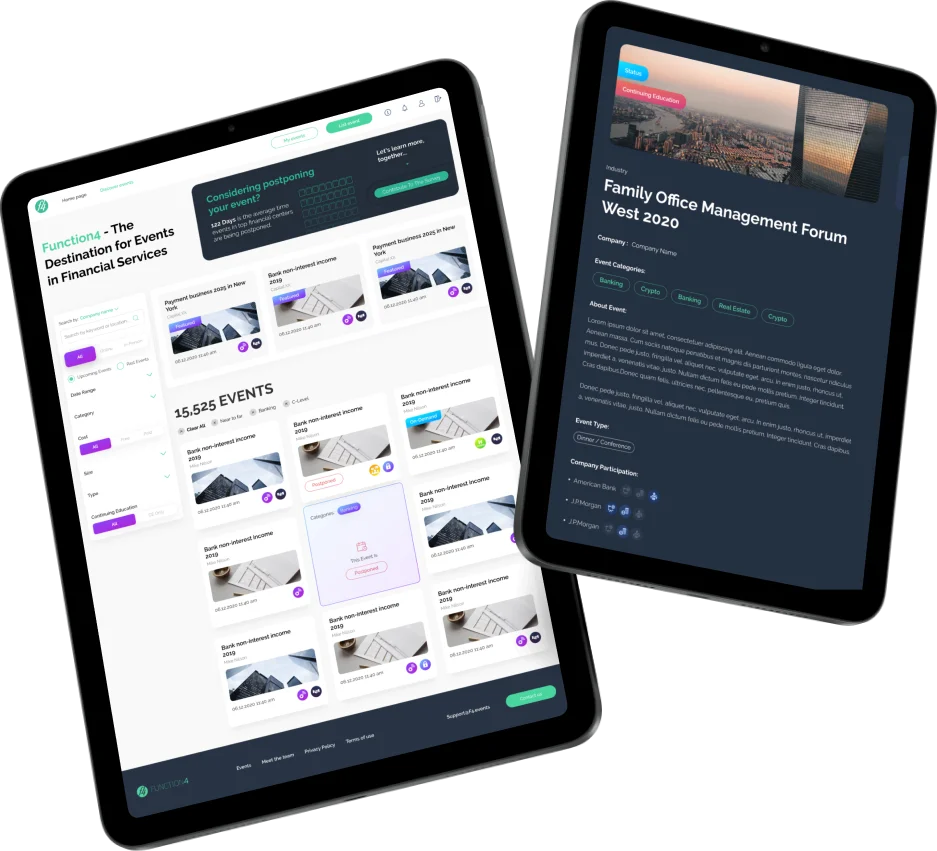
Function4: Event Management Platform for the Financial Services Industry

A feature-rich system for managing tickets, devices, invites, and communication at scale.

Additional Info

Core Tech:
  • Vue js
  • GSAP
  • Ruby
  • Azure
Country:

USA USA

Trusted by

company
company
company
company
company
company
company
company
company
company
company
company
company
company
company
company
company
company
company
company
company
company
company
company
company
company
company
company
company
company
company
company
Awards & Certifications

Industry Contribution Awards & Certifications

Check Devox Software’s awards on rating and review platforms, recognized among the top software development companies, along with the certifications our team members hold.

  • Awards
  • Certifications
  • UpWork

    UpWork

  • Clutch

    Clutch

  • The Manifest

    The Manifest

  • DesignRush

    DesignRush

  • MC.today

    MC.today

  • Clutch

    Clutch

  • Clutch

    Clutch

  • AppFutura

    AppFutura

  • Clutch

    Clutch

  • GoodFirms

    GoodFirms

  • DesignRush

    DesignRush

  • UpWork

    UpWork

  • Professional Scrum Master™ II (PSM II)

    Professional Scrum Master™ II (PSM II)

  • Professional Scrum Product Owner™ I (PSPO I)

    Professional Scrum Product Owner™ I (PSPO I)

  • Microsoft Certified: DevOps Engineer Expert

    Microsoft Certified: DevOps Engineer Expert

  • Microsoft Certified: Azure Administrator Associate

    Microsoft Certified: Azure Administrator Associate

  • Quality Assurance ISTQB Foundation Level

    Quality Assurance ISTQB Foundation Level

  • Java Development Certified Professional

    Java Development Certified Professional

  • JavaScript Developer Certificate – W3Schools

    JavaScript Developer Certificate – W3Schools

  • Certified Artificial Intelligence Scientist (CAIS)

    Certified Artificial Intelligence Scientist (CAIS)

  • Oracle Database SQL Certified Associate

    Oracle Database SQL Certified Associate

Testimonials

Testimonials

Carl-Fredrik Linné                                            Sweden

The solutions they’re providing is helping our business run more smoothly. We’ve been able to make quick developments with them, meeting our product vision within the timeline we set up. Listen to them because they can give strong advice about how to build good products.

Darrin Lipscomb Darrin Lipscomb
Darrin Lipscomb United States

We are a software startup and using Devox allowed us to get an MVP to market faster and less cost than trying to build and fund an R&D team initially. Communication was excellent with Devox. This is a top notch firm.

Daniel Bertuccio Daniel Bertuccio
Daniel Bertuccio Australia

Their level of understanding, detail, and work ethic was great. We had 2 designers, 2 developers, PM and QA specialist. I am extremely satisfied with the end deliverables. Devox Software was always on time during the process.

Trent Allan Trent Allan
Trent Allan Australia

We get great satisfaction working with them. They help us produce a product we’re happy with as co-founders. The feedback we got from customers was really great, too. Customers get what we do and we feel like we’re really reaching our target market.

Andy Morrey                                            United Kingdom

I’m blown up with the level of professionalism that’s been shown, as well as the welcoming nature and the social aspects. Devox Software is really on the ball technically.

Vadim Ivanenko Vadim Ivanenko
Vadim Ivanenko Switzerland

Great job! We met the deadlines and brought happiness to our customers. Communication was perfect. Quick response. No problems with anything during the project. Their experienced team and perfect communication offer the best mix of quality and rates.

Jason Leffakis Jason Leffakis
Jason Leffakis United States

The project continues to be a success. As an early-stage company, we're continuously iterating to find product success. Devox has been quick and effective at iterating alongside us. I'm happy with the team, their responsiveness, and their output.

John Boman John Boman
John Boman Sweden

We hired the Devox team for a complicated (unusual interaction) UX/UI assignment. The team managed the project well both for initial time estimates and also weekly follow-ups throughout delivery. Overall, efficient work with a nice professional team.

Tamas Pataky Tamas Pataky
Tamas Pataky Canada

Their intuition about the product and their willingness to try new approaches and show them to our team as alternatives to our set course were impressive. The Devox team makes it incredibly easy to work with, and their ability to manage our team and set expectations was outstanding.

Stan Sadokov Stan Sadokov
Stan Sadokov Estonia

Devox is a team of exepctional talent and responsible executives. All of the talent we outstaffed from the company were experts in their fields and delivered quality work. They also take full ownership to what they deliver to you. If you work with Devox you will get actual results and you can rest assured that the result will procude value.

Mark Lamb Mark Lamb
Mark Lamb United Kingdom

The work that the team has done on our project has been nothing short of incredible – it has surpassed all expectations I had and really is something I could only have dreamt of finding. Team is hard working, dedicated, personable and passionate. I have worked with people literally all over the world both in business and as freelancer, and people from Devox Software are 1 in a million.

Insights

Our Experts' Insights

Top Generative AI and LLM Integration Companies in 2026

Differences Between Cloud Apps vs Web Apps: Full Guide

Back End & Front End Developer Salary Trends In 2021 [Market Research]

Questions

Questions You May Have

  • Do you work with existing or legacy React codebases?

    Yes. A large share of our React work starts on a codebase someone else wrote. We begin with an audit of architecture, rendering performance, state handling, test coverage, and the areas carrying the most technical debt. The audit shows what can be kept and what must be rebuilt, and provides a written baseline before anything changes.

    We apply a step-by-step approach to modernizing legacy React codebases while keeping the product running as it evolves. Modernization is executed through functional slices, each delivered independently into production with defined boundaries and acceptance criteria. This may include migrating to modern React patterns, improving performance and data handling, introducing automated tests, and aligning the front end with current backend or API architectures. As the system stabilizes, we help teams gradually reduce technical debt and prepare the application for long-term growth, ensuring it remains maintainable, scalable, and easier to extend as business requirements change.

  • Should we upgrade to React 19 and the React Compiler?

    For most active products, yes. React 19 adds Actions, better form and async handling, and improvements that support Server Components. The React Compiler removes most manual memoization. We usually upgrade in stages: dependency audit, then React 18.3 warnings, then React 19, then the compiler enabled step by step, so nothing breaks in production.

  • Vite, Next.js or React Router 7: which should we use?

    Vite for SPAs and internal tools where SEO doesn’t matter. Next.js when you need server rendering, SEO or Server Components. React Router 7 (Remix) for data- and form-heavy apps that benefit from loaders and actions. We recommend one in the architecture step, based on your product rather than trends.


  • How do you handle performance optimization in React applications?

    Performance targets are set during architecture and carried through delivery. We work to Core Web Vitals — LCP, TTFB, and interaction responsiveness — and choose the rendering strategy accordingly: server-side rendering, static generation, or edge rendering. Data fetching, bundle size, and the volume of client-side JavaScript are treated as budgets with defined limits.

    As the application evolves, we continuously monitor and optimize performance in real-world conditions. This includes profiling rendering behavior, optimizing component updates, and introducing modern React capabilities such as Server Components, where they provide clear benefits. In React.js website development, performance testing and monitoring are integrated into our delivery process to ensure long-term speed, stability, and scalability. This approach ensures that React applications remain fast, stable, and scalable even as features, users, and data complexity increase.

  • How do you integrate React with backend systems and APIs?

    We start from the API contract and the product workflows rather than the UI screens. Data models, authentication, and error handling are agreed first, so the front end behaves predictably under real network conditions. A dedicated integration layer handles API communication, session management, and role-based access, keeping the interface consistent even when latency, partial failures, or retries occur.

    REST or GraphQL is chosen on a case-by-case basis. Caching, pagination, and prefetching keep the interface responsive as data volumes grow. Where real-time updates are required, we use WebSockets or subscriptions in place of polling. Contract tests and mocked environments run against realistic scenarios, so integration changes surface before they reach core workflows.

  • React vs Angular vs Vue: What Should You Choose for Your Project?

    React, Angular, and Vue can all support production-grade web applications, but they solve the framework decision differently.React gives teams a flexible component model and a large ecosystem while allowing architects to choose supporting technologies around it. Angular provides a more opinionated, integrated framework with many architectural decisions built in. Vue provides a relatively approachable component framework that can work especially well when development simplicity and incremental adoption are priorities.

    There is no universally superior choice. The right decision depends on the product, existing architecture, team expertise, rendering requirements, expected lifetime, and organizational constraints.

    Criterion React Angular Vue
    Architecture Flexible library/ecosystem Full, opinionated framework Progressive framework
    Learning curve Moderate Higher due to broader framework concepts Generally lower
    Complex UI Excellent Excellent Excellent
    Enterprise applications Strong Strong Strong, depending on ecosystem requirements
    SSR & SEO Strong with Next.js and other React frameworks SSR available Strong with Nuxt
    Component reuse Excellent Excellent Excellent
    Ecosystem Very large Large, integrated ecosystem Large and growing
    Mobile path React Native Separate mobile technologies usually required Ionic/Capacitor and other options
    Architectural flexibility High Lower/more standardized High
    Typical development cost Depends primarily on scope, architecture, and team Can require more initial framework expertise Often efficient for smaller/mid-sized teams
    Best fit SaaS, marketplaces, portals, dynamic products, complex interfaces Structured enterprise applications and teams favoring conventions Products prioritizing approachable development and incremental adoption

    Choose React when component reuse, ecosystem breadth, UI complexity, flexible architecture, or a React/Next.js web ecosystem is strategically useful.

    Choose Angular when your organization prefers a highly structured framework with more conventions standardized across teams.

    Choose Vue when a lightweight adoption path and relatively approachable development model align better with the product and team.

    If you already have a mature Angular or Vue product, however, switching frameworks simply because React is popular is rarely sufficient justification. Devox Software evaluates maintenance cost, hiring constraints, performance, technical debt, roadmap requirements, and migration risk before recommendivariety of engagement modelsng a rewrite.

  • Should I use React or Next.js for a new application?

    React provides the UI foundation, while Next.js adds an application framework around React with routing, server rendering, React Server Components, caching, build tooling, and other production capabilities. For many public-facing or full-stack React products, Next.js is a strong option. A client-heavy internal SPA may not require it. We select the rendering architecture according to the product rather than treating Next.js as mandatory.

  • What are React Server Components, and do we need them?

    React Server Components allow selected components to execute on the server rather than sending all of their implementation to the browser. They can reduce client-side JavaScript and simplify server-side data access in suitable applications. They are not a reason to rewrite a functioning application by themselves. We evaluate RSC based on rendering requirements, application architecture, hosting, caching, security, and migration cost.

  • Can you migrate an Angular or Vue application to React without downtime?

    Usually, yes. Large applications can often be migrated incrementally rather than replaced in one release. We map application boundaries and move routes, modules, or workflows to React in controlled slices. Automated tests, compatibility layers, feature flags, and staged releases can allow the legacy and new front ends to operate during migration, reducing cutover risk.

  • Can you audit an existing React application without rebuilding it?

    Yes. A React performance and architecture audit can be performed as a standalone engagement. We examine component structure, rendering, state management, dependencies, testing, data fetching, bundle composition, Core Web Vitals, security, and technical debt. The deliverable is a prioritized remediation plan with findings, recommended actions, dependencies, and estimated implementation effort.

  • What React stack do you work with?

    Area What we use Why
    Core React 19, TypeScript Actions, use(), better form handling; typed props and API contracts
    Compiler React Compiler Automatic memoization, so there’s less manual useMemo/useCallback code and fewer re-render bugs
    Frameworks Next.js (App Router), React Router 7 (Remix) Server rendering, Server Components, data loaders
    Build Vite Near-instant dev server and fast production builds; the standard replacement for Create React App
    Server state TanStack Query Caching, background refetching, pagination and optimistic updates, without hand-written fetching logic
    Client state Context, Zustand, Redux Toolkit Chosen by how data actually moves through the app, not by default
    Styling Tailwind CSS, CSS Modules Tailwind for speed and consistent design tokens; CSS Modules where teams prefer scoped CSS
    Components Storybook, [Radix UI / shadcn/ui] An accessible, documented component library shared by designers and developers
    Testing Vitest, React Testing Library, Playwright Unit, component and end-to-end tests in CI
    Monitoring [Sentry], Core Web Vitals RUM Errors and real-user performance tracked from launch
Book a call

Want to Achieve Your Goals? Book Your Call Now!

Contact Us

We Fix, Transform, and Skyrocket Your Software.

Tell us where your system needs help — we’ll show you how to move forward with clarity and speed. From architecture to launch — we’re your engineering partner.

Book your free consultation. We’ll help you move faster, and smarter.

Let's Discuss Your Project!

Share the details of your project – like scope or business challenges. Our team will carefully study them and then we’ll figure out the next move together.


    By sending this form I confirm that I have read and accept the Privacy Policy

    Thank You for Contacting Us!

    We appreciate you reaching out. Your message has been received, and a member of our team will get back to you within 24 hours.

    In the meantime, feel free to follow our social.


      Thank You for Subscribing!

      Welcome to the Devox Software community! We're excited to have you on board. You'll now receive the latest industry insights, company news, and exclusive updates straight to your inbox.