Facial Recognition Software AI Development Services

Facial Recognition Software AI Development Services

Take advantage of real-time monitoring capabilities and protect your assets with unmatched accuracy thanks to artificial intelligence technology for face recognition software made by Devox Software. Our engineering team delivers tailor-made solutions designed to meet your unique requirements, integrating seamlessly into your existing security infrastructure.

Book a Call
What is Facial Recognition Software

What is Facial Recognition Software and How Can it Help My Business?

Real-time facial recognition software is a technology that identifies and verifies a person's face from a video or live feed instantly. It can help radically boost your security system: you’ll quickly identify if someone who enters your premises is authorized or if they pose a potential threat.

Face recognition solutions can also streamline your access control, making it faster and more efficient for employees to enter secure areas without needing physical keys or badges. As a side benefit, it can improve customer service by recognizing returning customers and providing personalized experiences. By implementing this technology, your business can become safer without cost overhead or involving numerous technology solutions at once.

Modernizing unstable systems? Launching new products?

We build development environments that deliver enterprise-grade scalability, compliance-driven security, and control baked in from day one.

Check Our Portfolio
Services We Provide

Facial Recognition Software Services We Provide

Artificial intelligence technology for face recognition algorithm serves a primary purpose for security means. Take a look at what can Devox Software provide both on the security side and in other realms of facial AI applications.

  • Custom Facial Recognition Model Development & Integration

    We design facial recognition systems around your actual operating conditions instead of assuming one model will perform equally well everywhere. Depending on the project, our engineers can implement facial detection, face alignment, feature extraction, embedding generation, biometric comparison, identity matching, image-quality assessment, and decision logic.

    For projects where an existing model or commercial recognition engine already meets the required performance, we integrate and validate it rather than rebuilding the technology without a business reason. For specialized environments, we can evaluate custom training or fine-tuning approaches using appropriately sourced datasets. Integration may cover:

    • face recognition APIs;
    • identity and access management systems;
    • KYC platforms;
    • mobile and web applications;
    • physical access-control hardware;
    • camera infrastructure;
    • CRM and enterprise platforms;
    • document-verification workflows;
    • security information systems;
    • cloud and on-premise environments.

    Model outputs are connected to application-level rules, audit trails, permissions, review workflows, and fallback mechanisms so the recognition component does not operate as an isolated black box.

  • Mobile and Cloud-Based Facial Recognition

    Develop facial recognition functionality for mobile, web, cloud, edge, and hybrid environments. Mobile facial verification can support account recovery, transaction approval, employee authentication, identity onboarding, and other controlled authentication scenarios. Depending on security requirements, image processing can happen locally, remotely through an API, or through a hybrid architecture that minimizes unnecessary movement of biometric information.

    Cloud architectures are appropriate when businesses need centralized model deployment, elastic processing, multi-location management, or integration with existing cloud services.

    For privacy-sensitive or latency-critical applications, edge or on-premise processing may be preferable because biometric data can remain closer to the point of collection.

    Architecture decisions therefore consider more than inference speed. We evaluate where images and biometric templates are processed, how long they remain stored, who can access them, and what happens when a user withdraws consent or must be removed from a system.

  • Surveillance and Security Systems

    Integrate facial verification or identification with visitor management, secure entry points, access-control systems, alarms, security dashboards, and existing camera infrastructure. For sensitive deployments, the model should not automatically convert every similarity result into a security decision. A practical architecture may require a threshold above which a verification is accepted, a second range that triggers human review, and a rejection range where another authentication method is requested.

    The same principle applies to real-time identification. Where such processing is legally permitted, candidate matches can be surfaced to authorized personnel for verification rather than treated as conclusive identification. This human-in-the-loop design is particularly important when a false match could deny access, interrupt travel, affect employment, or create another material consequence for an individual.

  • 1:1 Facial Verification and Liveness Detection

    One-to-one verification answers a limited question: does the person presenting this face appear to be the same person as the claimed identity? Examples include comparing:

    • a selfie with an ID document;
    • a person at an access gate with an enrolled employee profile;
    • a banking customer with an existing verified identity;
    • a returning user with a previously enrolled biometric template.

    Unlike 1 identification, the system is not searching a large database for an unknown person. It is comparing two identity representations associated with one claimed identity.

    We can combine facial verification with passive or active liveness detection and presentation attack detection to help identify attempts involving printed photographs, replayed videos, screens, masks, manipulated media, or other spoofing techniques. Facial biometrics can also be combined with possession or knowledge factors where a higher level of assurance is required.

  • User and Entity Behavior Analytics (UEBA)

    These tools monitor and analyze user behavior to identify potentially risky or malicious activities within an organization. Understand and predict security threats based on behavior patterns, focusing on data analysis and anomaly detection.

  • 1:1 (One-to-One) Verification Systems

    Verify a person’s identity by comparing their live capture to a single image stored in a database for access control and authentication purposes, biometric authentication in banking, secure transactions, and device unlocking. Devox can build secure access systems for buildings, devices, and software applications.

  • Facial Recognition Search Engine

    Building software that conducts facial recognition web search similar to PimEyes, TinEye or AI-based Clearview solution. Search and identify faces across the internet, analyzing specific features of a face from a submitted image and comparing them against a vast array of images available online to find matches.

  • Augmented Reality (AR) Applications

    Facial recognition combined with AR can create interactive experiences by overlaying digital information on real-world images of faces. Such applications include virtual try-ons for glasses or makeup. The Devox developers can craft AR apps that boost customer engagement and retail experiences such as or similar to Instagram masks or virtual fitting rooms.

  • KYC/AML Identity Verification

    Combine document capture, document authenticity checks, OCR, facial verification, liveness detection, sanctions or AML checks, risk scoring, and manual review. The facial recognition component should not independently determine whether a customer passes AML requirements. Instead, it provides an identity signal within a wider onboarding and compliance process.

    Devox Software integrates biometric identity checks with banking applications, onboarding systems, compliance platforms, payment workflows, and existing KYC providers. The system can also route borderline matches or failed liveness checks to an authorized reviewer rather than automatically rejecting legitimate customers.

Development Process

Our Facial Recognition Software Development Process

We develop face recognition using artificial intelligence in a similar way we develop other software, adding the curve of AI building and training. See how our process looks like and what inputs we’ll require from you.

01.

01. Requirement Analysis

This initial phase involves understanding the specific needs and objectives of the facial recognition system. It includes identifying the target environment (e.g., indoor, outdoor, lighting conditions), the application's purpose, and any regulatory or privacy considerations. While eliciting your requirements and offering solutions, the Devox team takes ethical and privacy considerations into account: we implement measures to protect personal data, ensuring transparency in how the system is used, and considering the impact of the technology on individuals and society.

02.

02. Design

During this stage, developers design the software's architecture, including how it will capture, process, and analyze facial data. This involves deciding on the algorithms for facial detection, feature extraction, and matching, as well as the overall system architecture, including hardware requirements and integration with other systems.

03.

03. Data Collection

The Devox engineers collect a diverse dataset of facial images to train the machine learning models. This dataset must be varied enough to include different facial expressions, angles, lighting conditions, and demographic characteristics to ensure the system's accuracy and fairness.

04.

04. Model Training and Testing

With the dataset prepared, the next step is to train the facial recognition model. We employ machine learning algorithms to learn the distinguishing features of different faces. The model is then tested and refined iteratively to improve accuracy and reduce false positives and negatives.

05.

05. Integration

Once the model is sufficiently accurate, our developers integrate it into the application or system for which it was developed. This includes setting up the necessary hardware (cameras, servers) and ensuring the software can interact with other systems, such as access control or customer relationship management (CRM) systems.

06.

06. Deployment

The software is deployed in the target environment, where it begins to operate in real-world conditions. Depending on requirements or how the process goes, we involve further calibration and testing to optimize performance in the specific deployment setting.

07.

07. Monitoring and Maintenance

After deployment, our team stays in touch to update the facial recognition models with new data, addressing any performance issues, and ensuring the system complies with any new or updated regulations. We can also teach it new data or scale the system at your demand.

  • 01. Requirement Analysis

  • 02. Design

  • 03. Data Collection

  • 04. Model Training and Testing

  • 05. Integration

  • 06. Deployment

  • 07. Monitoring and Maintenance

Benefits

Benefits of Implementing Facial Recognition Software

Artificial intelligence technology for face recognition will bring one ultimate benefit of boosting your security level to the top.

  • Eliminate Unauthorized Access

    Reduce the risk of unauthorized individuals gaining access to secure or restricted areas by several times. The practice of verifying identities through facial recognition will ensure only authorized personnel can enter certain premises, making it much harder for intruders to bypass security protocols.

  • Ensure Facial Recognition Accuracy

    “99% accurate” is usually not enough information to evaluate a facial recognition system. False Match Rate (FMR) measures how often images belonging to different people are incorrectly treated as a match. False Non-Match Rate (FNMR) measures how often images belonging to the same person fail to match. At Devox, model acceptance criteria can therefore include both.

  • Identity Theft and Fraud

    Combat identity theft and fraud, especially in financial transactions and access to sensitive information. By matching faces with stored images in real-time, face recognition solution ensures that the person conducting a transaction or accessing information is indeed who they claim to be.

  • Prevent Tailgating

    Tailgaiting is a common security breach in many organizations which facial AI tackles at once. Detect and alert security personnel if an individual follows an authorized person into a restricted area without proper credentials.

  • Boost Surveillance Efficiency

    Gear up your surveillance systems by automating the detection and identification of individuals in real-time. You’ll minimize the need for constant manual monitoring of video feeds, allowing security personnel to focus on responding to identified threats.

  • Comply to BIPA: Illinois Biometric Information Privacy Act

    BIPA-alignment: it regulates private entities that collect or obtain biometric identifiers or biometric information. Among other requirements, organizations covered by the law must address notice, consent, retention, destruction, disclosure, and protection of biometric information.

  • Improve Data Security

    In the digital realm, facial recognition can secure sensitive data by ensuring that only authorized individuals can access certain information or systems, protecting against data breaches and cyber attacks.

  • Integrate with Other Security Measures

    Facial recognition can be integrated with other security systems, such as access control, alarms, and security cameras, creating a comprehensive security solution that leverages multiple technologies for enhanced protection.

  • Ensure Total Compliance

    Devox incorporates technical compliance controls into system architecture, but final legal applicability and lawful basis should be reviewed with qualified legal counsel: GDPR and UK Data Protection Rules, US State Biometric and Privacy Laws, and more.

Key Functionalities

Key Functionalities to Add to Your Custom Facial Recognition Software

01

Accurate and Reliable Real-time Identification

The ability to identify and verify individuals in real-time as they pass through cameras, providing instant security checks without delays. It includes high levels of accuracy in identifying unique facial features, even in varying lighting conditions, angles, or partial obstructions like glasses or hats, ensuring reliable verification.

02

Customizable Matching Thresholds

Offers the ability to adjust the sensitivity of matching criteria, balancing between false positives and negatives to meet specific security requirements.

03

Multi-factor Authentication

Works as part of a multi-factor authentication system, combining facial recognition with other forms of verification like PINs, passwords, or physical tokens for enhanced security.

04

Diverse Database Management

Efficiently manages and updates databases of faces, enabling quick additions, deletions, or modifications as needed to keep the system up-to-date with the latest information.

05

Mobile and Remote Capabilities

Some facial recognition solutions offer mobile applications or remote access, enabling security personnel to monitor and manage the system from anywhere.

06

Privacy Protection Features

Includes built-in privacy protection measures, such as data encryption and anonymization, to ensure compliance with data protection regulations and safeguard individual privacy.

07

Analytics and Reporting

Provides analytics on access patterns, identification incidents, and other metrics, offering valuable insights for security improvements and decision-making.

08

Anti-spoofing Technologies

Incorporates technology to detect and prevent spoofing attempts, such as using photographs, videos, or masks to fool the system, ensuring that only live, real faces are recognized.

Case Studies

Our Latest Works

View All Case Studies
Modular LMS for Multi-Domain Learning: SwissMentor’s Enterprise-Grade Online Platform Modular LMS for Multi-Domain Learning: SwissMentor’s Enterprise-Grade Online Platform
  • Backend
  • Frontend
  • Cloud
  • E-Learning

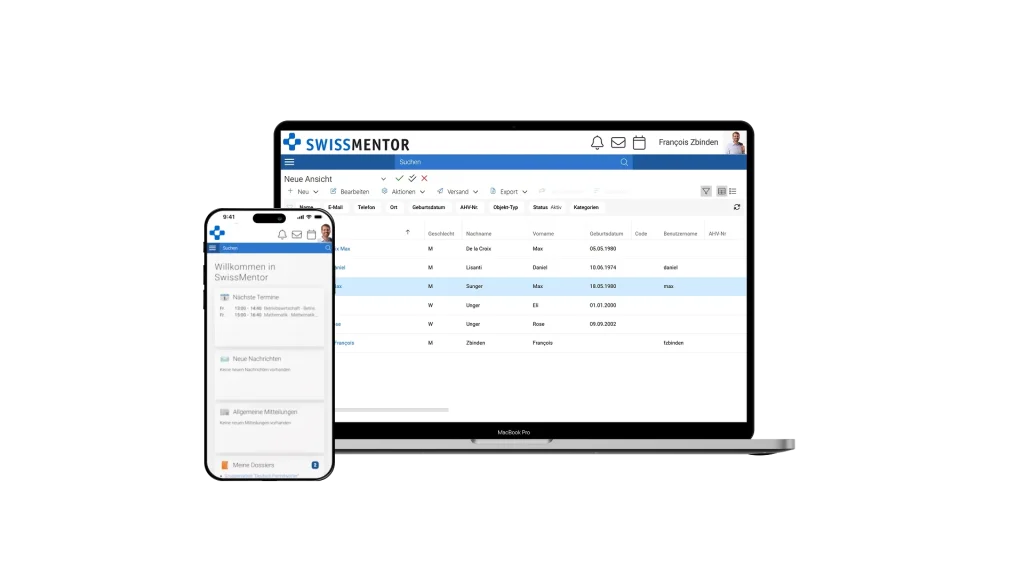
Modular LMS for Multi-Domain Learning: SwissMentor’s Enterprise-Grade Online Platform

A full-featured learning management system built to digitize education workflows, manage courses, and support online learning at scale.

Additional Info

Core Tech:
  • .NET Core
  • PostgreSQL
  • Angular
  • Docker
  • Kubernetes
  • Azure
  • SCORM
Country:

Switzerland Switzerland

Real Estate Listing Project Real Estate Listing Project
  • Backend
  • Frontend & Mobile
  • DevOps & Infrastructure
  • Third-Party Integrations

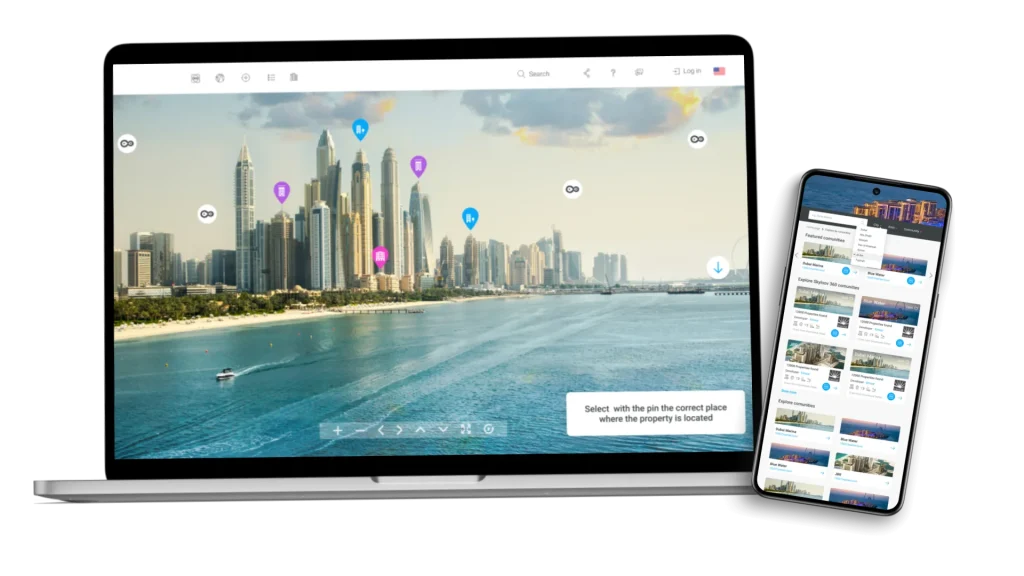
Immersive Property Portal with 360° View for Real Estate Buyers and Brokers

A real estate portal designed to streamline property search, simplify renting and buying decisions with personalized housing recommendations.

Additional Info

Core Tech:
  • NET Core
  • MS SQL
  • ELK
  • Angular
  • React Native
  • NgRx
  • RxJS
  • Docker
  • GitLab CI/CD
Country:

UAE UAE

Web 3 White-label PaaS NeoBank Web 3 White-label PaaS NeoBank
  • Web3
  • Fintech

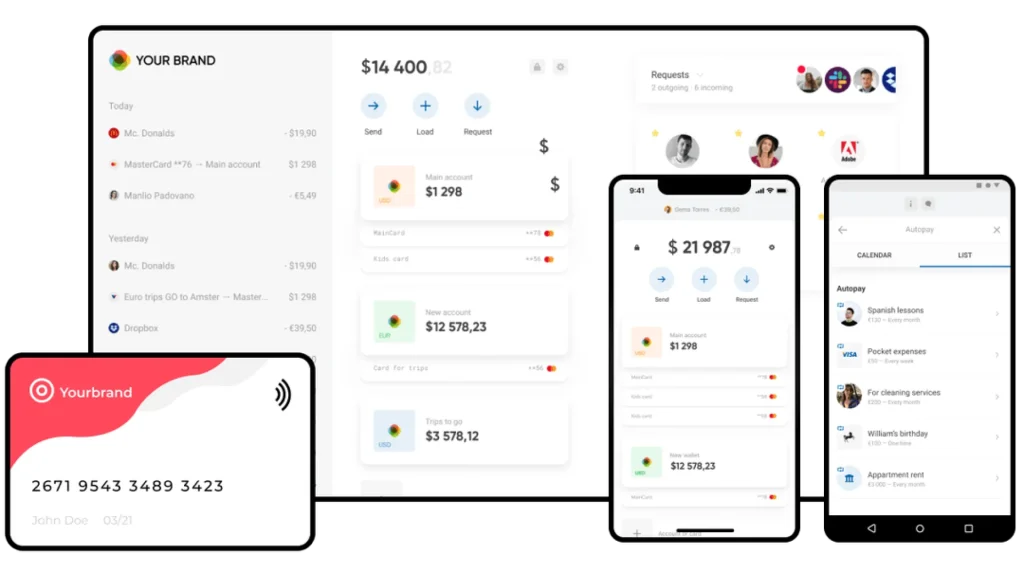
Web3 PaaS Ecosystem for Next-Gen NeoBanking, RegTech, and Secure Data Vaulting

A blockchain-powered PaaS ecosystem enabling financial providers to launch custom neobanking solutions with secure infrastructure.

Additional Info

Core Tech:
  • Blockchain
  • .NET
  • Node.js
  • AWS
  • Docker
  • PostgreSQL
  • React Native
Country:

USA USA

Trusted by

company
company
company
company
company
company
company
company
company
company
company
company
company
company
company
company
company
company
company
company
company
company
company
company
company
company
company
company
company
company
company
company
Awards & Certifications

Industry Contribution Awards & Certifications

Check Devox Software’s awards on rating and review platforms, recognized among the top software development companies, along with the certifications our team members hold.

  • Awards
  • Certifications
  • UpWork

    UpWork

  • Clutch

    Clutch

  • The Manifest

    The Manifest

  • DesignRush

    DesignRush

  • MC.today

    MC.today

  • Clutch

    Clutch

  • Clutch

    Clutch

  • AppFutura

    AppFutura

  • Clutch

    Clutch

  • GoodFirms

    GoodFirms

  • DesignRush

    DesignRush

  • UpWork

    UpWork

  • Professional Scrum Master™ II (PSM II)

    Professional Scrum Master™ II (PSM II)

  • Professional Scrum Product Owner™ I (PSPO I)

    Professional Scrum Product Owner™ I (PSPO I)

  • ITIL v.3 Foundation Certificate in IT Service Management

    ITIL v.3 Foundation Certificate in IT Service Management

  • ITSMS Auditor/Lead Auditor of ISO Standard 20000

    ITSMS Auditor/Lead Auditor of ISO Standard 20000

  • Microsoft Certified: DevOps Engineer Expert

    Microsoft Certified: DevOps Engineer Expert

  • Microsoft Certified: Azure Administrator Associate

    Microsoft Certified: Azure Administrator Associate

  • Quality Assurance ISTQB Foundation Level

    Quality Assurance ISTQB Foundation Level

  • Microsoft Certified Solution Develop (MCSD)

    Microsoft Certified Solution Develop (MCSD)

  • Java Development Certified Professional

    Java Development Certified Professional

  • JavaScript Developer Certificate – W3Schools

    JavaScript Developer Certificate – W3Schools

  • Certified Artificial Intelligence Scientist (CAIS)

    Certified Artificial Intelligence Scientist (CAIS)

  • Oracle Database SQL Certified Associate

    Oracle Database SQL Certified Associate

Testimonials

Testimonials

Carl-Fredrik Linné                                            Sweden

The solutions they’re providing is helping our business run more smoothly. We’ve been able to make quick developments with them, meeting our product vision within the timeline we set up. Listen to them because they can give strong advice about how to build good products.

Darrin Lipscomb Darrin Lipscomb
Darrin Lipscomb United States

We are a software startup and using Devox allowed us to get an MVP to market faster and less cost than trying to build and fund an R&D team initially. Communication was excellent with Devox. This is a top notch firm.

Daniel Bertuccio Daniel Bertuccio
Daniel Bertuccio Australia

Their level of understanding, detail, and work ethic was great. We had 2 designers, 2 developers, PM and QA specialist. I am extremely satisfied with the end deliverables. Devox Software was always on time during the process.

Trent Allan Trent Allan
Trent Allan Australia

We get great satisfaction working with them. They help us produce a product we’re happy with as co-founders. The feedback we got from customers was really great, too. Customers get what we do and we feel like we’re really reaching our target market.

Andy Morrey                                            United Kingdom

I’m blown up with the level of professionalism that’s been shown, as well as the welcoming nature and the social aspects. Devox Software is really on the ball technically.

Vadim Ivanenko Vadim Ivanenko
Vadim Ivanenko Switzerland

Great job! We met the deadlines and brought happiness to our customers. Communication was perfect. Quick response. No problems with anything during the project. Their experienced team and perfect communication offer the best mix of quality and rates.

Jason Leffakis Jason Leffakis
Jason Leffakis United States

The project continues to be a success. As an early-stage company, we're continuously iterating to find product success. Devox has been quick and effective at iterating alongside us. I'm happy with the team, their responsiveness, and their output.

John Boman John Boman
John Boman Sweden

We hired the Devox team for a complicated (unusual interaction) UX/UI assignment. The team managed the project well both for initial time estimates and also weekly follow-ups throughout delivery. Overall, efficient work with a nice professional team.

Tamas Pataky Tamas Pataky
Tamas Pataky Canada

Their intuition about the product and their willingness to try new approaches and show them to our team as alternatives to our set course were impressive. The Devox team makes it incredibly easy to work with, and their ability to manage our team and set expectations was outstanding.

Stan Sadokov Stan Sadokov
Stan Sadokov Estonia

Devox is a team of exepctional talent and responsible executives. All of the talent we outstaffed from the company were experts in their fields and delivered quality work. They also take full ownership to what they deliver to you. If you work with Devox you will get actual results and you can rest assured that the result will procude value.

Mark Lamb Mark Lamb
Mark Lamb United Kingdom

The work that the team has done on our project has been nothing short of incredible – it has surpassed all expectations I had and really is something I could only have dreamt of finding. Team is hard working, dedicated, personable and passionate. I have worked with people literally all over the world both in business and as freelancer, and people from Devox Software are 1 in a million.

Insights

Our Experts' Insights

Scaling Trust: How AI-Augmented Architectures Accelerate Web3 Business Adoption

AI as a Service (AIaaS): Use Cases and Emerging Trends

Intelligent Document Processing vs Traditional OCR: What Enterprises Need in 2026

FAQ

FAQ

  • What programming languages and technologies are used in developing facial recognition software?

    We use a combination of programming languages and technologies to develop state-of-the-art face detection systems, including Python for its extensive machine learning libraries (e.g., TensorFlow, PyTorch), C++ for high-performance components, and JavaScript for web-based interfaces. Our development process leverages OpenCV for image processing, alongside deep learning algorithms to train accurate and efficient facial recognition models. This technological stack ensures our software is both powerful and versatile, capable of operating across various platforms and devices.

  • How does your facial recognition software comply with GDPR and other privacy regulations?

    Compliance with GDPR and other privacy regulations is a cornerstone of our facial recognition software development. We implement strict data protection measures, including data anonymization, secure data storage, and encrypted data transmission. Our software includes features for easy consent management, allowing users to grant or withdraw consent for data processing. We conduct regular privacy impact assessments to ensure ongoing compliance and offer detailed documentation on data handling practices. Our approach prioritizes user privacy and regulatory compliance, minimizing legal risks for our clients.

  • What risk management strategies are in place for facial recognition software?

    Our risk management strategy for artificial intelligence face recognition software includes multiple layers of security and operational safeguards. We conduct thorough risk assessments to identify potential vulnerabilities in the software and its deployment environment. Our software features robust encryption, access controls, and audit logs to protect against unauthorized access and data breaches. We also offer continuous monitoring and regular updates to address new threats and ensure the software remains secure against evolving cyber threats. Our team provides comprehensive training and support to help clients manage risks effectively.

  • How do you address false positives and negatives in facial recognition?

    Minimizing false positives and negatives is critical for the effectiveness of facial recognition software. We utilize advanced machine learning algorithms and continuously train our models on diverse datasets to improve accuracy and reduce errors. Our software allows for adjustable sensitivity settings, enabling clients to find the right balance between security and convenience. We also implement multimodal biometric verification, combining facial recognition with other biometric methods (e.g., fingerprints) to enhance verification accuracy. Continuous software updates ensure our algorithms stay ahead of the curve in accuracy and reliability.

  • Can the facial recognition software operate in different lighting and environmental conditions?

    Our facial recognition systems are designed to operate effectively across a wide range of lighting and environmental conditions. We use sophisticated image enhancement technologies to improve the visibility of facial features in poor lighting or adverse weather conditions. Our algorithms are trained on datasets that include images captured in various environments to ensure robust performance. Additionally, we offer infrared and thermal imaging capabilities for low-light or nighttime conditions, ensuring consistent accuracy and security 24/7.

  • How is the data collected by facial recognition software stored and protected?

    All collected data is encrypted both in transit and at rest, using industry-standard encryption protocols. Devox stores data in secure, compliant data centers with strict access controls and regular security audits. Our software adheres to the principle of least privilege, ensuring that only authorized personnel can access sensitive data. We also provide data retention and deletion capabilities, allowing clients to manage data according to their policies and regulatory requirements.

    Teams comparing cities can also review our AI face recognition solutions in Amsterdam. Working across several markets? We also offer AI face recognition solutions in Copenhagen.

  • How does Devox Software ensure facial recognition software is responsible and ethical?

    We apply responsible AI practices throughout facial recognition development rather than treating ethics as a separate compliance step. We test model performance across relevant demographic groups to identify differences in false match and false non-match rates, validate systems against spoofing and presentation attacks, and introduce human review for uncertain or high-impact decisions.

    We also design for privacy by minimizing raw-image retention, restricting access to biometric templates, enforcing deletion policies, and using anonymous computer vision where identification is not necessary. After deployment, we monitor model performance, input quality, drift, error rates, and other operational signals. Material model changes are revalidated before release to help maintain accuracy, security, and consistent performance over time.

Book a call

Want to Achieve Your Goals? Book Your Call Now!

Contact Us

We Fix, Transform, and Skyrocket Your Software.

Tell us where your system needs help — we’ll show you how to move forward with clarity and speed. From architecture to launch — we’re your engineering partner.

Book your free consultation. We’ll help you move faster, and smarter.

Let's Discuss Your Project!

Share the details of your project – like scope or business challenges. Our team will carefully study them and then we’ll figure out the next move together.


    By sending this form I confirm that I have read and accept the Privacy Policy

    Thank You for Contacting Us!

    We appreciate you reaching out. Your message has been received, and a member of our team will get back to you within 24 hours.

    In the meantime, feel free to follow our social.


      Thank You for Subscribing!

      Welcome to the Devox Software community! We're excited to have you on board. You'll now receive the latest industry insights, company news, and exclusive updates straight to your inbox.