Building L-1 or L-2 blockchain networks from scratch according to your business requirements. We will pick the consensus mechanism, design smart contracts, work on data structures, and set up infrastructure to deliver public, private or consortium blockchain.
Blockchain Development Services

-
BUILD TOKENIZATION INFRASTRUCTURE
Develop tokenization platforms around the legal and operational structure defined for your assets. We build smart contracts, investor and asset workflows, and blockchain infrastructure that can support requirements identified by your legal team, including frameworks such as Reg D, Reg S, or MiCA -
AUTOMATE BLOCKCHAIN TRANSACTIONS
Use smart contracts to automate defined transaction rules, approvals, settlements, and recordkeeping. We design blockchain workflows that reduce manual processing, integrate with your existing systems, and provide verifiable transaction histories where distributed ledger technology is appropriate
-
BUILD FOR SECURITY AND SCALE
Develop L1, L2, or application-level blockchain infrastructure around your expected transaction volumes, security requirements, and operating model. We incorporate smart contract testing, access controls, monitoring, upgrade strategies, and scalability planning to reduce technical and operational risk as the platform grows
You're already feeling the shift: capital is becoming tokenized, users want ownership, and regulators are moving faster than your dev team.
You’re already feeling the shift: capital is becoming tokenized, users want ownership, and regulators are moving faster than your dev team. You know blockchain has the answers — transparency, decentralization, and scale — but how do you access the best blockchain development services to build it right? That’s a whole different game.
You’ve seen half-baked dApps with clunky UX, smart contracts that break under pressure, and “dev shops” that promise Web3 but deliver Web2 with a wallet connect.
Devox Software is your unfair advantage. We don’t just code — we ship blockchain products that survive in the wild. From protocol-level thinking to smart contract auditing, our blockchain development service covers everything from regulatory-fit systems to scalable infrastructure.
If you’re serious about entering this space, you can’t afford to learn by burning time and trust. This is where you stop experimenting with freelancers and start building with a partner who understands what’s at stake — user trust, investor confidence, and your product’s longevity.
Blockchain Software Development Services
Custom blockchain development can include the creation of blockchain itself, as well as a range of other decentralized applications. See what the worlds of Web3 has to offer and what can Devox develop.
-
Custom Blockchain Development
-
Smart Contract Development
Writing, testing, and deploying self-executing contracts with the terms of the agreement between buyer and seller being directly written into lines of code. Enable automated and trustworthy transactions and automate business processes, enhancing efficiency, trust, and transparency.
Read more -
dApp Development
Creating applications that run on a decentralized network. Launch an innovative, scalable dApp resistant to failure and censorship that will retain your customers and work toward more loyal customer base.
Read more -
Blockchain Integration
Integrating existing systems and applications with blockchain networks to enable seamless data sharing, transparency, and enhanced security. Streamline operations, improve data integrity, and unlock new possibilities by bridging the gap between traditional software and blockchain ecosystems.
-
Blockchain Auditing and Security
Conducting audits and assessments to identify vulnerabilities, ensuring blockchain networks’ and smart contracts’ security and integrity. Achieve confidence and peace of mind with your existing solution or upgrade your existing one to the Fort Knox level.
Read more -
Asset Tokenization
Convert a real-world asset into digital tokens on a blockchain, facilitating their easy and secure transfer and trading: you’ll receive a security token that is available for fractioning, DEX trading and further STO conduction. Devox works with ERC-20, ERC-721, ERC-1155, and other types of token standards.
Read more -
Decentralized Wallet Development
Get an individual crypto wallet for your business where your users can store and manage their cryptocurrencies, centralized or decentralized. Our team will assist you in complicated recovery solutions using graphic protocols like zero knowledge and the Shamir scheme.
Read more -
Cryptocurrency Development
Launch your own cryptocurrency to facilitate transactions, access decentralized finance (DeFi), or create utility tokens for projects and platforms. Devox will create and deploy custom digital currencies, designing the architecture, including its consensus mechanism, mining algorithms, and wallet development, to ensure secure, scalable, and efficient transactions.
Read more -
NFT Minting and Marketplace Development
We can mint unique digital non-fungible tokens that represent ownership or proof of authenticity of a wide range of items, both physical and digital. If you require a place to store, trade them or make available for your community, we can develop an universal or niche NFT marketplace as well.
Read more -
DAO Development
Experience decentralized governance for any organization type. Tap into transparent voting and tangible democracy with Web3 instruments regardless of whether you own a young startup, a medium-sized company, a large enterprise or are out of corporate sector.
Read more -
Digital Assets Development
Tap into the possibilities blockchain-based assets enable, opening up new possibilities and revenue streams for your business. Unlock governance with DAO, get better financing terms with security tokens, work toward brand image with NFTs, and do many more things Devox can help you with.
Read more -
DeFi Application Development
Revolutionize your securities, become more attractive for investors and streamline your overall financial picture with mechanics and possibilities blockchain unlocks. Devox will help craft a technical solution and stay ideally compliant.
Read more -
Blockchain & Digital Assets Consulting
Discover everything you wanted to know about the realm of Web3 and pick a viable solution for your business. We’ll review your case in detail and with precision, giving comprehensive advice on what will benefit you best.
Read more
Benefits of Custom Blockchain Development
Trust blockchain technology solutions to revolutionize the way your business runs.
-
Shorten Settlement Cycles
Use smart contracts and shared transaction records to reduce the number of manual steps between execution and settlement. For payment, tokenization, marketplace, and cross-border workflows, blockchain infrastructure can help automate predefined settlement rules and reduce delays caused by handoffs between disconnected systems.
-
Reduce Reconciliation Work
When multiple parties maintain separate records, teams spend time comparing data, resolving discrepancies, and confirming transaction status. A shared ledger can provide authorized participants with a consistent transaction history, reducing duplicate recordkeeping and the operational effort required for reconciliation.
-
Create a Verifiable Audit Trail
Record critical transactions, ownership changes, approvals, or supply-chain events in a tamper-evident history. Blockchain-based audit trails can improve traceability and make it easier to verify when an event occurred, which party initiated it, and how an asset or transaction moved through a defined workflow.
-
Enable New Liquidity and Transfer Models
Tokenization can make ownership interests easier to represent, divide, and transfer digitally where the applicable legal and market structure permits it. We build token issuance, ownership, transfer, compliance, and marketplace infrastructure around the rules defined for the asset rather than promising automatic liquidity or investor demand.
-
Automate Multi-Party Business Processes
Use smart contracts to execute predefined rules across organizations without relying on one party to maintain the entire workflow. This can support use cases such as escrow, royalty distribution, asset servicing, supply-chain events, claims processing, and conditional payments while reducing manual coordination between participants.
How We Choose a Blockchain for Your Project
Public vs Permissioned Blockchain
We start with who needs to participate in the network and who should control access. Public blockchains can work well for applications that require open participation, transferable digital assets, or public verification. Permissioned platforms such as Hyperledger Fabric may be better for enterprise workflows where participants are known and organizations need tighter control over identity, data visibility, and governance.
EVM vs Solana
For projects that benefit from Ethereum compatibility, mature tooling, and access to the broader EVM ecosystem, we may recommend Ethereum or EVM-compatible networks such as Arbitrum, Base, or Polygon. This also makes it easier to reuse Solidity contracts, libraries, wallets, and existing Web3 infrastructure.
Layer 1 vs Layer 2
Deploying directly on a Layer 1 can provide access to its native security and ecosystem, but transaction costs and throughput may become constraints for certain applications. Layer 2 networks can reduce transaction costs and increase capacity while retaining compatibility with the underlying ecosystem. We evaluate whether an L1, L2, or hybrid architecture provides the right balance of security, transaction speed, operating cost, and interoperability for the product.
Transaction and Gas Costs
Gas fees can materially affect the economics and user experience of a blockchain application. We estimate how frequently users or backend services will submit transactions, what data needs to be written on-chain, and whether some operations can remain off-chain. Where appropriate, we design batching, gas sponsorship, account abstraction, or off-chain processing strategies to reduce unnecessary on-chain costs without compromising the application's core trust requirements.
Privacy and Data Architecture
Not every piece of business data belongs on a blockchain. We determine what needs to be recorded on-chain for verification or settlement and what should remain in conventional databases, encrypted storage, or enterprise systems. For applications handling sensitive commercial or personal information, we design hybrid architectures that store only the necessary references, hashes, or transaction state on-chain.
Ecosystem and Integration Requirements
The right network also depends on what the product needs to connect with. We assess wallet support, custody providers, stablecoins, oracles, identity systems, bridges, indexers, existing smart contracts, and enterprise APIs before choosing the ecosystem. A technically fast blockchain can still be the wrong choice if the integrations your product depends on are immature or unavailable.
Security and Upgradeability
We evaluate the network's security model alongside the application-level architecture. This includes smart contract permissions, upgrade patterns, multisig controls, key management, pause mechanisms, oracle dependencies, and administrative roles. The goal is to choose an architecture that can evolve after launch without introducing unnecessary control points or making critical contracts difficult to maintain.
Expected Scale and Transaction Patterns
We model the application's real workload rather than relying only on theoretical network throughput. A tokenization platform with occasional high-value transactions has very different requirements from a consumer application processing thousands of small interactions. We use expected transaction frequency, concurrency, data volume, latency requirements, and growth assumptions to determine whether the proposed network can support both launch and future scale.
Industry Contribution Awards & Certifications
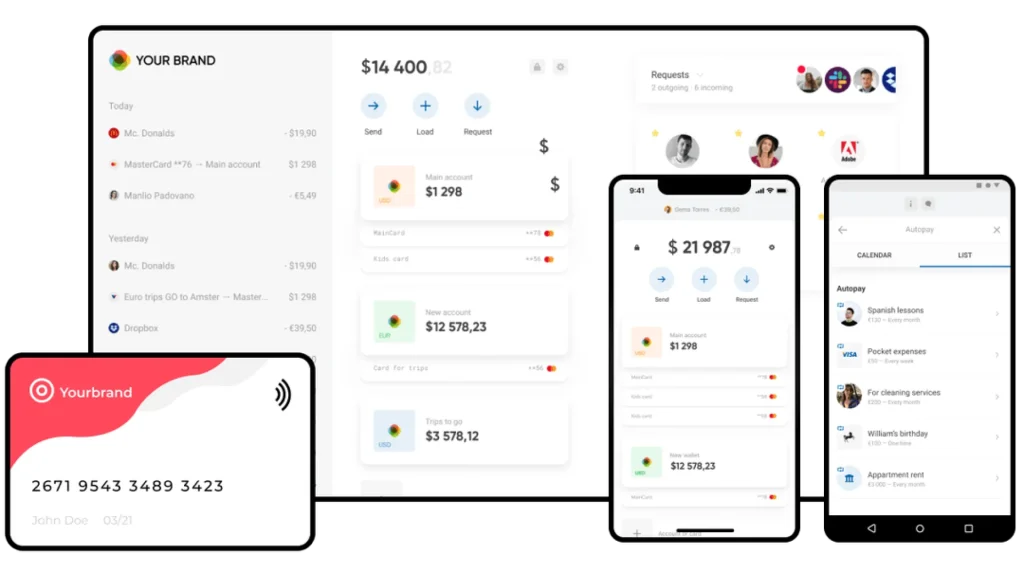
Web3 PaaS Ecosystem for Next-Gen NeoBanking, RegTech, and Secure Data Vaulting
A blockchain-powered PaaS ecosystem enabling financial providers to launch custom neobanking solutions with secure infrastructure.
Additional Info
- Blockchain
- .NET
- Node.js
- AWS
- Docker
- PostgreSQL
- React Native
USA
Juriba: Enterprise Digital Workplace Management Platform for Migration & Automation
An enterprise-grade automation platform that streamlines IT project workflows through smart dashboards.
Additional Info
- .NET 6
- MS SQL
- Redis
- Angular
- NgRx
- RxJS
- Kubernetes
- Elasticsearch
United Kingdom
Trusted by
Testimonials
Our Experts' Insights
Frequently Asked Questions
-
How do you ensure regulatory compliance in blockchain solutions, especially for financial use cases?
Regulatory compliance in blockchain development services begins long before a line of code is written. At Devox Software, we treat it as a design constraint. In financial services, where regulatory nuance governs every transaction, architecture must reflect accountability from the outset. Our teams work in lockstep with your legal and compliance advisors to map requirements into system behavior. That includes how data is handled, how identities are verified, how contracts behave under audit, and how transaction logs are maintained in tamper-proof form.
Our blockchain software development services align with the specific jurisdictions that shape your business — whether under SEC, GDPR, FINRA, or other regional mandates, and we do so with traceability built into the workflow. You get more than just a blockchain solution — you gain a foundation you can rely on when regulatory pressure increases.
-
How much does blockchain development cost and how long does it take?
The cost and timeline depend on the type of product, blockchain network, smart contract complexity, integrations, security requirements, and whether you are building an MVP or production platform. We estimate the scope after discovery and provide a phased roadmap covering architecture, development, testing, audit preparation, deployment, and post-launch support.
-
Which blockchain do you recommend for my project?
We select the network based on transaction volume, gas costs, security, privacy, interoperability, governance, and ecosystem requirements. Depending on the use case, we may recommend Ethereum or an EVM Layer 2 such as Arbitrum, Base, or Polygon, Solana, or a permissioned network such as Hyperledger Fabric. We do not default to one chain for every project.
-
Who owns the smart contracts, source code, and keys?
The client receives the agreed project IP and source code according to the contract, including repository access and technical documentation. For production systems, we also define how deployment permissions, admin roles, multisig access, and private-key custody should be handled so critical control does not remain with the development vendor.
-
Do you perform smart contract audits in-house or use third-party auditors?
Our development process includes code review, automated testing, security analysis, and tools such as Slither and Mythril. Where independent assurance is required, we prepare the contracts and documentation for a qualified third-party auditor selected with the client, then address findings before production deployment.
-
How do you approach MiCA, KYC, AML, and other regulatory requirements?
We treat regulatory requirements as architecture and workflow constraints. For EU crypto projects, this can include requirements arising under MiCA, while financial products may also require KYC/AML controls, sanctions screening, transaction monitoring, recordkeeping, and jurisdiction-specific securities requirements.
We work with your legal and compliance advisors to translate applicable rules into technical controls such as identity verification, permissions, transaction restrictions, audit logs, and reporting. Devox provides engineering implementation, not legal advice.
-
Can Devox Software integrate blockchain into our existing legacy infrastructure?
Legacy infrastructure doesn’t disqualify innovation — it defines its constraints. Most systems we work with in real-world projects are complex, distributed, and critical to daily operations. In our blockchain development outsourcing services, the opportunity lies not in replacement but in effective integration, orchestrating blockchain into legacy systems.
Our engineers engage directly with your architecture to understand the non-negotiables: where performance must remain stable, where integration is technically feasible, and where business logic can evolve safely. Blockchain enters as an augmentative force, enriching the ecosystem without burdening it. When done right, this integration allows your organization to adopt forward-looking capabilities while preserving operational continuity and technical cohesion.
-
How do you secure smart contracts in a live production environment?
Security in blockchain begins with an understanding of intent. A smart contract doesn’t tolerate ambiguity — it interprets inputs, executes logic, and commits outcomes without a safety net. This determinism demands engineering discipline. Every contract we deploy comes with a full verification trail — from initial design to post-deployment monitoring.
As part of our blockchain application development services, we validate assumptions through scenario modeling and runtime simulations, stress-test logic against atypical inputs, and examine not only what a contract is programmed to do but how it may be misunderstood. The outcome is not just functional code. It’s also a valuable asset. It is a verifiable digital agreement that stands up under real conditions, malicious inspection, and the unpredictable nature of the systems it operates within.
-
What happens after launch?
Delivery only concludes a milestone. The product enters the world, and from that point forward, it is a living system. Unlike most vendors you outsource blockchain development services to, we remain present to respond, refine, and extend. We track how the system performs under actual usage, how it responds to pressure, how users behave, and where friction emerges.
Through our blockchain app development services, we adapt your product to changing conditions, whether through regulatory shifts, increased demand, or new strategic priorities. Support is not reactive. It is measured, ongoing stewardship.
Want to Achieve Your Goals? Book Your Call Now!
We Fix, Transform, and Skyrocket Your Software.
Tell us where your system needs help — we’ll show you how to move forward with clarity and speed. From architecture to launch — we’re your engineering partner.
Book your free consultation. We’ll help you move faster, and smarter.
Let's Discuss Your Project!
Share the details of your project – like scope or business challenges. Our team will carefully study them and then we’ll figure out the next move together.
Thank You for Contacting Us!
We appreciate you reaching out. Your message has been received, and a member of our team will get back to you within 24 hours.
In the meantime, feel free to follow our social.
Thank You for Subscribing!
Welcome to the Devox Software community! We're excited to have you on board. You'll now receive the latest industry insights, company news, and exclusive updates straight to your inbox.