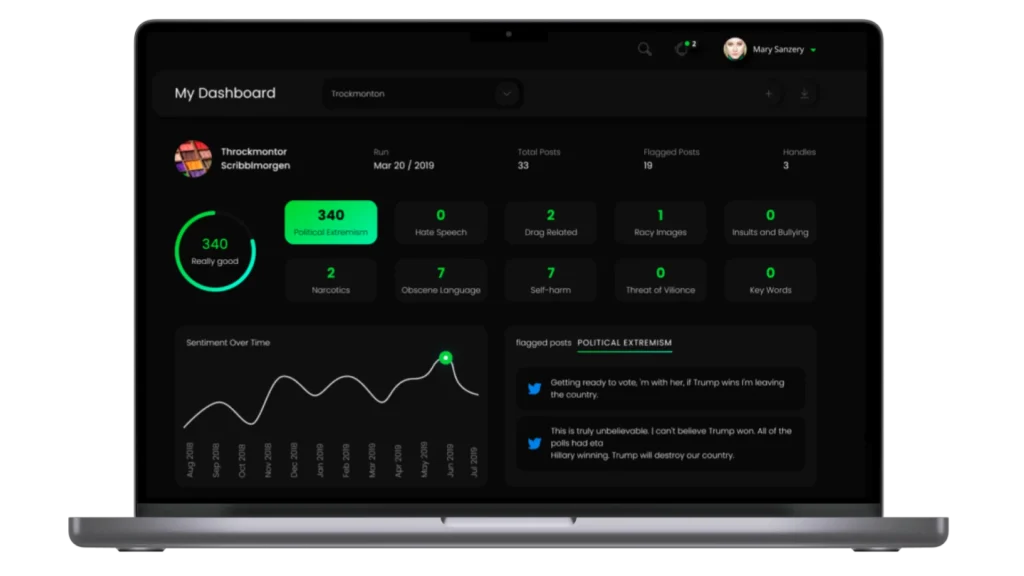
Use face, voice, or fingerprint recognition to verify users during transactions to reduce the risk of identity theft and fraud, or use a more sophisticated system if your objective is a workers’ access system.

AI Security Solutions Development Services
-
CUT ALERT NOISE
Rank SIEM alerts by risk with models trained on your own incident history. Analysts start each shift with the cases most likely to be real. -
CATCH UNKNOWN ATTACKS
Add behavior-based detection to network and endpoint monitoring. New malware variants and insider activity show up as deviations from normal patterns. -

STOP FRAUD, KEEP CUSTOMERS
Score transactions in real time on behavior and device signals. Risky ones go to review, and legitimate customers pass without extra checks.
AI Security Solutions Services We Provide
-
Biometrics Recognition Software
-
Intrusion Detection Systems (IDS)
Creating systems that monitor network traffic and system activities for suspicious behavior, alerting administrators to potential security breaches.
-
Antivirus and Anti-Malware Software
Incorporating AI into the antivirus architecture to identify and block malware, including variants that haven’t been seen before, based on behavior and heuristic analysis: artificial intelligence identifies and neutralizes a wide array of malicious software, including viruses.
-
Fraud Detection Systems
Rule-based fraud checks either let new schemes through or flag so many good transactions that customers leave. We build models that score each transaction on behavior and device data, with thresholds your fraud team controls.
-
SASE and Network Security Management
SASE frameworks often integrate AI to provide more dynamic and adaptive network access and security policies.
-
Security Information and Event Management (SIEM)
Your SIEM collects everything, and analysts spend most of the shift closing false alarms. We add models that group related events, score them by risk and attach the context an analyst needs to decide.
Benefits of Implementing AI Security Solutions
-
Coverage Outside SOC Hours
AI-based monitoring can run continuously, including outside your security team’s working hours. It continuously analyzes data flows to identify suspicious activities.
-
Detection of New Attack Patterns
AI, with its advanced algorithms, can evolve and learn to recognize new types of attacks.
-
Fewer False Alarms
AI can distinguish between genuine threats and benign anomalies more accurately than traditional systems.
-
Fewer Blocked Customers
Transaction scoring uses behavior and device data along with fixed rules. More legitimate payments pass automatically, and your fraud team reviews the rest.
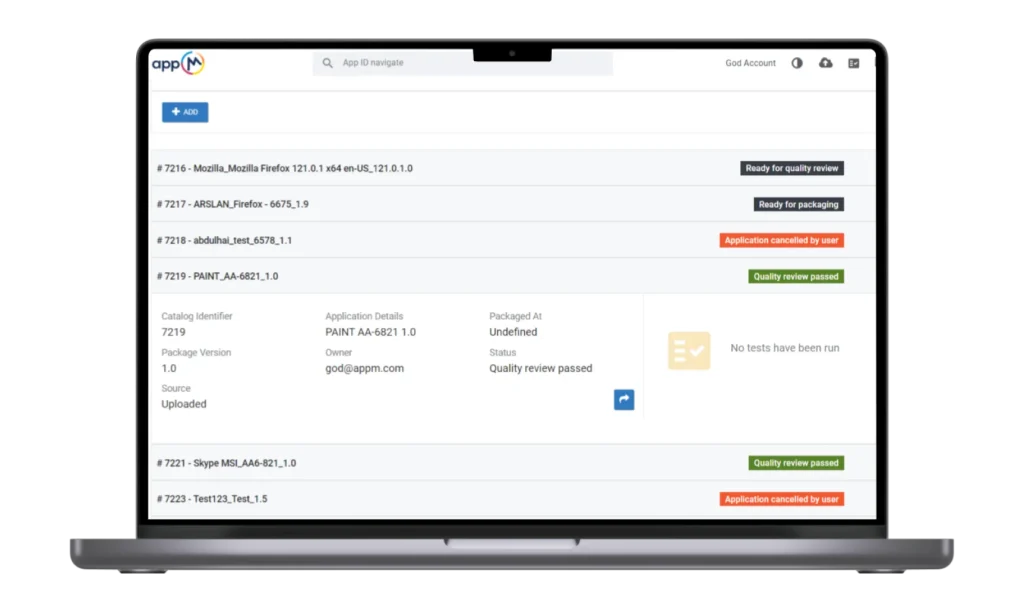
Juriba: Enterprise Digital Workplace Management Platform for Migration & Automation
An enterprise-grade automation platform that streamlines IT project workflows through smart dashboards.
Additional Info
- .NET 6
- MS SQL
- Redis
- Angular
- NgRx
- RxJS
- Kubernetes
- Elasticsearch
United Kingdom
Trusted by
Industry Contribution Awards & Certifications
Testimonials
FAQ
-
Can you work with our existing SIEM and EDR?
Yes. The models read events through your SIEM’s API and write scores and context back into it, so analysts keep working in the tools they already use. We replace a component only if your team decides to.
-
How do you reduce false positives in our SIEM?
We start with your alert history and the outcome of each alert: closed as benign, escalated, or confirmed as an incident. The model learns which patterns in your environment usually turn out harmless and ranks new alerts by risk. Your analysts still see every alert, but the queue starts with the ones that need attention.
-
Where does our security data go during model training?
Training runs in your cloud account or on your servers, depending on your policy. Logs and incident data stay inside your environment, and we agree in advance which data our engineers can access and how.
-
Who makes the final decision: the model or our team?
Your team sets the rules. The model scores events and transactions, and the thresholds decide what happens next: a low-risk event closes automatically, a high-risk one goes to an analyst. You can change those thresholds at any time.
-
How do we know the model still works after attackers change tactics?
We track detection quality on new incidents every week and compare it with the baseline from launch. When accuracy drops, the model is retrained on recent data, and the new version goes live after your team reviews the results.
-
How much historical data do we need to start?
It depends on the use case. For alert triage, a few months of SIEM data with incident outcomes is usually enough for a first model. For fraud detection, you need labeled transactions, including confirmed fraud cases. In a two-week discovery, we check your data and tell you whether it can support the project.
Want to Achieve Your Goals? Book Your Call Now!
We Fix, Transform, and Skyrocket Your Software.
Tell us where your system needs help — we’ll show you how to move forward with clarity and speed. From architecture to launch — we’re your engineering partner.
Book your free consultation. We’ll help you move faster, and smarter.
Let's Discuss Your Project!
Share the details of your project – like scope or business challenges. Our team will carefully study them and then we’ll figure out the next move together.
Thank You for Contacting Us!
We appreciate you reaching out. Your message has been received, and a member of our team will get back to you within 24 hours.
In the meantime, feel free to follow our social.
Thank You for Subscribing!
Welcome to the Devox Software community! We're excited to have you on board. You'll now receive the latest industry insights, company news, and exclusive updates straight to your inbox.