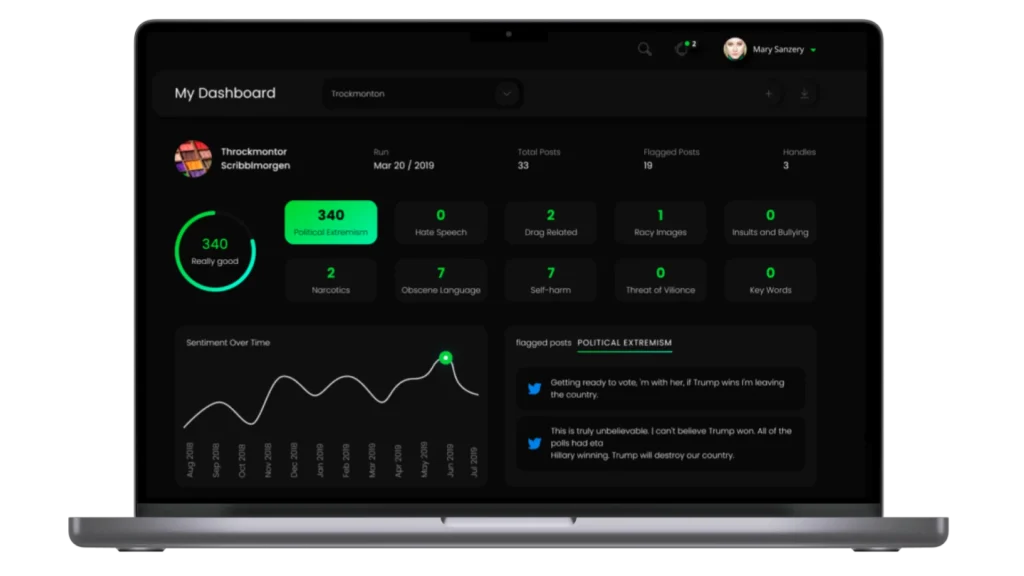
Build AI layers on top of LMS platforms that track engagement signals and translate them into early-intervention alerts for instructors. Our models use gradient-boosted and random-forest classifiers trained on longitudinal engagement data. Alerts route directly into the gradebook or messaging system and connect to agentic AI for administrative automation to auto-generate outreach tasks for advisors. Thresholds are configurable per cohort, since a “struggling” signal in a first-year seminar looks different from one in a capstone course.
AI Solutions for Education Development
AI Solutions for Education Services We Provide
There’s a wide range of various AI tools used in education. Devox Software can develop them for you as a custom solution, fully tailoring the user experience to your requirements and your institution’s needs to make both teachers and students happy.
-
Learning Management Systems (LMS) with AI Capabilities
-
Automated Grading Tools
We build grading pipelines combining fine-tuned NLP scoring models with rubric-embedding comparisons, so free-text and essay responses get scored against the same criteria a human grader would apply. AI-assisted feedback returns to students roughly 10 times faster than manual grading turnaround, and institutions using AI grading tools report teachers saving an average of 5.9 hours per week. Human review stays in the loop: educators approve or override any AI-generated score before it posts.
-
Content Generation Tools
Drawing on our generative AI for content generation tools development services, we build systems that draft quiz banks, lecture outlines, and study guides from your existing curriculum documents so outputs stay tied to your approved source material rather than the model’s general training data. Content generation is one of the routine tasks AI absorbs first, contributing to the same time savings educators report elsewhere in their AI workflows. Every generated item ships with a citation back to its source section for instructor review before publication, and drafts are versioned so a curriculum lead can compare AI-generated output against the previous term’s materials before approving a swap.
-
AI-Powered Analytics and Reporting
Our analytics layer applies clustering and pattern-recognition models to interaction data to surface which content and teaching approaches are actually working. AI-driven active-learning formats built on these insights generate roughly 10 times more measured engagement than passive, lecture-only formats. Dashboards translate that analysis into instructor-facing reports rather than raw data exports, so curriculum teams can act on patterns without needing a data scientist to interpret the output.
Read more -
Intelligent Library Services
We build retrieval-augmented (RAG) search over your institution’s library and content repository, embedding documents into a vector index so students and faculty can query in natural language and get passage-level answers. Layered with a personalization model, the same infrastructure recommends the next resource based on what a learner has already used. Automated tagging and metadata extraction also cut the manual cataloging work library staff previously did by hand, and the same vector index powers plain-language search across scanned archives that were never full-text searchable before.
-
Plagiarism Detection Software
Our plagiarism and AI-content detection pipelines combine stylometric features with transformer-based classifiers, cross-validated against human-reviewed writing samples rather than a single detection heuristic. We tune detection thresholds per institution to balance false positives against catching genuine violations, and every flagged submission surfaces the specific passages and confidence score driving the flag. Detection models are retrained on a rolling basis as new generative-AI writing tools appear, since a static classifier trained on last year’s models degrades against this year’s.
-
Adaptive Learning Platforms
We build adaptive learning software development on mastery-based models that adjust content difficulty and pacing in real time based on what each learner has actually demonstrated, not just what they’ve clicked through. A June 2025 study found students using AI-adaptive tutoring scored 0.73-1.3 standard deviations higher than peers in traditional instruction while spending less time on the task. These platforms pair naturally with our AI tutoring platform development work, since the same mastery model that adjusts difficulty can also drive a conversational tutor’s next question.
Benefits of AI Solutions for Education
Using AI in education will not just modernize your shool’s image but make it easier for each actor involved, be it a student, a teacher, or an administrative role.
-
Tailor Your Learning Journey
Let AI carve out a unique learning path tailored to your students’ pace, style, and preferences. This bespoke approach allows them to master subjects at their own rhythm, in the most fitting way, potentially amplifying their learning outcomes and overall satisfaction.
-
Improve Grading Systems and Innovate Assessment Methods
With AI, grading can become more consistent and unbiased. For objective assessments, AI can grade assignments instantly, providing immediate feedback to students and identifying common areas where students struggle. It can also facilitate more innovative assessment methods, going beyond traditional tests to assess students through simulations, interactive activities, and real-world problem-solving tasks.
-
Make Education Inclusive
Make education more accessible to students with disabilities through tools like speech-to-text, text-to-speech, and personalized learning accommodations. Artificial intelligence will help you level the playing field for all learners, opening your doors to more students and raising your school’s brand.
-
Tackle Administration Burden
Let your teachers focus more on teaching and less on bureaucracy: automating administrative tasks such as enrollment, scheduling, and even grading with AI can save both educators and institutions significant time and resources. Of course, better precision and reduced manual error are also a deriving perk.
-
Boost Engagement and Motivation
By incorporating AI-driven games, simulations, and interactive content, education can become more engaging for students. These tools can increase motivation and enhance the learning experience, making education both fun and effective.
-
Data-Driven Insights
With AI's ability to analyze vast amounts of data from student interactions, it can guide educators and institutions into students’ learning patterns, performance, and areas needing improvement. They can thus reach better teaching strategies, curriculum design, and resource allocation.
-
Scale Easy
Scale your educational offering to reach a wider audience without diminishing the quality of education. Online platforms, MOOCs (Massive Open Online Courses), and virtual classrooms can serve thousands of students simultaneously, breaking geographical barriers and contributing to global education accessibility.
Key Features of AI Solutions for Education
Machine Learning Algorithms
The backbone of AI-based education software, these algorithms allow the system to learn from data, adapt to new information, and make predictions or decisions based on patterns. AI and machine learning in education will be applied in adaptive learning platforms, predictive analytics in LMS, automated grading tools.
Natural Language Processing (NLP)
NLP enables the software to understand, interpret, and generate human language, facilitating interactions between computers and humans. It’s used in AI chatbot in higher education for student support, language learning applications, automated grading of text-based responses.
Data Analytics Engine
This component processes and analyzes large volumes of data to extract meaningful insights about learning patterns, effectiveness of teaching methods, and student performance. This engine is responsible for AI-powered analytics and reporting, personalized content recommendations, early detection of learning difficulties.
Content Management System (CMS)
A CMS is essential for creating, managing, and customizing digital content, ensuring that educational material is accessible and up-to-date. It’s applied in content generation tools, LMS with AI capabilities, intelligent library services.
Adaptive Learning Engine
Specifically designed for educational platforms, this engine uses machine learning to adjust learning paths, content, and assessments based on individual learner’s progress and feedback. It shapes the adaptive learning platforms and personalized learning experiences in LMS.
Database Management System
This system efficiently stores and retrieves data, including student records, educational content, and interaction logs, ensuring data integrity and security. Used in LMS, adaptive learning platforms, and plagiarism detection software.
Integration APIs
Application Programming Interfaces (APIs) allow the AI-based education software to integrate with existing systems and third-party services, enhancing functionality and interoperability. They are responsible for integrating LMS with institutional databases, external content libraries, and other educational technology tools.
Feedback and Improvement Mechanisms
These are systems designed to collect user feedback and monitor software performance to identify areas for enhancement and ensure continuous improvement. They function in user feedback in adaptive learning platforms, error reporting in automated grading tools, content updates in CMS.
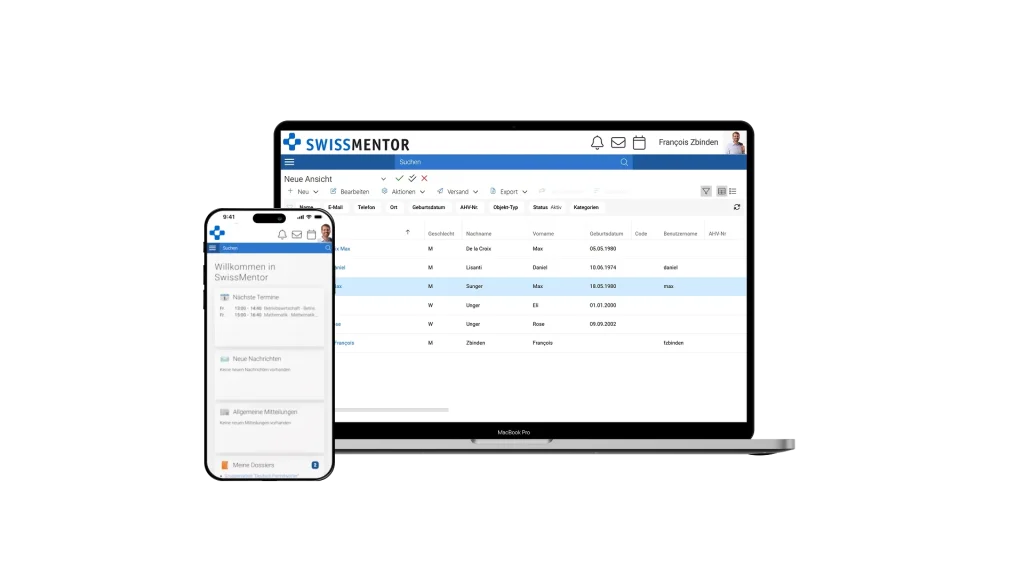
Modular LMS for Multi-Domain Learning: SwissMentor’s Enterprise-Grade Online Platform
A full-featured learning management system built to digitize education workflows, manage courses, and support online learning at scale.
Additional Info
- .NET Core
- PostgreSQL
- Angular
- Docker
- Kubernetes
- Azure
- SCORM
Switzerland

Joynd: Unified Integration Platform for HR Software Providers
A robust B2B platform that connects companies and HR software providers through federated identity, intelligent workflows, and secure data integrations.
Additional Info
- Angular
- NgRx
- RxJS
- Tailwind CSS
- .NET Core
- PostgreSQL
- AWS
- Docker
USA
Trusted by
Industry Contribution Awards & Certifications
Testimonials
Our Experts' Insights
FAQ
-
How does AI personalize learning for students?
AI personalizes learning by analyzing students’ performance data, learning styles, and preferences to tailor content, suggest learning paths, and adjust the difficulty of tasks in real-time. This approach ensures that each student faces challenges that are neither too easy nor too difficult, optimizing their learning pace and enhancing understanding. By continuously monitoring student interactions, AI identifies areas where a student might struggle and provides targeted resources, ensuring personalized support that caters to individual learning needs.
-
Can AI improve student engagement in online courses?
Yes, AI significantly enhances student engagement in online courses by introducing interactive elements, personalized learning experiences, and instant feedback mechanisms. For instance, AI-driven simulations and gamified learning modules make education more interactive, allowing students to apply concepts in virtual environments. Moreover, AI chatbot in education can offer 24/7 support, answering questions and guiding students through difficult topics, which keeps them motivated and reduces feelings of isolation in online learning environments.
-
What impact does AI have on the workload of educators?
AI reduces the workload of educators by automating administrative tasks, grading, and providing personalized feedback to students. Educators can utilize AI to quickly identify patterns in student performance, allowing them to intervene effectively and dedicate more time to personalized instruction. Furthermore, AI-driven content generation tools can assist in creating lecture materials, quizzes, and assignments, enabling teachers to focus on enhancing the learning experience and engaging directly with students.
-
How does AI facilitate better results for students?
AI facilitates better student results by providing a customized learning experience that adapts to each student’s unique needs, ensuring that they engage with material at the most appropriate level of challenge. By leveraging AI for predictive analytics, educators can identify students at risk of falling behind early and provide timely interventions. Additionally, instant feedback on assignments and quizzes allows students to learn from their mistakes in real-time, leading to improved understanding and retention of course material.
-
How can AI enhance the research capabilities of universities?
AI tools in education improve the research capabilities of universities by streamlining data analysis, offering new insights through deep learning algorithms, and managing large datasets more efficiently. For example, AI can process and analyze research data much faster than traditional methods, uncovering patterns and correlations that might not be immediately apparent. Additionally, AI-driven tools can assist in literature review processes by quickly scanning and summarizing relevant studies, allowing researchers to focus on innovation and discovery.
-
What role does AI play in improving the accessibility of education?
AI improves the accessibility of education by offering tools that support students with diverse learning needs and backgrounds. For instance, speech-to-text and text-to-speech functionalities can aid students with visual impairments or learning disabilities, while real-time translation services break down language barriers for non-native speakers. AI-driven adaptive learning platforms can adjust content presentation to suit different learning styles, ensuring that all students have equal opportunities to succeed.
-
How does AI contribute to the development of soft skills in students?
Use of AI in education contributes to the development of soft skills such as critical thinking, problem-solving, and teamwork through interactive and collaborative learning environments. For example, AI-driven simulations present real-world scenarios where students must apply knowledge, make decisions, and reflect on outcomes, thereby enhancing critical thinking and problem-solving abilities. Moreover, AI-facilitated group projects and discussions promote teamwork and communication skills, preparing students for the collaborative nature of the modern workplace.
-
In what ways does AI impact the scalability of educational programs?
AI impacts the scalability of educational programs by enabling institutions to offer personalized and high-quality education to a larger number of students without a corresponding increase in resources or faculty. Online courses powered by AI can adapt to individual learning needs, providing personalized guidance and feedback at scale. This not only makes education more accessible to a global audience but also allows institutions to expand their offerings efficiently, catering to diverse learner populations across different regions and disciplines.
Want to Achieve Your Goals? Book Your Call Now!
We Fix, Transform, and Skyrocket Your Software.
Tell us where your system needs help — we’ll show you how to move forward with clarity and speed. From architecture to launch — we’re your engineering partner.
Book your free consultation. We’ll help you move faster, and smarter.
Let's Discuss Your Project!
Share the details of your project – like scope or business challenges. Our team will carefully study them and then we’ll figure out the next move together.
Thank You for Contacting Us!
We appreciate you reaching out. Your message has been received, and a member of our team will get back to you within 24 hours.
In the meantime, feel free to follow our social.
Thank You for Subscribing!
Welcome to the Devox Software community! We're excited to have you on board. You'll now receive the latest industry insights, company news, and exclusive updates straight to your inbox.