Hire React.js Developers

Hire React.js Developers

Add pre-vetted React developers to your team. Every candidate passes five checks: an HR interview, a technical interview, a test task, a live coding session and a managerial interview. You get a shortlist within 7 days and make the final hiring decision yourself.

Arrange a Call
What We Offer

What Our React Developers Work On

  • React Upgrades and Migration

    Many production apps still run on React 16 or 17, class components, and Create React App, which the React team deprecated in 2025. We upgrade them to the current React in stages, and your team keeps shipping while the work is in progress.

    • Upgrade Assessment. We inventory class components, remove APIs such as ReactDOM.render, string refs, and legacy context, and identify the libraries that block the upgrade. You get a plan with effort per module and a list of dependencies to replace.
    • Create React App to Vite or Next.js. We move the build off react-scripts to Vite for single-page apps, or to Next.js where you need server rendering. The dev server starts in seconds, and the toolchain is supported again.
    • Class Components to Hooks. Lifecycle methods and higher-order components are rewritten as function components and custom hooks, starting with the code your team changes most often. The codebase gets smaller and easier to test.
    • State Management Cleanup. Hand-written Redux reducers and thunks move to Redux Toolkit, and server data moves to TanStack Query. Most of the boilerplate goes away, and caching stops being custom code.
    • Enzyme to React Testing Library. Enzyme has no official adapter for React 18 and later, so we rewrite those tests with React Testing Library. The new tests check what users see rather than component internals, so they survive refactoring.

  • React Web Application Development

    Our developers build customer portals, admin panels, and B2B SaaS front ends with React, TypeScript and a deliberately small set of proven libraries. They connect the UI to your existing APIs, whether the back end runs on .NET, Node.js, Java, Python, or PHP.

    • Customer Portals. Self-service areas for accounts, orders, invoices, and support requests. Customers handle routine tasks without contacting your team.
    • Data-Heavy Dashboards. Tables with server-side sorting, filtering, and pagination built on TanStack Table, plus charts and bulk actions. Operations teams work with tens of thousands of records without exporting to Excel.
    • Complex Forms. Multi-step forms, conditional fields, and validation with React Hook Form and Zod, using the same schema on the client and the server. Users get instant feedback, and invalid data never reaches the API.
    • Typed API Layer. TypeScript clients generated from your OpenAPI or GraphQL schema, with TanStack Query handling caching, retries, and optimistic updates. An API change breaks the build, not production.
    • Authentication and Role-Based UI. Sign in through your identity provider via OIDC or SAML, with routes and actions gated by role and feature flags. The UI mirrors your server-side permissions from one place instead of scattered checks across components.
  • Next.js and Server-Side Rendering

    For public pages and content-heavy products, we build with Next.js and choose the rendering mode per route: static, incrementally regenerated, or server-rendered on each request.

    • App Router and Server Components. Data fetching moves to the server, and only interactive parts of the page ship JavaScript to the browser. Pages load faster, and API keys stay off the client.
    • Pages Router to App Router Migration. Both routers run side by side in one app, so we migrate route by route instead of in one release. Your team keeps shipping features throughout.
    • Caching and Revalidation. We set caching rules per route and per data source, with on-demand revalidation when content changes. Editors see updates within seconds, and your origin isn’t hit on every request.
    • SEO Foundation. Metadata, structured data, canonical URLs, sitemaps, and Open Graph images generated from your content. Search engines index pages correctly from the first release.
    • Headless CMS and Hosting. Next.js connected to Contentful, Sanity, Strapi, or Storyblok with draft preview, deployed to Vercel or self-hosted on AWS or your own Kubernetes. Self-hosting keeps you free of platform lock-in when pricing or compliance requires it.
  • Legacy Front-End Migration to React

    For products built on AngularJS, jQuery, Backbone, or server-rendered templates, we replace the front end with React one section at a time. Old and new code run side by side until the move is complete.

    • Front-End Inventory. We map every page, script, and dependency in the old front end and rank them by traffic and risk. You see what to migrate first and what you can retire.
    • React Islands in Legacy Pages. We mount React components inside existing pages, so new features ship in React while the old shell keeps working. Nothing waits for the full rewrite.
    • Route-by-Route Migration. Pages move to React one route at a time behind a shared navigation and session. Users see one product throughout the move.
    • Micro-Frontends Where They Pay Off. When several teams own separate areas of the product, we split the front end with Module Federation so each team releases independently. For a single team, we usually advise against it, because the extra complexity costs more than it saves.
    • Visual Regression Testing. Automated screenshot comparisons run on every change between old and new pages. Layout and behavior differences are caught before release.
  • Design Systems and Component Libraries

    We turn your Figma design system into a library of typed, documented React components. Product teams build screens from the same tested parts, and a design change reaches every product from one place.

    • Design Tokens. Colors, spacing, typography, and themes exported from Figma and converted into tokens and CSS variables. Rebranding or adding dark mode becomes a change in one file.
    • Components on Headless Primitives. Components built on Radix UI or React Aria, which handle focus, keyboard, and ARIA behavior. Your team styles the components instead of reinventing dropdowns and dialogs.
    • Storybook Documentation. Every component documented with live examples, props and usage rules, plus interaction and visual tests. Designers and developers work from the same reference.
    • Accessibility to WCAG 2.2 AA. Keyboard navigation, focus management, screen reader labels, and contrast are checked for each component. Every screen built from the library inherits compliance.
    • Versioned Package Publishing. The library is published as a private npm package with semantic versioning, changelogs, and codemods for breaking changes. Product teams upgrade on their own schedule without manual rewrites.
  • Performance Optimization

    We profile the app with React DevTools and real-user data, measured against Core Web Vitals. Special attention goes to Interaction to Next Paint (INP), which replaced FID in 2024 and is often the weakest metric in client-heavy React apps.

    • Performance Audit. Lab tests and field data are combined into a ranked list of bottlenecks, each with its expected impact. You fix what matters first instead of guessing.
    • Re-render Fixes. We find components that re-render without reason and fix them through state colocation, memoization where measurements justify it, or React Compiler where the codebase follows the Rules of React. Typing, scrolling, and filtering stay smooth.
    • Bundle and Hydration Cost. Code is split by route with React.lazy and dynamic imports, heavy dependencies are replaced, and static parts move to Server Components. Users download and hydrate less JavaScript on first load.
    • Responsive Interactions. Heavy updates run through useTransition and useDeferredValue, and long lists are virtualized. Input responds immediately while results render in the background.
    • Performance Budgets in CI. Bundle size and Lighthouse thresholds are checked on every pull request. Regressions are caught before they reach production.
  • React Code Audit

    A senior React developer reviews your codebase for architecture, state management, security, and test coverage. You get a prioritized list of findings with recommended fixes, which your team or ours can then address.

    • Architecture Review. We assess folder structure, component boundaries, and coupling between features. You see where the codebase resists change and why.
    • State and Effects Review. We look for useEffect used to sync or derive state, race conditions in data fetching, and server data duplicated in global stores. These patterns cause most stale-data bugs and unnecessary renders in React apps.
    • Security Review. We check for unsanitized dangerouslySetInnerHTML, tokens kept in localStorage, secrets exposed through public environment variables, and vulnerable dependencies. Each finding comes with a severity rating and a fix.
    • Test Coverage Analysis. We measure what the tests cover and which critical flows have no tests at all. You know where a change is likely to break something unnoticed.
    • Remediation Roadmap. All findings are combined into a prioritized plan with effort estimates. Your team or ours can start on it the next sprint.
  • Testing and Ongoing Support

    Developers cover business logic and components with Vitest or Jest and React Testing Library, and critical flows with Playwright. After launch, the same team handles bug fixes, dependency updates, and new features.

    • Unit and Component Tests. Components are tested the way users interact with them, with API calls mocked at the network level through MSW. Tests stay valid when internals change.
    • End-to-End Tests. Critical flows such as sign-up, checkout, and payments are automated with Playwright across browsers. Releases are checked the way customers actually use the product.
    • CI Quality Gates. ESLint with React Hooks rules, strict TypeScript checks, and tests run on every pull request. Broken code is blocked before merge.
    • Dependency and Security Updates. React, Next.js and third-party packages are updated on a regular schedule, and vulnerabilities are patched as advisories come out. The app stays on supported versions.
    • Feature Development. The developers who already know your codebase build new features and improvements. You don’t onboard a new team for every change.
How To Hire React JS Developers

How To Hire React JS Developers With Devox Software?

01.

01. Discovery

We agree on the stack, seniority, time zone overlap and how the developer will fit into your team. You approve the role profile before the search starts.

02.

02. Candidate Shortlist

We search our talent pool for matching candidates. Each one passes an HR interview, a technical interview, a test task, a live coding session and a managerial interview.

03.

03. Your Interviews

You receive profiles of the shortlisted candidates with our interview notes, run your own interviews and make the final decision.

04.

04. Project start

The developer signs your NDA, gets access to your tools and joins your sprint. If someone doesn’t fit, we replace them at no cost.

  • 01. Discovery

  • 02. Candidate Shortlist

  • 03. Your Interviews

  • 04. Project start

Integration Tools and Resources

React Tech Stacks Our Developers Work With

Our React developers work with the back ends and data stores your product already runs on. These are the combinations we cover most often.

  • React + Python (Django)

    Django provides the REST API, authentication and admin panel, while React handles the user interface. The combination suits data-heavy products and teams that already work in Python.

  • React + Node

    With JavaScript or TypeScript on both the front end and the back end, one team works in a single language and shares types and validation logic. Node’s event-driven model handles many concurrent connections efficiently.

  • React + PHP

    PHP and Laravel offer a mature back end with a large ecosystem of libraries. React on top modernizes the interface without rewriting the server side.

  • React + Firebase

    Firebase is Google’s app development platform with ready-made authentication, database and hosting. It removes most back-end boilerplate, which makes React + Firebase a fast route to an MVP.

  • React + ExpressJS

    Express is a lightweight Node.js framework for building APIs. Like React, it runs on JavaScript, so the two combine easily, and its middleware model simplifies third-party integrations.

  • React + Java (Spring Boot)

    Spring Boot gives React apps a mature, strongly typed back end with built-in security, data access and REST support. It suits enterprise products that already run on the JVM.

  • React + ASP.NET Core

    ASP.NET Core is Microsoft’s open-source, cross-platform framework for high-performance APIs. Paired with React, it fits companies with existing .NET systems and Azure infrastructure.

  • React + MongoDB

    MongoDB stores flexible, document-based data, so the schema can evolve without downtime. It works well for products whose data model is still changing.

How We Can Work With Your Team

Choose the Setup That Fits Your React Project

01

Discovery Sprint

We help you work out what the project really needs.

If the scope is still taking shape, we start by reviewing the product and the front-end work. We help define the priorities and the skills you need before you add React developers to the team.

Good fit when: You need to clarify the front-end scope before hiring.

Read more
02

Project-Based Delivery

You give us the project. We run the delivery.

We put together the React team and take the work from planning through release. You stay close to the product decisions while we handle the day-to-day development and delivery.

Good fit when: You want a complete React project delivered rather than hiring developers one by one.

Read more
03

Dedicated Team

You set the priorities. We build the team around them.

We give you a stable React team that stays with the product over time. They learn the codebase and how your team works, so they can keep moving as the roadmap changes.

Good fit when: You have ongoing React work and need a team that can stay with the product.

Read more
04

Build-Operate-Transfer (BOT)

We build the team. You take it in-house later.

We hire and manage the React developers while they learn your product and development process. Once the team is settled and performing well, it moves in-house.

Good fit when: You want your own React team but do not want to build it from scratch.

Read more
05

Staff Augmentation

You lead. We add the React developers you need.

We add experienced React developers to your existing team. They work within your existing codebase and follow your process, while you keep full control.

Good fit when: Your team already has the direction and needs more React capacity or a specific front-end skill.

Read more
Case Studies

Our Latest Works

View All Case Studies
Function4 Function4
  • website
  • management platform

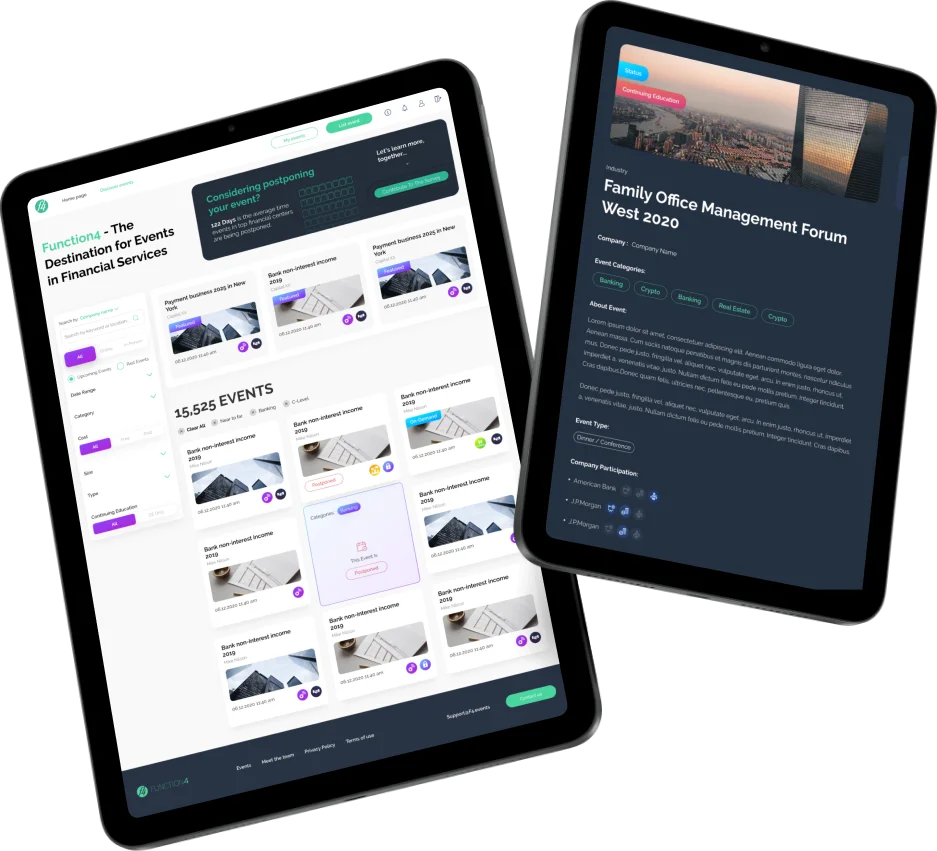
Function4: Event Management Platform for the Financial Services Industry

A feature-rich system for managing tickets, devices, invites, and communication at scale.

Additional Info

Core Tech:
  • Vue js
  • GSAP
  • Ruby
  • Azure
Country:

USA USA

Real Estate Listing Project Real Estate Listing Project
  • Backend
  • Frontend & Mobile
  • DevOps & Infrastructure
  • Third-Party Integrations

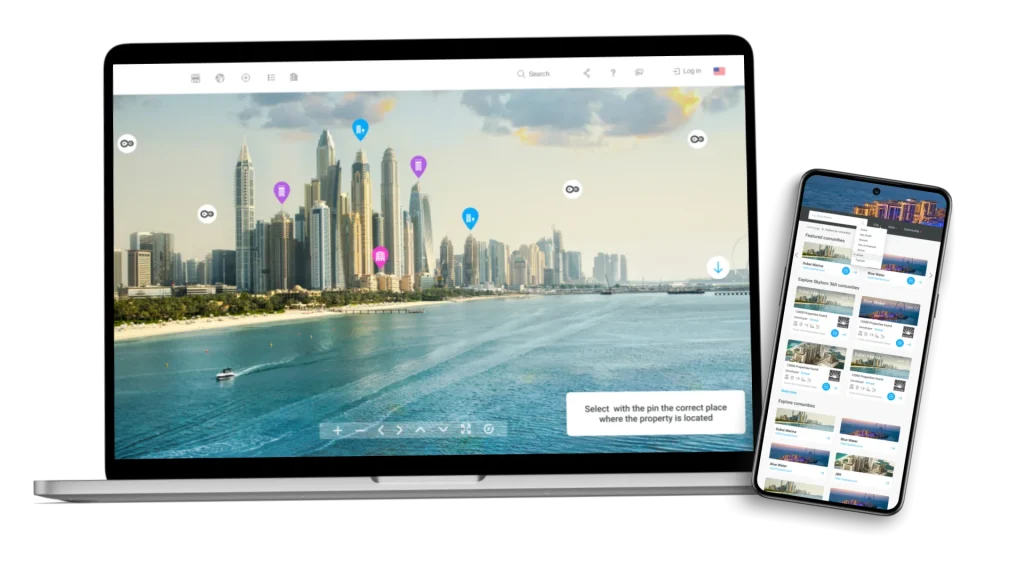
Immersive Property Portal with 360° View for Real Estate Buyers and Brokers

A real estate portal designed to streamline property search, simplify renting and buying decisions with personalized housing recommendations.

Additional Info

Core Tech:
  • NET Core
  • MS SQL
  • ELK
  • Angular
  • React Native
  • NgRx
  • RxJS
  • Docker
  • GitLab CI/CD
Country:

UAE UAE

Sport Info Solution Sport Info Solution
  • Backend
  • Frontend
  • Cloud
  • Metrics & Data

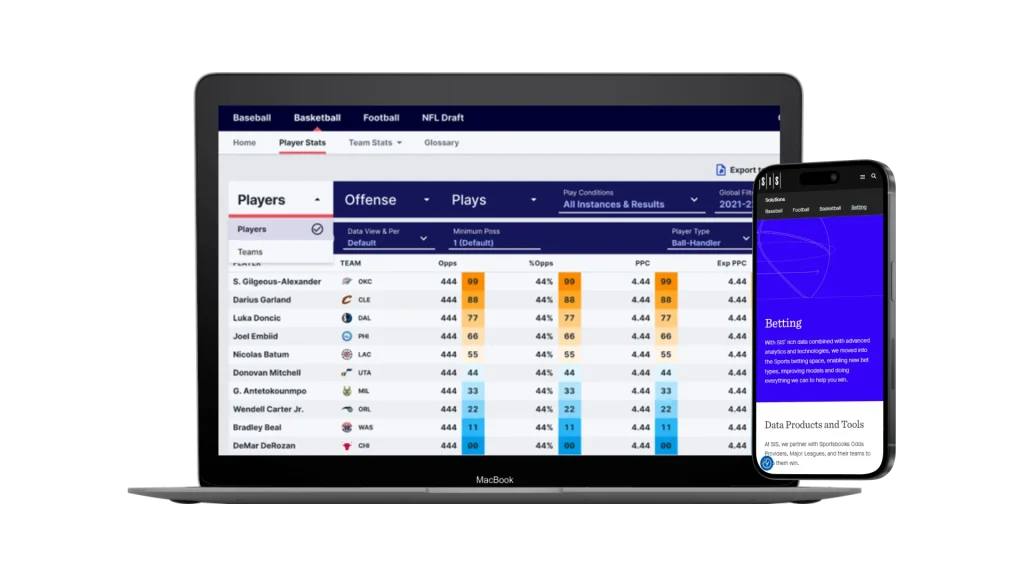
Sports Info Solutions: Real-Time Sports Data Platform for Betting, Leagues & Fans

A high-performance analytics system for sports organizations to optimize team performance in real time.

Additional Info

Core Tech:
  • .NET Core​
  • MS SQL
  • ELK​
  • Vue.js
  • AWS​
  • Docker
  • DataDog​
  • R
Country:

USA USA

Trusted by

company
company
company
company
company
company
company
company
company
company
company
company
company
company
company
company
company
company
company
company
company
company
company
company
company
company
company
company
company
company
company
company
Awards & Certifications

Industry Contribution Awards & Certifications

Check Devox Software’s awards on rating and review platforms, recognized among the top software development companies, along with the certifications our team members hold.

  • Awards
  • Certifications
  • UpWork

    UpWork

  • Clutch

    Clutch

  • The Manifest

    The Manifest

  • DesignRush

    DesignRush

  • MC.today

    MC.today

  • Clutch

    Clutch

  • Clutch

    Clutch

  • AppFutura

    AppFutura

  • Clutch

    Clutch

  • GoodFirms

    GoodFirms

  • DesignRush

    DesignRush

  • UpWork

    UpWork

  • Claude Certified Developer - Foundations (CCDV-F)

    Claude Certified Developer - Foundations (CCDV-F)

  • Claude Certified Partner

    Claude Certified Partner

  • Certified Kubernetes Application Developer (CKAD)

    Certified Kubernetes Application Developer (CKAD)

  • Cisco CCNA certification

    Cisco CCNA certification

  • Microsoft Certified: DevOps Engineer Expert

    Microsoft Certified: DevOps Engineer Expert

  • Quality Assurance ISTQB Foundation Level

    Quality Assurance ISTQB Foundation Level

  • Java Development Certified Professional

    Java Development Certified Professional

  • Certified Artificial Intelligence Scientist (CAIS)

    Certified Artificial Intelligence Scientist (CAIS)

  • Oracle Database SQL Certified Associate

    Oracle Database SQL Certified Associate

  • ITSMS Auditor/Lead Auditor of ISO Standard 20000

    ITSMS Auditor/Lead Auditor of ISO Standard 20000

  • Microsoft Certified: Azure Fundamentals (AZ 900)

    Microsoft Certified: Azure Fundamentals (AZ 900)

  • PL-400: Power Platform Developer Associate

    PL-400: Power Platform Developer Associate

  • Professional Scrum Product Owner™ I (PSPO I)

    Professional Scrum Product Owner™ I (PSPO I)

  • Professional Scrum Master™ II (PSM II)

    Professional Scrum Master™ II (PSM II)

Insights

Our Experts' Insights

Transparent Consulting Over “Cheap Outsourcing”: How We Integrate AI into the Client’s SDLC

How To Hire Angular Developers? [Step By Step Guide]

Introduction to New Technologies in Sports

Testimonials

Testimonials

Carl-Fredrik Linné                                            Sweden

The solutions they’re providing is helping our business run more smoothly. We’ve been able to make quick developments with them, meeting our product vision within the timeline we set up. Listen to them because they can give strong advice about how to build good products.

Darrin Lipscomb Darrin Lipscomb
Darrin Lipscomb United States

We are a software startup and using Devox allowed us to get an MVP to market faster and less cost than trying to build and fund an R&D team initially. Communication was excellent with Devox. This is a top notch firm.

Daniel Bertuccio Daniel Bertuccio
Daniel Bertuccio Australia

Their level of understanding, detail, and work ethic was great. We had 2 designers, 2 developers, PM and QA specialist. I am extremely satisfied with the end deliverables. Devox Software was always on time during the process.

Trent Allan Trent Allan
Trent Allan Australia

We get great satisfaction working with them. They help us produce a product we’re happy with as co-founders. The feedback we got from customers was really great, too. Customers get what we do and we feel like we’re really reaching our target market.

Andy Morrey                                            United Kingdom

I’m blown up with the level of professionalism that’s been shown, as well as the welcoming nature and the social aspects. Devox Software is really on the ball technically.

Vadim Ivanenko Vadim Ivanenko
Vadim Ivanenko Switzerland

Great job! We met the deadlines and brought happiness to our customers. Communication was perfect. Quick response. No problems with anything during the project. Their experienced team and perfect communication offer the best mix of quality and rates.

Jason Leffakis Jason Leffakis
Jason Leffakis United States

The project continues to be a success. As an early-stage company, we're continuously iterating to find product success. Devox has been quick and effective at iterating alongside us. I'm happy with the team, their responsiveness, and their output.

John Boman John Boman
John Boman Sweden

We hired the Devox team for a complicated (unusual interaction) UX/UI assignment. The team managed the project well both for initial time estimates and also weekly follow-ups throughout delivery. Overall, efficient work with a nice professional team.

Tamas Pataky Tamas Pataky
Tamas Pataky Canada

Their intuition about the product and their willingness to try new approaches and show them to our team as alternatives to our set course were impressive. The Devox team makes it incredibly easy to work with, and their ability to manage our team and set expectations was outstanding.

Stan Sadokov Stan Sadokov
Stan Sadokov Estonia

Devox is a team of exepctional talent and responsible executives. All of the talent we outstaffed from the company were experts in their fields and delivered quality work. They also take full ownership to what they deliver to you. If you work with Devox you will get actual results and you can rest assured that the result will procude value.

Mark Lamb Mark Lamb
Mark Lamb United Kingdom

The work that the team has done on our project has been nothing short of incredible – it has surpassed all expectations I had and really is something I could only have dreamt of finding. Team is hard working, dedicated, personable and passionate. I have worked with people literally all over the world both in business and as freelancer, and people from Devox Software are 1 in a million.

F.A.Q.

Our F.A.Q.

  • Why Do I Need React JS Developers?

    Your business needs may vary depending on its size. For startups, React JS offers a way to keep working hours and development costs down through reusable components. Mid-size businesses will value the ability to build a stable application and the framework’s regular updates. Enterprises will benefit from all of the above, plus faster rendering and streamlined testing. Essentially, organizations at every level can hire a React JS app developer to meet different needs.

  • What can I build with React JS?

    Use this framework to create large and sophisticated web interfaces as well as single-page apps. With its help, you can build a wide variety of digital solutions. For instance, it may be a blog, a social networking app, an e-commerce app, a messaging app, a workout or sleep habit tracker, and so on.

  • Do you offer a trial period?

    We don’t offer a separate trial period, but every developer goes through a probation period. If someone isn’t the right fit, we replace them at no cost.

  • Will your React developers work in my time zone?

    Our developers overlap with North American business hours by three to four hours, which covers daily standups and reviews. With Western European clients, working hours fully align.

  • Which engagement models do you offer for hiring React JS engineers?

    You can choose from five engagement models: Discovery Sprint, Project-Based Delivery, Dedicated Team, Build-Operate-Transfer, and Staff Augmentation. Project work can be priced as Fixed Bid or Time & Material. The section above explains when each model fits.

  • Do you provide support and maintenance?

    Yes. After we deploy your React-based solution, we keep it stable and up to date by fixing bugs and implementing updates. We can also help you upgrade it by designing and implementing new features.

  • Will I have complete control over the hired React JS developers?

    You decide. You can manage your remote developers yourself, set timeframes, and assign tasks. Or you can leave project execution to us and focus on other tasks. We will follow the predetermined plan and keep you updated.

  • What if I am not satisfied with the React JS Developer you provided?

    We screen every candidate carefully, and more than 90% of the developers we place pass probation. Still, if the need arises, we provide a replacement free of charge.

  • Can your React JS developers integrate with our existing team?

    Absolutely. Our React developers join your existing team and follow its processes. They adapt to various team structures and work methodologies, such as Agile or Scrum, and collaborate effectively using your preferred communication tools and project management software.

  • How do you track and report the progress of React JS development projects?

    Devox believes in transparency and consistent communication. Our project managers provide regular updates on the progress of your React JS development project. We use project management tools to track milestones, tasks, and timelines, and offer detailed reports and meetings to discuss progress, challenges, and next steps. This ensures you are always informed and in control of your project’s progress.

  • Can your React JS developers work on existing projects, or do they only work on new projects?

    Our React JS developers for hire can do both. They can join an existing project to add functionality, optimize performance, or resolve issues, or start a new project from scratch. They can quickly adapt to your project’s existing codebase and follow its guidelines and practices.

  • Can I hire React Native developers for mobile apps just as fast?

    Yes. Once we agree on the requirements, you will receive handpicked React Native profiles within 7 days.

  • How do I hire a skilled React JS developer?

    First, write a “success definition” that can be tested. This should include the particular screens and flows they will be responsible for, the APIs they will connect to, your stack, and what “done” means in terms of tests, performance, accessibility, and so on. Then check to see if they have delivered on similar projects, not just “years of React.” Also, have them do a small paid exercise similar to your work, including a real component, data fetching, and edge cases.

  • What should I look for when hiring a React developer?

    You want someone who can ship a clean UI while working within real-world limits. This means the component architecture should be easy to maintain, state and data flows should be predictable, error and loading handling should be well thought out, and the person should understand performance issues. They should also have a habit of testing critical paths. They get extra marks if they can explain trade-offs properly instead of just going for the latest trends.

  • How much does it cost to hire a React JS developer in 2026?

    In practice, 2026 prices are still grouped by geography and experience level. Globally, a common range is between $25 and $150 per hour (with senior US rates generally higher). However, validated marketplace medians are usually substantially lower than top-tier “specialist” rates. If you hire a dedicated team or agency, you’ll pay more per hour than a single freelancer, but you’ll also get delivery management, QA coverage, and continuity.

  • Where can I find qualified React developers?

    For fast access to many candidates, use large talent marketplaces. For more reliability and less coordination work, use an agency’s dedicated team. Hire directly and put money into onboarding and coding standards if you want to keep people for a long time and own the domain.

  • What skills should a senior React developer have?

    A senior React developer owns outcomes, not just components. They know React fundamentals in depth, including rendering, effects, and performance, and are fluent in TypeScript. They build reusable component systems, test critical paths, and have handled real-world concerns such as authentication, permissions, observability, and incremental refactoring. On Next.js projects, they also understand caching, data fetching, and how rendering choices affect SEO.

  • Should I hire a freelance React developer or a dedicated team?

    Choose a freelancer if the project is small, you already have strong product and tech leadership in-house, and you can handle one point of failure. Choose a dedicated team when you need to keep things moving, the backlog is changing, and you want built-in redundancy (such as PM/QA/backup devs), so progress doesn’t stop when someone is sick or overloaded.

  • How do I evaluate a React developer’s technical skills?

    Request a small feature that mirrors your app, such as a form-heavy UI with validation, an API call, pagination, optimistic updates, or error recovery, plus a few tests. Check how they structure components, eliminate wasteful re-renders, deal with edge cases, and talk about trade-offs. A short pair-programming session on a bug fix or refactor is the quickest way to see real seniority.

  • What interview questions should I ask a React JS developer?

    Ask them questions that require them to think practically, like how they would break a complicated page down into parts, how they choose where state should go, how they avoid performance problems with big lists, how they test async UI, how they deal with race conditions when getting data, and what patterns they use for permissions and feature flags. If you’re using Next.js, ask them how they decide between server and client components (or SSR/SSG patterns) and how they handle SEO and caching.

  • How long does it take to build a project with React?

    React itself doesn’t often set the deadline. If the designs and APIs are available, the MVP UI can take weeks. But production-grade apps usually take months since they need to integrate authentication, roles, analytics, testing, continuous integration, performance, accessibility, and genuine integrations. Clear scope, ready UI designs, stable API contracts, and quick feedback loops speed things up the most.

  • Is React still worth using for new projects in 2026?

    Yes. React remains one of the most widely used UI libraries, with regular releases, a mature ecosystem and one of the largest hiring pools among front-end frameworks. It is a strong choice when you need SSR and SEO through Next.js or plan to grow the team quickly.

  • How do React developers differ from full-stack JavaScript developers?

    A React developer’s main job is to build the front end and ensure a good user experience. A full-stack JavaScript developer should be able to work on both the front end and the back end, including Node.js APIs, databases, authentication, and basic infrastructure, and make trade-offs from start to finish. When it comes to hiring, React experts usually ship better UI faster, while full-stack developers reduce handoffs when the backend is also moving.

Book a call

Want to Achieve Your Goals? Book Your Call Now!

Having trouble booking? Open the booking page.

Contact Us

We Fix, Transform, and Skyrocket Your Software.

Tell us where your system needs help — we’ll show you how to move forward with clarity and speed. From architecture to launch — we’re your engineering partner.

Book your free consultation. We’ll help you move faster, and smarter.

Let's Discuss Your Project!

Share the details of your project – like scope or business challenges. Our team will carefully study them and then we’ll figure out the next move together.


    By sending this form I confirm that I have read and accept the Privacy Policy

    Thank You for Contacting Us!

    We appreciate you reaching out. Your message has been received, and a member of our team will get back to you within 24 hours.

    In the meantime, feel free to follow our social.


      Thank You for Subscribing!

      Welcome to the Devox Software community! We're excited to have you on board. You'll now receive the latest industry insights, company news, and exclusive updates straight to your inbox.