devox-services-back_end_development_services

Back End Development Company

Arrange a Call with Us
  • STABILIZE SYSTEM PERFORMANCE

    Keep applications fast and reliable under real traffic, peak loads, and growth pressure.

  • ELIMINATE SECURITY RISK

    Protect customer data, prevent breaches, and meet compliance requirements by design.

  • SCALE WITHOUT DISRUPTION

    Expand capacity, features, and integrations without rewrites, downtime, or delivery slowdowns.

  • awards
  • awards
  • awards
  • awards
  • awards
Why teams trust Devox with their backend

A backend you can trust — built to scale, secure by design.

We operate inside production reality, where live traffic sets the rules, taking full ownership of architecture and delivery in systems where uptime, data integrity, and release stability are critical. Modernization happens in isolated backend slices — modules, flows, or services — each upgraded, tested, and released independently. This approach keeps risk contained and delivery predictable as systems evolve.

We operate inside production reality, where live traffic sets the rules. Every release follows a controlled pipeline: slice boundaries, acceptance criteria, automated tests, and live deployment with rollback paths. Production remains stable throughout the process. We provide development services that handle high-throughput data, complex integrations, and concurrent workloads without degrading performance as scale increases.

Just as importantly, our work gives teams clarity on what’s next — with backend decisions rooted in real-world constraints and a predictable cost of change as the system evolves.

Partner with Devox Software, a trusted back end development company, to move forward with architectural confidence.

Modernizing unstable systems? Launching new products?

We build development environments that deliver enterprise-grade scalability, compliance-driven security, and control baked in from day one.

Check Our Portfolio
Our Services

Back End Development Services We Provide

Let us cover the nuances of Back-End Development for you seamlessly.

  • Mobile App Back-End Development

    Never worry about unpredictable user loads or cross-device compatibility anymore: we develop a back-end for native (Java/Kotlin, Swift) and cross-platform (Flutter, React Native, Kotlin Multiplatform) applications that will run on different OS and devices like iOS and Android.

    • Mobile banking backends. We build PCI-ready mobile banking backends with KYC/AML flows, transaction histories, limits management, and fraud checks for iOS and Android apps.
    • Courier apps. We power courier and driver apps with trip assignment, GPS tracking, delivery status updates, and proof-of-delivery sync to your core systems.
    • Field operations. Our back end application development services deliver solutions for operators and technicians with work orders, asset status, checklists, and downtime reporting tied into ERP, MES, or CMMS.
    • Push messaging. We implement push and in-app messaging backends that trigger alerts for payments, shipments, incidents, and account activity in real time.
    • Offline-first sync engines. We design offline-first sync engines with local caching and conflict resolution for unstable networks in warehouses, plants, and on the road.

    A well-architected mobile backend protects the business as the product scales. It enables mobile products to behave consistently across devices and stay stable under peak demand.


  • Cloud Back-End Solutions

    Switch to cloud infrastructure to scale up and down easily, handle heavy loads, and eliminate latency issues. Let us assist you in migration to public, private, or hybrid clouds. We support AWS, Google Cloud, Azure and other cloud vendors.

    • Cloud migration backends. We handle Java back end development migrations to AWS, Azure, or GCP with a mix of re-hosting, re-platforming, and targeted refactoring.
    • Microservices architectures. We design and implement containerized microservices with Kubernetes, service discovery, centralized configuration, and full observability.
    • Serverless workloads. We build serverless APIs and event handlers on Lambda, Azure Functions, or Cloud Functions for spiky workloads like campaigns, billing, and ETL.
    • Multi-tenant SaaS cores. We architect multi-tenant SaaS backends with tenant isolation, subscription management, RBAC, and metered usage tracking.
    • Cloud reliability engineering. We set up CI/CD, infrastructure as code, autoscaling, backup and disaster recovery, monitoring, and alerting for production cloud workloads. These foundations allow backend slices to deploy independently, scale under load, and integrate into live systems without interrupting users or operations.

    Cloud backend solutions provide the ability to scale capacity in line with demand while keeping performance stable and operating costs under control. A well-executed cloud migration reduces infrastructure constraints, improves system resilience under peak loads, and gives teams the flexibility to adapt architecture as products and markets evolve, without latency becoming a limiting factor.

  • Web Applications

    Whether it’s a large-scale system, web portal, or IoT infrastructure, our team will deliver high-load performance systems with enhanced stability. We will leverage server-side logic and infrastructure to ensure smooth and high platform performance.

    • Customer and partner portals. We create secure portals for customers, agents, shippers, and suppliers with tailored roles, self-service tools, and API connectivity.
    • Enterprise system extensions. We extend ERP, MES, WMS, and TMS with custom backends for new workflows, events, and integration endpoints that the core system lacks.
    • Analytics backends. We use Python back end development to aggregate operational, financial, and logistics data into backend services that power dashboards, exports, and alerting.
    • Pricing and order engines. We implement pricing, quoting, and order management engines with configurable rules, approvals, and lifecycle tracking.
    • Workflow automation cores. We build workflow backends that orchestrate underwriting, credit approvals, shipment exceptions, maintenance requests, and similar processes.

    For the business, this means stable back end web development that ensures platforms continue to perform as demand grows, without sudden slowdowns, outages, or costly firefighting. A stable backend turns growth into a controllable process and allows the product to evolve without performance becoming a limiting factor.

    Read more
  • API Development and Integration

    Developing versatile solutions for mobile, web, and other back-end to improve your current interoperability level, enable multi-platform functionality, share data across systems, and leverage seamless integration with third-party services. Using REST API, GraphQL, WebSocket, Hooks, and EventStreams.

    • Payment APIs. We integrate payment providers such as Stripe, PayPal, ACH, and wallets and build reconciliation logic, webhooks, and payout flows.
    • Banking and KYC APIs. We connect to banking cores, KYC/AML providers, and credit bureaus through secure APIs with strict access control and auditing.
    • Logistics APIs. We integrate carrier and telematics APIs for parcel, freight, GPS tracking, route status, and proof-of-delivery data.
    • Industrial IoT APIs. We expose and consume APIs for IIoT platforms, gateways, and machine data, streaming telemetry into scalable cloud backends.
    • Public and partner APIs. We design and operate API development back end platforms with OAuth2, rate limiting, versioning, and developer onboarding tools. Stable API contracts and versioning strategies allow frontend and partner teams to evolve independently, while backend modernization continues in parallel.

    Strong API design turns fragmented systems into a single, reliable business platform. It removes integration friction, accelerates feature delivery across platforms, and allows data to flow freely between products, partners, and services—without instability or manual overhead.

  • Back-End Refactoring

    Failing to get optimum app performance? Devox Software can rehaul the entire solution infrastructure, leaving the front end intact. Rebuild existing systems to reduce development, infrastructural and supporting costs, enhancing the code base quality on the way.

    • Backend audit roadmap. We analyze codebases, dependencies, data flows, and infrastructure to define a clear, risk-aware refactoring roadmap with measurable performance and cost outcomes. The roadmap is organized into independent slices, each delivering production-ready improvements with clear ownership, quality gates, and visible impact on performance and maintainability.
    • API refactoring integration. We deliver API development back end improvements by redesigning and stabilizing backend APIs using REST or GraphQL to improve scalability, integration reliability, and long-term maintainability.
    • Microservices refactoring. We break down tightly coupled backends into well-defined services to enable independent scaling, faster releases, and architectural clarity.
    • Cloud-ready refactoring. We refactor backend components for cloud-native operation and align them with automated CI/CD pipelines to support predictable, low-risk delivery.
    • Performance optimization. We optimize backend performance through data access tuning, caching, and runtime observability to keep systems responsive as load and complexity grow.

    In many back end development projects, refactoring restores control over performance and costs without disrupting users or ongoing operations. We decompose backend systems into delivery slices aligned with business flows. Each slice moves through audit, refactor or rewrite, automated testing, and production release on its own timeline, allowing teams to modernize continuously while feature development moves forward.

  • Custom Server Development

    If you need a close local infrastructure for an internal network, we can develop a custom server exclusively for your company’s needs. Relevant for a product that has unique requirements like high-performance processing, advanced security needs, or low-latency demands.

    • Backend audit roadmap. We analyze codebases, dependencies, data flows, and infrastructure to define a clear, risk-aware refactoring roadmap with measurable performance and cost outcomes. The roadmap is organized into independent slices, each delivering production-ready improvements with clear ownership, quality gates, and visible impact on performance and maintainability.
    • API refactoring integration. We deliver API development back end improvements by redesigning and stabilizing backend APIs using REST or GraphQL to improve scalability, integration reliability, and long-term maintainability.
    • Microservices refactoring. We break down tightly coupled backends into well-defined services to enable independent scaling, faster releases, and architectural clarity.
    • Cloud-ready refactoring. We refactor backend components for cloud-native operation and align them with automated CI/CD pipelines to support predictable, low-risk delivery.
    • Performance optimization. We optimize backend performance through data access tuning, caching, and runtime observability to keep systems responsive as load and complexity grow.

    In many back end development projects, refactoring restores control over performance and costs without disrupting users or ongoing operations. We decompose backend systems into delivery slices aligned with business flows. Each slice moves through audit, refactor or rewrite, automated testing, and production release on its own timeline, allowing teams to modernize continuously while feature development moves forward.

  • Back-End Testing

    Get an exhaustive test coverage of your existing back-end. We’re conducting security and stress testing to trial-run your app’s back-end and evaluate its performance under pressure, resistance to high load or attacks, and overall capacity. No stones unturned, no potential issues undetected.

    • Backend testing strategy. We define a backend testing strategy that aligns business logic, integration risks, and system boundaries with meaningful test coverage.
    • Automated backend testing. We implement automated tests that validate core logic, service interactions, and data consistency across backend components.
    • API contract testing. We test backend APIs against defined contracts to ensure reliability, backward compatibility, and safe evolution of integrations.
    • Performance load testing. We validate backend behavior under realistic load scenarios to uncover bottlenecks before they impact users or operations.
    • Regression validation. We run regression testing pipelines that verify backend stability as changes move through CI/CD toward production.

    By validating business logic, data integrity, and service interactions before changes reach production, teams reduce outage risk, avoid revenue-impacting defects, and keep delivery predictable as systems evolve. Reliable backend testing shortens release cycles, lowers the cost of fixing issues late in development, and builds confidence that refactoring or scaling efforts will not disrupt customers or internal operations.

  • Back-End Consulting

    Let us provide sound guidance into any aspect of back-end development that is relevant for you, help you pick a proper solution, or assist in finding the way to design, develop, optimize, and maintain the back-end components of your software applications.

    • Backend architecture advisory. We advise on backend architecture choices that balance scalability, maintainability, and long-term operational cost.
    • Technology stack guidance. We help select back end development technologies and frameworks based on real workload demands, team maturity, and growth plans.
    • Legacy system modernization. We assess existing backend systems and define pragmatic modernization paths that reduce risk while improving delivery speed.
    • Scalability performance consulting. We identify architectural and data-level constraints that limit backend scalability and recommend targeted improvements.
    • Delivery governance advisory. We support backend decision-making with guidance on delivery models, technical risk management, and engineering governance.

    Backend consulting helps avoid costly architectural mistakes by aligning technical decisions with real-world product, scalability, and operational needs. It shortens decision cycles, prevents expensive rework, and ensures backend investments support long-term growth instead of locking the business into fragile or costly paths.

Our Process

Our Back End Development Process

The software development life cycle is the same for every application or product. See how we approach Back End Development: we’ve built a detailed and well-tuned structure not to miss anything.

01.

01. Develop High-level Architecture

Creating a blueprint or plan for how the back-end of your application will be structured and how its components will interact. We're considering your requirements, identifying the major components or modules that will make up the app's back-end, and pick technologies. Then, we define component relationships and describe data flow.

02.

02. Design Database Schema

Providing a structured and organized way to store, retrieve, and manage data for the application. This is when we pick the appropriate database system (SQL, NoSQL) and design its schema, defining tables, fields, relationships, and constraints. After that, we set up the selected database system and conduct data seeding, populating it with initial data if required for testing and development.

03.

03. Design Cloud Infrastructure

Our engineers create the necessary server and network resources to host the back-end components in a scalable and cost-effective manner. Firstly, they choose a cloud service provider (e.g., AWS, Azure, Google Cloud). Secondly, they create virtual machines, containers, or serverless functions to host the back-end code. Finally, the team sets up network settings, security groups, and firewall rules to control traffic to and from your back-end services.

04.

04. Setup CI/CD pipeline

Implementing a Continuous Integration and Continuous Deployment (CI/CD) pipeline automates the build, test, and deployment processes, ensuring code quality and reliability. We start by picking a version control system to manage your codebase. Then, we set up a CI server (e.g., Jenkins, Travis CI, GitHub Actions) to automate building, testing, and code quality checks, and create automated deployment pipelines that promote validated code changes to staging and production environments. We also include rollback mechanisms in case of deployment failures.

05.

05. Implement logic

Developing your back-end's core business logic and functionality. We develop APIs and create their documentation, routes, controllers, and services to handle business logic. Then, we implement user authentication, authorization, and security features. Finally, if required, we integrate the logic with external services (e.g., payment gateways, third-party APIs).

06.

06. Third-party services integration

We're connecting additional features that help your application leverage the functionality and features provided by external service providers. Most frequently, it involves working with SendGrid, Auth0, Firebase, Azure Services (Azure bus, security layer, etc).

07.

07. Connect front-end

We roll out the back-end, fully integrating it with UI components and the client-side code. We stay in touch after the project's completion to provide maintenance and upscale the system on your demand.

  • 01. Develop High-level Architecture

  • 02. Design Database Schema

  • 03. Design Cloud Infrastructure

  • 04. Setup CI/CD pipeline

  • 05. Implement logic

  • 06. Third-party services integration

  • 07. Connect front-end

Our Back End Best Practises

Our Back End Best Practises

01

Development Approaches

Devox employs 5 main software development principles: SOLID, DRY (Don’t Repeat Yourself), KISS (Keep It Simple), YAGNI (You Are Gonna Need It), and STEM (Science, Technology, Engineering, Mathematics).

02

Architectural Patterns

Based on your requirements, our engineers conduct the research to offer an architectural pattern that would work best — monolithic, microservices-based architecture or serverless. Regardless of a pattern you choose, we think out the means of third-party integrations for monolith or the ways microservices will interact.

03

Infrastructure Design And Selection

During the infrastructure design phase, we employ platforms such as cloud-based solutions, Microsoft's Azure, or Amazon's AWS. Based on the nature of your project and its unique demands, we handpick services that fit today’s needs and anticipate future growth and changes.

04

CI/CD (Continuous Integration, Continuous Deployment)

CI/CD is a set of practices and tools that streamline the building, testing, and deployment of code changes, ensuring that your back-end application remains reliable, up-to-date, and secure. In Devox, the CI/CD stage includes testing, code quality checks, and deployment of code analyzers that carefully analyze code for any potential inefficiencies or vulnerabilities.

Development Approaches  Architectural Patterns Infrastructure Design And Selection  CI/CD (Continuous Integration, Continuous Deployment)
01

Development Approaches

Devox employs 5 main software development principles: SOLID, DRY (Don’t Repeat Yourself), KISS (Keep It Simple), YAGNI (You Are Gonna Need It), and STEM (Science, Technology, Engineering, Mathematics).

02

Architectural Patterns

Based on your requirements, our engineers conduct the research to offer an architectural pattern that would work best — monolithic, microservices-based architecture or serverless. Regardless of a pattern you choose, we think out the means of third-party integrations for monolith or the ways microservices will interact.

03

Infrastructure Design And Selection

During the infrastructure design phase, we employ platforms such as cloud-based solutions, Microsoft's Azure, or Amazon's AWS. Based on the nature of your project and its unique demands, we handpick services that fit today’s needs and anticipate future growth and changes.

04

CI/CD (Continuous Integration, Continuous Deployment)

CI/CD is a set of practices and tools that streamline the building, testing, and deployment of code changes, ensuring that your back-end application remains reliable, up-to-date, and secure. In Devox, the CI/CD stage includes testing, code quality checks, and deployment of code analyzers that carefully analyze code for any potential inefficiencies or vulnerabilities.

Our Technologies

Technologies We Use For Back End Development

We’re making your back end solution up for scales by design with the modern tech stack. See what we work with.

  • Python

    Python is an excellent option for big data solutions, data analysis, and predictive modeling. We also recommend using it for machine learning and AI — all thanks to its broad selection of frameworks and libraries.

    Visit Page
  • Java

    Leverage Java capabilities to build big enterprise systems with an extensive infrastructure. As a language, it’s secure and highly compatible. It’s general-purpose, meaning it’s a good choice to write a complicated, scalable and cross-platform solution.

    Visit Page
  • Node.Js

    Go with Node.js to build light and flexible or real-time applications: pick it to make a swift chat bot or chat room, data streaming app, browser game, or server-side web app. Devox’s engineers will help you leverage its non-blocking, event-driven architecture. Node.js is a good back-end choice for quick development and fast idea realization.

    Visit Page
  • .NET

    This framework is a proper choice for mid- or large-size systems with an extensive workload and a need for quick data processing thanks to its scalability and integrativeness. It’s closely associated with the Microsoft ecosystem, which will enable you to build apps with Azure services.

    Visit Page
  • Go

    Go is the native language of Ethereum as an ecosystem (not its smart contracts). It’s a good choice for developing blockchain nodes and network-related components thanks to its concurrency support. Additionally, you can create tools for interacting with blockchains.

  • Solidity

    Solidity is widely used for Ethereum-based smart contract development. It serves as the basis of reputable Web3 solutions like Uniswap or Compound. Its use cases also include DAOs, stablecoins, DeFi protocols, blockchain oracles, and other Ethereum-based dApps, as it’s essential for Ethereum-based dApps and DeFi applications.

  • Rust

    Among back-end technologies, Rust is commonly used for architecting modern L2 blockchains and solutions. It serves as a canvas for Optimistic Ethereum, zkSync, Laminar from Polkadot, and Elrond. Rust is perfect for building blockchain clients, runtime environments, critical components that require low-level control and security and Polkadot-based solutions using Substrate (a framework for Polkadot development).

Our Benefits

Why Back End Development Services By Devox?

01

Weather the Storm and Keep Your Position

Code vulnerabilities and system failures happen like bad weather. Don't let anyone question your tech authority or sense of leadership because of a bugged feature: let our team provide a second opinion on the matter and help tackle it in the fashion most beneficial for your product.

02

Take a Break From Decision Fatigue

Making choice is tiring — especially when you make tens of responsible choices on a daily basis. Delegate this burden to an external backend dev team like Devox to free up your head to focus on what truly requires your unique expertise.

03

Keep It Alcatraz-Safe

Have your product safe and sound while complying with every cybersecurity standard there is. Let our engineers outfit your platform or application with the strongest and most relevant cybersecurity tools. We're working on encryption procedures, building firewalls (Network/WAFs), improving authentication (MFA/RBAC), setting up IDPS, and upgrading software components.

04

Don't Worry About What's Ahead

A product is like a child: it's scary to see them grow. As the business grows, the back-end must handle more users, more data, and more complexity. We'll make it so the database knows no failures, the architecture is rock-solid yet scalable, and load times are never bigger than the breadcrumb.

Stick With Devox

Stick With Devox Back-End Services

01

Quality for money

Reach a sacred balance of cost and quality with Devox as your next software development partner. You don’t have to pick between a massive check and low skill — we provide reasonable pricing for a comprehensive technical solution your business will end up benefiting from every day.

02

Tailoring the proposition

However complex your project, whatever your budget, and whichever requirements you put first, the Devox team will craft the right fit for you. Let us provide a solution that won’t be overcost or overcoded but will be scalable for future growth.

03

There for you

Our team stays in touch long after deployment: we are there for you to fix bugs, provide updates, scale the system, or simply answer your questions. Once we’ve developed a product for you, we keep up the contact.

04

Detailed initial consulting

If your team is out of sync concerning the technical nuances of product development, we can help you align and put them on the same page concerning tech deliverables. Let us solve the business tasks by talking technical.

Our Vision

We’ve worked extensively in terms of geography and sector, developing a variety of work — products, services, and experiences — that has taught us that a well-defined visual strategy is key to bring visibility, credibility, and funds to any organisation. Starting in 2017, we decided to plant a tree for each client that we work with.

70

+

Successfully completed projects

71

%

Devox Software annual growth

100

+

Tech specialists on board

82

%

Clients with us for more than 2 years

Case Studies

Our Latest Works

View All Case Studies
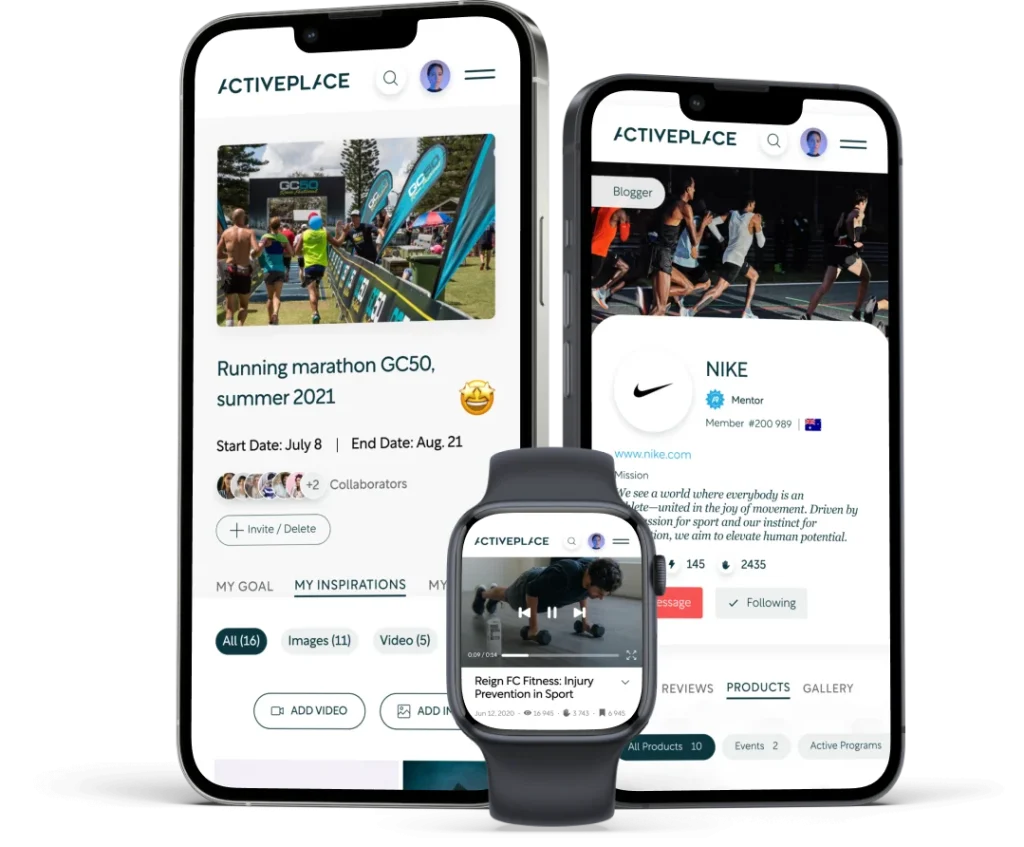
ActivePlace ActivePlace
  • health
  • fitness
  • marketplace

ActivePlace: Wellness-Focused Social Marketplace Platform

A wellness-focused social media and marketplace platform for active lifestyle communities.

Additional Info

Core Tech:
  • Jenkins
  • Angular
  • Ruby
  • Figma
Country:

Australia Australia

Joynd: Unified Integration Platform for HR Software Providers Joynd: Unified Integration Platform for HR Software Providers
  • Frontend
  • Backend
  • Cloud & DevOps

Joynd: Unified Integration Platform for HR Software Providers

A robust B2B platform that connects companies and HR software providers through federated identity, intelligent workflows, and secure data integrations.

Additional Info

Core Tech:
  • Angular
  • NgRx
  • RxJS
  • Tailwind CSS
  • .NET Core
  • PostgreSQL
  • AWS
  • Docker
Country:

USA USA

Real Estate Listing Project Real Estate Listing Project
  • Backend
  • Frontend & Mobile
  • DevOps & Infrastructure
  • Third-Party Integrations

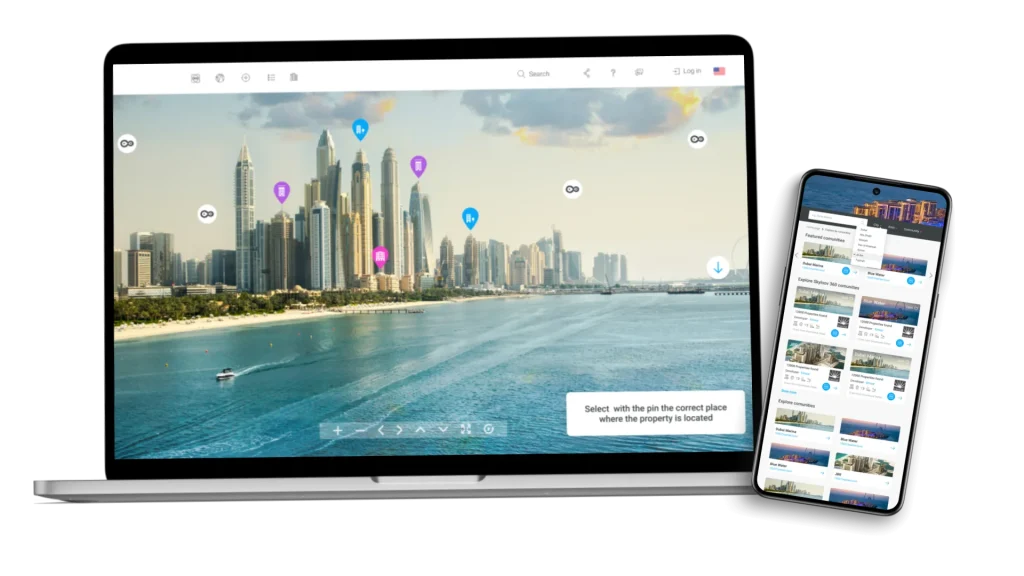
Immersive Property Portal with 360° View for Real Estate Buyers and Brokers

A real estate portal designed to streamline property search, simplify renting and buying decisions with personalized housing recommendations.

Additional Info

Core Tech:
  • NET Core
  • MS SQL
  • ELK
  • Angular
  • React Native
  • NgRx
  • RxJS
  • Docker
  • GitLab CI/CD
Country:

UAE UAE

Trusted by

company
company
company
company
company
company
company
company
company
company
company
company
company
company
company
Awards & Certifications

Industry Contribution Awards & Certifications

Check Devox Software’s awards on rating and review platforms, recognized among the top software development companies, along with the certifications our team members hold.

  • Awards
  • Certifications
  • UpWork

    UpWork

  • Clutch

    Clutch

  • The Manifest

    The Manifest

  • DesignRush

    DesignRush

  • MC.today

    MC.today

  • Clutch

    Clutch

  • Clutch

    Clutch

  • AppFutura

    AppFutura

  • Clutch

    Clutch

  • GoodFirms

    GoodFirms

  • DesignRush

    DesignRush

  • UpWork

    UpWork

  • Professional Scrum Master™ II (PSM II)

    Professional Scrum Master™ II (PSM II)

  • Professional Scrum Product Owner™ I (PSPO I)

    Professional Scrum Product Owner™ I (PSPO I)

  • ITIL v.3 Foundation Certificate in IT Service Management

    ITIL v.3 Foundation Certificate in IT Service Management

  • ITSMS Auditor/Lead Auditor of ISO Standard 20000

    ITSMS Auditor/Lead Auditor of ISO Standard 20000

  • Microsoft Certified: DevOps Engineer Expert

    Microsoft Certified: DevOps Engineer Expert

  • Microsoft Certified: Azure Administrator Associate

    Microsoft Certified: Azure Administrator Associate

  • Quality Assurance ISTQB Foundation Level

    Quality Assurance ISTQB Foundation Level

  • Microsoft Certified Solution Develop (MCSD)

    Microsoft Certified Solution Develop (MCSD)

  • Java Development Certified Professional

    Java Development Certified Professional

  • JavaScript Developer Certificate – W3Schools

    JavaScript Developer Certificate – W3Schools

  • Certified Artificial Intelligence Scientist (CAIS)

    Certified Artificial Intelligence Scientist (CAIS)

  • Oracle Database SQL Certified Associate

    Oracle Database SQL Certified Associate

Testimonials

Testimonials

Carl-Fredrik Linné                                            Sweden

The solutions they’re providing is helping our business run more smoothly. We’ve been able to make quick developments with them, meeting our product vision within the timeline we set up. Listen to them because they can give strong advice about how to build good products.

Darrin Lipscomb Darrin Lipscomb
Darrin Lipscomb United States

We are a software startup and using Devox allowed us to get an MVP to market faster and less cost than trying to build and fund an R&D team initially. Communication was excellent with Devox. This is a top notch firm.

Daniel Bertuccio Daniel Bertuccio
Daniel Bertuccio Australia

Their level of understanding, detail, and work ethic was great. We had 2 designers, 2 developers, PM and QA specialist. I am extremely satisfied with the end deliverables. Devox Software was always on time during the process.

Trent Allan Trent Allan
Trent Allan Australia

We get great satisfaction working with them. They help us produce a product we’re happy with as co-founders. The feedback we got from customers was really great, too. Customers get what we do and we feel like we’re really reaching our target market.

Andy Morrey                                            United Kingdom

I’m blown up with the level of professionalism that’s been shown, as well as the welcoming nature and the social aspects. Devox Software is really on the ball technically.

Vadim Ivanenko Vadim Ivanenko
Vadim Ivanenko Switzerland

Great job! We met the deadlines and brought happiness to our customers. Communication was perfect. Quick response. No problems with anything during the project. Their experienced team and perfect communication offer the best mix of quality and rates.

Jason Leffakis Jason Leffakis
Jason Leffakis United States

The project continues to be a success. As an early-stage company, we're continuously iterating to find product success. Devox has been quick and effective at iterating alongside us. I'm happy with the team, their responsiveness, and their output.

John Boman John Boman
John Boman Sweden

We hired the Devox team for a complicated (unusual interaction) UX/UI assignment. The team managed the project well both for initial time estimates and also weekly follow-ups throughout delivery. Overall, efficient work with a nice professional team.

Tamas Pataky Tamas Pataky
Tamas Pataky Canada

Their intuition about the product and their willingness to try new approaches and show them to our team as alternatives to our set course were impressive. The Devox team makes it incredibly easy to work with, and their ability to manage our team and set expectations was outstanding.

Stan Sadokov Stan Sadokov
Stan Sadokov Estonia

Devox is a team of exepctional talent and responsible executives. All of the talent we outstaffed from the company were experts in their fields and delivered quality work. They also take full ownership to what they deliver to you. If you work with Devox you will get actual results and you can rest assured that the result will procude value.

Mark Lamb Mark Lamb
Mark Lamb United Kingdom

The work that the team has done on our project has been nothing short of incredible – it has surpassed all expectations I had and really is something I could only have dreamt of finding. Team is hard working, dedicated, personable and passionate. I have worked with people literally all over the world both in business and as freelancer, and people from Devox Software are 1 in a million.

Insights

Some Insights Into Back End Development

Modernize Legacy Systems: All You Should Know

Legacy Modernization ROI: A Cost-Focused Guide

Vue vs React Comparison

FAQ

Frequently Asked Questions about Back-End Services

  • How does back-end development integrate with front-end features?

    Back-end development provides the necessary data and functionality to the front-end. A back end web developer creates APIs, manages database interactions, and implements server-side logic that allows the front-end to display dynamic content, process user inputs, and offer interactive features.

    By 2027, the dynamics of back end vs front end web development collaboration will be the key to making sure products evolve quickly without messing with the user’s experience. A backend that is well-organised exposes APIs that are rock solid, data contracts that are easy to predict, and versioning strategies that let frontend teams update things on their own. That makes it so that frontend teams can release changes without having to wait for the backend to get rewritten from scratch — it’s a huge time and risk saver.

  • How long does back-end development take?

    The timeline for back-end development services depends on the project’s complexity, scope, and team size.To get a precise estimation for your back end for website, get in touch with Devox’s managers.

  • How fast can I hire a back-end developer from Devox Software?

    The timeline for hiring a back-end developer always depends on the candidates’ amount and capacity on the market as well as the search location. However, we will present the first candidates for your consideration within a week after getting a request.

  • Can back-end development improve website performance?

    Yes, back-end development plays a crucial role in enhancing website performance. By optimizing back end system design, including server-side operations, databases, and application logic, back-end development ensures faster loading times, efficient data processing, and overall improved user experience.

  • What are the ongoing maintenance requirements for back-end systems?

    Maintaining back-end systems means regularly updating software and libraries, applying security patches, monitoring servers, optimizing performance, and scaling as your user base and data needs grow. This ensures the system remains efficient, secure, and scalable — thanks to ongoing software developer solutions.

  • How do you choose between monolithic vs microservices architecture for the back-end?

    A monolith is a good choice for early-stage products or simpler systems because it’s faster to build, easier to deploy, and cheaper to keep up with at first. However, microservices pay off when you have defined domain boundaries, many teams, significant size, or the requirement to deploy components of the system independently. Microservices are more advanced in all respects of performance, stability, and security. The decision is always made depending on the strategic vision and the goals.

    The choice is really about how big your organisation is, how fast you need to deliver, and how much maturity your ops team has, rather than just going with your gut. Monoliths are great for getting things done fast and with less overhead early on, but as your systems and teams start to grow and get more complicated, service-based architectures become a lot more appealing because they let you release independently, clear up ownership, and scale things as needed. The goal is to pick an architecture that fits with your business plans and how fast you need to go.

  • What is the cost breakdown for a typical back-end development project?

    Costs are frequently broken down into discovery and architecture, core development, quality assurance, and DevOps. You should also include ongoing maintenance, cloud infrastructure, and feature evolution, not just the initial build, if you plan for a long run.

    Backend cost is driven less by code volume and more by architectural decisions, data complexity, and operational requirements. Clear boundaries, reusable components, and automated delivery pipelines reduce long-term engineering effort and infrastructure spend. Transparent cost modeling helps businesses understand where upfront investment lowers future maintenance, scaling, and incident costs.

  • How do you ensure data integrity and consistency in a back-end system?

    We implement schemas and APIs with explicit rules and leverage database-level assurances, such as foreign keys, unique constraints, and checks. Business rules are followed in both the code and the data layer. For distributed systems, we choose the correct consistency model, implement idempotent operations, and leverage patterns like sagas or outbox to keep data in sync across services.

    Data integrity protects revenue, reporting accuracy, and operational trust. Backend systems achieve this through clear ownership of data domains, transactional guarantees where required, and consistency models aligned with real business processes. These practices prevent silent data corruption and ensure that growth or refactoring does not undermine decision-making or compliance.

  • Which database engine should we use for our back-end (relational vs NoSQL) and why?

    Relational databases (like PostgreSQL or MySQL) are frequently the default choice for most commercial apps because they offer high consistency, powerful querying, and well-understood transaction semantics. When you have a lot of data, flexible and adaptable schemas make sense. While a polyglot architecture, which combines a relational core with specialized stores for certain workloads, works best in many systems. So the final choice is made in consideration of many factors but always to support the main goals.

  • How do you handle scalability and load-balancing in back-end development?

    We create stateless services where possible, so instances can be scaled horizontally behind a load balancer. The real thing, databases are less stressed with caching, connection pooling, and efficient queries. Moreover, to handle more traffic, we add read replicas, message queues, and asynchronous processing. The method includes monitoring and capacity planning so that we can scale up before disruptions.

    Scalability is not something you add later on — it’s something you build into your system from the start, through using stateless services, controlling concurrency and making sure your load is distributed in a way that makes sense. That way, when you get a traffic spike or you start to grow in a new region or you need to integrate with someone else, your system can just take it and keep on going without falling over — its good for your customers and it stops your costs from getting out of control.

Book a call

Want to Achieve Your Goals? Book Your Call Now!

Contact Us

We Fix, Transform, and Skyrocket Your Software.

Tell us where your system needs help — we’ll show you how to move forward with clarity and speed. From architecture to launch — we’re your engineering partner.

Book your free consultation. We’ll help you move faster, and smarter.

Let's Discuss Your Project!

Share the details of your project – like scope or business challenges. Our team will carefully study them and then we’ll figure out the next move together.


    By sending this form I confirm that I have read and accept the Privacy Policy

    Thank You for Contacting Us!

    We appreciate you reaching out. Your message has been received, and a member of our team will get back to you within 24 hours.

    In the meantime, feel free to follow our social.


      Thank You for Subscribing!

      Welcome to the Devox Software community! We're excited to have you on board. You'll now receive the latest industry insights, company news, and exclusive updates straight to your inbox.