


- Adaptive AUTOSAR Integration. Scalable middleware standardizes hardware-to-software communication across the entire vehicle network. This abstraction layer empowers engineers to deploy isolated microservices dynamically across centralized computing domains.
- Bi-Directional OTA Pipelines. A/B partitioned firmware updates utilize delta compression to secure fleet-wide capability upgrades. This pipeline ensures rapid, fully reversible installations that maintain continuous vehicle availability.
- Hypervisor-Based Domain Isolation. Advanced hypervisors logically separate safety-critical vehicle controls from infotainment operating systems. This structural isolation guarantees uncompromised execution of core driving functions.
- High-Performance Compute Centralization. Consolidated zonal controllers absorb legacy distributed ECUs to drastically reduce wiring weight. This centralized topology accelerates internal data routing and simplifies overall vehicle engineering.
- Automotive CI/CD Automation. Automated testing pipelines streamline the deployment of embedded software directly to edge devices. This automation enables continuous integration of new vehicle features at enterprise scale.

Automotive Software Development Services
-
PROTECT MARGINS
Reduce recall risk and warranty costs by engineering predictable vehicle behavior — validated across ECUs, edge, and cloud before vehicles leave the factory. -
LAUNCH FASTER
Compress time-to-road with automated validation pipelines and early regression detection — so you hit certification schedules without last-minute surprises. -
SCALE RELIABLY
Deploy OTA updates across thousands of vehicles with signed rollouts, automatic rollback, and live telemetry — so every vehicle stays on the right version.Why Choose Devox Software for Automotive Software Development Services?
Why It Matters
At scale, control is everything.
Today’s vehicle is a software platform. Embedded controllers, cloud services, OTA pipelines, and fleet intelligence need to behave as one system across dozens of ECUs, multiple suppliers, and continuous release cycles.
When architecture is fragmented, delivery slows down. Features miss certification windows. Updates reach some vehicles but not others. Engineering teams spend more time firefighting than shipping.
We bring architectural control back to the center—with modular systems, AI-accelerated delivery, and compliance built into every layer. So your team ships faster without trading away safety or stability.
Our Edge
Why Automotive Teams Choose Devox
- Modernize
- Build
- Innovate
Legacy logic stalling feature delivery?
We isolate critical behavior factors, reduce risks in transitions, and transform legacy code into structured platforms.
Software fragmented across ECUs, clouds, and services?
We bring cohesion through modular architecture, real-time observability, and aligned state control.
Delivery blocked by cross-platform inconsistencies?
We refactor system flows with stable interfaces, runtime validation, and CI pipelines built for multi-platform complexity.
Need to ship fast without breaking stability?
Our AI-accelerated delivery pipelines are trace-aware and regression-hardened, built to sustain velocity after release.
New features triggering unpredictable behavior?
We run behavioral parity across ECUs, edge, and backend, designed and validated.
Timelines slipping due to lack of alignment?
We keep delivery tight across six pillars—traceable requirements, matched dev/prod environments, automated pipelines, structured testing, formal review gates, and aligned teams so nothing slips between handoffs.
AI too risky to deploy in production?
We ship guardrailed AI, observable, testable, and designed for safety-critical use.
OTA stalled by infrastructure limitations?
Staged, signed, rollback-ready OTA with auditability across regions and fleets, so every rollout is safe, traceable, and reversible.
Platform needs to scale, but complexity compounds?
We optimize signals at the edge, run data contracts, and reinforce telemetry so models train and behave on trusted data.
What We Offer
Services We Provide
-
Software-Defined Vehicle (SDV) Architecture
-
Embedded Software Development
Get embedded automotive software development running directly on a vehicle’s electronic control units (ECUs) and domain controllers to control critical driving functions: steering, braking, engine control, airbag deployment, battery management, power distribution, and more. What you get:
- ECU & DCU Firmware Development. Firmware for engine control units (ECUs) and domain controllers (DCUs) provides real-time behavior, diagnostics via UDS, and compliance with ISO 26262 for safety.
- AUTOSAR Integration. Classic and adaptive AUTOSAR stacks enable modular components, software reuse, and vendor-agnostic development across various hardware platforms.
- Flash Memory Management. Secure bootloaders with memory segmentation, validation checks, and support for A/B partitioning enable safe OTA deployments.
- Real-Time Operating System (RTOS) Customization. Configured FreeRTOS, QNX, and Zephyr operate for real-time needs with low-level drivers and I/O schedulers.
- Diagnostics & Communication Protocols. Our firmware supports LIN, CAN, CAN-FD, and Ethernet stacks with diagnostics (UDS, DoIP), DTC management, and ISO 14229/ISO 15765 support.
- Safety-Critical Code Compliance. Static analysis, formal verification tools, and code coverage analysis at the unit level fully comply with MISRA-C and ISO 26262 ASIL-B/D standards.
Modern vehicles require modern firmware. Our automotive software development solutions help you engineer embedded systems that exactly meet today’s complexity.
-
ADAS & Autonomous Driving Software
Achieve AUTOSAR-based architectures for ADAS/AD (Autonomous Driving) solutions that are safe, reliable, and compliant. Our algorithms and systems turn vehicle data into real-time decisions. From Level 1 to Level 4 autonomy, we help you deliver safe, intelligent driving experiences.
We develop full-cycle ADAS/AD solutions, which include programming sensors, integrating embedded operating systems, processing data in real time, optimizing algorithms, and creating ADAS apps that automate important driving tasks. What exactly do you get:
- Real-Time Sensor Data Fusion. Customized ROS2 architectures combine LiDAR, radar, camera, and ultrasonic inputs to create a unified environmental grid that is millisecond-accurate. This unified perception layer guarantees exact object tracking and dynamic spatial awareness.
- Edge-Optimized Neural Networks. Lightweight computer vision models like YOLO and EfficientDet deploy directly onto automotive-grade hardware from NVIDIA and NXP. This localized inference ensures immediate object detection and highly responsive system execution.
- Dynamic Trajectory Planning. Predictive behavioral models and advanced algorithms calculate optimal vehicle paths to secure seamless navigation through complex traffic environments. These systems maintain strict adherence to legal requirements and prioritize passenger safety.
- Closed-Loop Virtual Validation. Virtual test environments like Carla and LGSVL execute million-mile stress tests to validate edge-case responses. This rigorous digital testing secures algorithmic reliability across highly complex driving conditions.
- ISO 26262 Safety Logic Architecture. Deterministic fail-safe mechanisms and redundant execution paths are embedded directly into the control layer. This architecture maintains absolute system integrity and guarantees full SOTIF compliance during critical maneuvers.
-
OTA (Over-the-Air) Infrastructure for Automotive
Let your software, firmware, and configuration updates be sent to cars from a distance throughout their lifecycle. Features like managing updates, signing and verifying cryptographic information, managing versions and dependencies, staged rollouts, health checks, and rollback procedures ensure that updates are safe, durable, and can be checked.
This way, manufacturers may address bugs, add features, and stay compliant across regions and fleets without having to recall or stop working. More of what you get:
- Full OTA Stack Implementation. Automotive-grade OTA systems include device targeting, phased rollout, retry logic, rollback support, and update integrity checks for both application and firmware layers.
- Delta & Dual-Partition Update Support. Our OTA infrastructure enables differential updates and A/B partitioning, reducing bandwidth use and ensuring safe failover in case of update failure.
- Secure Update Pipeline. We ensure compliance with ISO/SAE 21434 and UN R156 through end-to-end encryption, digital signing, integrity verification, and secure boot.
- Telemetry. Live update status shows vehicle reachability. You can see installation success or failure logs, all visualized on a cloud dashboard with alerts.
- Backend & Cloud Integration. OTA infrastructure integrates with your DevOps pipeline, vehicle cloud backend, CI/CD, and telemetry systems built on AWS, Azure, or custom hosting.
With OTA done right, your team can fix, enhance, and scale software long after vehicles leave the factory. We make OTA a core part of your automotive service software solutions architecture, not a patch on top.
-
Vehicle Intelligence
Automotive data and software solutions with AI transform raw vehicle data into real-time decisions, predictive alerts, and self-optimizing performance. Unlock your benefits:
- Predictive Maintenance. We train machine learning models with real-world sensor data and fault logs to anticipate component failures, reducing unplanned downtime and service costs.
- Driver Behavior Analytics. AI analyzes driving patterns, like aggressiveness and fatigue, for insurers, fleets, and OEMs to tailor services, pricing, or in-vehicle alerts.
- Anomaly Detection Systems. Unsupervised learning and streaming analytics spot small anomalies in telemetry, ECU behavior, and network traffic.
- Edge ML Deployment. AI models on edge devices like NVIDIA Jetson and NXP S32 for inference directly in the vehicle, even offline.
- Sensor Fusion with AI. Neural networks for sensor fusion and object recognition include LiDAR, radar, cameras, 2D/3D vision, semantic segmentation, and multi-object tracking.
- Data Engineering for Automotive AI. Secure data pipelines from in-vehicle sources to cloud platforms enable labeling, augmentation, model retraining, and continuous learning at scale.
From failure prediction to on-road perception, we help you build vehicle intelligence that evolves.
-
Fleet Management Systems
Gain complete operational control from one dashboard. Our custom fleet platforms unify logistics, diagnostics, routing, and resource planning into one system. What you get:
- Telematics-Driven Fleet Dashboards. Our dashboards display real-time details for each vehicle and the whole fleet. You can see location, status, fuel use, battery health, tire pressure, and fault codes.
- Predictive Maintenance Scheduling. Past and live data predict service needs before breakdowns and optimize service intervals.
- Capacity & Route Optimization. Traffic, delivery, and payload data suggest dynamic routing and load balancing for less idle time and improved asset use.
- Driver Monitoring & Scoring. We track behaviors like speeding, braking, and idle time to provide safety scores and coaching tips for every driver.
- Integration with Existing Systems. We connect your fleet platform with ERP, WMS, TMS, and third-party APIs to create one source of truth across operations.
- Mobile Access. Drivers and operators interact through automotive HMI software connected to backend systems in real time.
Whether you manage 100 vehicles or 10,000, we provide tools for efficiency, quick responses, and smooth operations, paving the way for a strategic business advantage.
-
Connected Car and Telematics
- V2X Protocol Implementation. Ultra-low-latency communication channels connect vehicles with smart city infrastructure and adjacent traffic. This bidirectional data exchange optimizes route planning and expands the vehicle’s environmental awareness.
- Predictive Digital Twin Synchronization. Cloud environments mirror physical vehicle telemetry to track component health dynamically. This constant synchronization enables highly accurate anomaly detection and proactive fleet maintenance.
- Real-Time Telematics Aggregation. Edge algorithms process high-throughput sensor data locally to maximize bandwidth efficiency. The vehicle transmits strictly structured, actionable intelligence to central enterprise dashboards.
- Zero-Trust Connectivity Frameworks. End-to-end encryption and mutual authentication apply across all external communication interfaces. This cryptographic security protects passenger data and secures the vehicle’s operating system from external manipulation.
- In-Cabin Digital Ecosystems. Synchronized cloud services connect personalized driver profiles directly to the vehicle’s central display. This integration delivers a continuous, high-performance digital experience tailored to individual user preferences.
-
Electrification & Battery Software
We build embedded and cloud software for EV powertrains, charging infrastructure, and fleet energy management — from firmware running on the BMS controller to cloud dashboards tracking state of charge across thousands of vehicles.
- Battery Management System (BMS) Firmware. Cell monitoring, state-of-charge estimation, state-of-health tracking, and protection logic running on embedded controllers.
- Thermal Management Software. Algorithms that balance battery temperature across charge and discharge cycles, integrating with cooling system actuators and predicting thermal runaway risk before it becomes a safety event.
- Smart Charging & V2G Integration. Charging control software that communicates with OCPP-compliant infrastructure, optimizes charging schedules based on grid price signals, and supports Vehicle-to-Grid (V2G) energy flow with bidirectional inverter control.
- EV Fleet Analytics & Predictive Range. Cloud pipelines that aggregate state-of-charge, energy consumption, and route data across a mixed fleet. ML models predict real-world range under actual load conditions — not just WLTP numbers.
- EV OTA & Configuration Management. Remote updates for BMS firmware and charging parameters with cryptographic signing, A/B partitioning, and rollback. Keeps every vehicle on the correct calibration without a service visit.
Benefits
Benefits
01
AI-Orchestrated Delivery
Our AI Solution Accelerator™ aligns teams and automotive software development services with real-time insight, removes delivery blind spots, and compresses feedback loops into hours, not weeks. This way, we ensure consistency across embedded, cloud, and edge systems, accelerating complex projects without sacrificing control or quality.
02
Legacy, Rewired for Scale
We modernize legacy systems through targeted improvements that preserve critical business logic. We use runtime analysis, API mapping, and architecture refactoring to modernize legacy platforms without disrupting core functionality.
03
Compliance-Driven Architecture
Security and safety are built into the system from day one. Functional safety patterns, OTA rollback protocols, threat modeling workflows, and coverage-aware pipelines are integrated into the development lifecycle. Our automotive ECU software development ensures each release supports ISO 26262, ISO/SAE 21434, and UN regulations, structurally and traceably.
04
Full Lifecycle Support
We handle everything from planning and designing how to modernize ERP to reworking, moving, integrating, and optimizing it after it goes live. This way, you don't have to deal with many different providers to keep things smooth. Your platform won't become the next outdated system; it will keep getting better as the business expands.
05
CASES Framework
Together with AutoMobility Advisors, we bring additional automotive expertise to every engagement. Together, we deliver our solutions in line with the CASES framework (Connected, Autonomous, Shared, Electric, and Security/Privacy) and set the direction for autonomous strategy from SAE Level 2–5, shape shared mobility models, support electrification programs, and improve security and privacy, so you receive real business results.

LOGISTICS & AUTOMOTIVE
Automating a Car Repair Center for a Bus Transportation Company
A legacy process modernization in a car maintenance service has ensured real-time tracking, reporting, and workflow automation.
Additional Info
Core Tech:
- .NET 8
- C# 12
- ASP.NET Core
- EF Core
- SignalR
- Hangfire
- HTML5/CSS3/SASS
- Bootstrap 5
- TypeScript

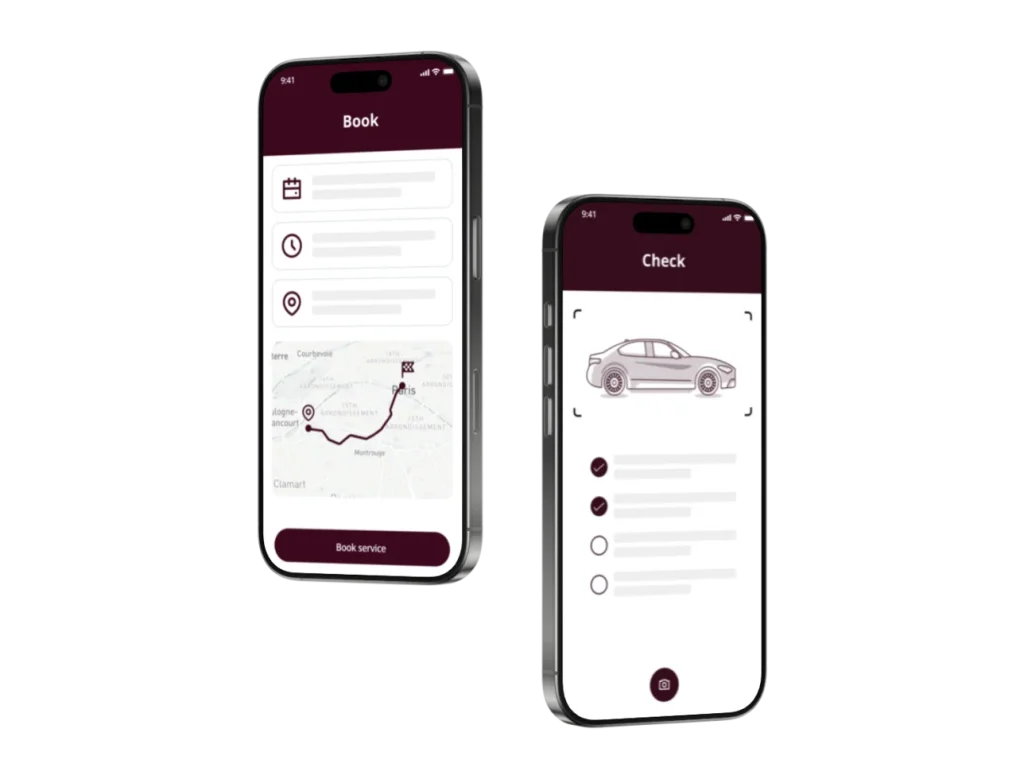
 LOGISTICS & AUTOMOTIVE
Otoqi: Custom Fleet Management System and Driver App for Pan-European Car Logistics
A turn-key transport management solution (TMS) that helps deliver cars throughout Europe.
Additional Info
Core Tech:
- Angular
- Node.js
- PostgreSQL
- REST API
- AI algorithms
- Keycloak
- Selenium
Country:
 France

LOGISTICS & AUTOMOTIVE
Rigorous Testing for Safety Car Components
Discover how an automotive manufacturer validated emergency call and telemetric devices without costly field-testing, but with full industry compliance.
Additional Info
Core Tech:
- Canooe
- Protocol Analysis Tools
- Automotive-Specific Testing Frameworks
Testimonials
Testimonials



 Sweden
The solutions they’re providing is helping our business run more smoothly. We’ve been able to make quick developments with them, meeting our product vision within the timeline we set up. Listen to them because they can give strong advice about how to build good products.
Carl-Fredrik Linné
Tech Lead at
CURE Media



 United States
We are a software startup and using Devox allowed us to get an MVP to market faster and less cost than trying to build and fund an R&D team initially. Communication was excellent with Devox. This is a top notch firm.
Darrin Lipscomb
CEO, Founder at
Ferretly



 Australia
Their level of understanding, detail, and work ethic was great. We had 2 designers, 2 developers, PM and QA specialist. I am extremely satisfied with the end deliverables. Devox Software was always on time during the process.
Daniel Bertuccio
Marketing Manager at
Eurolinx


 Australia
We get great satisfaction working with them. They help us produce a product we’re happy with as co-founders. The feedback we got from customers was really great, too. Customers get what we do and we feel like we’re really reaching our target market.
Trent Allan
CTO, Co-founder at
Active Place



 United Kingdom
I’m blown up with the level of professionalism that’s been shown, as well as the welcoming nature and the social aspects. Devox Software is really on the ball technically.
Andy Morrey
Managing Director at Magma Trading



 Switzerland
Great job! We met the deadlines and brought happiness to our customers. Communication was perfect. Quick response. No problems with anything during the project. Their experienced team and perfect communication offer the best mix of quality and rates.
Vadim Ivanenko
COO at
Optherium


 United States
The project continues to be a success. As an early-stage company, we're continuously iterating to find product success. Devox has been quick and effective at iterating alongside us. I'm happy with the team, their responsiveness, and their output.


 Sweden
We hired the Devox team for a complicated (unusual interaction) UX/UI assignment. The team managed the project well both for initial time estimates and also weekly follow-ups throughout delivery. Overall, efficient work with a nice professional team.
John Boman
Product Manager at
Lexplore



 Canada
Their intuition about the product and their willingness to try new approaches and show them to our team as alternatives to our set course were impressive. The Devox team makes it incredibly easy to work with, and their ability to manage our team and set expectations was outstanding.
Tamas Pataky
Head of Product at
Stromcore



 Estonia
Devox is a team of exepctional talent and responsible executives. All of the talent we outstaffed from the company were experts in their fields and delivered quality work. They also take full ownership to what they deliver to you. If you work with Devox you will get actual results and you can rest assured that the result will procude value.
Stan Sadokov
Product Lead at
Multilogin


 United Kingdom
The work that the team has done on our project has been nothing short of incredible – it has surpassed all expectations I had and really is something I could only have dreamt of finding. Team is hard working, dedicated, personable and passionate. I have worked with people literally all over the world both in business and as freelancer, and people from Devox Software are 1 in a million.
Mark Lamb
Technical Director at M3 Network Limited
Insights
Our Experts' Insights

AI & ML
Automotive
Workflow Management
How to Choose a Software Partner for Automotive AI Projects: Buyer Playbook

AI & ML
Automotive
From Engineering Data to Digital Twins: 7 Accelerators of Automotive Time-to-Market
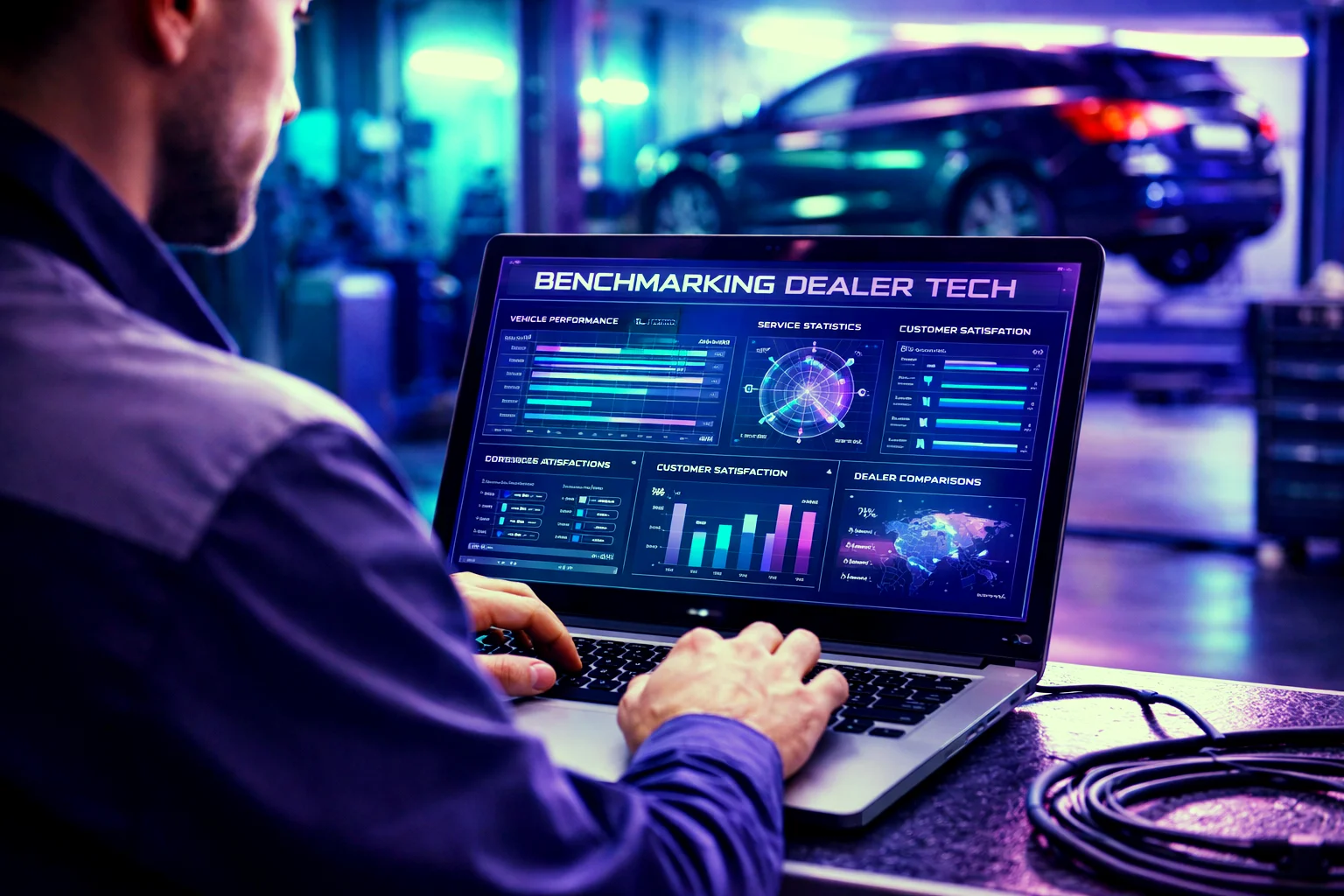
Automotive
Research Paper
Benchmarking Dealer Tech: Comparing DMS, CRM, Inventory & Fleet Tools Used by Top Auto Groups in 2025
FAQ
Frequently Asked Questions
-
How is AI being used in automotive software development?
In ADAS and autonomy, AI helps vehicles understand their environment in real time, fusing data from LiDAR, radar, cameras, and GPS to build a live, dynamic map of the world. It detects pedestrians, tracks vehicles, predicts movement, and makes millisecond decisions based on that perception.
AI also helps us accelerate EV software development, especially in battery management, charging optimization, and predictive analytics. It gives engineering teams better visibility into system behavior and delivery risks.
-
Can your architecture and tooling support cross-functional simulation?
Definitely. In fact, that’s a core part of how we design for trust.
We support full-loop simulations, from perception to actuation, that are seamlessly integrated into automotive software testing and validation pipelines.
We use tools like Carla and LGSVL to simulate edge cases, stress-test autonomy logic, and validate safety paths under unpredictable conditions. And we don’t just stop at running simulations; our CI pipelines are built around automotive simulation and modeling software that feeds outputs back into architecture refinement and test generation.
Cross-functional means more than just ADAS teams. Our pipelines support automotive software integration services by including QA, DevOps, safety, and systems engineering, all in CI-integrated test environments that mimic real-world vehicle behavior. Everything stays traceable and auditable, aligned with ISO 26262 and SOTIF standards.See the wider range covered by our Automotive ERP, MES and PLM Integration Services and Automotive Legacy Modernization and Integration.
-
What are the challenges of developing software for autonomous vehicles?
Automotive software development requires systems that perform reliably under real-world conditions.
For example, one of the key challenges in ADAS software development services is perception, fusing camera, LiDAR, radar, and GPS signals into a coherent, real-time view of the environment.
Then comes decision-making. Edge cases, like unexpected human behavior, unmarked roads, or sensor failures, test the system’s ability to reason and react like a cautious, confident human driver. These scenarios cannot be addressed through static rules alone. That’s why an automotive software development company must combine learning models with high-fidelity validation environments to handle edge cases.
-
How does automotive software development services ensure safety and compliance with industry standards?
In automotive software, safety drives architecture, development, testing, and release decisions.
We start by designing systems where critical behavior stays stable, predictable, and verifiable across versions, loads, and environments. In automotive embedded software development, the rules that control braking, steering, or power distribution follow set paths and are kept separate from changing or less important processes.
We ensure lifecycle-wide alignment with ISO 26262, ISO/SAE 21434, SOTIF, UN R155, and R156 standards. Security is built into the core, with signed updates, partitioned OTA systems, and automotive cybersecurity solutions that enforce telemetry-aware rollback and compliance alignment.
-
How do you support lifecycle traceability from development through OTA updates and incident response post-launch?
We start with system decomposition. Every module, interface, and safety function gets mapped to its technical and business intent, with trace paths extending from requirements into code, test coverage, and validation artifacts. In automotive ECU software development, trace paths must extend through CI/CD pipelines, versioning logic, and update orchestration layers, ensuring safe delivery and rollback capability.
When over-the-air (OTA) software updates for vehicles go live, each one carries a cryptographic signature, is rollback-ready, and is fully mapped to its software lineage. This is one of several capabilities in our OTA Update Software Development.
Post-launch, live diagnostics, sensor anomalies, and behavioral shift signals feed into telematics software development for cars, enabling real-time incident tracking with structured incident response.
-
How do you validate ML models used in perception or prediction under edge conditions and rare events?
Validation begins long before deployment. We engineer the dataset to reflect system-level risks, edge conditions, sensor anomalies, and behavior patterns that lie outside the statistical norm. Real-world logs form the base, extended by synthetic augmentation and simulation scenes with calibrated variability. Each scenario serves a purpose: degraded visibility, occlusion, overlapping motion vectors, and low-confidence object boundaries.
Model performance is evaluated inside structured simulation pipelines—tools like Carla, LGSVL, and custom high-fidelity rigs, running synchronized with hardware-specific inference constraints. We use scenario replays with frame-level trace inspection, observing decision latency, output certainty, and variation under load.
Performance metrics align with the system’s behavioral envelope. Evaluation spans perception to actuation with traceable intent, including path planning under detection uncertainty, and metrics on misclassification, prediction shift, and output validation.
Edge deployment uses automotive-grade inference hardware and each platform passes through thermal, throughput, and runtime audits. This guarantees timing holds under environmental pressure.
Post-deployment, models stay under observation. Live telemetry feeds back signal entropy, misalignment from expected outcomes, and contextual anomalies. These are tagged, replayed, and reintroduced into the validation set, creating a reinforcement cycle where each vehicle strengthens the next release.
The result is a model designed for reliability, transparency, and consistent performance across real-world edge cases. Browse related work within our AI in Supply Chain and Logistics and Supply Chain Management and Traceability Systems.
-
What are the key software solutions driving innovation in the automotive industry?
Most new technology is based on software. Examples include domain controllers and centralized vehicle OS platforms, ADAS/autonomy stacks, connected-car platforms, in-vehicle infotainment and digital cockpits, battery/energy management for EVs, smart charging and V2G integration, predictive maintenance and fleet analytics, and cybersecurity platforms that monitor, isolate, and update vehicle components. Explore the full set of options under our SDV Software Development.
-
What programming languages are most commonly used in automotive software projects?
C is still the most popular language for embedded and performance-critical ECU work. C++ is also commonly used for higher-level modules, middleware, and ADAS components.
Java/Kotlin (Android Automotive), JavaScript/TypeScript for UI, and more Rust for memory-safe systems programming in some parts are common in modern cockpits and related layers. This is one of several capabilities in our Parts Management for Automotive Aftermarket.
Python primarily serves tooling, data pipelines, ML training, and test automation, rather than serving as a safety-critical embedded runtime. See the wider range covered by our AI Transformation Services. Browse related work within our Fleet Management for Automotive Industry Services.
-
How is over-the-air (OTA) software updating implemented in modern vehicles?
OTA updates typically follow a structured process: package, sign, distribute, verify, install, validate, and report. Vehicles check cryptographic signatures, make sure that versions and compatibility are correct, and often employ A/B partitions so they can safely roll back if something goes wrong.
Updates are often staggered, with small groups of people getting them first, and telemetry input rapidly stops a problematic rollout. The most important thing to remember is that OTA isn’t just “sending files.” It’s a safe release process with strong identity, integrity checks, and recovery paths. Explore the full set of options under our Automotive Cybersecurity Services.
-
What role does IoT play in connected car software development?
IoT connects the car to the cloud and everything else around it. It allows for telematics, remote services, fleet administration, and ongoing health monitoring. It also links cars to things like charging stations, parking lots, toll roads, and smart city services. Explore the full set of options under our Intelligent Document Processing Solutions (AI).
The problem is that every connected feature makes the attack surface bigger; therefore, IoT connectivity needs to be combined with device identity, secure communication, segmentation, and ongoing security monitoring.
Book a call
Want to Achieve Your Goals? Book Your Call Now!
Contact Us
We Fix, Transform, and Skyrocket Your Software.
Tell us where your system needs help — we’ll show you how to move forward with clarity and speed. From architecture to launch — we’re your engineering partner.
Book your free consultation. We’ll help you move faster, and smarter.
Let's Discuss Your Project!
Share the details of your project – like scope or business challenges. Our team will carefully study them and then we’ll figure out the next move together.
Thank You for Contacting Us!
We appreciate you reaching out. Your message has been received, and a member of our team will get back to you within 24 hours.
In the meantime, feel free to follow our social.
Thank You for Subscribing!
Welcome to the Devox Software community! We're excited to have you on board. You'll now receive the latest industry insights, company news, and exclusive updates straight to your inbox.