
Table of content
Businesses are replacing disjointed legacy industrial equipment, enterprise management, and analytics platforms into a single operational backbone via software development for manufacturing that fuels further growth and lets them stay competitive in the market.
At Devox Software, we assist manufacturers with updating plant-to-cloud architectures, TMS-driven logistics, and production systems. As we can see, this one trend appears in all of these projects: as operations grow, diversify, or interact extensively with physical processes, custom software regularly performs better than off-the-shelf technologies.
That’s why we’ve distilled a shortlist of proven vendors offering software development for manufacturing companies for you to ease the choice and raise the bar of expectations for a really effective product.
Why Custom Manufacturing Software Matters
As the software development for manufacturing companies includes:
- Manufacturing Execution Systems (MES)
- Production planning & scheduling platforms
- Industrial IoT & machine connectivity layers
- Quality management systems (QMS)
- Predictive maintenance (CMMS)
- Supply-chain and logistics integrations
- Data & AI platforms for production intelligence,
these systems must operate reliably in one loop across environments, workshops, and plants. However, in their pursuit to gain such an advantage, manufacturers face fundamental limitations that generic software cannot address, including:
- Deep integration with older equipment, sensors, and machines
- Workflows unique to a given industry
- Constant optimization under pressure from cost, safety, and compliance.
That’s why manufacturers keep investing in digital core systems to precisely match technology with plant reality rather than vendor assumptions.
How We Ranked the Best Providers for Software Development for Manufacturing Companies
Together, our assessment framework included the following criteria:
- Depth of the manufacturing domain
- Technical maturity and area of expertise
- Case studies and reviews showing the hands-on experience
- Long-term ownership and delivery model.
As a result, you can get a shortlist of the best vendors with advanced approaches and proven techniques for your specific project.
Top 10 Custom Software Development for Manufacturing Companies in 2026
Let’s proceed with the list of the best companies for custom software development for manufacturing industry arranged for your convenience.
1. Devox Software
Devox Software is an established expert at the nexus of production systems and logistics, specializing in the development of specialized software for the manufacturing sector. Their fundamental strengths include:
- Vast experience in developing and modernizing platforms for manufacturing and logistics (MES, TMS, SCM)
- Robust compliance and quality assurance pipelines (dedicated quality offices and development in accordance with ISO standards)
- Shorter development timelines due to proprietary AI Solution Accelerator™
- Integration-first, cloud-native architecture, and more.
Devox Software usually works on projects like support platforms for production, software for managing logistics, upgrading old manufacturing systems, and analytics tools that provide real-time insights into operations. This way, when manufacturers need a long-term engineering partner that can evolve systems without disrupting operations, Devox is the most obvious choice.
2. Softeq
Softeq is an expert in hardware-adjacent systems, IoT, and embedded software development. Their work frequently focuses on cloud integration for equipment makers, industrial networking, and device-level custom software development for manufacturing industry.
Building monitoring platforms, predictive maintenance tools, and firmware-level integrations that connect devices to digital systems are common tasks for them. Thus, for producers creating or running industrial gadgets, smart machinery, or networked equipment, Softeq is especially useful.
3. ScienceSoft
ScienceSoft is a well-known software engineering and IT consulting company that provides software development for manufacturing. ScienceSoft has decades of experience working with manufacturing companies, primarily in North America. Plus, their manufacturing work frequently focuses on enterprise system modernization, IoT integration, production analytics, and MES deployment.
Moreover, the business is renowned for its well-organized delivery procedures, strict paperwork requirements, and focus on security and stability. So if you’re looking for large-scale data-driven manufacturing solutions, compliance alignment, and predictable execution, ScienceSoft is for you.
4. Honeywell Connected Enterprise
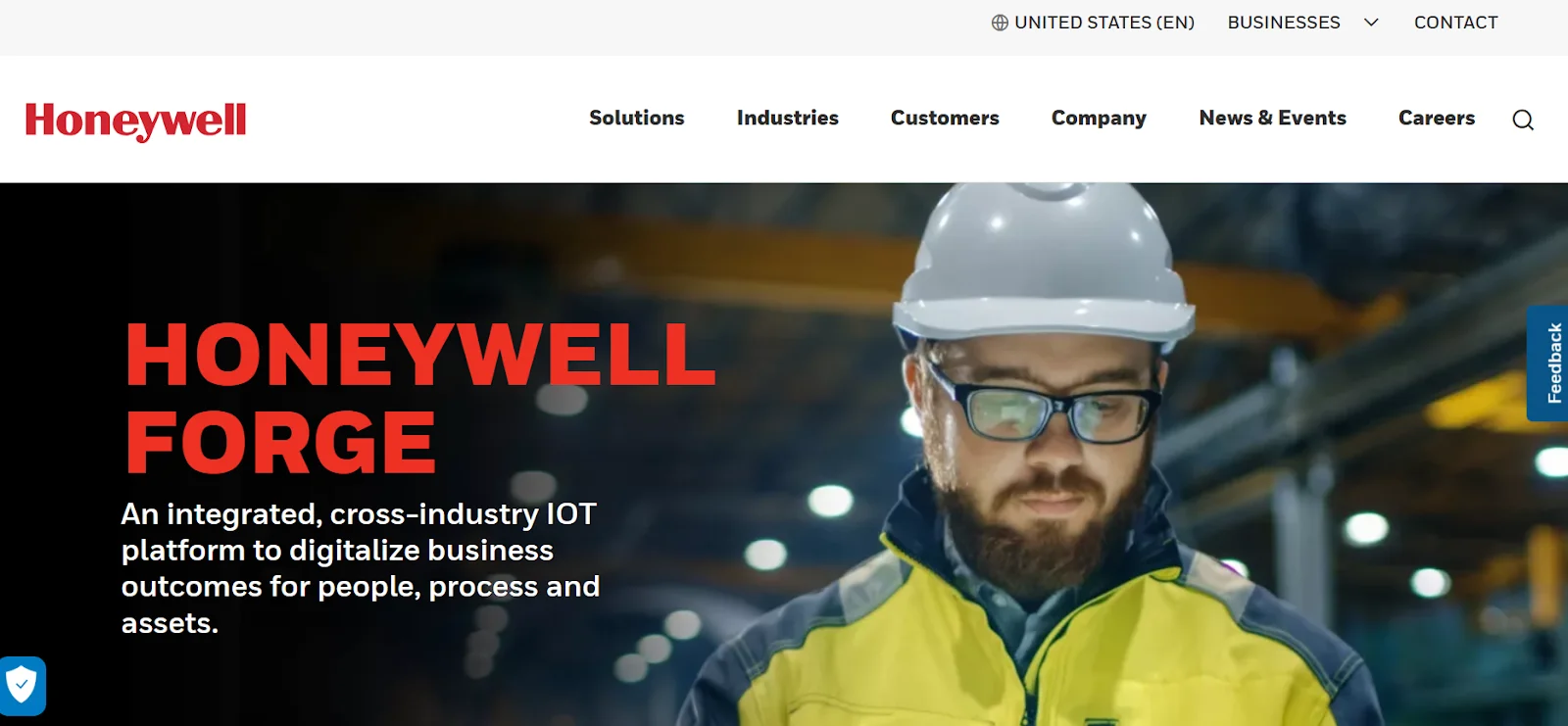
Honeywell’s industrial software division, Honeywell Connected Enterprise (HCE), is dedicated to providing enterprise-class digital solutions for manufacturers and industrial operators. They integrate information technology (IT) and operational technology (OT) data to enhance production and decision-making.
Furthermore, Honeywell Forge, the main product suite of HCE, is a cloud-native IoT and performance management platform that unifies data from people, processes, and assets into a single operational system. The main features of HCE’s services concentrate on:
- advanced analytics driven by AI and machine learning
- interaction with current systems
- the capacity to assist digital transformation initiatives that connect conventional OT systems.
As a result, Honeywell Connected Enterprise seeks to lower manufacturers’ unscheduled downtime, increase productivity, and improve operational decisions by consolidating data into a single platform.
5. Atomic Object
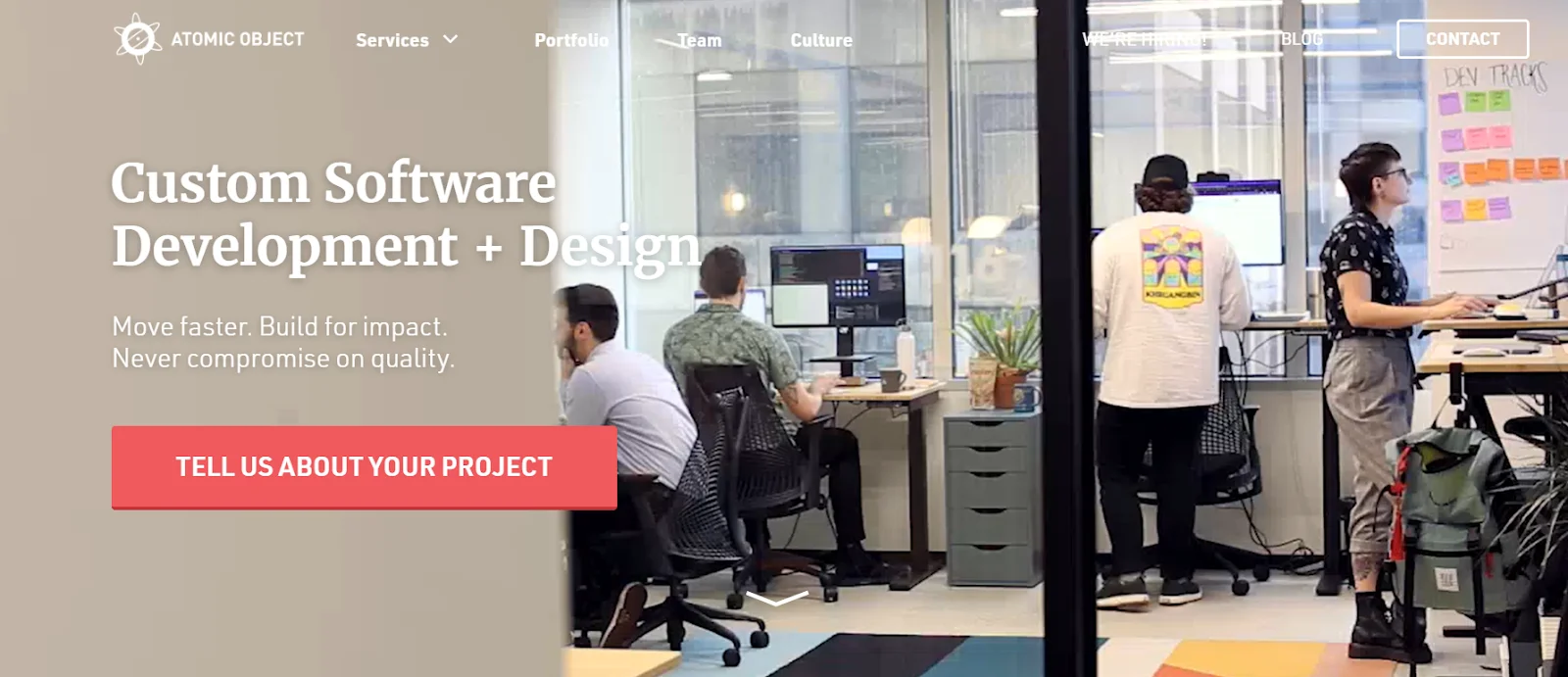
Founded in 2001, Atomic Object is an employee-owned custom software development agency with offices in Grand Rapids, Chicago, Ann Arbor, and Raleigh-Durham. The company’s primary focus is on creating software systems for online, mobile, desktop, cloud, and IoT platforms with a strong emphasis on collaborative problem-solving, human-centered design, and transparent communication.
Their services include developing new products, improving current systems, updating legacy software, and integrating cutting-edge technology like cloud and artificial intelligence. The company has worked with a wide range of clients, including large corporations and mid-sized manufacturers.
6. Rockwell Automation
Rockwell Automation is a multinational industrial automation and digital transformation company that offers software development for manufacturing. In particular, Rockwell’s FactoryTalk portfolio is positioned as a comprehensive industrial software suite for operations and automation, offering features like:
- production execution capabilities across plants
- maintenance/asset information management
- role-based operational data access and more
Specifically for manufacturing execution, Rockwell provides FactoryTalk MES, made to monitor production data, manage resources, and enforce quality and traceability. It frequently integrates with shop floor automation and IoT devices.
7. Entrans
Entrans is an expert in software development for manufacturing companies. However, the company specializes in helping expanding businesses with organizational growth and automation. This way, Entrans focuses on manufacturers in the expansion stage who need both technological solutions and strategic direction to scale their operations.
Through the implementation of supporting technology platforms and software development and business process consultancy, their ecosystem approach assists manufacturers in navigating the organizational changes that come with digital transformation.
8. Saritasa
Saritasa offers custom software development with an emphasis on system automation, user-facing apps, and specific business procedures. Instead of developing end-to-end platforms, their manufacturing projects frequently entail digitizing particular operational processes.
So they are renowned for software development for manufacturing, including creating workflow tools, mobile apps, and dashboards that increase operational teams’ adoption and usefulness. That’s why manufacturers usually choose Saritasa to address well-defined operational issues without undergoing extensive system transformation.
9. PTC (ThingWorx)
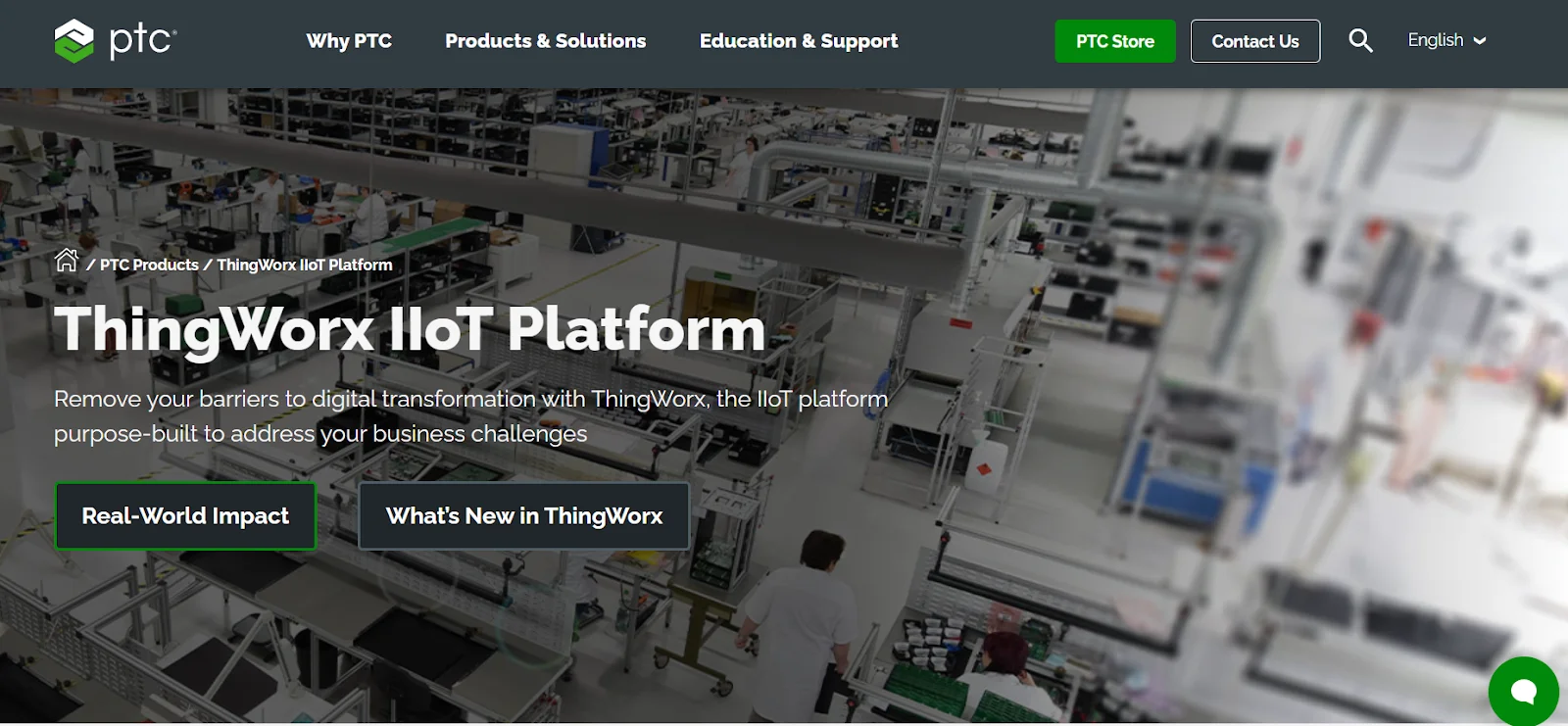
Designed to assist manufacturers and industrial operators in connecting assets and systems, ThingWorx is PTC’s industrial IoT and AI platform. With deployment options for on-premises, cloud, or hybrid systems, PTC centers ThingWorx around end-to-end capabilities.
Additionally, PTC emphasizes bundled solutions such as service-focused apps that depend on real-time asset monitoring, as well as native analytics for diagnostic, predictive, and prescriptive insights, turning into a valuable driver for manufacturers.
10. Altoros
Altoros is a software engineering and IT consulting company that creates unique platforms with a focus on modernization, cloud-native engineering, and scalable solutions. They focus on providing end-to-end solution development and assisting organizations with the migration and replatforming of old workloads to cloud-native architectures.
Furthermore, Altoros is often associated with Industrial IoT patterns. These patterns encompass real-time monitoring, the integration of operational technology with IT systems, and the development of architectures capable of handling continuous event and sensor data streams.
As a result, Altoros accumulates a portfolio of projects that demonstrate its expertise with high-load, distributed, and fail-safe systems, including work on industrial IoT platforms.
How to Choose the Right Partner for Software Development for Manufacturing
For you, we’ve prepared a brief but comprehensive checklist of how to choose the vendor that can be more than a one-time-stand contract but a long-term technological partner. This involves both technical advancements and cultural fit. Begin by shortlisting potential vendors, and then proceed with the following:
- Verify case studies that are common to manufacturing or specific to your needs.
- Evaluate the level of integration they offer.
- Verify the approach for modernizing outdated systems:
- Examine not just what they construct, but also how they collaborate with manufacturing teams.
- Evaluate their delivery discipline and engineering culture.
- Be mindful of continuity and ownership.
- Demand quantifiable KPIs rather than assurances.
- Select collaborators who view software as a product rather than a project.
Long-term partners make plans for evolution, handover, and maintainability. They create systems that can be expanded by additional teams, withstand staff changes, and accommodate new factories or product lines.
Lastly, software used in manufacturing might last for years or even decades. You need a partner that understands your decision-making pace, is open and honest about risks, and feels at ease questioning presumptions.
The Bottom Line
Competitiveness in 2026 will be determined by how well software development for manufacturing integrates data, replicates actual processes, and changes with the plant. Selecting a vendor that can evolve alongside your operations, technology, and business goals over time is more important than choosing the most stunning software stack.
Devox Software serves industrial and logistics companies that see software as long-term infrastructure rather than a one-time installation. Our goal is to create flexible, integration-ready systems that facilitate incremental modernization, quantifiable operational enhancements, and ongoing development without disrupted operations. If you don’t know where to start, we’re ready to help.
Frequently Asked Questions
-
When should we choose custom software instead of off-the-shelf manufacturing tools?
Do your processes grant you a competitive edge? Are integrations in software development for manufacturing a major pain point? Are you forced to use workarounds and manual reconciliation a lot? Try custom products.
On the contrary, standard operations are best served by off-the-shelf systems, but when you require a platform that can adapt to your plant’s changing needs without vendor restrictions, bespoke custom products win.
-
How long does custom software development for manufacturing usually take?
Phased delivery wins time as long as many other techniques, which are no problem for an experienced vendor.
An MVP, for instance, can be completed in about 8–16 weeks after discovery and architecture, and its expansion in waves over a period of 6–18 months. Though the complexity of the integration, data preparedness, and the number of workflows you wish to standardize all play a major role in the schedule.
-
Can you integrate with legacy machines, PLCs, and SCADA without stopping production?
True, the task is challenging, but not impossible. To solve this problem, most projects use designs that don’t interrupt production, like edge gateways, protocol adapters, and “shadow mode” data capture, where the new system checks and confirms everything before taking over. You add audit logs and rollback paths, phase cutovers by workflow and shift, and only change authority when exceptions and data behave appropriately.
-
What ROI metrics should we track to prove the project worked?
A limited number of financial operational KPIs, such as throughput/yield, scrap/rework rate, labor time per task, maintenance cost, inventory accuracy/stockouts, downtime minutes, and time-to-detect/time-to-recover, will do well. Prior to launch, you need to baseline them, and after deployment, then measure them every week.