


We convert fragile monoliths to containerized .NET 8+ and Java 21 services on Kubernetes by mapping domain boundaries, writing data in parallel until parity is established, and opening up new paths behind feature flags. So, users get service all the time, and the platform can be changed in the future.

Why It Matters
VB6, Delphi, and WinForms don't get updates or security fixes, putting you at risk of compliance and security issues.
However, there are more reasons to convert legacy apps to contemporary systems. Here are some other grounds why businesses choose to migrate from VB6/Delphi/WinForms to .NET Core/WPF/Web SPA:
- Bad Performance: Legacy architectures struggle with speed, scalability, and compatibility across different devices.
- Limited Integration: Old technology can’t easily link to APIs, cloud platforms, or new analytics tools.
- Business Agility: Moving to .NET Core, WPF, or Web SPAs enables faster deployments, task automation, and budget savings in the long run.
- Talent Gap: There aren’t as many engineers who work with old programming languages, which makes it very difficult to hire and grow a development team.
What We Offer
All-in-One Services You Get
-
Legacy App Conversion Services
-
Legacy App Audit and Assessment Services
Learn a lot about the health, risks, and the need for modernization. We use ourAI Solution Accelerator™ to check for technological debt, hidden dependencies, and compliance gaps by looking at architecture, performance, and security. The end result is a detailed plan that lowers costs, risks, and implements smooth changes.
-
Application Re-architecture and Refactoring Services
Our app re-architecture services break down complicated monoliths into small functions that take months to negotiate, e.g., monolith to microservices .NET modernization. We break down domain barriers, turn high-throughput modules into event-driven services, and remove bottlenecks. As a result, you get a modular design that can grow horizontally, recover quickly, and become innovation-friendly.
-
Database Migration Services
Move to new platforms without any problems or unexpected downtime. Our AI Solution Accelerator™ improves data structures, cleans up outdated datasets, and transports data to the cloud or a hybrid environment without losing any of it. Your data ecosystem will be faster, more reliable, and more scalable as a result. It will also be able to handle any problems or changes that may come up.
Benefits
Value We Provide
01
Excellent Quality
The PMO (Project Management Office), BAO (Business Analysis Office), and QMO (Quality Management Office) all work together to ensure meticulous execution and reasonable costs. So, no matter how complex it is, the Delphi to .NET migration and others go as anticipated.
02
Less Time to Market
The proprietary AI Solution AcceleratorTM tool, CI/CD pipelines, automated QA, static code analysis, and Infrastructure as Code (IaC) streamline the Delphi to VB NET migration and others. As a result, we speed up the entire development process by an average of 30%.
03
Compliance according to ISO 27001
With thorough internal policies, best tools for VB6 modernization, and vetted experts, Devox Software adheres to ISO 27001 security standards. This ensures the safe and secure handling of the client's assets, environments, and sensitive information at every SDLC stage.
04
Full Lifecycle Support
We aim to surpass the role of a one-time vendor, offering a long-term tech partnership, delivering solutions that help to foster real business outcomes. That’s why the full-service support for the Delphi to NET migration assists you at every process stage.

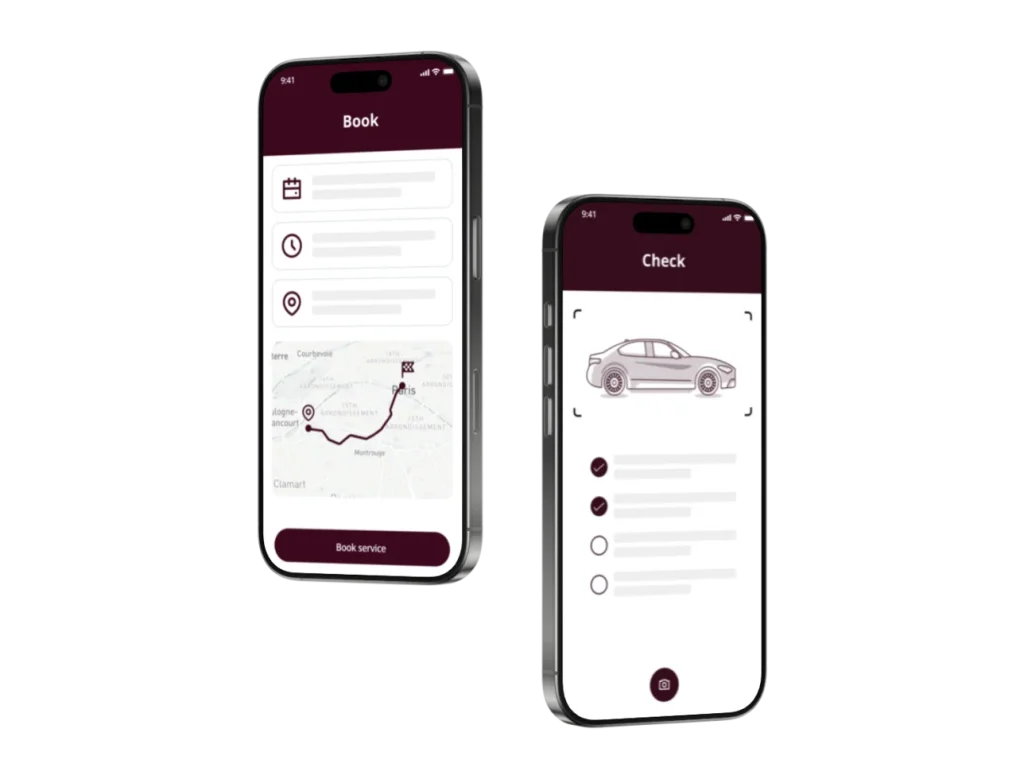
 LOGISTICS & AUTOMOTIVE
Otoqi: Custom Fleet Management System and Driver App for Pan-European Car Logistics
A turn-key transport management solution (TMS) that helps deliver cars throughout Europe.
Additional Info
Core Tech:
- Angular
- Node.js
- PostgreSQL
- REST API
- AI algorithms
- Keycloak
- Selenium
Country:
 France

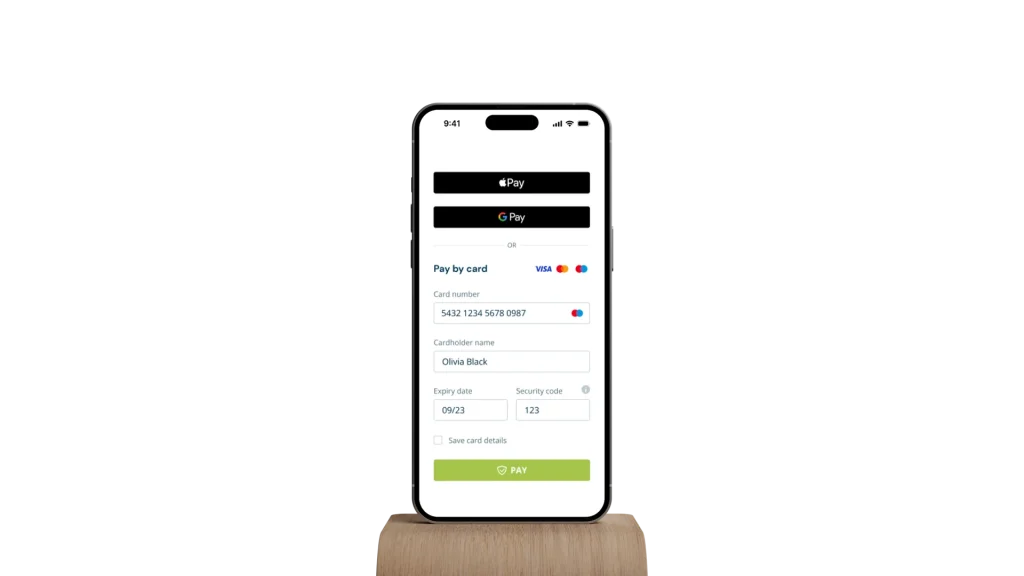
FINTECH
FinTech Platform for Invoicing and Secure Transactions
A fintech platform that safeguards online payments using encryption, MFA, and AI-driven fraud detection.
Additional Info
Core Tech:
- .NET microservices
- Angular 8
- PostgreSQL
- Multi-Factor Authentication (MFA)
- End-to-End Encryption
- AI-based Fraud Detection

LOGISTICS
Enabling Real-Time Teleoperation of a Multi-Purpose Robotic Platform
A remote control system for a multi-purpose robotic platform needs a solid backend. Real-time commands, video streaming, and video powered by neural networks are among the baseline features, forming the backbone for efficient teleoperation.
Additional Info
Core Tech:
- .NET Framework
- Razor
- PostgreSQL
- Xamarin
- YOLO
Country:
 United Kingdom
Testimonials
Testimonials



 Sweden
The solutions they’re providing is helping our business run more smoothly. We’ve been able to make quick developments with them, meeting our product vision within the timeline we set up. Listen to them because they can give strong advice about how to build good products.
Carl-Fredrik Linné
Tech Lead at
CURE Media



 United States
We are a software startup and using Devox allowed us to get an MVP to market faster and less cost than trying to build and fund an R&D team initially. Communication was excellent with Devox. This is a top notch firm.
Darrin Lipscomb
CEO, Founder at
Ferretly



 Australia
Their level of understanding, detail, and work ethic was great. We had 2 designers, 2 developers, PM and QA specialist. I am extremely satisfied with the end deliverables. Devox Software was always on time during the process.
Daniel Bertuccio
Marketing Manager at
Eurolinx


 Australia
We get great satisfaction working with them. They help us produce a product we’re happy with as co-founders. The feedback we got from customers was really great, too. Customers get what we do and we feel like we’re really reaching our target market.
Trent Allan
CTO, Co-founder at
Active Place


 United Kingdom
I’m blown up with the level of professionalism that’s been shown, as well as the welcoming nature and the social aspects. Devox Software is really on the ball technically.
Andy Morrey
Managing Director at Magma Trading



 Switzerland
Great job! We met the deadlines and brought happiness to our customers. Communication was perfect. Quick response. No problems with anything during the project. Their experienced team and perfect communication offer the best mix of quality and rates.
Vadim Ivanenko
COO at
Optherium


 United States
The project continues to be a success. As an early-stage company, we're continuously iterating to find product success. Devox has been quick and effective at iterating alongside us. I'm happy with the team, their responsiveness, and their output.


 Sweden
We hired the Devox team for a complicated (unusual interaction) UX/UI assignment. The team managed the project well both for initial time estimates and also weekly follow-ups throughout delivery. Overall, efficient work with a nice professional team.
John Boman
Product Manager at
Lexplore



 Canada
Their intuition about the product and their willingness to try new approaches and show them to our team as alternatives to our set course were impressive. The Devox team makes it incredibly easy to work with, and their ability to manage our team and set expectations was outstanding.
Tamas Pataky
Head of Product at
Stromcore



 Estonia
Devox is a team of exepctional talent and responsible executives. All of the talent we outstaffed from the company were experts in their fields and delivered quality work. They also take full ownership to what they deliver to you. If you work with Devox you will get actual results and you can rest assured that the result will procude value.
Stan Sadokov
Product Lead at
Multilogin


 United Kingdom
The work that the team has done on our project has been nothing short of incredible – it has surpassed all expectations I had and really is something I could only have dreamt of finding. Team is hard working, dedicated, personable and passionate. I have worked with people literally all over the world both in business and as freelancer, and people from Devox Software are 1 in a million.
Mark Lamb
Technical Director at M3 Network Limited
FAQ
Also Asked
-
How to modernize old VB applications?
Firstly, audit dependencies and UX, then choose a target tech stack that fits goals and opportunities. Extract business logic into .NET class libraries via adapters, keeping the legacy UI running. Additionally, try to automate the conversion, then refactor the architecture, data access, and state. Eventually, rebuild the UI, test, and ship via containers and CI/CD.
-
What’s the best modernization path for Delphi to VB NET migration?
The first step in any case is to separate the UI from the business logic. We move logic into .NET 8+ class libraries via adapters. We then change the UI. A “strangler” method helps a lot, releasing one module at a time with feature flags and contract tests to ensure everything is secure.
-
Should we rewrite or migrate our legacy WinForms application through WinForms to WPF migration?
In this case, replace a big-bang rewrite with the migrate-then-improve approach. Move logic to .NET libraries, keep WinForms operating for now, and subsequently change the UI to a new platform. Only rewrite everything when the architecture or user experience is lagging or when third-party controls cease upgrades.
-
How can we preserve business logic when we migrate legacy app to modern architecture?
Follow this algorithm. Make a stable “contract of record”. Put old logic behind adapters, add approval or golden-master tests to lock in behavior, move logic into .NET libraries, and test it all with the same test harness. Change the UI or hosting model. Only after that.
-
Is it possible to automate the migration process from VB6/Delphi to .NET?
AI tools for legacy code modernization partially handle automation. Why partially? Expect 50–80% of the syntax and project scaffolding to be automated, but 0% of the architecture and UX. Use converters to speed up stubs, and then manually refactor for globals, events, data access, and controllers from other companies.
-
What’s the most cost-effective strategy for modernizing legacy desktop apps?
Let’s give you an example. Here’s the following Delphi to .NET conversion tutorial.
Put work in order based on business value and risk:
1) Make data contracts stable;
2) Move core services to .NET;
3) Keep the old UI with shims;
4) Change the UI in pieces;
5) Get rid of shims.
This gets things done quickly, cuts down on freeze time, and cuts down on double maintenance.
-
How do we choose between WinForms vs WPF vs Web?
It depends on the project specifics. Choose based on how many people will use it, if it needs to work offline, and the talents of your team, for instance:
- WPF/WinUI is best for desktops with many features, hardware, and peripherals.
- Blazor (Server/WebAssembly) is faster for .NET teams and web content.
- SPA (React/Angular/Vue + .NET API) has the biggest pool of web expertise and is best for web UX.
-
What are the main performance and scalability benefits after migration?
VB6 vs .NET Core performance varies. .NET 8 has async I/O and a modern GC, better data access (EF Core/Dapper), parallelism (TPL), and containerization for elastic scaling. On the client side, virtualization, incremental rendering, and GPU-accelerated graphics (WPF) all help speed up the UI.
-
How can we refactor tightly coupled codebases into microservices or modular architectures?
Generative AI in code refactoring makes the difference. First, use a clean design and limited contexts to extract modules from a monolith. Then introduce HTTP/gRPC to enforce contracts, add contract tests, and after that, divide along natural seams like ownership and scaling hotspots. Also, you can use an API gateway or a strangler proxy to send traffic to each module. However, every stage goes smoother with AI in the game.
-
What tools or frameworks help accelerate migration to .NET Core or the web?
If you wonder how to migrate VB6 to .NET Core, see this. Apply .NET, CodeArchitects VB Migration, and Delphi’s tools for .NET as code conversion tools. At the same time, .NET Upgrade Assistant and try-convert will help you upgrade your project.
Moreover, WPF, WinUI 3, Avalonia/Uno (cross-platform), and third-party UI are all examples of desktop frameworks. In contrast, ASP.NET Core is used for web development with Minimal APIs, gRPC, Blazor, or SPA frameworks; Microsoft Identity or Keycloak helps with authentication; and Docker is employed for packaging.
-
How can we ensure UI/UX consistency after moving from WinForms to modern UI frameworks?
WPF vs web spa pros and cons vary. First, make a design system that includes tokens, spacing, typography, and components. Pick a modern control suite that fits your brand, map old controls to new parts, and run A/B screens side by side during the migration. To keep things consistent, use MVVM (WPF) or component patterns (Blazor/SPA) and a shared style dictionary.
Book a call
Want to Achieve Your Goals? Book Your Call Now!
Contact Us
We Fix, Transform, and Skyrocket Your Software.
Tell us where your system needs help — we’ll show you how to move forward with clarity and speed. From architecture to launch — we’re your engineering partner.
Book your free consultation. We’ll help you move faster, and smarter.
Let's Discuss Your Project!
Share the details of your project – like scope or business challenges. Our team will carefully study them and then we’ll figure out the next move together.
Thank You for Contacting Us!
We appreciate you reaching out. Your message has been received, and a member of our team will get back to you within 24 hours.
In the meantime, feel free to follow our social.
Thank You for Subscribing!
Welcome to the Devox Software community! We're excited to have you on board. You'll now receive the latest industry insights, company news, and exclusive updates straight to your inbox.