devox-hero (19)

MES & ERP Modernization Services for Manufacturers

Arrange a Call with Us
  • PROVE REAL FLOW

    Expose true cycle times, operator routines, and machine behavior. Get a system that mirrors plant reality, stabilizes execution, and turns daily actions into deterministic outcomes.

  • SHIP CHANGES SAFELY

    Make changes in small, controlled steps — with versioned interfaces and dual-run checks that ensure nothing breaks. Gain verified data integrity across ERP, MES, IIoT, and analytics.

  • SCALE INTELLIGENCE FAST

    Unify events and semantics to synchronize scheduling, quality, and maintenance in real time — from edge to cloud. Roll out AI models, cloud MES/ERP, and multi-plant standards that raise OEE, cut downtime, and accelerate decision speed.

  • awards
  • awards
  • awards
  • awards
  • awards
Why It Matters

Bridging the Gap Between Floor Reality and System Logic

Modernising plants is happening at a much faster pace than their systems can keep up with. Every time a new product update or line change is made, it exposes the weaknesses in older MES and ERP systems — they can’t keep track of the real cycle times, machine states, or how the operators work. As more and more manufacturers start moving to the cloud and IIoT technology, the gap between what is actually happening on the shop floor and what the system thinks is happening just gets bigger and bigger.

Getting a clear view of what’s going on is still the number one operational challenge 40% of manufacturers are making a priority of updating their MES to sort out the cycle time distortion and get their trust back in their real-time data.

The only way you’re going to get accuracy is if you can see the real structure of how things are getting done. Once you’ve mapped out the machine behaviour, the timing signatures and the workflow paths in accurate detail, then you can start modernising bit by bit — with clear boundaries, measurable outcomes and versioned interfaces. Doing it in slices like this lets you strengthen your ERP, MES, IIoT, and analytics systems without touching the production line, and keeps the modernisation process in line with the plant’s natural rhythm.

We keep systems stable during ERP modernization services for manufacturers by validating every change — CI checks, automated tests, governance rules, and step-by-step refactoring.


Modernizing unstable systems? Launching new products?

We build development environments that deliver enterprise-grade scalability, compliance-driven security, and control baked in from day one.

Check Our Portfolio
Our Edge

Why choose Devox Software?

  • Modernize
  • Build
  • Innovate

Your MES/ERP shows the structure but not what actually happens on the floor?

We rebuild it around the real flow — true cycle times, operator practice, asset behavior, and how the line actually runs.

System changes slow down every time your lines, products, or rules shift?

We design an architecture that adjusts fast, clean boundaries, stable interfaces, and integrations that work with any protocol.

Your teams adapt faster than the system does?

We capture those routines, codify them into governed workflows, and push system speed to match high-performance operations.

Cloud costs keep rising while decisions move more slowly than the floor?

We align decisions to the real production tempo — synced signals, clean timing, faster flow.

Data pipelines fall out of sync across assets, shifts, and sites?

We create one operational fabric that supports manufacturing ERP software through clear semantics, steady events, and built-in scale.

Teams can't turn daily actions into system-level intelligence?

We turn daily actions into system intelligence — captured insight, guided logic, automatic lift.

New AI capabilities outpace system evolution?

We deploy an adaptive layer that brings new models and copilots online at the speed of your operations.

Frontline expertise grows faster than platforms absorb it?

We turn that knowledge into reasoning engines that elevate decision quality across every shift.

Multiple plants require aligned innovation with local flexibility?

We build a federated core where each improvement strengthens the entire manufacturing ecosystem.

What We Offer

Services We Provide

  • ERP Modernization & Integration

    We rebuild ERP software for manufacturing into a stable, predictable operational core that stays aligned with real production behavior. Legacy constraints are removed, boundaries are cleaned up, and the system gains the clarity it needs to coordinate planning, inventory, logistics, finance, and execution in real time.

    What we deliver:

    • Domain-driven ERP reconstruction. We break your ERP monolith into clean, independent domains. Outdated modules go away, logic is rebuilt on versioned interfaces, and all hidden dependencies are mapped and fixed, so the ERP becomes easier to change and doesn’t break when you update it.
    • Cloud ERP transformation. We migrate ERP software manufacturing workloads to D365 Finance/SCM, SAP S/4HANA Cloud, NetSuite, or hybrid setups with normalized schemas, automated pipelines, and stateful, zero-disruption cutovers.
    • Enterprise integration layer. We replace fragile connectors with event-driven, standardized contracts using MuleSoft, Boomi, Azure Integration Services, or Kafka — ensuring consistent master data, order flow, and production events across ERP and MES.
    • Deterministic ERP automation. Manual procure-to-pay, order-to-ship, material moves, and costing cycles become deterministic workflows or RPA sequences with exception logic and full auditability.
    • Unified operational data models. Unified operational data models for ERP software for manufacturing industries consolidate ERP, MES, and IIoT data into one governed model with lineage-controlled pipelines and real-time analytics.

    We turn ERP for manufacturing industry into a reliable, scalable backbone — one that supports continuous production and gives your team a modernization path that can evolve at plant speed.

  • MES Implementation & Optimization

    As part of our MES modernization services, we rebuild MES around the way your plant actually runs — real machine states, operator routines, scheduling behavior, and undocumented workflow paths. Every function is validated through automated tests, CI/CD gates, and governance checks, ensuring predictable behavior across shifts and sites.

    What we deliver:

    • Greenfield MES deployment. We deploy MES (Opcenter, Plex, Tulip, AVEVA) by setting up routing, resources, quality flows, and traceability so the system mirrors how your line actually runs from the first day.
    • MES performance optimization. While MES performance optimization aligns execution with floor reality, ERP software for manufacturers ensures upstream clarity across planning, costing, and inventory signals.
    • IIoT integration. We connect your machines and controllers into one stream of clean, reliable signals, so every cycle, idle moment, alarm, or slowdown is captured the instant it happens.
    • Intelligent scheduling and dispatching. We build scheduling and dispatch rules that react to real machine states in real time, keeping orders moving without bottlenecks or guesswork.
    • Quality & traceability control. We enforce quality steps and rebuild full batch/lot genealogy so defects are traceable immediately, and compliance never interrupts production.

    We turn MES into a stable execution core — predictable, measurable, and scalable — giving your plant the consistency it needs to raise throughput and sustain performance gains.

  • Cloud Migration & Infrastructure Modernization

    We expose the exact failure points that prevent your on-prem ERP/MES from running cleanly in the cloud, then rebuild the environment with IaC, versioned configs, and CI/CD validation so infrastructure is reproducible and failure-safe. Contract-based interfaces ensure deterministic sync between ERP, MES, IIoT, and cloud services, while dual-run checks and progressive cutovers guarantee zero production downtime as workloads move.

    What we deliver:

    • ERP & MES cloud re-platforming. We migrate ERP software for manufacturing industry platforms like D365, SAP S/4HANA Cloud, NetSuite, Infor CSI, and Epicor Kinetic into cloud-native or hybrid setups.
    • Hybrid edge-cloud architectures. Local shop-floor execution (OPC/PLC connectivity, machine interfaces, low-latency logic) is combined with cloud orchestration for scheduling, analytics, and cross-plant coordination.
    • Elastic IIoT data infrastructure. We build ingestion pipelines capable of high-frequency sensor loads using Azure IoT Hub, AWS IoT Core, time-series databases, event hubs, and streaming frameworks, supporting predictive maintenance, real-time quality analytics, and OEE intelligence.
    • Multi-site cloud harmonization. We standardize MES/ERP logic, master data, reporting structures, and operational models across plants, enabling shared visibility and consistent execution.
    • Adaptive cloud scaling. Resources scale in real time based on line load, shift intensity, seasonality, IIoT message density, and analytics demand.

    We replace infrastructure that slows production with an architecture built for operational speed — enabling faster MES deployment, clean IIoT expansion, AI adoption, and synchronized execution across every plant.

  • Industrial IoT & Real-Time Monitoring

    We connect machines, sensors, and lines into one IIoT backbone that gives your team real-time visibility into how equipment actually behaves — cycle times, slowdowns, alarms, and hidden process drift — so problems surface instantly instead of hours later.

    What we deliver:

    • Full-Stack Industrial Connectivity. We connect your equipment through any industrial protocol and unify all signals into one clean, reliable data stream you can trust — a critical foundation for cloud ERP for manufacturing modernization.
    • Live equipment performance. We capture real-time machine states so your team sees cycle changes, idle time, and anomalies the moment they happen.
    • Predictive maintenance intelligence. We implement ML models that process vibration, temperature, current, and production event signals to predict failure probabilities and trigger maintenance workflows before breakdowns occur. Includes automated work order creation, downtime avoidance logic, and closed-loop feedback into MES/ERP.
    • Environmental & utility sensing. We track temperature, humidity, air, and power conditions so environmental drift never becomes a hidden cause of quality loss.
    • Edge-cloud orchestration. We architect data pipelines with local processing for latency-sensitive logic and cloud/central compute for long-term analytics, trend detection, and cross-plant benchmarking — all seamlessly integrated into our cloud ERP for manufacturing modernization strategy. Includes event buffering, schema evolution, and historian integration.

    By unifying all machine, sensor, and line-level signals into one IIoT layer, the system eliminates data silos and provides a reliable, real-time view of operations.

  • AI & Advanced Analytics

    We deploy AI and advanced analytics on top of a clean, semantically extracted data layer — restoring the real structure of machine states, production logic, and cross-system dependencies before models go live. Every model is validated through automated tests, drift checks, and CI-based quality gates, ensuring consistent accuracy under changing loads and product mixes. Controlled-scope pilots allow rapid rollout without operational risk, while governance and privacy guardrails align analytics with enterprise and regulatory requirements, including high-impact AI standards.

    What we deliver:

    • Predictive operations modeling. We use your MES and IIoT data to spot early signs of equipment failure, quality drift, or cycle variation before they become real downtime.
    • Demand intelligence. We forecast demand by combining sales, production, and supply-chain signals, so procurement, inventory levels, and line planning adjust automatically.
    • Vision-driven quality control. We add vision systems that catch defects, assembly errors, and pattern mismatches in real time and feed every result into MES for full traceability.
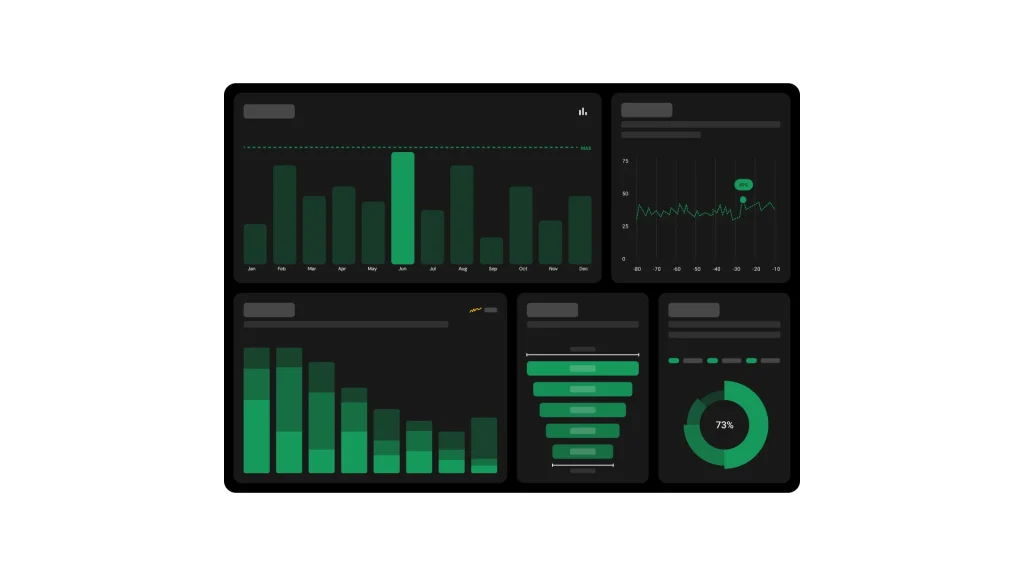
    • Advanced operational analytics. We pull streaming and historical data into clear dashboards that reveal bottlenecks, takt deviations, scrap drivers, and live exceptions across your lines.
    • Dynamic production optimization. We optimize schedules and work-order sequencing with models that react to real plant constraints, cutting changeover losses and stabilizing flow.

    We transform data from a passive byproduct into an operational advantage, giving manufacturers live, predictive, and prescriptive control over every critical variable that drives throughput, yield, and margin.

  • Supply Core Digitalization

    We make the supply chain rock solid — tying together SCM, ERP, and MES on a data model that finally makes sense, and actually shows what’s really going on between procurement, production, and logistics. We do the integration bit in tiny chunks, and each bit gets carefully checked and tested before it gets turned on.

    What we deliver:

    • Digital supply core integration. We strengthen ERP software for food manufacturing by building direct interfaces between your supply chain, production, and planning systems — automating the flow of orders, stock movements, and production signals.
    • Real-time material visibility. We implement IoT sensors, barcode/RFID infrastructure, and telemetry gateways for continuous, granular tracking of every batch and unit across inbound, in-process, and outbound logistics.
    • Chain-of-custody traceability. We give each lot a digital record of every handoff and transformation, so recalls, audits, and compliance checks become instant and fully reliable.
    • Materials intelligence. We use historical production and procurement patterns to forecast demand, adjust safety stock, and update reorder points automatically as conditions change.
    • Unified operations visibility. We build dashboards that show lead times, OTIF performance, excess stock, and demand spikes in one place, giving operations and leadership a single source of truth.

    A unified digital core ensures synchronized inventory states, order statuses, and production signals. This minimizes mismatches between what ERP thinks, what SCM expects, and what the shop floor is actually executing.

  • Automation & Robotics

    We integrate lightweight bots directly into existing production and back-office workflows without slowing them down. Every automation goes through CI/CD, testing, and governance to ensure reliability and zero disruption, creating a resilient automation layer that scales easily, removes human bottlenecks, and delivers consistent 24/7 performance across all locations.

    What we deliver:

    • RPA workflow automation. Workflow automation inside D365, NetSuite, SAP: auto-posting, schedule generation, material requests, compliance checks.
    • Robotic cell integration. Deployment of industrial robots for assembly, handling, welding, and palletizing. Integration with PLCs, SCADA, and MES through OPC-UA and fieldbus protocols.
    • Automated production lines. Synchronization of conveyors, feeders, pick-and-place systems, and QA stations. Line logic optimized for balanced takt, minimal idle, and stable throughput.
    • Computer-vision inspection. Surface defect detection, dimensional checks, label verification, and quality gating using OpenCV and industrial cameras. Automated decisioning for reject/accept logic.
    • Pick-to-light assembly. Visual cues for operators to reduce picking errors, speed up assembly, and maintain consistent quality across shifts. Robotic and automated stations deliver cycle events, scrap reasons, downtime codes, and material consumption directly into MES/ERP.

    Activating robotics and RPA in controlled slices ensures throughput is never compromised. Teams upgrade processes incrementally, maintaining stable takt time while gradually eliminating manual waste.

  • Sustainability & Energy Efficiency

    Older plants are often stuck in the dark ages, lacking real-time monitoring and automated controls, which lets energy-wasting leaks, off-peak waste, and efficiency losses go undetected for years and years. We build more efficient manufacturing systems by plugging every utility stream into real-time data and weaving those improvements into the bigger picture of our ERP modernization roadmap — it’s an ongoing process.

    What we deliver:

    • Real-time resource monitoring. We deploy IoT meters and sensors on machines, lines, compressors, HVAC systems, and utilities. Data is streamed into a unified energy telemetry model with second-level resolution.
    • Automated control. We implement intelligent controllers that optimize temperature, pressure, airflow, and power usage. Systems dynamically adjust zones, equipment modes, and load profiles based on real-time operational conditions.
    • Waste & emissions tracking. We build software modules that capture waste output, recycling flows, scrap categories, and CO₂ emissions across processes. Each material stream receives a complete digital record for audits and customer compliance.
    • Anomaly detection. We use ML models to identify energy leaks, unstable consumers, off-shift spikes, and avoidable peak loads. Insights tie directly to equipment behavior and production schedules.
    • Baseline modeling. We generate normalized energy baselines for lines, cells, and entire plants. Models support seasonal load planning, shift-based optimization, and process-level efficiency tuning.

    We build sustainability systems that reduce waste, increase energy discipline, and strengthen your position in supply chains where transparency, efficiency, and ESG readiness now define long-term competitiveness.

  • Cybersecurity for Manufacturing Systems

    We make sure manufacturing environments are secure by designing security into the very fabric of our systems and validating every single change we make to our OT, IIoT, or ERP systems for manufacturing via our CI/CD policy gates and automated checks — it’s all part of the release process.

    What we deliver:

    • Factory network hardening. We redesign your plant network into secure zones that isolate PLCs, HMIs, SCADA, MES, and IIoT devices — a crucial capability when you choose ERP modernization partner manufacturing that prioritizes cybersecurity from the ground up.
    • PLC/Robot encryption lockdown. We lock down controllers and robots with authenticated access, encrypted traffic, and protected firmware so no one can alter machine behavior without authorization.
    • IIoT edge hardening. Sensors, edge devices, condition-monitoring modules, and data collectors receive hardened configurations, device-level identity, and encrypted telemetry pipelines.
    • OT Anomaly Detection. We deploy anomaly detection that understands machine states, control loops, cycle patterns, and expected traffic volumes. Alerts trigger when behavior deviates from operational baselines — not just generic IT signatures.
    • MES-ERP API Security. We protect all data flows between MES, ERP, and shop-floor systems and secure remote access points so no unauthorized connection can reach your controllers or equipment dashboards.

    We build cybersecurity foundations that protect the physical execution layer of manufacturing to support MES system upgrade manufacturers and ensure machines run reliably, data remains trustworthy, and production stays stable under digital risk.

Our Process

Modernization Process with Cross-Cutting Stability Tracks

01.

01. Semantic Mapping of the Actual Plant Logic

We extract real workflows, machine states, data paths, and scheduling rules exactly as they run today, eliminating guesswork and creating a precise digital baseline for modernization.

02.

02. Low-Risk Modernization in Controlled Slices

Instead of large cutovers, each component — integrations, data models, MES modules, ERP functions — is rebuilt and activated in isolated slices. Dual-run checks validate correctness against real production flow, ensuring modernization without plant disruption.

03.

03. CI/CD for Manufacturing Systems

Modernized components pass through automated tests, lineage checks, data-quality validation, and domain-specific performance tests. Releases move through versioned environments with deterministic promotion rules, giving ERP software for food manufacturers a predictable, traceable upgrade path.

04.

04. Hardened Integration and Security Gates

Every integration, interface, and model passes security-by-design controls: role boundaries, encrypted channels, governed APIs, and event contracts. This prevents legacy vulnerabilities from propagating into the new architecture and keeps MES/ERP aligned with evolving compliance standards.

05.

05. Continuous Monitoring and Adaptive Optimization

Real-time monitoring across MES, ERP, IIoT, and workflows provides ground truth on load, drift, data quality, and process stability for manufacturing ERP solutions. Auto-remediation paths correct anomalies early, while feedback loops refine schedules, models, and operational logic over time.

  • 01. Semantic Mapping of the Actual Plant Logic

  • 02. Low-Risk Modernization in Controlled Slices

  • 03. CI/CD for Manufacturing Systems

  • 04. Hardened Integration and Security Gates

  • 05. Continuous Monitoring and Adaptive Optimization

Benefits

What Sets Us Apart as a Modernization Partner

01

Certainty of Outcome

Every modernization initiative for an ERP for software manufacturing industry begins with a reconstruction of the plant's true operational state: machine dynamics, routing logic, material flows, operator routines, scheduling constraints, and cross-system dependencies. This evidence baseline becomes the single source of architectural truth that guides design, sequencing, and integration. Decisions align with how the production network actually behaves under load, which creates predictable upgrades, stable interfaces, and a modernization roadmap shaped by operational reality rather than assumptions.

02

Phased Transformation

Modernization advances through contained slices, each shaped as an independent unit of logic with its own acceptance criteria, domain tests, data validation, and performance thresholds. Slices move through versioned environments with CI/CD gates that enforce consistency and verifiable behavior at each step, directly reducing the cost of ERP modernization manufacturing industry by ensuring efficient deployment and validation. This approach establishes a steady modernization rhythm, delivers traceable improvements, and maintains throughput and coordination across plants without introducing volatility into core workflows.

03

Guaranteed Stability and Resilience

While functional upgrades progress, several stability layers operate continuously — a best practice to choose ERP modernization partner manufacturing that prioritizes governance policies, automated test suites, data lineage checks, and security validation across every integration and workload route. These parallel tracks maintain system coherence, protect interoperability across MES, ERP, IIoT, and cloud components, and ensure that every modernization cycle strengthens — rather than strains — the operational backbone.

Built for Compliance

Industry Regulations We Master

Compliance sits inside the modernization architecture itself. Every release passes through governed pathways, versioned interfaces, and automated checks that align MES, ERP, IIoT, and cloud environments with current industrial, safety, and data-governance standards.

[Industrial Automation & Control Standards]

  • ISA-95

  • ISA-88

  • IEC 62443 (OT Security)

  • OPC UA Specifications

  • ISO 13849 (Machine Safety)

[Quality, Safety & Manufacturing Practice Requirements]

  • ISO 9001

  • ISO 45001

  • IATF 16949 (Automotive)

  • cGMP / GAMP 5 (Pharma & Food)

  • HACCP

[Data, Security & Infrastructure Governance]

  • ISO/IEC 27001:2022

  • NIST Cybersecurity Framework

  • SOC 2

  • CMMC (Defense)

  • Zero-Trust Standards

[Supply Chain & Traceability Regulations]

  • FSMA 204

  • EU Traceability Reg

  • UDI (Medical Devices)

  • Digital Product Passports

  • GS1 Standards

[Environmental, Energy & Sustainability Frameworks]

  • ISO 14001

  • ISO 50001

  • EPA GHG Reporting

  • EU ETS

  • Corporate Sustainability Reporting

[AI Governance & Algorithmic Accountability]

  • EU AI Act (2024/1689)

  • NIST AI RMF 1.0

  • ISO/IEC 42001 (AI Management Systems)

Case Studies

Our Latest Works

View All Case Studies
Scalable, AI-Powered TMS to Drive Market Expansion for a Logistics Company Scalable, AI-Powered TMS to Drive Market Expansion for a Logistics Company

Scalable, AI-Powered TMS to Drive Market Expansion for a Logistics Company

A logistics multi-module platform that helps manage parcel tracking, intelligent routing, barcode generation, and returns.

Additional Info

Core Tech:
  • Node.js
  • React.js
  • PostgreSQL
  • AWS Cloud Infrastructure
  • NetworkX
Country:

United Kingdom United Kingdom

Stromcore Stromcore

Stromcore: Web Interface for Real-Time Battery Monitoring in a PaaS Logistics Platform

A web interface enabling real-time forklift battery tracking and predictive maintenance scheduling.

Additional Info

Core Tech:
  • React
  • TypeScript
  • Node.js
  • GraphQL
  • AWS
Country:

Canada Canada

Intelligent Refactoring of a Legacy VB6/WinForms HealthTech System Intelligent Refactoring of a Legacy VB6/WinForms HealthTech System

Intelligent Refactoring of a Legacy VB6/WinForms HealthTech System

Devox Software used AI code assistants to refactor a legacy VB6/WinForms HealthTech platform into a secure, compliant .NET 8 system.

Additional Info

Core Tech:
  • .NET 8
  • C#
  • WinForms
  • Avalonia
  • PostgreSQL
  • AWS
  • GitHub Copilot
Country:

USA USA

Testimonials

Testimonials

Carl-Fredrik Linné                                            Sweden

The solutions they’re providing is helping our business run more smoothly. We’ve been able to make quick developments with them, meeting our product vision within the timeline we set up. Listen to them because they can give strong advice about how to build good products.

Darrin Lipscomb Darrin Lipscomb
Darrin Lipscomb United States

We are a software startup and using Devox allowed us to get an MVP to market faster and less cost than trying to build and fund an R&D team initially. Communication was excellent with Devox. This is a top notch firm.

Daniel Bertuccio Daniel Bertuccio
Daniel Bertuccio Australia

Their level of understanding, detail, and work ethic was great. We had 2 designers, 2 developers, PM and QA specialist. I am extremely satisfied with the end deliverables. Devox Software was always on time during the process.

Trent Allan Trent Allan
Trent Allan Australia

We get great satisfaction working with them. They help us produce a product we’re happy with as co-founders. The feedback we got from customers was really great, too. Customers get what we do and we feel like we’re really reaching our target market.

Andy Morrey                                            United Kingdom

I’m blown up with the level of professionalism that’s been shown, as well as the welcoming nature and the social aspects. Devox Software is really on the ball technically.

Vadim Ivanenko Vadim Ivanenko
Vadim Ivanenko Switzerland

Great job! We met the deadlines and brought happiness to our customers. Communication was perfect. Quick response. No problems with anything during the project. Their experienced team and perfect communication offer the best mix of quality and rates.

Jason Leffakis Jason Leffakis
Jason Leffakis United States

The project continues to be a success. As an early-stage company, we're continuously iterating to find product success. Devox has been quick and effective at iterating alongside us. I'm happy with the team, their responsiveness, and their output.

John Boman John Boman
John Boman Sweden

We hired the Devox team for a complicated (unusual interaction) UX/UI assignment. The team managed the project well both for initial time estimates and also weekly follow-ups throughout delivery. Overall, efficient work with a nice professional team.

Tamas Pataky Tamas Pataky
Tamas Pataky Canada

Their intuition about the product and their willingness to try new approaches and show them to our team as alternatives to our set course were impressive. The Devox team makes it incredibly easy to work with, and their ability to manage our team and set expectations was outstanding.

Stan Sadokov Stan Sadokov
Stan Sadokov Estonia

Devox is a team of exepctional talent and responsible executives. All of the talent we outstaffed from the company were experts in their fields and delivered quality work. They also take full ownership to what they deliver to you. If you work with Devox you will get actual results and you can rest assured that the result will procude value.

Mark Lamb Mark Lamb
Mark Lamb United Kingdom

The work that the team has done on our project has been nothing short of incredible – it has surpassed all expectations I had and really is something I could only have dreamt of finding. Team is hard working, dedicated, personable and passionate. I have worked with people literally all over the world both in business and as freelancer, and people from Devox Software are 1 in a million.

FAQ

Frequently Asked Questions

  • How can AI-powered MES improve production efficiency and reduce downtime?

    AI-powered MES in ERP software for small manufacturing businesses uncovers the real execution patterns behind machine behavior, operator actions, and micro-delays, and uses that insight to progressively refactor routing, dispatching, and equipment-aligned scheduling.

    Efficiency grows as MES evolves slice by slice, with each refinement validated through CI tracks, automated tests, and stability checks that protect plant flow. Parallel stability layers monitor state transitions, sensor fidelity, historian alignment, and upstream/downstream data coherence, ensuring that optimization never compromises plant flow.

    Downtime decreases for ERP for small manufacturing businesses as AI models read early signals of cycle degradation, pattern drift, and routing inefficiency, triggering targeted adjustments in dispatching, maintenance planning, and machine utilization.

  • What are the key steps in modernizing legacy ERP software manufacturing industry systems for manufacturers?

    Modernizing a legacy ERP starts with evidence-first reconstruction of the actual system behavior across modules, integrations, data models, and production-shaping logic. Once the boundaries are clear, modernization of the ERP system for manufacturers moves through controlled slices. Each slice represents a focused ERP capability — a costing workflow, procurement path, material ledger segment, planning engine rule, or interplant transfer function. Slices are rebuilt with stabilized logic, consistent schemas, and governed extension layers, then validated in CI/CD pipelines with domain tests, integration checks, data-lineage validation, and performance baselines.

    Versioned domains maintain long-term architectural clarity. Each functional boundary forms a stable contract that harmonizes with MES, MRP, quality systems, and IIoT data flows. Interfaces evolve through structured versions, enabling progressive upgrades, phased cloud transformation, cross-plant standardization, and multi-phase cutovers aligned with real manufacturing cycles. This approach transforms legacy ERPs into stable, transparent, and adaptable systems fit for high-velocity manufacturing.

  • What questions should I ask when selecting an MES/ERP modernization partner?

    A strong modernization partner demonstrates an engineering approach grounded in real operational behavior, controlled evolution, and disciplined release cycles. The right questions reveal whether a vendor works at that level.

    Do you reconstruct actual system behavior and workflows within your manufacturing ERP process before planning?

    Modernization gains precision when the partner analyzes transaction flows, machine-to-system interactions, operator patterns, integration timing, and data lineage. Evidence-first discovery shows whether decisions come from real plant behavior or generic assumptions.

    Do you modernize through controlled slices for the best ERP for small manufacturing business instead of multi-month phases?

    Slice-based evolution creates steady, verifiable progress. Each enhancement appears as a contained unit with its own tests, metrics, and acceptance path. This approach aligns modernization with production tempo and prevents architectural drift.

    Do you maintain cross-cutting stability tracks during all upgrades?

    Continuous validation, data-quality checks, domain-level tests, governance controls, and CI-driven verification keep systems coherent while modernization advances. These tracks define whether the partner can scale upgrades without risking production stability.

    Do you support versioned boundaries between MES, ERP, and integrations?

    Versioned domains preserve architectural clarity in manufacturing ERP software small business, maintaining clean interfaces while evolving modules, and enabling progressive upgrades across plants and cloud environments.

    Do you use AI-assisted discovery and engineering acceleration?

    AI identifies hidden dependencies, configuration drift, timing anomalies, and cross-system patterns far faster than manual analysis. It also accelerates refactoring and test creation, reducing overall modernization effort while strengthening accuracy.

    A partner who answers these questions confidently operates with the discipline required for complex MES/ERP modernization — clear boundaries, predictable releases, continuous stability checks, and visibility into the plant’s operational truth.

  • How long does a full MES/ERP modernization project take, and what is the ROI?

    AI acceleration shortens discovery, speeds slice validation, and improves cutover rhythm by exposing real transactional patterns and timing drift early.

    AI-assisted acceleration shortens discovery and implementation cycles in the manufacturing ERP process, uncovering real transactional patterns, domain boundaries, configuration drift, and timing anomalies much earlier in the project, which reduces analysis overhead and enables engineers to focus on building the refined logic. It also speeds test creation, slice validation, and environment checks, improving the rhythm of cutover waves across plants or business units.

    Typical end-to-end modernization spans 9–18 months for mid-sized manufacturing systems, але the benefits of ERP modernization manufacturing start even earlier through continuous releases, improved cross-system coherence, and operational alignment. Plants gain a more predictable execution environment, a scalable architecture, and an upgrade path synchronized with real production tempo — the combination that drives sustainable ROI.

  • What are the biggest risks in MES/ERP modernization, and how can they be mitigated?

    Rushing modernization over legacy operational logic can distort transactions, material movement, and machine-state understanding.

    Risk decreases when every change to modernize legacy ERP system manufacturing enters the system through governed activation. Each upgrade flows through controlled environments with rule-based promotion, timestamp-consistency checks, cross-module reconciliation, and domain-specific validation. These checks confirm that manufacturing software ERP workflows, data paths, and integrations behave as expected at real production tempo.

    Data-related risks reduce when modernization relies on data lineage tracking and CI/CD validation. Lineage reveals which tables, signals, and events influence each domain, while CI/CD enforces correctness through automated tests, schema validation, integration checks, and performance baselines.

    Architectural risk declines when modernization proceeds through controlled slice boundaries. Each slice contains its own logic, interfaces, and verification rules, which limit the blast radius of any issue and create a predictable upgrade rhythm. Boundaries preserve clarity between domains, sustain stable interfaces, and allow ERP, MES, and IIoT layers to advance without cross-system disruption.

  • Can our current on-premise ERP integrate with AI-enabled MES and cloud systems?

    Yes — integration succeeds for small business manufacturing ERP software when the architecture evolves through versioned interfaces and stable boundaries rather than broad system replacement. Once ERP-production interactions are clarified, the upgrade path emerges as a disciplined sequence instead of a single disruptive jump.

    AI-enabled MES platforms operate through richer event models, higher-frequency telemetry, and contextualized cycle data. ERP connects to these capabilities through versioned interfaces: structured, governed contracts that translate execution events into planning, costing, and inventory updates without restructuring the entire ERP core. These interfaces evolve through clear versions, allowing the MES layer to grow its intelligence while the ERP remains stable.

    Integration remains safe when manufacturing ERP softwares evolves through structured governance pathways. Each pathway enforces data validation, timestamp alignment, ID reconciliation, and rule-based event promotion.

    Incremental cloud and telemetry integration lets planning, execution, and AI mature together into a unified, stable operational fabric.

  • What cost savings or efficiency gains can be expected from implementing the best manufacturing ERP/MES?

    AI-driven MES/ERP modernization creates tangible savings for ERP for small business manufacturing by restructuring how systems evolve and how engineering work is executed. Delivery speeds up when AI captures real operational patterns and reveals how processes truly interact across the plant. With that clarity, engineers shift from broad exploration to precise improvements.

    Slice-based evolution reduces costs by isolating issues early — each slice follows a defined set of acceptance rules, undergoes domain-level testing, includes full history tracking, and carries a timestamp for transparent validation. This approach simplifies root-cause analysis and eliminates the prolonged stabilization phases that typically complicate large-scale ERP or MES rollouts. As engineering effort decreases and issue frequency drops, momentum builds — stably and predictably, enabled by continuous integration validation, automated test generation, controlled activation, and real-time system monitoring. This ensures machine-state stability, maintains smooth data flow between MES and ERP, and enables reliable material and quality tracking.

    Integration costs drop when an ERP solution for manufacturing industry modernization proceeds through well-bounded units. Clear domain boundaries reduce cross-system rework, keep interfaces stable, simplify cloud or IIoT adoption, and create a cleaner upgrade path for future extensions.

Book a call

Want to Achieve Your Goals? Book Your Call Now!

Contact Us

We Fix, Transform, and Skyrocket Your Software.

Tell us where your system needs help — we’ll show you how to move forward with clarity and speed. From architecture to launch — we’re your engineering partner.

Book your free consultation. We’ll help you move faster, and smarter.

Let's Discuss Your Project!

Share the details of your project – like scope or business challenges. Our team will carefully study them and then we’ll figure out the next move together.


    By sending this form I confirm that I have read and accept the Privacy Policy

    Thank You for Contacting Us!

    We appreciate you reaching out. Your message has been received, and a member of our team will get back to you within 24 hours.

    In the meantime, feel free to follow our social.


      Thank You for Subscribing!

      Welcome to the Devox Software community! We're excited to have you on board. You'll now receive the latest industry insights, company news, and exclusive updates straight to your inbox.