
We judge companies developing AI in the same way we judge production systems: by what works in real-world situations, such as hardware variability, the edge-cloud split, safety requirements, and operational scalability. The AI in the automotive market is booming in 2025, predicted to reach $149.04 billion with a 53.3% CAGR by 2030.
Devox Software fits this “production-first” bar when the goal is an AI system that can be deployed, monitored, governed, and improved over the years to actually move the business forward. This piece synthesized the core principles of responsible delivery and shares the outcomes. Let’s get started.
What Makes Companies that Are Developing AI Reliable? Our Evaluation Basis
While compiling the track record, we focused on one fundamental question. Does this or that particular AI development company offer a genuine business impact for investment? This way, our assessment approach was based on real cases, reputation, size, etc. These are the criteria we used to narrow down the best candidates.
| What We Looked For | Why It Matters | Evidence | |
| Automotive Domain Expertise | Proven understanding of vehicle systems, mobility platforms, and end-to-end automotive workflows | Domain depth reduces implementation risk and speeds up time-to-value | Case studies, engineers with automotive backgrounds, etc. |
| Depth of AI and Engineering Capabilities | Real ML/CV/data engineering ability across the full lifecycle | Separates production-ready AI from prototype-only delivery; ensures reliability beyond pilots and PoCs | Deployed models in live environments, MLOps setup, scalable data pipelines, measurable model performance reporting, security, and infra competence |
| Enterprise Readiness and Scalability | Enterprise-grade architecture, resilience, security, and performance at scale | Automotive workloads must scale safely; weak architecture becomes outages, breaches, or ballooning costs | Reference architectures, SLAs/SLOs, security practices, high-availability patterns, load and performance testing |
| Real-World Use Case Delivery | Delivered outcomes in predictive maintenance, connected vehicles, fleet optimization, automation, or similar high-impact workflows | Real delivery experience correlates with predictable execution and clearer ROI | Before/after metrics, dashboards tied to ops KPIs, integrations into existing systems, and production customer references |
| Compliance, Safety, and Data Governance | Data privacy, safety standards awareness | Regulated environment: weak compliance creates rework, delays, and long-term legal/security risk | Documented governance approach, privacy and security controls, audit readiness, safety considerations for model behavior, risk assessments, and clear accountability, and so on |
| Fit for Startups and Enterprises | Clear positioning by client stage | The top AI development companies depend on maturity, fit, cost predictability, and stability | Transparent engagement model and team composition, phased delivery plan, realistic timelines, pricing clarity, references matching your stage, and the ability to scale delivery |
Moreover, this shortlist is not a rating; we don’t evaluate companies and give no marks. Use this list as a hint to explore your future vendor. Here’s what we’ve got throughout research.
List of Top AI Development Companies (Automotive Version)
Below is a curated list of top companies developing AI for automotive outcomes in the US. You’ll notice enterprise-scale engineering winners that can integrate AI across legacy systems, security, and large operations.
Devox Software, Miami, Fl
Offered Services: Automotive software engineering, OTA-ready platform development, fleet intelligence, AI/ML delivery, and enterprise integrations for automotive operations.
Industries Served: Automotive and logistics startups and enterprises.
Apart from our humble assessment, we’ve included Devox Software as a top production-first AI engineering partner because the automotive offering explicitly covers OTA, AI, and fleet intelligence. The public portfolio includes specific industry-related works, which map to real-world AI use cases and integration-heavy delivery.
Moreover, an advanced proprietary pipeline like AI Solution Accelerator™, multiplied by seasoned organizational structures like the Quality Assurance Center, enables faster delivery of the value.
Applied Intuition, Mountain View, CA
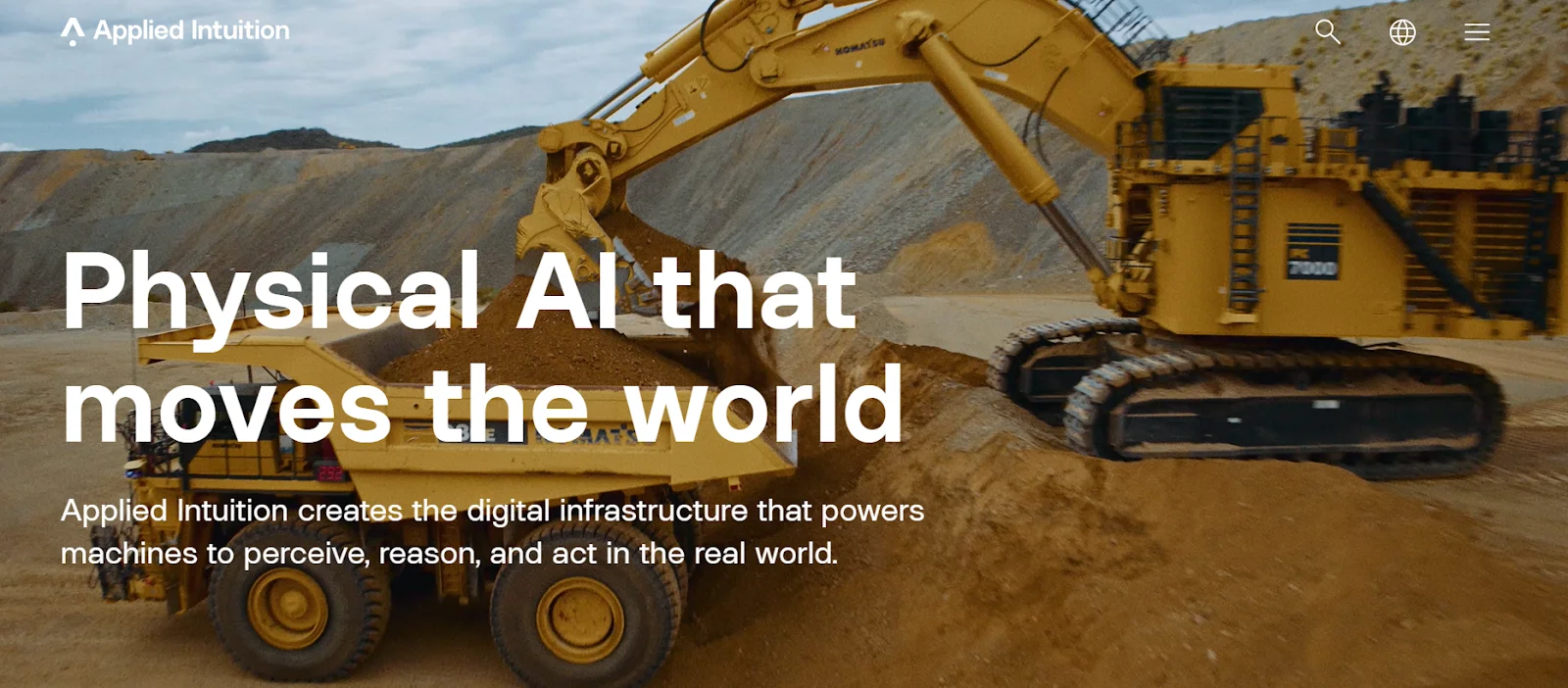
Offered Services: Self-driving car software, AI simulation platforms, and ADAS validation tools.
Industries Served: Automotive OEMs, self-driving cars.
Applied Intuition is one of the top companies in AI development in the US for teams that make sophisticated driver assistance and self-driving systems. The startup makes simulation and validation software that lets car engineers evaluate how AI will act in millions of real-world driving situations before putting it into use.
This method cuts down on safety hazards and development time by a lot. Applied Intuition gives OEMs and mobility startups working on autonomy the tools they need to test AI models, make them more reliable, and fulfill demanding automotive compliance standards.
Sibros, Santa Clara, CA
Offered Services: Software for connected vehicles, over-the-air upgrades, and platforms for vehicle data intelligence.
Industries Served: Electric cars, automotive OEMs, and commercial fleets.
Sibros belongs to top companies developing AI, making automobile software that connects to the cloud and monitors cars in real time. It releases telematics platforms, connected car systems, fleet management systems, etc.
One of the main directions is software-defined cars. As a result, Sibros’s software lets manufacturers keep making safer cars, perform better, and be easier to operate without having to do expensive recalls or go to the dealership.
Cerence, Boston, MA
Offered Services: AI for talking in cars and voice-enabled automotive software.
Industries Served: Automotive OEMs, infotainment systems, and linked cars.
Cerence is concentrated in speech and language technology that uses AI. Its software lets drivers use voice requests to handle navigation, controls, and entertainment systems naturally.
Helping car producers make their vehicles safer and more user-friendly, Cerence is a great partner for OEMs that want smart in-cabin technologies since it is so focused on cars.
Sonatus, Sunnyvale, CA
Offered Services: Software-defined vehicle platforms and vehicle data management software.
Industries Served: Automotive OEMs and companies that offer new ways to get about.
Sonatus helps with bespoke automotive software solutions for manufacturers to have more control over vehicle data, diagnostics, and feature distribution. Its solutions help separate software innovation from hardware limits. OEMs utilize their systems to speed up software upgrades, make vehicles smarter, and help with long-term digital transformation plans.
Cognata, San Francisco, CA
Offered Services: AI simulation software for self-driving and ADAS systems
Industries Served: Car manufacturers and developers of self-driving cars.
Cognata is among the top AI development companies that make simulation software to test AI-driven driving systems in virtual worlds. Thanks to this, manufacturers can test cars’ performance and dependability and nurture them.
Nuro.ai, Mountain View, CA
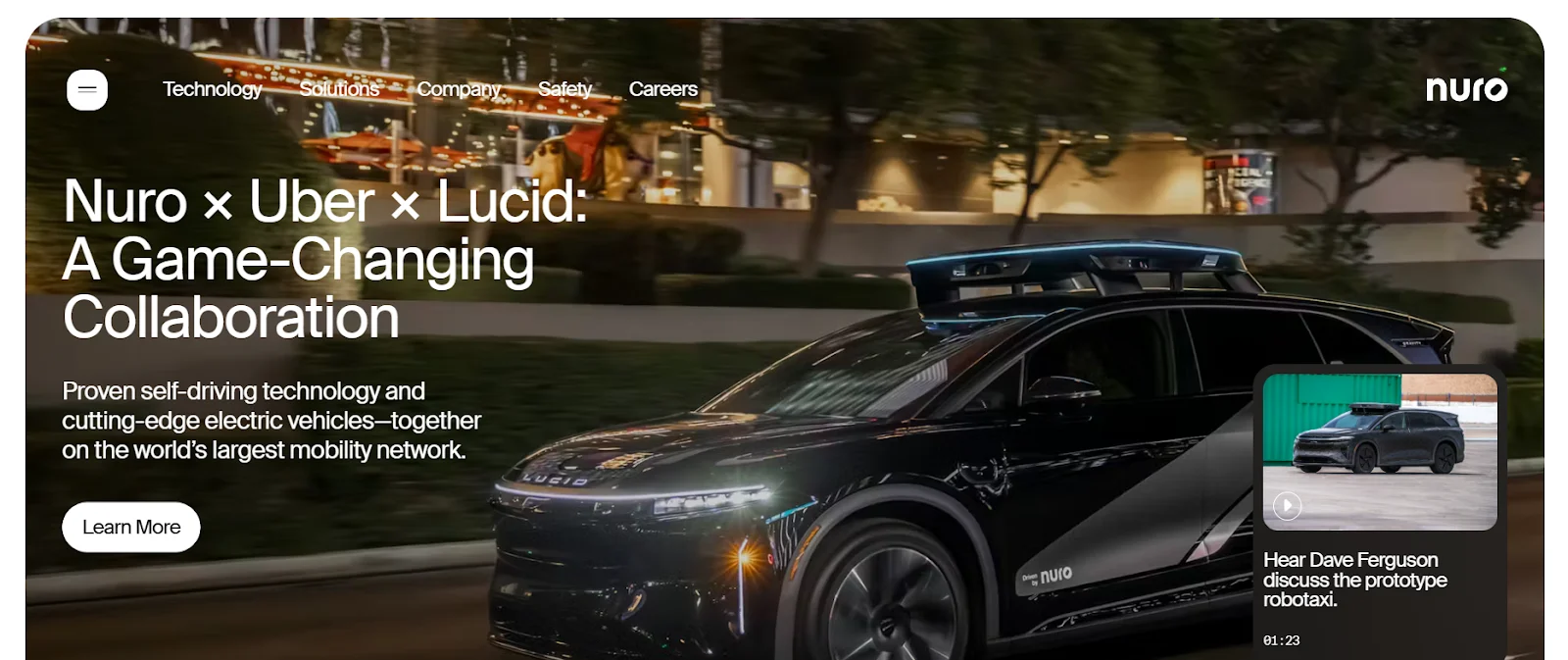
Offered Services: AI navigation systems and autonomous delivery software.
Industries Served: Transportation and delivery services.
Nuro develops AI-powered software for last-mile delivery vans that work at low speeds. Its systems take care of perception, routing, and making operational decisions. Since Nuro’s software excels in logistics settings, the company assists in developing new business models beyond passenger cars through predictive maintenance and automation.
Pony.ai, Fremont, CA

Offered Services: Autonomous driving software, AI perception, and planning systems.
Industries Served: Self-driving cars and transportation networks.
Pony.ai develops full-stack self-driving software for business mobility situations. Its technologies use perception, prediction, and planning to help with safe self-driving navigation.
Pony.ai is one of the best AI development company in USA that works with mobility companies. It is a vital player in making real-world autonomous services better. Its job is to connect research and large-scale implementation.
UVeye, Teaneck, NJ
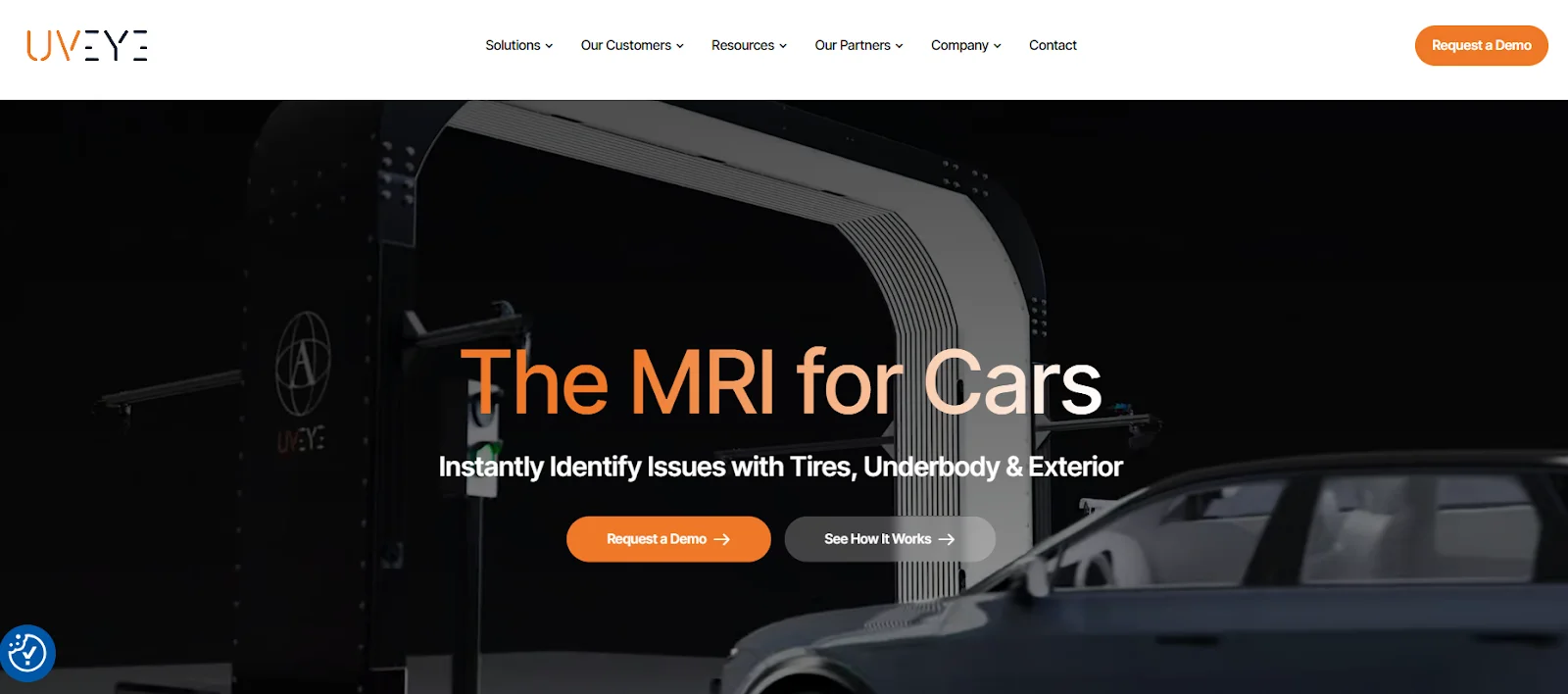
Offered Services: AI-powered vehicle inspection software, computer vision systems.
Industries Served: Car dealerships, fleet operators, and inspection services.
As a best AI development company in USA for automotive, UVeye uses AI and computer vision for quality assurance to find damage, wear, and other problems quicker and more precisely than people can do it by hand.
As a result, this makes UVeye irreplaceable for fleet operators and inspection services for improving diagnostics and operational efficiency.
Visteon, Van Buren Township, MI
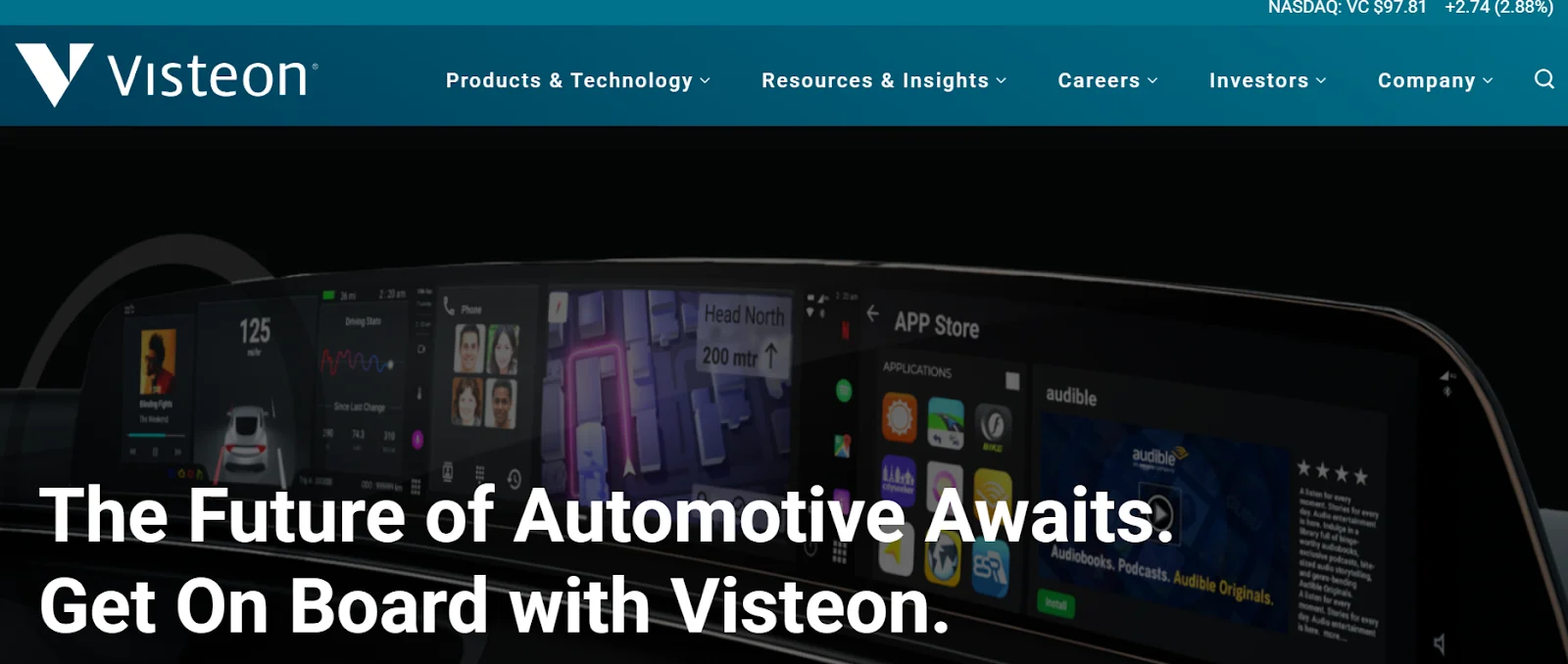
Offered Services: Software platforms for cars and linked cockpit systems.
Industries Served: Automotive and mobility technologies.
Visteon creates software-driven cockpit and connected car platforms that bring together displays, data, and intelligence into one system. Its solutions help make current vehicles better. As an established provider, Visteon simplifies digital transformation as OEMs move toward software-centric architectures. Its platforms, indeed, make car ecosystems smarter and more connected.
How to Choose the Best AI Development Company in USA?
Choosing top AI development companies is one thing, but the resulting benefit is another. Automotive initiatives often depend on safety, size, complicated data, and extended product lifecycles. You need a partner to help you with everything, including model development. Here’s an approximate framework you can use.
Step 1: Figure out Your Business Goals
AI-powered changes should address particular business issues. So you need to figure out what success means for your automobile project, for a start: less downtime, better diagnostics, quicker fleet choices, or a better experience for customers. When the results are clear, the tech setup of the project falls into place effortlessly.
The main notions here are as follows:
- Clear KPIs linked to operations or sales
- Most important use cases, such as predictive maintenance or automation
Step 2: Check Smart Automation Features
The most winning approach is to add AI to automate and optimize everything that you already have. Strong partners develop intelligence that makes things easier, not harder, for development, offering more efficient use of present car data, operations, and corporate systems.
Step 3: Check the AI model
Off-the-shelf models don’t often suit automotive use cases properly. You need partners that make models that fit your data, not just any old datasets. That’s why teams who have worked on AI model creation before understand this and provide you control, openness, and the capacity to change as your needs change. As a result, you get:
- Models that are trained just for your data
- AI that can be explained for safety and compliance
- Ability to retrain and improve over time
Step 4: Look at the Team Composition
For unmatched execution, you need to find out who will really be working on your project. Senior architects, data scientists, and engineers who have prior experience in the automotive field and work on cars are crucial. This way, partners that employ AI developers or work with specialized teams have an advantage since they promise more stability and responsibility in the work process.
Step 5: Consider Post-Deployment Support
Automotive projects stretch in time as models shift, data changes, and systems grow. You need to be sure about what will happen following deployment. The top AI software development companies actively assist optimization, monitoring, and ongoing improvement.
That’s why monitoring the performance of models all the time is crucial for long-term success. If a vendor fails to supply regular updates and improvements or help with modifications to rules and data, the entire project is at risk.
Conclusion
Automotive AI is growing quickly, but the loudest suppliers won’t be the ones that win. The winners will be those who can ship under actual restrictions. This is the reason why we looked at vendors that make AI resemble real systems, not just demonstrations.
If you require a partner that can take an AI project from a proof of concept (PoC) to dependable operations that work with car data, over-the-air delivery, and core enterprise systems, start with a use case that has a key performance indicator. Check that the data is ready early on, and then run a pilot.
If you tell us your intended use case and existing data sources, we will come up with a pilot scope and rollout strategy that will help you get a quantifiable return on investment.
Frequently Asked Questions
-
What companies developing AI for automotive are different from other software developers?
Automotive systems have their peculiarities. In particular, they need to combine real-time data, logic that is important for safety, and embedded systems that work with hardware sensors and controllers. This is why only a company with industry-specific experience and expertise can deliver effective solutions.
-
How can AI automotive software services in the US improve driving and customer satisfaction?
Not only in the US but globally, automotive AI software improves diagnostics, safety features, and the overall experience in a car. This way, predictive maintenance solutions find problematic spots and, therefore, help to avoid breakdowns. Moreover, leading AI automotive software companies offer connected platforms that enable customization, improved navigation, and smarter infotainment experiences.
-
What other sectors in the USA outside OEMs get the most out of AI automotive software companies?
Top AI software development companies help more than just manufacturers. They also help businesses in fleet management, logistics, dealerships, and shared mobility platforms. Fleet operators employ AI to find the best routes and keep their vehicles in good shape, while dealerships apply smart diagnostics and inspection systems.
-
What effect does AI-driven digital transformation have on the development of automotive software?
AI is transforming the way that software for cars is designed, tested, and operated. In the US, AI automotive software companies help with digital transformation via predictive analytics, automation, and smart testing. Safety and compliance are still very important, which is why the best automotive AI businesses in the US ensure that validation and governance are part of every step of the development process.