
While AI is closely associated only with autonomous driving systems, businesses miss other effective machine learning in automotive industry use cases. The cases where AI serves as a connection layer to pump up separated processes. For example, top automotive suppliers of LiDAR sensors are shifting to driver assistance features, predictive maintenance tools, or connected entertainment systems to make up for lower profits.
Devox Software powers this change technologically, helping businesses to build, modernize, and innovate their offerings and operational backbone. That’s why this material has accumulated years of progressive hands-on experience. Looking for how to add value with AI and monetize investments? This article is right for you.
Why Real-Time Decisioning Matters
For engineering and IT leaders, real-time ML solves three structural problems: technical debt containment, operational stability, and scalable architecture. For product leaders, it additionally enables an accelerated development process and adds value for customers. This way, machine learning automotive industry systems are becoming production-critical layers. Let’s consider four main directions.
- More Effective Production. AI greatly improves manufacturing efficiency in the automobile business through RBA, reactive quality assurance, predictive analytics, and more.
- Enhanced Driving Comfort. With capabilities like adaptive user interfaces, voice recognition, and gesture control, AI improves route planning, personalizes settings, and delivers real-time traffic information. Moreover, AI-powered infotainment systems also provide easy connectivity, smart device integration, and multimedia content.
- Customized Experience. AI-driven analytics sheds light on consumer tastes and habits for more personalized advertising and better product suggestions. Meanwhile, improved telematics systems track your vehicle’s use after purchase, offer proactive maintenance, and personalize setup and feature recommendations.
- Efficient Supply Chains. AI algorithms effectively forecast demand by examining past sales data, current market trends, and other pertinent criteria. This allows for the ideal stock levels with minimum shortages and overproduction.
Let’s see how to realize these features in real life.
Core Machine Learning Use Cases in Automotive
As the “brain” of automotive software, machine learning converts raw sensor data into instantaneous actions. Thanks to it, autonomous vehicles comprehend their environments and make well-informed judgments in real-time based on data from cameras, LIDAR, and microphones. This is a crucial step in the transition to software-defined vehicles (SDVs).
However, automotive businesses seek to embed strategic advantage with AI-native systems in all niches. We’ve gathered the most efficient cases across fields.
Advanced Driver Assistance Systems (ADAS) and Autonomous Driving
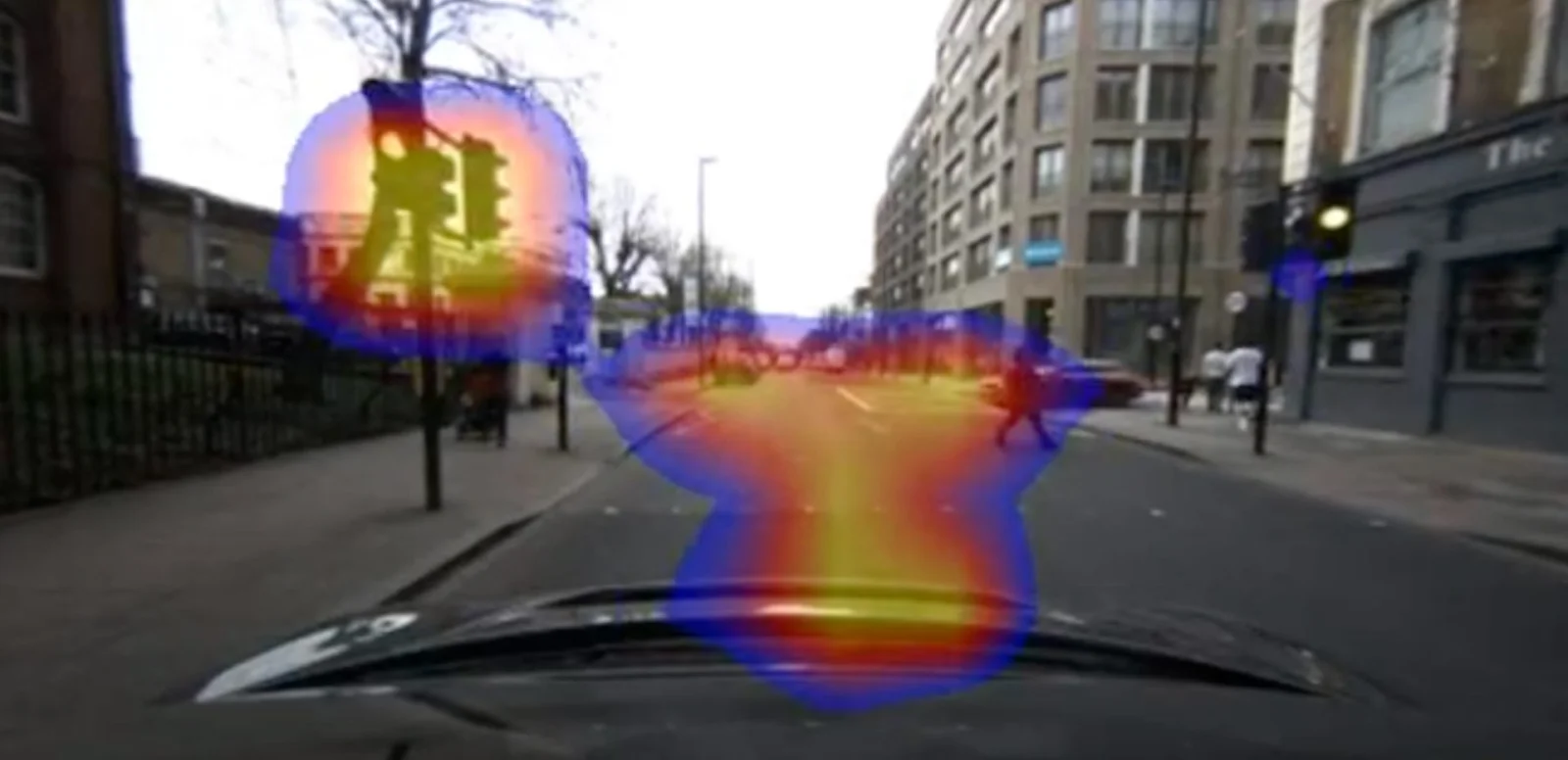
Yet, we can’t mention the most obvious and common use of machine learning automotive industry, as real-time machine learning is a cornerstone of autonomous driving systems and applications (ADAS):
- Perception to Control: Machine learning models take in data about the road ahead, determine if action is required, plot out how to alter the vehicle’s speed or course, and then communicate these commands to the various systems in the vehicle.
- End-to-End (E2E) ADAS: Instead of relying on outdated rule-based systems, advanced deep-learning models now manage the whole pipeline, making driving decisions based on raw sensor inputs such as camera pictures.
With the ability to detect hazards in real-time, these systems trigger safety maneuvers such as applying the brakes, adjusting the steering, and assisting with lane maintenance proactively, which could potentially prevent over 37 million crashes.
Edge AI for Low-Latency Execution
| Average Latency | Suitability | |
| Pure Cloud AI | 1000–2200 ms | Non-critical analytics |
| Edge AI (In-Vehicle) | 300–700 ms | Safety-critical operations |
Minimal latency is essential for the safety of real-time decision-making. And AI could enforce that. For instance, cloud-based AI is great for complicated queries, but “at the edge” (within the car) processing enables safety-critical protection.
In comparison to edge installations, pure cloud solutions often have latency levels of 1000-2200 ms, whilst the former provide latency levels of 300-700 ms, an advantage that is critical for making split-second judgments on the road. As a result, Neural Processing Units (NPUs) and modular System-on-Chip (SoC) architectures are increasing, which increasingly incorporate this hardware.
Energy Management and Powertrain Optimization
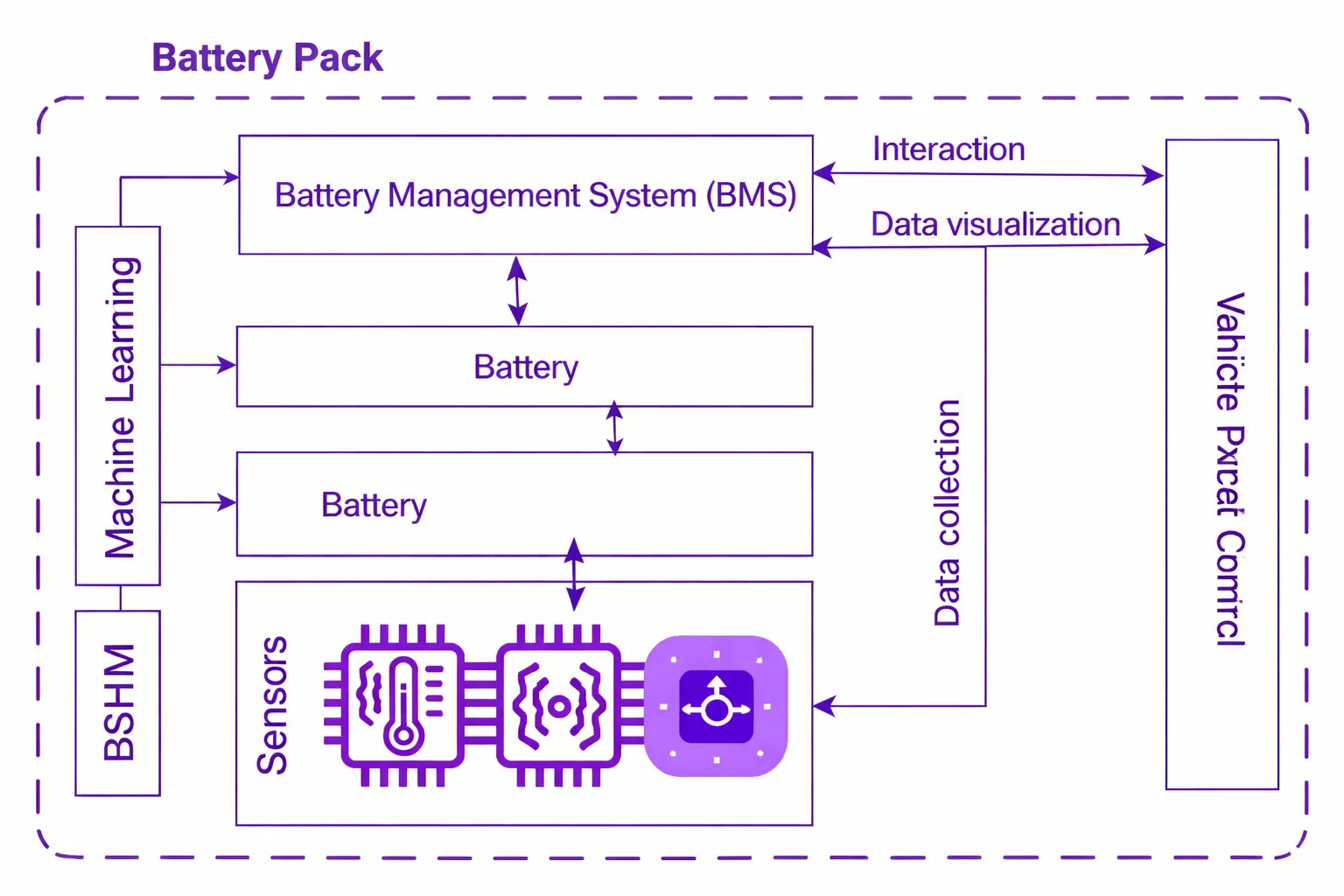
To maximize efficiency, ML software modifies how a vehicle operates mechanically in real time.
- Real-Time Range Optimization: The e-Tron system from Audi, for example, employs machine learning to assess factors like weather, terrain, and driver behavior in order to optimize the energy allocation between the motors.
- Battery Optimization: To maximize the efficiency of the charging process, Tesla employs AI-driven algorithms to regulate the temperature of the battery in real time as the car gets closer to a charging station.
That’s why predictive systems are often called anti-downtime systems. Thanks to them, the onboard chargers, DC/DC or AC/DC converters, and controllers distribute the power efficiently and dependably. Who wouldn’t want to maximize component life and utilize every kilowatt to the maximum extent possible?
Another change is more powerful architectures, enabling new 800-volt designs instead of the old 400V. As a result of increased efficiency, better thermal performance, and enabled high-voltage currents, charging has become two times quicker.
Intelligent User Experience and In-Cabin Safety
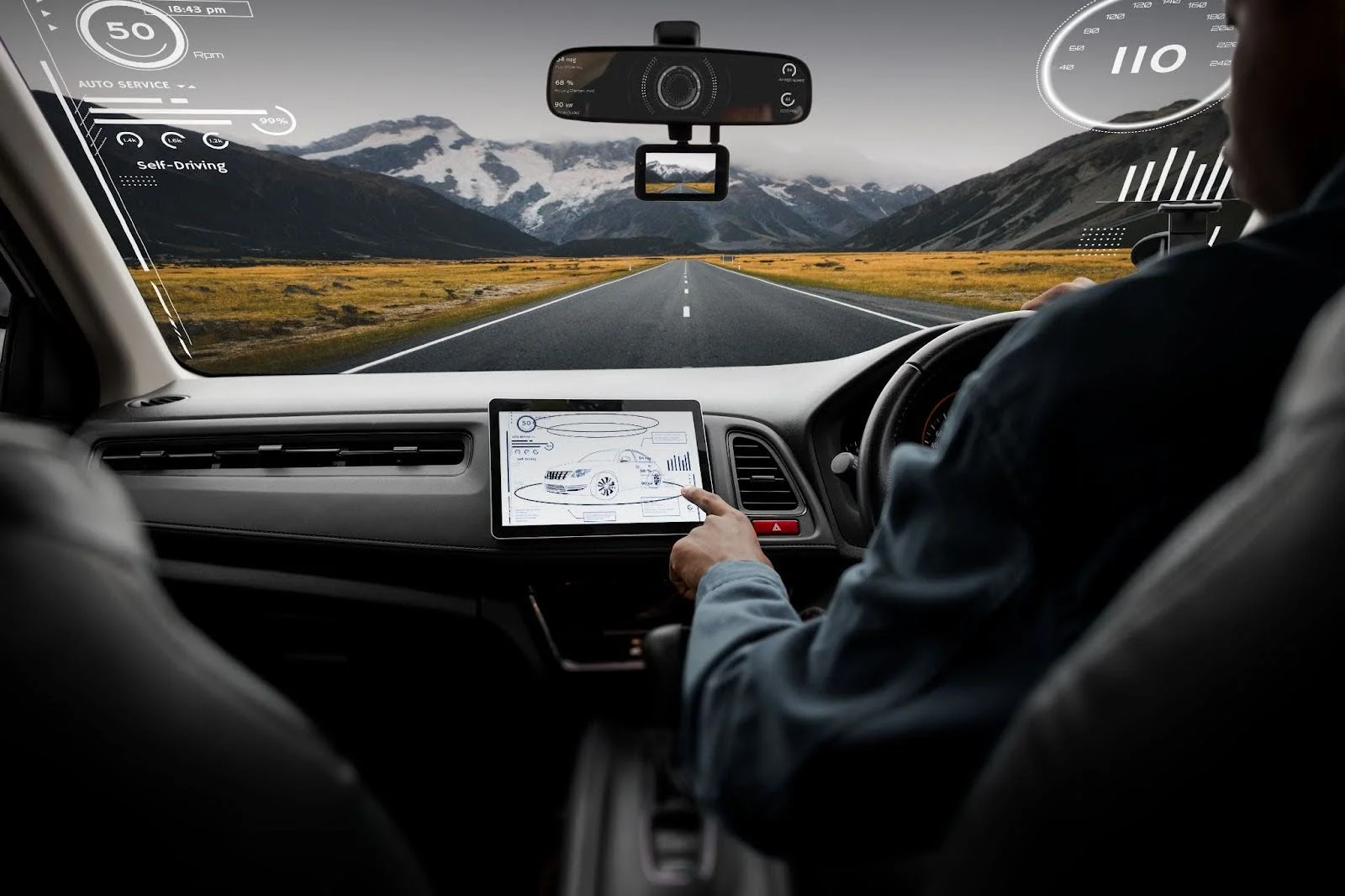
The interior surroundings of the driver are also subject to real-time decision-making ion both directions, for drivers and their surroundings:
- When an AI model detects that a driver is sleepy or distracted, it will immediately sound an alarm.
- With conversational AI, drivers may operate navigation or temperature systems with context-aware voice commands, thanks to Natural Language Processing (NLP) that enables smooth, human-like interactions.
Faster Design and Development
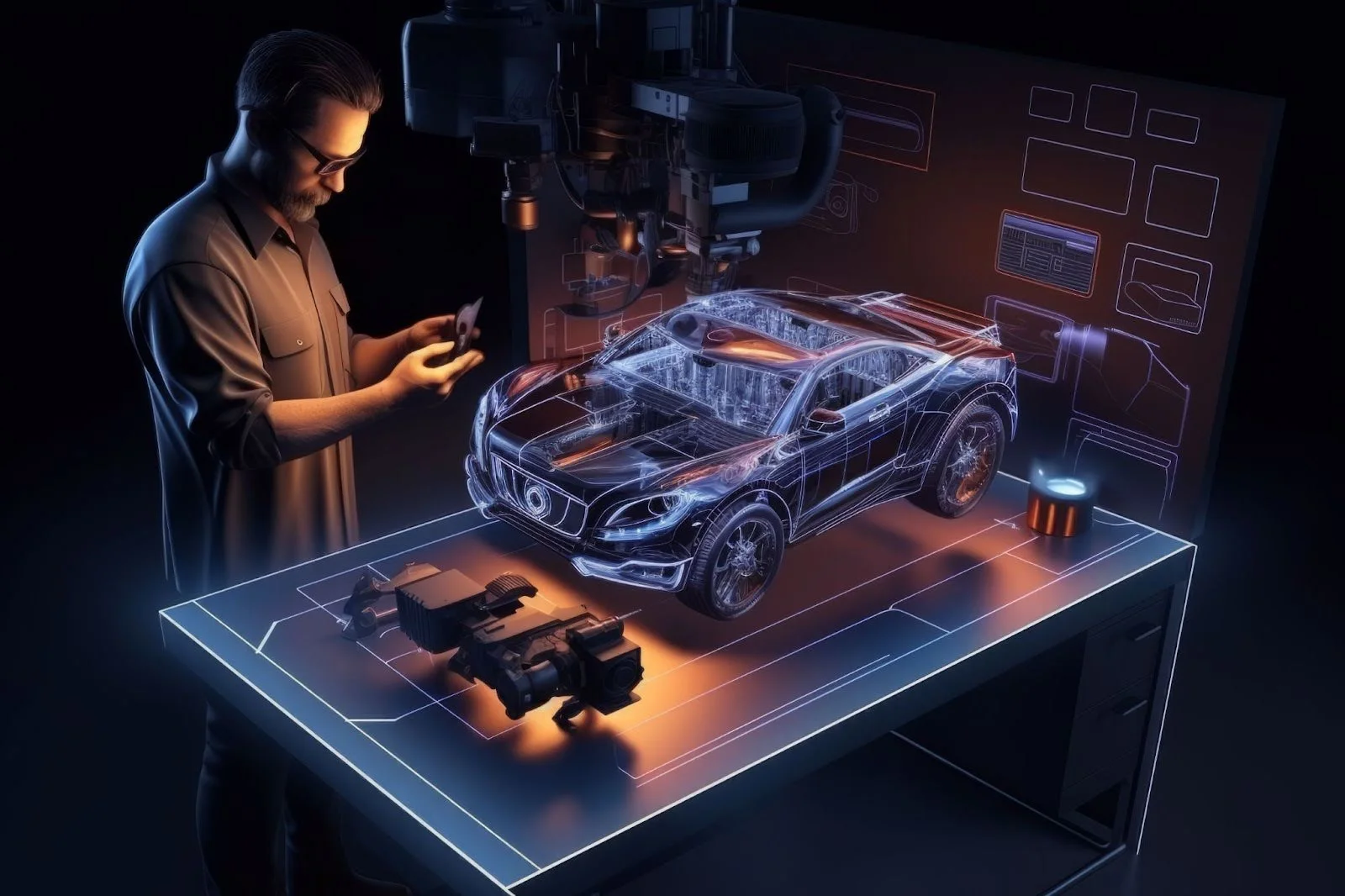
With AI in hand, engineers design components and systems better, eliminating decade-long problems, such as regulating heat, avoiding thermal runaways, and preventing fires.
In particular, engineers have achieved a striking balance between long-term durability and fast-charging capabilities through the selection and optimization of AI-guided cell chemistries. This slows the chemical deterioration of batteries while still allowing them to absorb high-voltage currents.
Also, AI is assisting with the improvement of recharging cycles, which results in longer battery life, and with increasing energy density, which results in greater driving ranges without increasing weight. These innovations reduce development expenses and research and development timelines.
Digital Twins Driven by AI
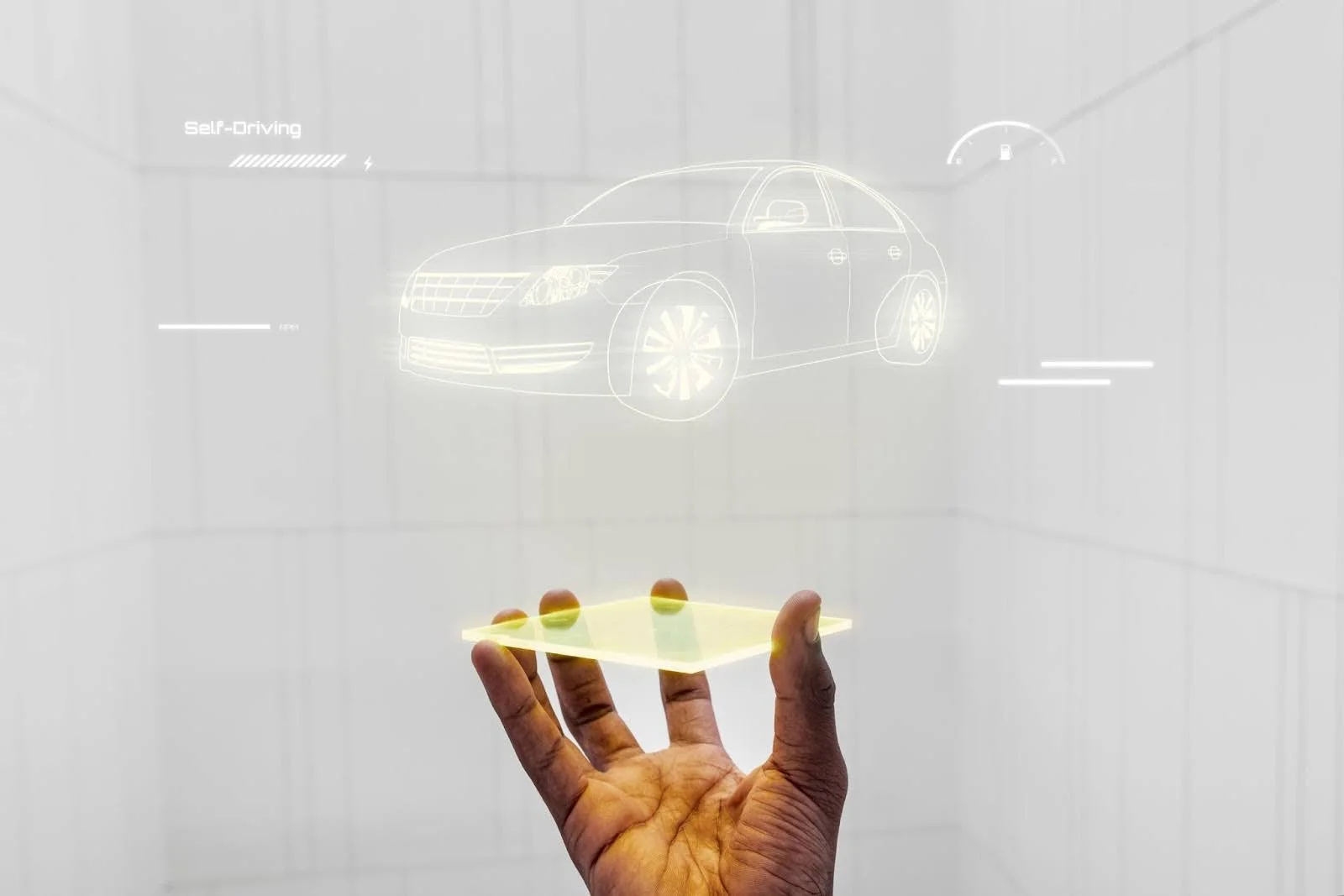
Another major case is quicker (and better) testing. With digital twins in R&D pipelines, early-stage validation leads to data-layered feedback loops that, in their turn, decrease development costs and downtime. This way, companies may better support data-intensive product lines and drastically shorten time to market:
- Digital Twins: Automakers use digital twins, which are virtual versions of actual automobiles, to test and refine autonomous driving algorithms.
- Synthetic Data: Artificial intelligence creates photorealistic simulation scenarios that imitate hazardous road conditions or uncommon weather, enabling software to go through “millions of miles” of testing in a controlled environment before being released to the public.
So, what’s the overall effect from all those efforts and, in reality, multi-million dollar investments? The next section unveils this matter with respect to each particular automotive niche.
AI Applications and Functions Across Sectors
| Sector | Machine Learning Application | Business Impact |
| Research and development | AI-driven simulation & battery design | Faster time-to-market |
| Manufacturing | Computer vision QA & predictive maintenance | Reduced downtime |
| Supply Chain | Demand forecasting & route optimization | Lower working capital |
| Marketing and sales | Dynamic pricing & lead scoring | Higher conversion rates |
| Diagnostics | Predictive service alerts | Increased retention |
Not only is AI improving production efficiency, but it is also shortening product development cycles and inspiring new ideas for car designs. Let alone in-vehicle driving experiences for customers. These are the major machine learning examples in automotive to boost the automobile value chain.
1. Research and Development Facilities

As we said before, AI reduces simulation times from days to minutes, enabling faster design iterations and improved vehicle performance.
This way, advanced simulation environments reduce validation cycles from days to minutes. Instead of waiting for physical testing loops, engineering teams can run thousands of virtual scenarios in parallel, stress-testing rare edge cases, extreme weather conditions, and system interactions. This compression of simulation time enables:
- Faster architecture validation
- More frequent design iterations
- Earlier defect detection
- Reduced non-recurring engineering (NRE) costs
For manufacturers, the strategic outcome is twofold: safer autonomous systems and accelerated innovation cycles.
2. Supply Chain and Manufacturing
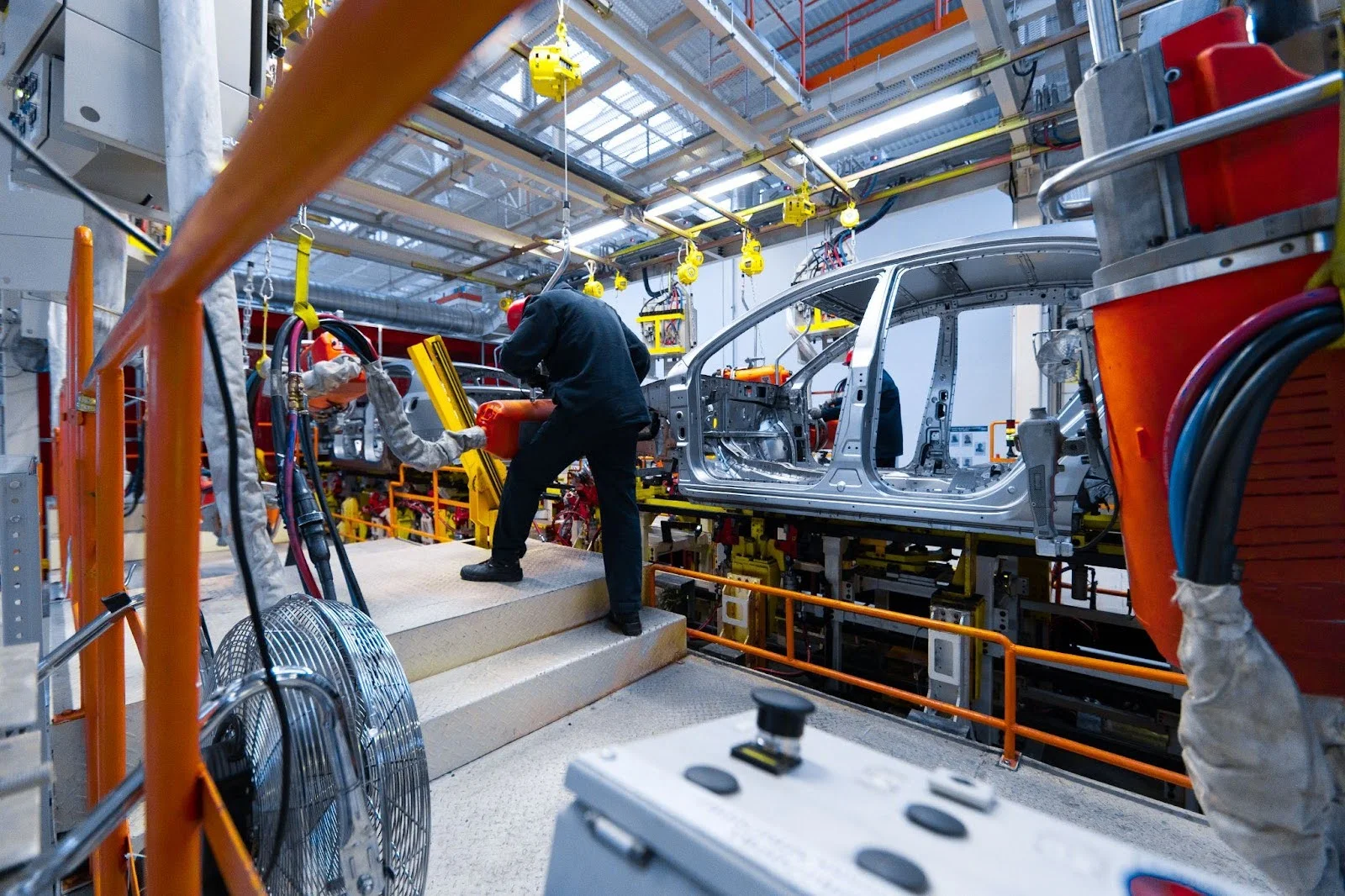
Computer vision enhances real-time quality control in industrial operations, while predictive analytics helps with demand forecasting and reduces working capital. By delivering analytics-as-a-service models, smart manufacturing module suppliers may stand out, and original equipment manufacturers can compare AI predictions with real delivery performance to measure the accuracy of their forecasts.
3. Marketing and Sales

From a business perspective, AI is becoming more and more associated with marketing, sales, and customer support. Conversational agents, dynamic pricing, and lead qualification allow teams to convert more quickly and provide round-the-clock customer service. As a result, it becomes an expectation, not a feature.
Moreover, predictive field-service notifications help dealers and OEMs to increase retention, while tracking funnel efficiency stimulates ROI.
4. Diagnostics and Service

The use of onboard technologies packed with AI to anticipate component failures is improving vehicle diagnostics and servicing. Because of this, preemptive service campaigns may be launched, and opportunities for OEMs and suppliers to establish data-sharing ecosystems can be created to improve these signals.
In all of these areas, AI plays a crucial role in facilitating better decisions, shorter cycles, and more robust consumer results. It may be helpful to visualize these applications using interactive tools or diagrams and then link to relevant internal material or solution sites to highlight specialized expertise.
The Bottom Line
The automotive industry no longer confines machine learning solely to ADAS or experiments. For CTOs, CPOs, and CIOs, it has become a structural lever for stability since AI delivers measurable impact:
- Reduced technical debt instead of adding complexity
- Predictable operational performance instead of reactive firefighting
- Data-driven product roadmaps instead of assumption-based prioritization
- Controlled AI investments aligned with ROI
That’s why we, at Devox Software, try to help automotive manufacturers and suppliers integrate AI into real-world production environments. We design and modernize architectures where machine learning brings real value to business.
Frequently Asked Questions
-
How is machine learning automotive industry different from traditional software logic?
Traditional machine learning automotive software relies on deterministic, rule-based systems. Machine learning automotive systems, in their turn, adapt based on data patterns. Instead of manually updating logic for every new condition, ML models continuously improve through training, making them more resilient in complex, real-world scenarios.
-
Where should CTOs start with AI and machine learning in automotive industry?
Start with high-ROI, low-risk domains:
- Predictive maintenance
- Energy optimization
- Quality control via computer vision
- Usage analytics for feature prioritization
Avoid starting with full autonomy or massive architecture overhauls unless the organization is mature in ML governance and infrastructure.
-
How do we calculate ROI for machine learning use cases in automotive?
ROI of machine learning automotive industry is typically measured across four dimensions: downtime reduction, warranty cost reduction, time-to-market acceleration, and revenue lift. A small percentage improvement in battery lifecycle or defect detection can translate into millions annually for large OEMs.
-
Is edge AI mandatory for automotive ML deployments?
For safety-critical systems, yes. Edge AI reduces latency (300–700 ms vs. 1000–2200 ms in cloud-only setups) and minimizes dependency on connectivity. However, cloud remains essential for model training, analytics, and fleet-wide insights. Most mature strategies combine edge inference with cloud orchestration.
-
What are the biggest machine learning in automotive industry implementation risks?
Common risks include:
- Poor data quality and fragmented telemetry
- Lack of ML governance and compliance oversight
- Unrealistic performance expectations
- Overloading legacy hardware
- Treating ML as a standalone innovation project instead of an architectural decision
AI initiatives fail more from misalignment than from technical complexity.