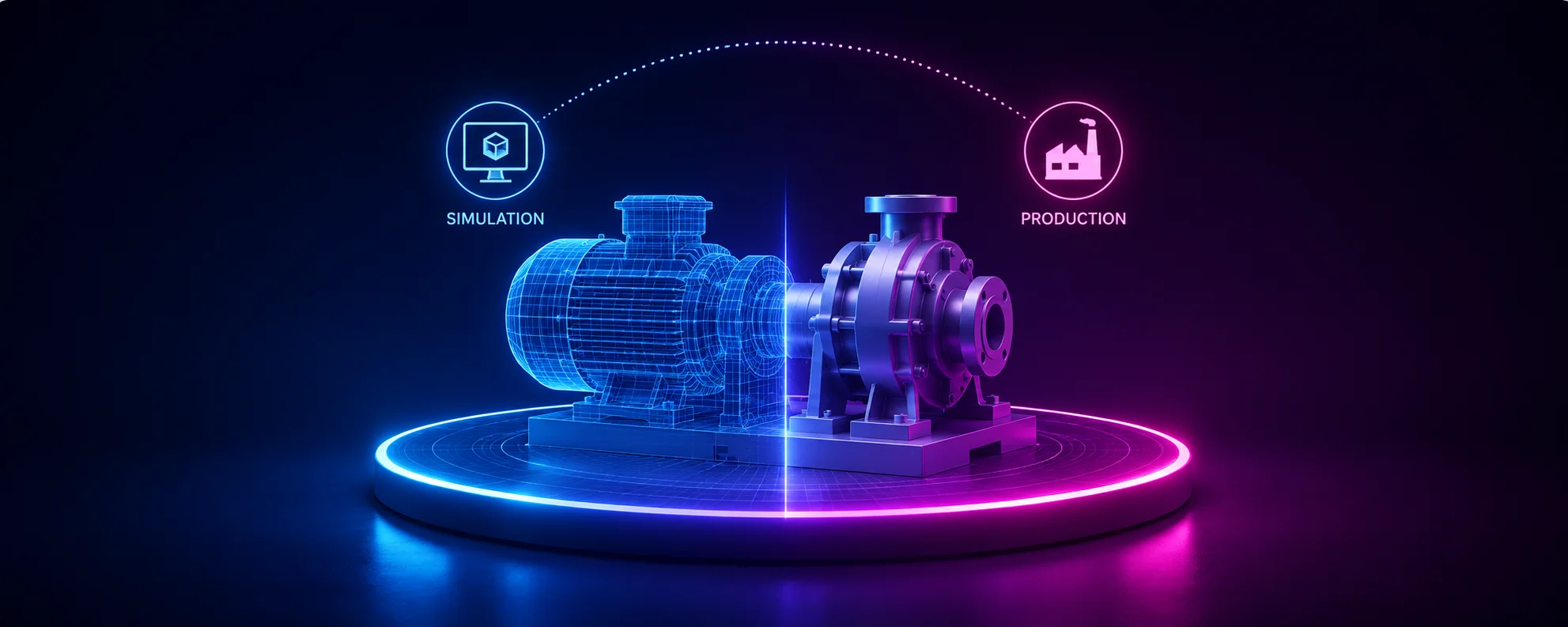
A factory twin starts to earn its keep when something happens on the floor, and the schedule can react while production is still running. Siemens Nanjing is a useful example because the twin was not simply given control of the line. The MOM layer still governed what could move between the virtual model and the physical asset, so any schedule change stayed within the rules the plant had already approved.
The temptation is to jump straight to the intelligent part of the twin because that’s the piece everybody wants to see. But if the floor data is late, inconsistent, or coming from the wrong system, the intelligence on top of it does not help much.
So the order matters here. Get the floor connected, make sure you trust the data, close the loop on one decision, and then worry about scaling the operating model.
Connect the Machines That Matter First
Many North American factories still run decades-old lines—some dating back to the 1960s. These systems are still common, but old protocols and rigid data models make them harder to integrate. A twin rarely requires instrumenting the whole line.
You usually don’t need to instrument the whole line to get started. Maintenance already knows which three or four assets can shut production down, so I would start there and leave the rest off the critical path until the next phase. If you want to prove the economics, instrument the bottleneck cell first. A twin on a noncritical machine may teach you the stack, but it won’t tell you much about the business case.
Before I instrumented anything beyond that first cell, I would want the team to be able to answer a few pretty basic questions:
- Which failure or production event are we trying to catch?
- Which tag or sensor tells us that event is happening?
- How fresh does that signal need to be before it is useless?
- Which system owns the current production state?
- What action should the twin be allowed to request when the condition is met?
- What number are we trying to move — downtime minutes, scrap, cycle time, or schedule recovery?
If those answers are still fuzzy, adding another hundred tags usually just gives you a larger data project.
One Tier 1 supplier, for example, added standalone temperature sensors around adhesive quality instead of rebuilding the underlying equipment. Once that data was available, the scheduling layer could use it through an API without forcing a months-long system overhaul.
Edge gateways can pull data from legacy systems and translate it for modern platforms. Some newer PLCs support MQTT and OPC UA natively, but gateways are still essential for older equipment.
Keep Real-Time Control at the Edge
Today’s twins run on a hybrid architecture. Hard stops and motion interlocks execute on the cell PLC or on an edge node, where local execution meets the required latency. Real-time control stays on the factory floor. The cloud handles processes with flexible timelines: the next shift, the SKU mix, model training on months of history. Edge nodes preprocess signals before they leave the plant, reducing cloud storage costs and giving AI cleaner inputs. The easiest way to decide what stays on the floor is to start with the latency budget and then look at the data volume. If a control loop needs a millisecond response, it belongs at the edge. If you’re recalculating the next shift every twenty minutes, that workload has a lot more freedom. And don’t test that latency with one quiet machine connected. The real question is what happens when ten cells start reporting events at once, because that’s often where a system that looked fast in the pilot starts to slow down. Set the ceiling before rollout and find out where concurrency actually breaks it.
Build a Data Model the Twin Can Trust
Every machine reports a little differently, so normalize that data before the twin ever has to make sense of it. In practice, this means a hybrid architecture built on open standards with integration platforms at the core.
The practical goal is to give the twin a consistent way to identify the asset and understand its telemetry. Open standards help with that, and frameworks like the Asset Administration Shell can provide the standardized asset description while the data bus moves those signals between OT and IT. ERP can still own the part, MES can still own production state, and the twin can read from both without inventing another naming scheme.
The moment somebody introduces a third local name for the same thing, you’ve created the next version mismatch. And nobody notices that mismatch on the day the dashboard goes live. You notice it three months later, when engineering says one part is current and the floor is still being built against another.
Keep Part Identity Consistent Across Systems
Picture an engineer updating a part number while production continues using a different version. A digital twin requires every team to use the same definitions and trust they’re looking at the same data. The integration spans the entire product lifecycle. Keeping them aligned comes down to ownership, identity, and validation.
In practice, keeping the part aligned comes down to three pretty basic things: one canonical identity, a clear owner for the data, and validation that catches drift before the twin consumes it. MBSE can help keep that alignment intact as the system grows, but the basic discipline comes first.
Boeing’s MarkLogic digital-twin case gives CIOs a strong MDM example: more than 500,000 databases, all complicated by inconsistent part names. MBSE and governed identifiers allow a spec change to propagate into a single model. I would treat Boeing as an MDM lesson rather than something another manufacturer should copy directly. The usable point is one identifier per physical part across engineering and the floor. You do not need Boeing-scale complexity to have the same problem. Two spreadsheets and an old MES screen are enough.
Set Quality Rules for Decision-Critical Data
For any tag that can influence a production decision, I would write down:
- Source: the PLC, sensor, gateway, or calculated tag that produced it.
- Unit: °C, mm/s, PSI, amps, cycle count — with no local conversions hiding downstream.
- Freshness: how old the value can be before the twin has to reject it.
- Valid range: the physical range within which the equipment can reasonably operate.
- Bad-data behavior: what happens when the tag is stale, missing, frozen, or out of range.
- Owner: who decides whether the signal is trustworthy enough to restore.
- Decision dependency: which twin action is blocked when that tag fails validation.
That last one matters. A bad temperature tag should not quietly turn into a bad production decision.
It also gives the operator a point of reference when the twin is wrong. Instead of arguing about whether the model “felt off,” the team can see that the tag was stale, out of range, or missing altogether. This is a deeply human operational value.
Keep Engineering and Production on the Same Revision
The data is there. The problem is that it lives in too many places.
When engineering works from the same data, design changes stop dying between engineering and production. Engineers can immediately see how a new requirement affects production schedules. That real-time feedback requires a data model connecting design tools to shop-floor systems.
Most of these disconnects are not dramatic. They are somebody emailing a PDF, somebody else working from yesterday’s revision, or a process engineer waiting on IT for a query they have run ten times before.
A couple of practical changes help. Designers need to see manufacturing constraints while they’re still designing, and process engineers need direct access to routine production data without putting IT in the middle of every check.
And this is where the organizational part matters just as much as the data model. IT teams need to understand plant operations, while operations teams need enough technical skill to work directly with the systems. Otherwise, the data model still falls apart at the seams of the organization.
Catch Layout Problems Before Steel Hits the Floor
AR lets engineers find layout errors while they are still cheap to fix.
Sometimes that error is not sophisticated at all. A cabinet door cannot open, a maintenance aisle disappears, or the operator has to reach around a fixture that looked fine on a monitor.
The usual sequence is to validate the layout virtually first and then take that model onto the floor for a physical fit check. Once the layout works in the model, validate it on the shop floor. Mercedes-Benz uses NVIDIA Omniverse and OpenUSD to build detailed digital factory models.
Engineers use AR headsets to view full-scale equipment models and catch clashes before steel hits the floor. AR can also place virtual equipment on the physical floor for a fast fit check.
You want to find those clashes in the model, not after steel is already being moved on the floor. Live schedule still writes through MOM. Mixing the two in one screen is how a pretty model starts issuing work the cell cannot execute.
Define What the Twin Can Control
Separate Detection From Production Control
Ford’s MAIVS is a good example of where vision stops and production control starts. The system scaled across North American plants and handled a huge number of inspections, but Ford still kept people in the gate on major launches. That’s the important part: the model can flag the issue, while the station still owns the hold. That’s an important distinction for the people running the station, because they need to understand whether the system is asking for attention or actually taking production authority away from them.
I would keep classification separate from control, because “possible weld defect” and “stop the cell” are two very different levels of authority.
I would make that action envelope explicit before the first live write-back:
- Read-only: what the twin is allowed to observe.
- Recommend: which changes it may propose without taking action.
- Auto-execute: the small set of actions it can take without approval.
- Magnitude limit: how far it may move a schedule, change a queue, or hold production.
- Equipment scope: which cell, line, or work center the action can affect.
- Human gate: which conditions immediately require supervisor approval.
- Rollback: how the operation gets back to the last known-good state.
- Confirmation: what MES or MOM response proves the action actually happened.
I would keep that list pretty boring on purpose. Production authority is not the place to get creative. The crew will trust a narrow system they understand long before they trust a powerful system nobody can explain.
Machine vision can inspect laser welds for defects that are easy to miss. Heat maps can reveal tiny pores and weak coatings that operators may not see.
Detection earns its keep only when the station can act on it. Close the loop to the station record by holding the unit before stopping the line.
Write-back is only half the loop. After the twin requests a schedule change, verify the result in MES or MOM before making the next decision. Did the work order actually change state? Did the station accept the hold? Did the downstream queue move? HTTP 200 does not mean the plant did what you asked.
Turn Predictive Alerts Into Maintenance Work
A common mistake is feeding raw sensor data into AI and expecting useful results without context. Do that long enough and alerts become wallpaper.
Everybody has seen what happens next: the first week, people open every alert. A month later, the same red box has been sitting on the screen so long that nobody really sees it anymore.
Your maintenance team already knows which failures shut down the line, so that’s where I would start. Build the first models around those failure modes and the signals attached to them before asking the system to learn everything else.
Filter noise at the edge. Instead of pushing every stable reading upstream, send the meaningful change and the reason code that explains why it matters. The failure modes that actually cost the plant money get a model. Everything else can stay in the historian until there’s a reason to promote it.
And then use the physics as a sanity check. If the model flags something that violates basic thermodynamics or kinematics, you may be looking at a bad sensor rather than a real failure.
Use operator feedback to improve the model. Early models will misfire. The real test is how quickly you close the feedback loop. When an alert is wrong, log where it went wrong. Was the vibration tag stale? Did the model misclassify the pattern? Did the maintenance rule map it to the wrong failure mode? Or did the CMMS action fail after the prediction was correct? Model accuracy only tells you half the story. If the prediction is right but the CMMS action never happens, the system still failed operationally. From the technician’s point of view, that distinction is pretty simple: if the right work never gets scheduled, the “correct” model did not help them. Enable operators to flag false positives and retrain the model to reduce repeat errors.
A maintenance alert is not really useful until the crew can answer:
- What asset is affected?
- What failure mode does the model think is developing?
- Which signals support that call?
- How long do we probably have before the risk becomes operational?
- What inspection or maintenance action should happen next?
- Who owns that action?
- Did the CMMS actually create or update the work?
- Was the prediction later confirmed, rejected, or left unresolved?
If the alert cannot make it through that chain, I would fix the workflow before spending time improving another decimal point of model accuracy.
Secure the Twin Before You Give It Write Access
Limit the Blast Radius With OT Segmentation
More IoT devices expand the attack surface, making factory systems more attractive targets for ransomware and industrial espionage. Outdated security practices make that risk worse.
A plant VPN still leaves you with one oversized trust boundary. Once a credential is compromised, the blast radius can spread from the gateway to the MES. IEC 62443 segmentation gives the CISO a way to put walls around the blast radius. A compromised cell PLC is enough to shut down a body shop. And when that happens, the production team does not care which security framework was technically correct. They care about how far the incident can spread and how quickly they can isolate it.
The practical goal is to prevent a compromised cell from becoming a plant-wide incident. Segment the production network into zones, control what can cross the OT-IT boundary, encrypt command traffic, and make write access role-based. That gives you smaller trust boundaries, rather than a single plant-wide VPN where a single compromised credential can travel too far.
Give Suppliers Only the Model Slice They Need
When you partner with suppliers, you share production data, increasing the risk of designs leaking during joint analysis. Under certain attack scenarios, attackers may target those drawings.
Supplier access should stop at the component boundary. Give the supplier only the model slice it needs, encrypt that data in transit and at rest, and keep a complete access trail so you can reconstruct what happened if something goes wrong. The broader point is pretty simple: collaboration does not require giving a Tier 1 supplier the whole model.
Scale the Operating Model to Plant #2
Getting one plant up and running is the easy part. Plant #1 usually has the people who remember why every exception was handled the way it was. Plant #2 does not. That is why the operating contract matters more than the demo. The real test starts when Plant #2, Plant #3, and Plant #10 must follow the same operating model.
When you move to Plant #2, reuse the action envelope before you worry about recreating the full 3D scene.
Copy the execution contract too: which system owns the state, which actions the twin can request, what counts as success for confirmation, and where a human has to approve. Plant #2 should not reinvent those rules around the same model. Scaling the twin means copying the operating contract around the AI model.
By the time Plant #1 is working, I would expect the rollout package for Plant #2 to contain:
- the canonical asset and part IDs;
- the connector and tag mappings;
- the signed data-quality rules;
- the approved action envelope;
- the role and write-access matrix;
- the MES/MOM confirmation rules;
- the rollback path;
- the commissioning test cases;
- and the same operating scoreboard used at Plant #1.
The point is to keep Plant #2 from relearning decisions Plant #1 already paid to figure out.
The local plant should still be able to change its layout, equipment mapping, and production details. What it should not have to reinvent is the contract around how the twin is allowed to behave.
Mercedes is useful here because the digital factory model, the production layer, and the AI layer remain separate. The model can recommend a schedule change, but the execution layer still exposes only the actions the plant has approved. The model can reason about the change, but the control layer still decides what it is physically allowed to write.
Start With One Closed Production Loop
The difference is pretty simple: visualization shows you what the plant is doing, while a production twin is allowed to participate in running it. That’s why I would secure the execution path before adding more intelligence. Prove the loop on one cell, define exactly what the twin is allowed to change, and then carry that same asset identity, action envelope, and scoreboard into Plant #2. A production twin also has to know whether its last command actually landed. If the schedule changed on the screen but the station never accepted it, the loop is not closed. Until the system can verify that difference for itself, I would keep its production authority pretty narrow.
Frequently Asked Questions
-
What is the primary benefit of digital twins in manufacturing?
The primary benefit of a digital twin is the significant improvement in operational efficiency and financial performance. In the United States, full adoption of this technology is estimated to generate $37.9 billion in annual savings. Implementation typically results in a 25-50% reduction in unplanned downtime, a 20% decrease in material waste, and a 40% optimization in energy consumption. These improvements enable manufacturers to accelerate time-to-market and enhance supply chain resilience.
-
How does the digital twin process work for industrial equipment?
The process involves continuous synchronization between physical equipment and its virtual representation. The system integrates engineering designs with real-time performance data from the factory floor. This data informs sophisticated models—utilizing physics-based simulations, machine learning, or a hybrid approach. By processing this information through edge and cloud computing, the system predicts equipment behavior and automates processes to maintain optimal operational stability.
-
What are common digital twin use cases in manufacturing?
The possibilities span the entire lifecycle of production. One of the most popular applications is predictive maintenance, which allows equipment to signal maintenance needs before a failure occurs. Teams also utilize augmented reality to walk through virtual factories and optimize their layouts before physical construction begins. Beyond the factory walls, forward-thinking companies utilize twins to seamlessly synchronize global supply chains, while others model complex processes to safely accelerate product launches. Pairing digital twins with AI vision systems also provides a highly accurate monitoring capability to ensure every product meets the highest quality standards.
-
Is digital twin integration possible with legacy machinery?
Yes. This is the starting point for transformation in many manufacturing and automotive facilities. It is not necessary to replace existing, reliable legacy machines to integrate modern technology. Instead, they can be retrofitted by adding IoT gateways, smart edge devices, and external sensors to gather data, all while preserving the original controllers. Open communication standards act as perfect translators between older systems and modern platforms. Furthermore, government initiatives, such as NIST MEP grants or CHIPS Act funding, are specifically designed to support this modernization.