devox-hero (49)

Custom Manufacturing Software Development & Digital Transformation Services

Arrange a Call with Us
  • INTEGRATE THE FACTORY

    Connect ERP, MES, PLM, and PLC with event-driven APIs. Standardize data models and stream real-time telemetry across lines.

  • AUTOMATE OPERATIONS

    Digitize work orders, inspections, and traceability from line to cloud. Orchestrate machines, robots, and people with rule-driven workflows.

  • DELIVER CHANGE SAFELY

    Simulate changes with operational digital twins before release. Deploy updates via OT-aware CI/CD, apply versioning, and pass compliance gates.

  • awards
  • awards
  • awards
  • awards
  • awards
Why It Matters

Manufacturing software development defines how quickly your operations can adapt, scale, and improve under real production pressure.

When systems are designed to reflect actual workflows, machine behavior, and operational constraints, they become a source of control rather than overhead. Teams gain real-time visibility they can act on, decisions are made closer to the moment they matter, and improvements move from planning discussions into daily execution on the shop floor.

What makes the difference is custom manufacturing software development built around production reality, not abstract models. By extending existing ERP, MES, and automation layers, capturing real production events, and introducing change incrementally alongside live operations, manufacturers gain the ability to modernize without disrupting output. This approach turns digital investment into a practical execution advantage — enabling faster responses to variability, more stable quality, and continuous performance gains that compound over time rather than stalling in long transformation cycles.

Modernizing unstable systems? Launching new products?

We build development environments that deliver enterprise-grade scalability, compliance-driven security, and control baked in from day one.

Check Our Portfolio
Our Edge

Why choose Devox Software?

  • Modernize
  • Build
  • Innovate

Can you modernize production without replacing ERP or MES?

Yes. We extend existing systems; nothing gets ripped out.

What about legacy machines and custom workflows?

We build around real equipment and how operators actually work.

What results do we see first?

Live visibility, less manual work, faster decisions, OEE gains — within weeks.

Can you connect directly to shop-floor hardware?

Yes. PLCs, SCADA, IoT, machine data — fully integrated.

Do you offer software development for manufacturing?

Yes. Tracking, MES extensions, BOM automation, scheduling.

Will this fit our current tech stack?

Yes. Modular APIs extend your ERP/MES, not replace them.

Is AI applied to real production, not just dashboards?

Yes. AI runs inside execution flows using live data

Do you support predictive use cases?

Yes. Maintenance, quality, and supply-chain risk.

How do you avoid disrupting production?

Parallel pilots, controlled rollout, compliance-first.

What We Offer

Services We Provide

  • Industrial Digital Twin & Simulation Systems

    Physical process changes are costly and risky, while most digital twins remain static models disconnected from real operational behavior.

    • Operational digital twin architecture. We build digital twins that are actually operational systems — they mirror your physical assets and production lines in real-time by keeping in sync with IoT, MES, and control-layer data.
    • Scenario & constraint simulation. We implement simulation engines that model real process constraints — material properties, equipment limits, batch logic — enabling “what-if” analysis grounded in plant reality rather than idealized assumptions.
    • Twin-to-execution synchronization. We ensure that the changes you make in your digital twin are validated, staged, and safely moved to live operations — no more lost ideas.
    • Lifecycle & configuration tracking. We track what your assets are up to, how they’re configured, and how the process changes over time to help you wring the most out of things in the long run.
    • Engineering & operations alignment. We design digital twins and support manufacturing portal development that serves both engineering analysis and daily operations without gaps between design and execution.

    You get reduced implementation risk, faster engineering decisions, and predictable outcomes for process changes.
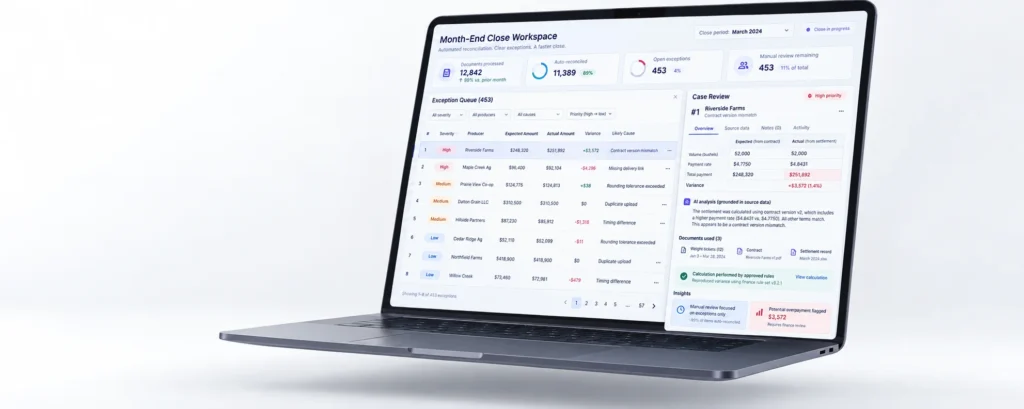
  • Manufacturing Platform Modernization Systems

    Aging ERP and MES platforms remain operational but block integration with modern digital initiatives such as manufacturing mobile app development, edge analytics, and cloud orchestration.

    • Behavioral legacy analysis. We analyze how legacy ERP, MES, and control systems actually behave under load, failure, and exception scenarios rather than relying on outdated documentation.
    • API wrapping of core logic. We expose legacy business and execution logic through stable APIs that decouple consumers from fragile internal implementations.
    • Incremental microservice extraction. We gradually extract high-value capabilities into independently deployable services without forcing full platform replacement.
    • Event-driven data enablement. We connect these legacy platforms to event streams that let you run real-time analytics, AI, and cross-system coordination — like a new lease on life.
    • Parallel run & cutover strategy. We modernise the system alongside your live production workflow, so you get a chance to validate before making the switch.
    You get a future-ready architecture that preserves existing investments while enabling continuous modernization.

  • IIoT & Edge Data Platforms

    As a manufacturing software development company, we understand that cloud-only architectures introduce latency and cost, while critical quality and safety decisions require millisecond-level response.

    • Edge-centric architecture design. We build industrial edge environments that process data close to the machines, respecting all those latency and bandwidth constraints.
    • Signal conditioning & validation. We make sure that the edge systems send out reliable, context-aware signals to downstream systems.
    • Resilient offline operation. We make sure that the edge systems carry on running in a deterministic way even when the network or cloud is down.
    • Selective cloud synchronization. We only send the high-value, aggregated data to central platforms to save costs and noise.
    • OT-specific security controls. We put security right at the protocol and device level, rather than just relying on perimeter defence.

    You get real-time control and analytics without being held up by cloud dependency or operational risk.

  • Supply Chain Planning & Resilience Systems

    Traditional supply chain systems are optimized for stability that no longer exists: they rely on static planning cycles, delayed signals, and human-driven exception handling, which makes manufacturers reactive instead of resilient when disruptions propagate across suppliers, logistics, and production schedules.

    • Predictive risk intelligence layer. We build a predictive intelligence layer that continuously models supply chain risk by combining your internal operational signals with external data sources like logistics constraints, weather disruptions, and regional instability.

    • Event-driven supply chain architecture. We implement event-driven architectures that enable real-time updates across systems, including manufacturing chatbot development that informs teams about shipment status, materials, or production shifts.
    • Scenario-based planning & simulation. We build simulation engines that evaluate alternative sourcing, routing, and production sequencing scenarios under constrained capacity, contractual obligations, and cost thresholds before you actually make the decisions.
    • ERP, MES & planning system synchronization. We integrate resilience logic directly into your ERP, APS, and MES environments so your supply chain decisions actually reflect the real production state.
    • Decision automation with explainability. We integrate resilience logic directly into your ERP, APS, and MES environments so your supply chain decisions actually reflect the real production state.

    You get a supply chain that detects risk early, evaluates alternatives before disruption escalates, and maintains production continuity through coordinated, data-driven decisions rather than manual firefighting.

  • Quality Management & Inspection Systems (QMS)

    Manual and sampling-based inspection cannot keep up with modern production speed and variability, while disconnected vision pilots fail to deliver consistent quality impact because they are not embedded into execution, control, and traceability workflows.

    • Inline inspection system architecture. We design and deploy inline inspection systems that operate at full production throughput, synchronized with conveyor mechanics, cycle-time constraints, and physical line topology, so quality control becomes part of execution rather than a downstream checkpoint.
    • Multimodal defect detection framework. We implement defect detection pipelines that fuse visual data with thermal, spectral, and process-level signals to identify surface anomalies, structural inconsistencies, and process-induced defects that single-sensor inspection cannot reliably detect.
    • Production-calibrated model lifecycle. We train and continuously recalibrate inspection models using real production data, defect distributions, and environmental variation so detection accuracy remains stable under changing materials, tooling wear, and operating conditions.
    • Closed-loop quality feedback integration. We integrate inspection outcomes directly into MES, PLC, and process control layers to enable immediate containment actions, parameter adjustment, or controlled line intervention based on verified quality deviations.
    • Traceability, compliance & root-cause intelligence. We ensure every quality decision is fully traceable to product identity, batch context, equipment state, and process parameters — and link this data back to your manufacturing product development software to support compliance and root-cause analysis.

    You get a production-grade quality management system that reduces scrap and rework, detects issues at their origin, and transforms inspection from a reactive cost center into a real-time quality control mechanism embedded in manufacturing execution.

  • Autonomous Manufacturing Execution Systems (Next-Gen MES)

    Traditional MES platforms provide visibility and reporting but rely on manual intervention for decision-making, which creates delays, inconsistency, and operational risk when production conditions change faster than humans can react.

    • Execution-centric system architecture. We design MES platforms as execution engines that model real production workflows, constraints, and state transitions so every order, operation, and material movement is governed by deterministic logic rather than dashboards alone.
    • Event-driven production control. We implement event-driven execution where machine signals, quality events, and material availability trigger immediate system responses instead of waiting for batch reconciliation or manual escalation.
    • Autonomous decision & orchestration layer. We embed autonomous decision logic that evaluates production deviations and executes bounded actions, supported by manufacturing chatbot development for instant operator interaction and feedback loops.
    • Agentic intelligence integrated with execution. We integrate AI agents directly into MES execution flows so optimization and anomaly handling operate on contextualized production state rather than raw sensor data or external analytics outputs.
    • Mes–PLC–SCADA synchronization. We ensure tight synchronization between MES logic and control-layer systems so execution decisions remain aligned with actual machine behavior, cycle timing, and control constraints.

    You get a next-generation MES that moves beyond monitoring into controlled autonomy, reducing reaction time to disruptions, increasing execution consistency across shifts and sites, and enabling scalable production without proportional increases in operational overhead.

  • Software-Defined Automation (SDA) Systems

    Traditional automation architectures are tightly bound to PLC hardware and vendor-specific control stacks, which makes production logic slow to change, expensive to scale, and risky to evolve when product mix, robotics, or line configuration changes.

    • Decoupled control architecture. We design software-defined automation architectures where control logic is decoupled from physical controllers and executed on industrial servers while PLCs remain responsible for deterministic I/O and safety-critical functions.
    • Virtualized control & motion logic. We implement virtualized control layers that manage robots, cells, and production lines through software-defined execution engines rather than hardcoded PLC programs.
    • Centralized control deployment & versioning. We enable centralized deployment, versioning, and rollback of automation logic, so production behavior can be updated, tested, and validated with the same discipline as modern software releases.
    • Hardware-Agnostic Automation Layer. We design automation logic that is portable across robot brands, controllers, and line configurations, reducing vendor lock-in and simplifying future reconfiguration.
    • Safe coexistence with legacy PLCs. We integrate software-defined control with existing PLC infrastructure, so plants can evolve incrementally without compromising safety, certification, or uptime.

    You get a production automation platform that replaces rigid hardware-bound logic with flexible software-defined control, enabling faster line changes, lower reconfiguration cost, and the ability to evolve factory behavior at software speed.

Our Process

How We Deliver Manufacturing Systems

01.

01. Digital Maturity Audit

We need to figure out just how production is actually working on your shop floor, pinpoint where it's getting bogged down, and come up with a solid roadmap for turning things around — all with some concrete numbers that'll actually mean something to your bottom line.

02.

02. Data Strategy

We set up a system that lets production data be the foundation all your systems are built on, without piling up extra layers of bureaucracy along the way.

03.

03. Agile Development

What we're doing here is breaking down projects into manageable chunks and delivering them in short, snappy iterations that actually get a look in at how things are really working on the shop floor — and that's usually within weeks.

04.

04. IIoT Integration & Edge Deployment

We connect directly with your shop floor machines and support manufacturing website development alongside edge computing to ensure decisions are made quickly — right at the source of production.

05.

05. Change Management

We make sure that whatever we implement gets aligned with the way things are actually done on the shop floor, and training your staff to use the new systems is all done on the job, so it just becomes part of the normal routine.

06.

06. Scaling Up with ML

We use the data coming in from your operation to keep on refining our AI models and spread the benefits of what we've learned to all the sites without disrupting your production schedule.

  • 01. Digital Maturity Audit

  • 02. Data Strategy

  • 03. Agile Development

  • 04. IIoT Integration & Edge Deployment

  • 05. Change Management

  • 06. Scaling Up with ML

Benefits

Why Manufacturers Choose Devox as Their Engineering Partner

01

Built for Manufacturing Complexity

Manufacturing rarely follows clean templates, and most real challenges emerge at the intersection of equipment behavior, process constraints, and legacy system limitations. As a manufacturing chatbot development company, Devox Software handles cases where standard MES, ERP, or automation platforms break down by designing adaptive systems.

02

Deep Execution & Industrial Systems Expertise

Having spent years angling across manufacturing execution systems, quality control systems, industrial automation, and data platforms, Devox Software has gotten pretty good at spotting potential problems before they materialise, understanding the intricate web of dependencies that can trip up a production line, and designing architectures that can hold up when things get real — in other words, when they're in the middle of a chaotic production floor.

03

Production-Linked ROI Delivery

What sets Devox Software apart is that we tie every single project phase to something tangible — real-world KPIs like reduced downtime, more stable throughput, improved quality, or lower energy bills. By delivering in small increments and validating software development for manufacturing companies in real-world factory settings, we ensure your digital transformation produces results that make a difference.

Built for Compliance

Industry Regulations We Master

Compliance is built into our architecture. The matrix below shows the frameworks we update as soon as changes occur, ensuring that every factory floor, IoT network, and digital twin is fully compliant, secure, and ready to scale.

[Industrial Data & Communication Standards]

  • OPC UA

  • MQTT

  • MTConnect

  • ISA-95

  • IEC 62439-3 (PRP/HSR)

  • RAMI 4.0

[Smart Manufacturing & Cybersecurity]

  • IEC 62443 (IACS)

  • NIST SP 800-82

  • ISO/IEC 27001:2022

  • ETSI EN 303 645

  • SOC 2 (Type II)

[Operational Safety & Robotics]

  • ISO 10218-1/-2

  • ISO/TS 15066 (Cobots)

  • IEC 61508 (Functional Safety)

  • SIL 1-4

  • CE Marking

  • ANSI/RIA R15.06

[Quality Management & Traceability]

  • ISO 9001:2015

  • IATF 16949 (Automotive)

  • AS9100D (Aerospace)

  • ISO 13485 (Medical Devices)

  • 21 CFR Part 11

[Sustainability & Green Manufacturing]

  • ISO 14001 (EMS)

  • ISO 50001 (Energy Management)

  • EU Digital Product Passport (DPP)

  • ESG Reporting Standards

  • Carbon Border Adjustment Mechanism (CBAM)

[AI Governance & Industrial Intelligence]

  • EU AI Act (High-Risk Systems)

  • ISO/IEC 42001 (AI MS)

  • NIST AI RMF 1.0

  • IEEE P2807 (Knowledge Graphs)

  • Predictive Maintenance Quality Standards

Case Studies

Our Latest Works

View All Case Studies
Sport Info Solution Sport Info Solution
  • Backend
  • Frontend
  • Cloud
  • Metrics & Data

Sports Info Solutions: Real-Time Sports Data Platform for Betting, Leagues & Fans

A high-performance analytics system for sports organizations to optimize team performance in real time.

Additional Info

Core Tech:
  • .NET Core​
  • MS SQL
  • ELK​
  • Vue.js
  • AWS​
  • Docker
  • DataDog​
  • R
Country:

USA USA

Automated VAT Filing & E‑Invoicing Platform for SAP-Driven Operations

Automated VAT Filing & E‑Invoicing Platform for SAP-Driven Operations

A full-cycle SAP-integrated platform that automates VAT filings, SAF-T reporting, and e-invoicing via KSeF and PEPPOL for a multinational enterprise.

Additional Info

Core Tech:
  • SAP S/4HANA
  • ABAP
  • SAP PI/PO
  • SAP Cloud Integration
  • Node.js
  • Angular
  • PostgreSQL
  • Redis
  • Docker
  • Azure
Country:

Poland Poland

AI-Powered Realtor Collaboration Platform for Localized Real Estate Markets AI-Powered Realtor Collaboration Platform for Localized Real Estate Markets

AI-Powered Realtor Collaboration Platform for Localized Real Estate Markets

AI-powered realtor collaboration platform with geospatial intelligence, and real-time sync, modernized for secure and scalable transactions in real estate markets.

Additional Info

Core Tech:
  • React
  • NestJS
  • PostgreSQL (spatial indexing)
  • Redis (pub/sub)
  • WebSockets
  • Python + OpenAI API
  • Mapbox GL JS
  • AWS ECS
  • S3
  • Lambda
  • Legacy CRM bridge
Country:

Canada Canada

Testimonials

Testimonials

Carl-Fredrik Linné                                            Sweden

The solutions they’re providing is helping our business run more smoothly. We’ve been able to make quick developments with them, meeting our product vision within the timeline we set up. Listen to them because they can give strong advice about how to build good products.

Darrin Lipscomb Darrin Lipscomb
Darrin Lipscomb United States

We are a software startup and using Devox allowed us to get an MVP to market faster and less cost than trying to build and fund an R&D team initially. Communication was excellent with Devox. This is a top notch firm.

Daniel Bertuccio Daniel Bertuccio
Daniel Bertuccio Australia

Their level of understanding, detail, and work ethic was great. We had 2 designers, 2 developers, PM and QA specialist. I am extremely satisfied with the end deliverables. Devox Software was always on time during the process.

Trent Allan Trent Allan
Trent Allan Australia

We get great satisfaction working with them. They help us produce a product we’re happy with as co-founders. The feedback we got from customers was really great, too. Customers get what we do and we feel like we’re really reaching our target market.

Andy Morrey                                            United Kingdom

I’m blown up with the level of professionalism that’s been shown, as well as the welcoming nature and the social aspects. Devox Software is really on the ball technically.

Vadim Ivanenko Vadim Ivanenko
Vadim Ivanenko Switzerland

Great job! We met the deadlines and brought happiness to our customers. Communication was perfect. Quick response. No problems with anything during the project. Their experienced team and perfect communication offer the best mix of quality and rates.

Jason Leffakis Jason Leffakis
Jason Leffakis United States

The project continues to be a success. As an early-stage company, we're continuously iterating to find product success. Devox has been quick and effective at iterating alongside us. I'm happy with the team, their responsiveness, and their output.

John Boman John Boman
John Boman Sweden

We hired the Devox team for a complicated (unusual interaction) UX/UI assignment. The team managed the project well both for initial time estimates and also weekly follow-ups throughout delivery. Overall, efficient work with a nice professional team.

Tamas Pataky Tamas Pataky
Tamas Pataky Canada

Their intuition about the product and their willingness to try new approaches and show them to our team as alternatives to our set course were impressive. The Devox team makes it incredibly easy to work with, and their ability to manage our team and set expectations was outstanding.

Stan Sadokov Stan Sadokov
Stan Sadokov Estonia

Devox is a team of exepctional talent and responsible executives. All of the talent we outstaffed from the company were experts in their fields and delivered quality work. They also take full ownership to what they deliver to you. If you work with Devox you will get actual results and you can rest assured that the result will procude value.

Mark Lamb Mark Lamb
Mark Lamb United Kingdom

The work that the team has done on our project has been nothing short of incredible – it has surpassed all expectations I had and really is something I could only have dreamt of finding. Team is hard working, dedicated, personable and passionate. I have worked with people literally all over the world both in business and as freelancer, and people from Devox Software are 1 in a million.

FAQ

Frequently Asked Questions

  • What are the benefits of custom manufacturing software vs off-the-shelf solutions?

    Off-the-shelf manufacturing software works best when production follows standardized processes and change happens slowly. In real factories, however, competitive advantage often lives in the exceptions: unique equipment behavior, plant-specific workflows, legacy constraints, and operational decisions that cannot be cleanly mapped onto generic software models. Custom manufacturing software is designed around how production actually runs, allowing systems to reflect physical reality instead of forcing teams to adapt their operations to the limitations of a predefined platform.

    The deeper benefit of custom manufacturing software is long-term control and measurable performance impact. Instead of accumulating workarounds, integrations, and manual steps over time, custom systems evolve with the factory, supporting continuous optimization across execution, quality, planning, and energy efficiency. This approach reduces operational friction, shortens reaction time to disruptions, and ties digital investment directly to outcomes such as higher OEE, lower downtime, and more predictable production performance. Custom software does not replace standard tools where they fit, but it fills the critical gaps where differentiation, resilience, and scale truly matter.

  • What features should custom manufacturing software include?

    Custom manufacturing software should be built around execution, not reporting. At its core, it must reflect how production actually runs on the shop floor, capturing real process states, material flow, equipment behavior, and constraints in a way that supports day-to-day decision-making. This includes real-time visibility into operations, event-driven execution logic, tight integration with machines and control systems, and the ability to react immediately when conditions change rather than relying on static plans or delayed data.

    Equally important, custom manufacturing software should be designed to evolve. Solutions delivered by a manufacturing bot development company must support incremental automation, integrate with existing ERP and MES platforms, and scale as production evolves. Features matter less than architecture: the ability to adapt to unique workflows, preserve operational knowledge, maintain traceability, and continuously improve performance over time is what ultimately turns software into a long-term production asset rather than a temporary digital layer.

  • Can custom manufacturing software integrate with ERP, MES, or IoT systems?

    Yes, and in practice, this is one of the main reasons manufacturers choose custom software in the first place. Custom manufacturing systems are typically designed to sit alongside existing ERP and MES platforms rather than replace them, extending their capabilities and filling execution or data gaps without disrupting live operations. Integration is built around real production events and system behavior, so information flows between planning, execution, and reporting in a way that reflects what is actually happening on the shop floor.

    The same principle applies to IIoT and connected equipment. Custom software can integrate directly with machines, sensors, and controllers through industrial protocols and edge computing layers, allowing real-time data to be processed close to production and shared with higher-level systems when it adds value. This approach avoids fragile point-to-point integrations, preserves existing investments, and creates a unified operational view where ERP, MES, and IoT systems work together as part of a single manufacturing ecosystem rather than isolated tools.

  • How do you ensure scalability and security in manufacturing software?

    Scalability starts withan architecture that can grow without turning into a fragile web of integrations. We design manufacturing software as a modular system with clear boundaries so new plants, lines, workflows, and data sources can be added without rewriting the core. Real-time workloads are handled through event-driven execution and edge processing, where it makes sense, so the platform scales by distributing responsibility rather than pushing everything into one central bottleneck. We also treat scalability as an operational discipline by designing for observability, predictable deployments, and controlled change, because a system that cannot be safely updated will eventually stop scaling in practice.

    Security is engineered into the system from day one because manufacturing has a different risk profile than typical enterprise software. We design strict separation between IT and OT zones, enforce least-privilege access, and protect interfaces that touch equipment or execution logic with strong authentication and auditability. Data is secured in transit and at rest, while critical actions are logged and traceable to support compliance and incident investigation. We pair this with DevSecOps practices so security controls evolve with every release, which keeps the system defensible as connectivity increases and the attack surface expands.

  • What technologies are best for manufacturing web development and custom manufacturing software?

    The “best” technologies depend less on hype and more on where the software must run and what it must guarantee. For shop-floor execution, quality control, and near-real-time monitoring, the strongest choices are event-driven architectures plus an edge layer that can process data locally and keep operating during network instability. In practice that means industrial connectivity standards such as OPC UA for equipment integration, lightweight messaging such as MQTT for telemetry, and a streaming backbone (often Kafka-class patterns) to move production events reliably from machines to execution and analytics systems. This foundation keeps the system responsive, observable, and extensible as more lines, plants, and use cases come online.

    For the application layer, the “best” stack is the one that stays maintainable under continuous change. Most manufacturers benefit from a modular service architecture (container-based when appropriate), robust APIs, and a data layer that separates operational transactions from time-series telemetry and analytics. Commonly, teams pair a mature backend stack (.NET or Java for core execution services) with Python, where applied AI adds value, and a modern web UI for operator and supervisor workflows. On the platform side, cloud services (AWS or Azure) work well for scale and governance, while edge runtime choices prioritize determinism, secure updates, and lifecycle control. The real differentiator is not the brand of tools but the architecture that keeps integration stable, security enforceable, and evolution safe over years of production use.

Book a call

Want to Achieve Your Goals? Book Your Call Now!

Contact Us

We Fix, Transform, and Skyrocket Your Software.

Tell us where your system needs help — we’ll show you how to move forward with clarity and speed. From architecture to launch — we’re your engineering partner.

Book your free consultation. We’ll help you move faster, and smarter.

Let's Discuss Your Project!

Share the details of your project – like scope or business challenges. Our team will carefully study them and then we’ll figure out the next move together.


    By sending this form I confirm that I have read and accept the Privacy Policy

    Thank You for Contacting Us!

    We appreciate you reaching out. Your message has been received, and a member of our team will get back to you within 24 hours.

    In the meantime, feel free to follow our social.


      Thank You for Subscribing!

      Welcome to the Devox Software community! We're excited to have you on board. You'll now receive the latest industry insights, company news, and exclusive updates straight to your inbox.