


- Architecture Analysis. AI agents examine your legacy systems’ structure and surface the logic paths, bottlenecks, and hidden debt that slow delivery.
- Dependency Mapping. Autonomous scanners show how systems behave in production and highlight fragile integrations, duplicated endpoints, and risky third-party touchpoints.
- Security Scan. AI‑driven engines evaluate code, infrastructure, and configurations to pinpoint outdated components, exposed interfaces, and high‑impact vulnerabilities. You get a realistic view of your security posture instead of relying on old audits or assumptions.
- Modernization Roadmap. A data-backed model shows the modernization sequence that gives the fastest operational lift with the lowest execution risk.
- Modernization Cost Modeling. A financial model quantifies the cost of maintaining the current state and contrasts it with the projected gains from modernization and AI‑assisted refactoring.

Modernize-to-AI Programs
-
RECONSTRUCT THE PRODUCT'S LOGIC
Turn AI-generated flows into explicit business rules backed by tests, so the product behaves correctly beyond the demo path. -
RESTORE CONTROL OVER EVERY CHANGE
Replace prompt-driven edits with reviewed, tested steps, so a new feature leaves existing workflows intact. -
MAKE THE MVP READY FOR REAL USERS
Rebuild the layer under the UI: identity, transactions, and separate environments for real data and integrations.
The Devox Software Difference
How We Use AI in Modernization
AI Reads, Engineers Decide
AI maps the code, drafts documentation, and proposes refactoring. Every change goes through engineer review and tests before it reaches production.
Tests Before Changes
For code with little or no coverage, we generate tests that record how it behaves today. Refactoring starts once that baseline is in place.
One Part at a Time
We use the Strangler Fig pattern: each function moves to the new system separately, while the rest of the platform keeps running.
Data Moved With the Code
Schemas, lineage and data quality are handled in the same program as the application. When the code is ready for AI, the data is too.
Services
What We Offer
-
Legacy Modernization Assessment
-
AI Data Readiness
- Data Readiness Assessment. We evaluate your current data landscape to determine whether it can support AI workloads and where the gaps are.
- Data Quality Scoring. We score datasets for accuracy, consistency, and completeness to understand how well they can support AI systems.
- Data Access Governance. Permissions, PII handling, and access controls are structured to support safe AI use across your engineering teams.
- Training Data Preparation. Raw data is labeled, structured, and transformed into formats suitable for machine learning and GenAI pipelines.
- AI‑Readiness Roadmap. A clear plan outlines how to move from fragmented, inconsistent data to AI‑ready inputs that can power real applications.
-
AI-Driven Code Refactoring
- Framework Upgrades. Our highly specialized engineers use AI agents to assess legacy frameworks and move applications to modern runtimes such as .NET 8 or current JDK versions.
- Monolith Decomposition. AI systems examine call patterns, data flows, and code boundaries to identify natural seams inside large monoliths.
- Integration Tests. AI helps generate test suites for legacy codebases that lack coverage.
- Documentation Generation. AI analyzes undocumented codebases and produces documentation that reflects how the system works today.
- Platform Migration. AI-assisted translators move applications from aging languages like COBOL, VB6, or legacy PHP into modern, maintainable stacks.
-
Cloud-Native Modernization
- Kubernetes Modernization. AI systems analyze application behavior and reshape legacy workloads into container‑ready components that run cleanly on Kubernetes.
- Event-Driven Re-Architecture. Workloads are redesigned around serverless functions and real‑time event flows, eliminating idle compute and reducing operational drag.
- Cloud Cost Optimization. Models evaluate usage patterns, resource waste, and deployment inefficiencies to find opportunities to reduce cloud spend without hurting performance.
- Resilient Auto-Scaling. Rebuild architectures to scale automatically and withstand regional failures, traffic spikes, and dependency outages.
- Cloud Migration Execution. AI‑assisted workflows move applications into AWS, Azure, or GCP and change them from basic lift‑and‑shift deployments to fully cloud‑native patterns.
-
Intelligent Data Modernization
- Legacy Database Migration. AI-assisted workflows move legacy databases into modern cloud environments and reshape outdated schemas into cleaner, more scalable structures. The shift removes long‑standing constraints that make data slow, brittle, and expensive to maintain.
- Data Cleanup. AI models detect inconsistencies, duplicates, and low‑quality records across fragmented data sources and automatically remediate them.
- Data Cataloging. It captures, organizes, and connects metadata to show where it comes from, how it moves, and who relies on it. Clear lineage makes governance easier and reduces the risk of AI models pulling from the wrong sources.
- Lakehouse Modernization. Legacy warehouses are re-platformed to modern lakehouse architectures such as Snowflake or Databricks.
- GenAI Data Pipelines. AI‑ready pipelines generate embeddings, build retrieval layers, and connect structured and unstructured data into a single semantic fabric.
Benefits
What Changes After Modernization
-
Documentation
that matches the running system
Your team gets a description of how the system works today, including the business rules that lived only in the code. New engineers can start from it.
-
Data
your AI projects can use
Data sets are scored, cleaned, and cataloged. When a model gives a wrong answer, you can trace which source it came from.
-
A cost case
for each phase
Each phase comes with the cost of keeping the old system compared with the cost of replacing that part. Leadership approves the next step with those numbers in hand.
-
Customers
keep working
Migration happens in small steps behind a stable interface. Most changes go out without users noticing.
Benefits
What Changes After the Rescue
01
A product you can show in due diligence
Investors and enterprise buyers ask about security, architecture, and test coverage. After the rescue, you can show them tests, logs, and a documented environment setup.
02
New features stop breaking old ones
The product rules are written down as tests and contracts. Every change has to pass them before it reaches production.
03
Your team keeps using AI tools
Cursor, Lovable and similar tools stay in the workflow, with clear limits on which parts of the code they can change without review.
04
You keep what users already validated
The UI and flows your users know stay in place. The work goes into the backend, data and security underneath them.

 Austria

LOGISTICS
Enabling Real-Time Teleoperation of a Multi-Purpose Robotic Platform
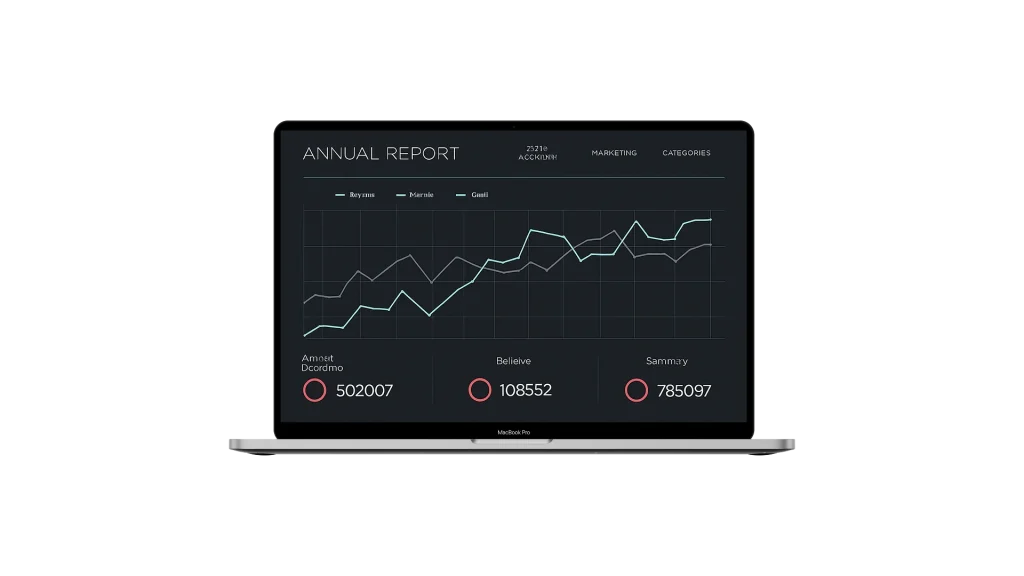
A remote control system for a multi-purpose robotic platform needs a solid backend. Real-time commands, video streaming, and video powered by neural networks are among the baseline features, forming the backbone for efficient teleoperation.
Additional Info
Core Tech:
- .NET Framework
- Razor
- PostgreSQL
- Xamarin
- YOLO
Country:
 United Kingdom

REAL ESTATE
AI-Powered Realtor Collaboration Platform for Localized Real Estate Markets
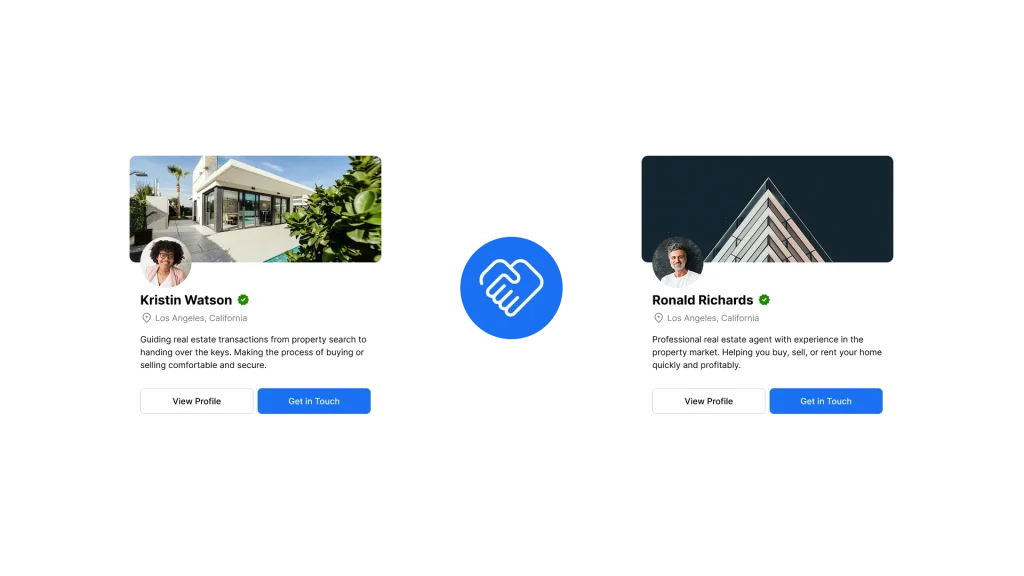
AI-powered realtor collaboration platform with geospatial intelligence, and real-time sync, modernized for secure and scalable transactions in real estate markets.
Additional Info
Core Tech:
- React
- NestJS
- PostgreSQL (spatial indexing)
- Redis (pub/sub)
- WebSockets
- Python + OpenAI API
- Mapbox GL JS
- AWS ECS
- S3
- Lambda
- Legacy CRM bridge
Country:
 Canada
Testimonials
Testimonials



 Sweden
The solutions they’re providing is helping our business run more smoothly. We’ve been able to make quick developments with them, meeting our product vision within the timeline we set up. Listen to them because they can give strong advice about how to build good products.
Carl-Fredrik Linné
Tech Lead at
CURE Media



 United States
We are a software startup and using Devox allowed us to get an MVP to market faster and less cost than trying to build and fund an R&D team initially. Communication was excellent with Devox. This is a top notch firm.
Darrin Lipscomb
CEO, Founder at
Ferretly



 Australia
Their level of understanding, detail, and work ethic was great. We had 2 designers, 2 developers, PM and QA specialist. I am extremely satisfied with the end deliverables. Devox Software was always on time during the process.
Daniel Bertuccio
Marketing Manager at
Eurolinx


 Australia
We get great satisfaction working with them. They help us produce a product we’re happy with as co-founders. The feedback we got from customers was really great, too. Customers get what we do and we feel like we’re really reaching our target market.
Trent Allan
CTO, Co-founder at
Active Place

 United Kingdom
I’m blown up with the level of professionalism that’s been shown, as well as the welcoming nature and the social aspects. Devox Software is really on the ball technically.
Andy Morrey
Managing Director at Magma Trading



 Switzerland
Great job! We met the deadlines and brought happiness to our customers. Communication was perfect. Quick response. No problems with anything during the project. Their experienced team and perfect communication offer the best mix of quality and rates.
Vadim Ivanenko
COO at
Optherium


 United States
The project continues to be a success. As an early-stage company, we're continuously iterating to find product success. Devox has been quick and effective at iterating alongside us. I'm happy with the team, their responsiveness, and their output.


 Sweden
We hired the Devox team for a complicated (unusual interaction) UX/UI assignment. The team managed the project well both for initial time estimates and also weekly follow-ups throughout delivery. Overall, efficient work with a nice professional team.
John Boman
Product Manager at
Lexplore


 Canada
Their intuition about the product and their willingness to try new approaches and show them to our team as alternatives to our set course were impressive. The Devox team makes it incredibly easy to work with, and their ability to manage our team and set expectations was outstanding.
Tamas Pataky
Head of Product at
Stromcore



 Estonia
Devox is a team of exepctional talent and responsible executives. All of the talent we outstaffed from the company were experts in their fields and delivered quality work. They also take full ownership to what they deliver to you. If you work with Devox you will get actual results and you can rest assured that the result will procude value.
Stan Sadokov
Product Lead at
Multilogin


 United Kingdom
The work that the team has done on our project has been nothing short of incredible – it has surpassed all expectations I had and really is something I could only have dreamt of finding. Team is hard working, dedicated, personable and passionate. I have worked with people literally all over the world both in business and as freelancer, and people from Devox Software are 1 in a million.
Mark Lamb
Technical Director at M3 Network Limited
Insights
Our Experts' Insights
AI & ML
AI Solutions
Legacy Modernization
AI-Assisted Software Development: The Ultimate Practical Guide
AI & ML
AI Solutions
AI-Powered, Buyer-Centric, Revenue-Driven: A New Marketing Model for B2B Growth
FAQ
Frequently Asked Questions
-
How do you control modernization costs?
We combine domain-expert engineering leadership with AI-assisted delivery to accelerate execution while keeping scope, quality, and cost under control. We review, test, and approve AI-generated code before it reaches production. From planning through rollout, we stay accountable for delivery and provide reports your leadership team can use to evaluate progress and investment.
-
How do you uncover legacy business rules and algorithms?
We use AI-assisted analysis to map the codebase and surface the business rules embedded in it. Often, that shortens work that would otherwise take weeks of manual review. Our architects validate the findings and turn them into documentation your team can use, giving you clearer control of critical IP and a stronger foundation for modernization.
-
How do you move legacy tech stacks into modern systems?
Our engineers work across legacy platforms and modern cloud environments, helping them translate older systems into maintainable, scalable software. We use specialized tooling to convert legacy logic into modern components, with seasoned engineers reviewing each step. The result is a platform that is easier to support, extend, and operate over time.
-
How do you avoid cloud vendor lock-in?
We design portable architectures that can run across platforms such as Snowflake, Databricks, and Confluent. Our deployments integrate cleanly with AWS and Azure services while keeping the core system flexible. That gives you the flexibility to switch providers, adopt the best-fit services, and avoid unnecessary dependence on a single vendor.
-
How do you keep AI outputs accurate?
We design AI architectures with governance, lineage, and data controls built in from the start. Applications connect to a consistent source of truth, which helps AI systems work from reliable data. That improves the accuracy and auditability of RAG-based workflows while preserving security controls.
-
How do you keep operations running during modernization?
We modernize in phases using the Strangler Fig pattern, replacing one part of the system at a time while the core platform remains in service. We isolate each function and transition it gradually so customer activity, transactions, and day-to-day operations continue with minimal disruption. In most cases, end users experience little to no interruption. We cover the hands-on side of enterprise AI transformation.
Book a call
Want to Achieve Your Goals? Book Your Call Now!
Contact Us
We Fix, Transform, and Skyrocket Your Software.
Tell us where your system needs help — we’ll show you how to move forward with clarity and speed. From architecture to launch — we’re your engineering partner.
Book your free consultation. We’ll help you move faster, and smarter.
Let's Discuss Your Project!
Share the details of your project – like scope or business challenges. Our team will carefully study them and then we’ll figure out the next move together.
Thank You for Contacting Us!
We appreciate you reaching out. Your message has been received, and a member of our team will get back to you within 24 hours.
In the meantime, feel free to follow our social.
Thank You for Subscribing!
Welcome to the Devox Software community! We're excited to have you on board. You'll now receive the latest industry insights, company news, and exclusive updates straight to your inbox.