devox-hero (70)

Automotive ERP/MES/PLM Integration Services

Arrange a Call with Us
  • ELIMINATE OPERATIONAL BLIND SPOTS

    Connect ERP, MES, and PLM into a unified real-time platform. Gain full visibility into production status, vehicle lifecycle, and operational workflows to make accurate decisions and commitments.

  • UNLOCK TRAPPED CAPITAL

    Synchronize production, inventory, and operational data across your ecosystem. Optimize inventory flow, improve delivery accuracy, and increase capital efficiency using live operational intelligence.

  • ENABLE PROGRESSIVELY AUTONOMOUS OPERATIONS

    Build an integration foundation that supports AI-driven execution, connected vehicle workflows, and software-defined vehicle lifecycle management. Prepare your architecture for scalable, intelligent automotive operations.

  • awards
  • awards
  • awards
  • awards
  • awards
Why choose Devox Software?

What We Offer

Data Interoperability

We create a seamless connection between OEM production systems and automotive supply chain ERP platforms using STAR-compliant, API-native architecture (JSON/OpenAPI). This ensures that engineering data, production status, inventory signals, and lifecycle events flow continuously across your ecosystem, enabling real-time operational decisions, accurate delivery commitments, and tighter capital control.

Cybersecurity

We design integration environments based on Zero Trust principles and continuous verification controls to protect financial, operational, and customer data across distributed systems. Security becomes embedded in the architecture itself, reducing systemic risk while enabling safe ecosystem connectivity with OEMs, suppliers, and third-party platforms.

Autonomous Operations

We embed AI agents into ERP-connected workflows to analyze live operational signals, prioritize actions, and automatically trigger execution through ERP, MES, and service systems. These agents operate on live operational data across ERP, MES, and PLM, enabling faster execution cycles, reduced manual intervention, and higher operational efficiency across production, service, and supply chain workflows.

SDV Management

We integrate ERP with PLM and OTA backend platforms to provide full lifecycle visibility, linking software updates, configuration history, and compatibility data directly to operational and service workflows. This ensures accurate service preparation, configuration integrity, and full operational visibility across evolving vehicle software environments.

ESG Sustainability Ledger

We embed sustainability tracking directly into ERP transaction frameworks, enabling traceability of carbon footprint, lifecycle impact, and battery circularity for EV programs. This provides audit-ready transparency while supporting regulatory compliance and long-term operational accountability.

Cloud-Native Composable ERP

We modernize legacy DMS and ERP environments using composable, cloud-native automotive ERP solutions, integrating platforms such as SAP S/4HANA and Acumatica into a unified operational ecosystem. This composable foundation allows organizations to expand capabilities, integrate AI, and connect new services without disrupting core operations, ensuring architectural flexibility as business models evolve.

Our Edge

Challenges We Overcome

  • Modernize
  • Build
  • Innovate

Legacy tech dragging down your product and team velocity?

We untangle and rebuild your stack, smarter, faster, and lighter.

Cloud bills are skyrocketing while performance remains underwhelming?

We optimize where it hurts: infrastructures, pipelines, and services.

Can’t scale without risking your license?

We upgrade with full compliance baked in; no more audit anxiety.

Running low on in-house fintech expertise and time?

We drop in as a ready squad: architecture, delivery, and domain know-how.

Need to launch quickly but worried about compliance pushback?

We build quickly and cleanly, ready for customers and regulators.

KYC slowing down your onboarding and growth?

We design flows that keep you compliant and conversions high.

Want AI, but do not want to break things or the law?

We deploy AI solutions that are smart and secure, from fraud detection to credit scoring.

Struggling to add new features without killing your roadmap?

We bring clarity and structure to innovation, reducing noise and increasing long-term value.

Need cutting-edge tech, but Your team maxed out?

We integrate directly into your organization, delivering architecture, engineering, and domain expertise with speed, precision, and automotive industry fluency.

What We Deliver

Services We Provide

  • Automotive MES Integration

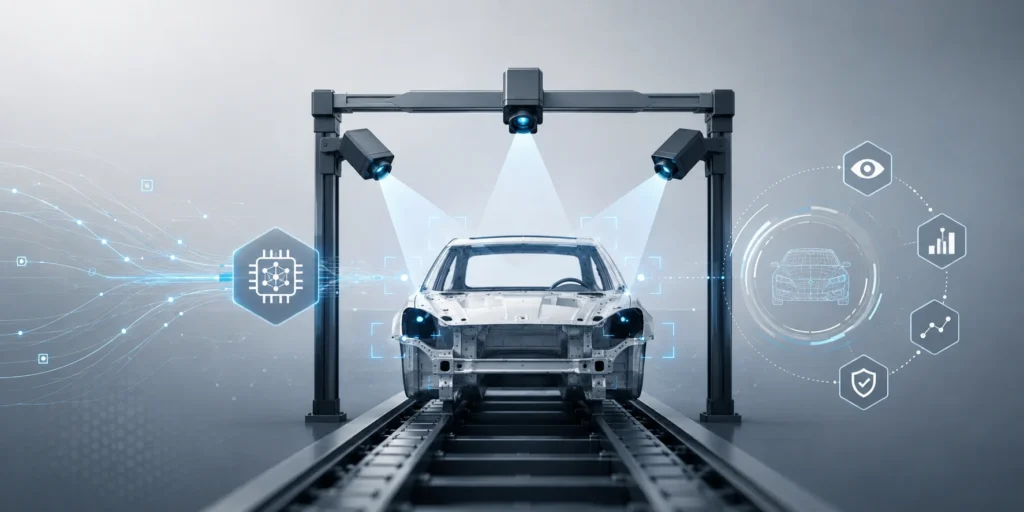
    Modern automotive operations no longer end at the factory floor or begin at the dealership. In MES in automotive industry, production status, component availability, quality signals, and assembly progress directly shape delivery timelines, customer commitments, and inventory economics. Integrating MES with ERP transforms production data into a real-time operational layer, enabling automotive manufacturers and dealership networks to see what is being built, when it will be available, and how it affects downstream operations.

    • Shop Floor to ERP Data Synchronization. We enable continuous data exchange between shop floor operations and ERP systems, providing accurate visibility into work orders, material consumption, labor tracking, and production performance.
    • Production Traceability Implementation. We design traceability frameworks that capture component-level, batch-level, and vehicle-level production data to support compliance, recalls, and quality audits.
    • Quality Management Integration. We connect MES with quality systems and ERP modules to ensure nonconformance tracking, root-cause analysis, and corrective action workflows are fully integrated into operational processes.
    • Industrial IoT and Equipment Connectivity. We deliver automotive production software integration by connecting MES with production equipment, PLCs, and IoT sensors to enable real-time monitoring of machine performance, downtime, and throughput.
    • Production Analytics and Performance Monitoring. We implement real-time dashboards and data pipelines that provide operational intelligence across lines, plants, and supplier networks.
    • Multi-Plant MES Architecture. We design scalable MES integration architectures that unify data across multiple manufacturing sites while maintaining local operational control.

    This integration with MES software for automotive manufacturing enables accurate delivery forecasting, proactive service preparation, and tighter alignment between manufacturing execution and commercial commitments.

  • Automotive ERP Integration

    Automotive ERP has evolved from a financial record system into the operational core that coordinates vehicle orders, supply chain activity, service workflows, and financial execution across OEM and dealership ecosystems. Integrating ERP with OEM platforms, MES, PLM, and connected vehicle systems enables continuous synchronization of production status, lifecycle data, and operational events.

    • OEM Systems Integration. Our automotive ERP integration services connect your ERP with OEM platforms using STAR-compliant APIs, enabling real-time synchronization of vehicle data, orders, inventory, and operational workflows.
    • MES Integration. We connect your ERP to MES platforms to provide real-time visibility into vehicle production status, component availability, and delivery timelines.
    • Digital Vehicle Lifecycle Synchronization. We integrate ERP with PLM systems to enable access to vehicle configuration, software updates, service history, and lifecycle intelligence.
    • Integration Hub Development. We build centralized API platforms that orchestrate data exchange between ERP and internal and external systems, ensuring scalability and ecosystem interoperability.
    •  Unified Data Flow Implementation. We establish continuous, real-time data flow across ERP, MES, PLM, and customer systems, creating a unified operational and decision-making foundation.

    This establishes a unified execution environment where operational and financial decisions are driven by real-time data rather than delayed reporting cycles. As a result, organizations gain the ability to coordinate inventory, service readiness, customer commitments, and financial planning in real time, improving capital efficiency, operational responsiveness, and scalability across dealership networks and manufacturing ecosystems.

  • Automotive PLM Integration

    In PLM in automotive industry, vehicles are software-defined products with continuously evolving configurations, software versions, and lifecycle requirements. PLM integration allows ERP and operational systems to access all the important information about each vehicle, such as engineering details, software updates, and the history of its parts.

    • PLM System Integration. We integrate automotive product lifecycle software with ERP and MES to enable seamless product lifecycle data synchronization.
    • Vehicle Configuration Management Integration. We enable access to vehicle configuration and engineering data to support accurate service and production operations.
    • Software Lifecycle Integration. We integrate PLM with systems for managing the vehicle software lifecycle to support OTA updates and software management.
    • Product Data Synchronization. We ensure accurate synchronization of product, component, and lifecycle data across your systems.
    • Digital Vehicle Lifecycle Enablement. We enable unified lifecycle visibility across engineering, production, and dealership operations.

    This allows organizations to manage vehicle configurations accurately, prepare service operations proactively, and ensure compatibility across hardware and software environments. By connecting engineering, production, and operational systems, modern trends in automotive PLM establish full lifecycle visibility, enabling precise service planning and readiness for connected and electric vehicles.

  • AI-Powered Dealership Operations

    Automotive process automation software depends on real-time access to operational and lifecycle data across ERP, PLM, inventory, and customer systems. By integrating AI agents directly into ERP and dealership workflows, organizations can automate customer engagement, service coordination, inventory planning, and operational decision-making.

    • AI Lead Handling and Appointment Automation. We deploy AI agents that automatically respond to customer inquiries, qualify buyers, and schedule showroom and service appointments directly in your ERP.
    • Predictive Inventory and Pricing Optimization. We implement AI models that analyze demand, vehicle performance, and market trends to optimize inventory levels and pricing decisions.
    • Automated Service Scheduling and Parts Coordination. We enable AI to automatically plan service visits, check parts availability, and coordinate service workflows across your dealership.
    • AI Customer Engagement Integrated with ERP. We integrate AI-driven customer interactions with your ERP, ensuring every conversation, opportunity, and service request is tracked and executed seamlessly.
    • AI-Ready ERP Foundation. We prepare ERP platforms with unified data models, event streams, and API layers required to support AI-driven automation and real-time operational intelligence.

    These systems continuously analyze demand patterns, vehicle lifecycle signals, and operational constraints to execute tasks autonomously and optimize performance. This establishes a continuously improving operational system where decisions adapt dynamically based on real-time demand signals, vehicle lifecycle data, and supply chain conditions.

  • Data Platform and Analytics

    Operational visibility requires more than isolated reports; it requires a unified data foundation that connects production, inventory, service, financial, and customer systems into a single operational view. By integrating ERP, MES, PLM, and dealership systems into a centralized data platform, organizations gain real-time access to operational intelligence across their entire ecosystem.

    • Unified Dealership Data Platform Development. We build centralized data platforms that unify ERP, CRM, inventory, service, and customer data into a single real-time system.
    • Real-Time Operational and Financial Dashboards. We implement dashboards that provide instant visibility into sales performance, inventory turnover, service operations, and financial results.
    • Inventory, Sales, and Service Performance Analytics. We deliver analytics tools that help you identify trends, optimize inventory movement, and improve dealership profitability.
    • Customer Intelligence. We enable analysis of customer behavior, purchase history, and service patterns to improve retention and increase lifetime value.
    • AI-Ready Reporting Systems. We prepare your data architecture to support advanced analytics, automation, and future AI-driven operational improvements.

    This enables faster decision-making, more accurate forecasting, and continuous performance optimization. A unified data platform becomes the analytical foundation that supports operational control, financial visibility, and the deployment of advanced automation and AI-driven optimization across the organization.

  • Connected Vehicle Integration

    Connected vehicles continuously generate operational, diagnostic, and lifecycle data that can transform service operations and customer engagement. Integrating ERP with vehicle telematics, OEM platforms, and lifecycle systems allows organizations to monitor vehicle health, prepare service operations proactively, and coordinate maintenance workflows based on real-time vehicle conditions.

    • OEM System Integration. We integrate your ERP with OEM platforms to provide real-time access to vehicle orders, specifications, production status, and delivery timelines.
    • Vehicle Lifecycle Integration. We connect your systems with vehicle lifecycle data to ensure accurate service planning, configuration visibility, and operational control.
    • Vehicle Telematics Integration. We enable your dealership to receive and use vehicle telematics data to support proactive service, diagnostics, and customer engagement.
    • OTA Update Integration. We integrate your ERP with systems for vehicle software updates to manage software versions, service readiness, and support workflows.
    • EV Battery Data Integration. We enable access to battery lifecycle and vehicle health data to improve maintenance planning, valuation accuracy, and service strategy.

    Our solution enables predictive service planning, improves service readiness, and strengthens customer relationships by anticipating needs before failures occur. Connected vehicle integration extends operational visibility beyond internal systems, enabling organizations to operate based on real-world vehicle behavior and lifecycle signals.

  • Cloud Infrastructure

    Modern automotive integration requires infrastructure capable of supporting ERP, MES, PLM, and connected vehicle systems while ensuring continuous data flow and real-time operational execution. Cloud infrastructure provides the scalability, resilience, and availability required to support ERP, MES, PLM, and connected vehicle systems without operational disruption.

    • Cloud Architecture Design. We design secure, scalable cloud architectures that support your ERP, integrations, and operational systems.
    • Cloud Migration. We migrate your ERP and dealership systems to the cloud with minimal disruption to daily operations.
    • Cloud Security Implementation. We implement identity controls, access policies, and data protection mechanisms to secure your dealership systems and customer data.
    • High Availability Infrastructure Setup. We configure infrastructure that ensures your ERP and dealership systems remain continuously available and reliable.
    • Monitoring Implementation. We implement monitoring systems that detect issues early and ensure stable and uninterrupted dealership operations.

    By establishing secure, scalable cloud environments, organizations ensure continuous system availability, faster integration and deployment, and the ability to evolve their operational architecture as business needs grow. This creates a stable and adaptable foundation that supports ongoing integration, automation, and digital transformation across automotive operations.

Our Process

Our Process

01.

01. Platform and Systems Assessment

We analyze your ERP, MES, PLM, and integration landscape to identify architectural gaps, data fragmentation, and operational risks.

02.

02. Integration Architecture Design

We design future-ready ERP MES PLM automotive solutions that connect ERP, MES, and PLM into a unified, scalable platform.

03.

03. Secure Integration Foundation Setup

We establish secure APIs, data pipelines, and infrastructure required to support reliable system integration.

04.

04. ERP, MES, and PLM Integration Implementation

We integrate ERP, MES, and PLM systems to enable real-time data flow across production, operations, and lifecycle management.

05.

05. Validation and Operational Readiness

We test, validate, and optimize the integrated platform alongside an automotive quality management system to ensure stability, accuracy, and operational reliability.

06.

06. Launch and Continuous Evolution

We deploy the integrated platform and support its continuous evolution as your operations and business grow.

  • 01. Platform and Systems Assessment

  • 02. Integration Architecture Design

  • 03. Secure Integration Foundation Setup

  • 04. ERP, MES, and PLM Integration Implementation

  • 05. Validation and Operational Readiness

  • 06. Launch and Continuous Evolution

Built for Compliance

Industry Regulations We Master

Compliance is embedded across automotive ERP systems, MES, and PLM integration layers. As manufacturing, safety, cybersecurity, and supply-chain regulations evolve, our architectures adapt in parallel, ensuring production continuity, traceability, and audit readiness across global automotive operations.

[Automotive Safety & Quality Standards]

  • IATF 16949

  • ISO 9001:2015

  • ISO 26262

  • AIAG Core Tools (APQP, PPAP, FMEA, SPC, MSA)

[Functional Safety & Software Compliance]

  • ASPICE

  • ISO 21434 (Automotive Cybersecurity)

  • UNECE WP.29 (R155 / R156)

[Cybersecurity & Infrastructure Protection]

  • NIST CSF 2.0

  • ISO/IEC 27001:2022

  • IEC 62443 (OT Security)

  • CMMC 2.0 (for DoD suppliers)

[Supply Chain & Traceability Regulations]

  • UFLPA

  • Conflict Minerals Rule (Dodd-Frank §1502)

  • REACH

  • RoHS

  • EPA Reporting Requirements

[Data Governance & Digital Engineering]

  • FDA 21 CFR Part 11 (for regulated components)

  • GDPR (cross-border engineering data)

  • ITAR / EAR (export-controlled programs)

[AI & Advanced Manufacturing Governance]

  • NIST AI RMF 1.0

  • ISO/IEC 42001

  • EU AI Act (for AI-enabled production systems)

Case Studies

Our Latest Works

View All Case Studies
The Full-Spectrum Solution Ecosystem in Logistics for a Global Player The Full-Spectrum Solution Ecosystem in Logistics for a Global Player

The Full-Spectrum Solution Ecosystem in Logistics for a Global Player

From legacy to robust global solutions for optimizing supply chain operations with enhanced customer satisfaction.

Additional Info

Core Tech:
  • React.js
  • .NET 7
  • Microsoft SQL Server
  • Keycloak
  • Auth0
  • Azure DevOps
Country:

USA USA

AI-Driven Intelligent Automation Engine for Multicountry Export Certification AI-Driven Intelligent Automation Engine for Multicountry Export Certification

AI-Driven Intelligent Automation Engine for Multicountry Export Certification

A modular, AI-powered platform that automates the generation of export certificates by extracting structured data from multi-format documents and rendering country-specific outputs.

Additional Info

Core Tech:
  • React
  • FastAPI
  • Python
  • Google Gemini API
  • pytesseract
  • PostgreSQL
  • Docker
  • AWS/Azure/GCP Cloud Services
Country:

Germany Germany

Enabling Real-Time Teleoperation of a Multi-Purpose Robotic Platform Enabling Real-Time Teleoperation of a Multi-Purpose Robotic Platform

Enabling Real-Time Teleoperation of a Multi-Purpose Robotic Platform

A remote control system for a multi-purpose robotic platform needs a solid backend. Real-time commands, video streaming, and video powered by neural networks are among the baseline features, forming the backbone for efficient teleoperation.

Additional Info

Core Tech:
  • .NET Framework
  • Razor
  • PostgreSQL
  • Xamarin
  • YOLO
Country:

United Kingdom United Kingdom

Testimonials

Testimonials

Carl-Fredrik Linné                                            Sweden

The solutions they’re providing is helping our business run more smoothly. We’ve been able to make quick developments with them, meeting our product vision within the timeline we set up. Listen to them because they can give strong advice about how to build good products.

Darrin Lipscomb Darrin Lipscomb
Darrin Lipscomb United States

We are a software startup and using Devox allowed us to get an MVP to market faster and less cost than trying to build and fund an R&D team initially. Communication was excellent with Devox. This is a top notch firm.

Daniel Bertuccio Daniel Bertuccio
Daniel Bertuccio Australia

Their level of understanding, detail, and work ethic was great. We had 2 designers, 2 developers, PM and QA specialist. I am extremely satisfied with the end deliverables. Devox Software was always on time during the process.

Trent Allan Trent Allan
Trent Allan Australia

We get great satisfaction working with them. They help us produce a product we’re happy with as co-founders. The feedback we got from customers was really great, too. Customers get what we do and we feel like we’re really reaching our target market.

Andy Morrey                                            United Kingdom

I’m blown up with the level of professionalism that’s been shown, as well as the welcoming nature and the social aspects. Devox Software is really on the ball technically.

Vadim Ivanenko Vadim Ivanenko
Vadim Ivanenko Switzerland

Great job! We met the deadlines and brought happiness to our customers. Communication was perfect. Quick response. No problems with anything during the project. Their experienced team and perfect communication offer the best mix of quality and rates.

Jason Leffakis Jason Leffakis
Jason Leffakis United States

The project continues to be a success. As an early-stage company, we're continuously iterating to find product success. Devox has been quick and effective at iterating alongside us. I'm happy with the team, their responsiveness, and their output.

John Boman John Boman
John Boman Sweden

We hired the Devox team for a complicated (unusual interaction) UX/UI assignment. The team managed the project well both for initial time estimates and also weekly follow-ups throughout delivery. Overall, efficient work with a nice professional team.

Tamas Pataky Tamas Pataky
Tamas Pataky Canada

Their intuition about the product and their willingness to try new approaches and show them to our team as alternatives to our set course were impressive. The Devox team makes it incredibly easy to work with, and their ability to manage our team and set expectations was outstanding.

Stan Sadokov Stan Sadokov
Stan Sadokov Estonia

Devox is a team of exepctional talent and responsible executives. All of the talent we outstaffed from the company were experts in their fields and delivered quality work. They also take full ownership to what they deliver to you. If you work with Devox you will get actual results and you can rest assured that the result will procude value.

Mark Lamb Mark Lamb
Mark Lamb United Kingdom

The work that the team has done on our project has been nothing short of incredible – it has surpassed all expectations I had and really is something I could only have dreamt of finding. Team is hard working, dedicated, personable and passionate. I have worked with people literally all over the world both in business and as freelancer, and people from Devox Software are 1 in a million.

FAQ

Frequently Asked Questions

  • Why is integration critical for digital manufacturing automotive environments?

    Integrating these systems creates a cohesive “digital thread” that bridges the critical gap between engineering intent and shop-floor reality. While PLM acts as the system of record for product design and engineering changes, and ERP manages the broader business planning and supply chain, MES provides the real-time execution data needed to monitor and control production as it happens. By 2026, this level of integration will have become a strategic necessity rather than an optional upgrade; it will eliminate the manual data transfers and inconsistent bill of materials (BOM) structures that historically slowed down innovation and led to costly errors on the assembly line.

    Beyond operational efficiency, a unified ecosystem is essential for navigating the complex regulatory and technical demands of the modern automotive market. Seamless connectivity allows for “closed-loop” feedback, where real-time quality data from the MES layer informs design improvements in PLM, while production status flows directly into the ERP to provide accurate inventory visibility and delivery commitments. In 2026, manufacturing execution system automotive integration becomes vital for managing the software-defined vehicle lifecycle and meeting new transparency standards.

  • What are the challenges of ERP and MES integration?

    The integration of ERP and MES systems often encounters significant technical friction due to inconsistent data models and misaligned Bill of Materials (BOM) structures between the planning and execution layers. Without structured ERP MES data integration, manual data transfers or delayed updates between systems reduce real-time visibility and weaken inventory accuracy and delivery commitments. Furthermore, complex legacy IT ecosystems and a lack of standardized APIs often create data silos that prevent the seamless flow of information necessary for high-velocity manufacturing cycles.

    Beyond technical hurdles, organizational challenges such as resistance to change and a lack of clear system governance often stall integration projects. A major risk is “customization overload,” where bespoke logic is built for specific workflows without considering long-term scalability, making future upgrades difficult and costly. Additionally, because integration acts as an amplifier, poor data quality at the source can quickly spread errors across the entire enterprise, necessitating rigorous validation protocols at system boundaries to prevent widespread operational disruptions.

  • How does PLM improve engineering and production collaboration?

    If you ask what PLM means in automotive, it refers to the definitive system of record for engineering intent, where product data, design history, and revisions remain centralized and accessible. By synchronizing the Engineering Bill of Materials (EBOM) with the Manufacturing Bill of Materials (MBOM), PLM facilitates a seamless transition from design to the shop floor. This alignment ensures that any engineering changes are instantly reflected in downstream production logic, eliminating the friction of manual data transfers and reducing the risk of manufacturing errors caused by outdated specifications.

    In 2026, this collaboration is significantly enhanced by a graph-based “Product Memory” that links CAD revisions, engineering change orders (ECOs), and real-time feedback from the assembly line into a single digital thread. This enables a closed-loop system where quality notes and defects detected during assembly are automatically synced back to engineering teams for immediate review. By automating the verification of data consistency between engineering and manufacturing, PLM allows teams to stop double-checking manual releases and focus instead on high-level design decisions and innovation.

  • What benefits come from connecting ERP with the shop floor?

    Connecting an ERP system automotive directly to the shop floor (MES) provides critical real-time feedback that enables better-informed decision-making and optimized manufacturing operations. This integration is a strategic priority in 2026 because it significantly improves inventory accuracy and allows businesses to provide more reliable delivery commitments to their customers. By connecting these systems, ERP systems change from just keeping records to actively making decisions in real-time, predicting delays, reallocating resources, and automatically adjusting production schedules to avoid problems.

    Furthermore, this connectivity supports “smart manufacturing” by utilizing AI-driven forecasting and real-time tracking of materials to reduce waste and optimize assembly line planning. In a dealership or service environment, integrating shop-floor execution data with the ERP ensures that technicians have the necessary parts and tools ready for repairs, which reduces service delays and boosts overall workshop productivity. This “digital factory integration” ultimately unlocks scalability by ensuring that engineering, sales, and operations all work from a single, synchronized source of truth.

  • How do manufacturers ensure data consistency across systems?

    Manufacturers achieve data consistency by establishing a clear hierarchy of roles, where PLM serves as the primary system of record for engineering intent and revisions, while automotive supply chain ERP manages business planning and MES handles shop-floor execution. To prevent the “amplification” of bad data, best practices in 2026 focus on aligning data models across systems through standardized naming conventions and the precise mapping of Engineering BOMs (EBOM) to Manufacturing BOMs (MBOM). This alignment ensures that engineering changes instantly update downstream logic in both production and procurement modules, significantly reducing the errors and friction typically caused by manual data transfers.

    During ERP implementation automotive industry, maintaining long-term accuracy requires rigorous data governance and validation at system boundaries. Modern architectures utilize automated scanners and real-time classifiers to ensure that data remains consistent across cloud, edge, and on-premises environments. Furthermore, the industry is increasingly adopting the 2026 STAR Automotive Retail Domain Model, which provides a unified reference architecture with shared semantic definitions to eliminate fragmentation caused by proprietary data formats. By linking these standardized structures into a graph-based “product-memory” layer, manufacturers can maintain an audit-ready “digital thread” that automatically verifies consistency throughout the entire lifecycle of a vehicle.

  • What architectures support PLM integration automotive industry?

    In 2026, typical automotive integration architectures are built upon a “digital thread” that links every phase of a vehicle’s lifecycle into a cohesive value network. This framework follows a layered approach where a PLM system for auto parts acts as the system of record for design intent, ERP manages business logic and supply chains, and MES governs real-time shop-floor activities. To ensure scalability and avoid the fragility of legacy systems, modern architectures utilize middleware or robust API layers for data exchange instead of traditional point-to-point integrations.

    The industry is rapidly shifting toward composable, and MACH-certified (Microservices, API-first, Cloud-native, Headless) designs that allow for modular upgrades without disrupting core operations. For seamless dealer-to-OEM interoperability, the 2026 STAR Automotive Retail Domain Model has become the standard, utilizing JSON and OpenAPI schemas to replace outdated, siloed data formats. Additionally, the growth of software-defined vehicles (SDVs) has brought in new designs that connect vehicle data to cloud services, allowing for better service management and automatic updates over the internet.

Book a call

Want to Achieve Your Goals? Book Your Call Now!

Contact Us

We Fix, Transform, and Skyrocket Your Software.

Tell us where your system needs help — we’ll show you how to move forward with clarity and speed. From architecture to launch — we’re your engineering partner.

Book your free consultation. We’ll help you move faster, and smarter.

Let's Discuss Your Project!

Share the details of your project – like scope or business challenges. Our team will carefully study them and then we’ll figure out the next move together.


    By sending this form I confirm that I have read and accept the Privacy Policy

    Thank You for Contacting Us!

    We appreciate you reaching out. Your message has been received, and a member of our team will get back to you within 24 hours.

    In the meantime, feel free to follow our social.


      Thank You for Subscribing!

      Welcome to the Devox Software community! We're excited to have you on board. You'll now receive the latest industry insights, company news, and exclusive updates straight to your inbox.