


- Build-vs-Buy Evaluation. We evaluate core technology options using structured criteria focused on scalability and long-term cost curves. This gives you a clear decision framework that reduces vendor lock-in and helps prevent costly platform mistakes.
- AI Architecture Roadmap. We design a target architecture that maps to a 6–12 month execution plan, built around your regulatory, scale, and business model requirements.
- POC Feasibility Assessment. We scope POCs with success criteria and risk controls, so pilots have a clear path to production. Before the POC starts, we check it against the usual reasons pilots stall: poor data, unclear ownership, and unrealistic expectations.

AI Architect as a Service
-
BRING IN A SENIOR AI ARCHITECT
Add principal-level AI architecture to your team without a long hiring search or a full-time senior salary. -
OWN EVERY LINE YOU RUN
Retain full ownership of your AI stack through documented architecture and hands-on knowledge transfer. -
EMBED AI, KEEP YOUR CORE
Embed AI into existing workflows without replacing core systems while keeping people in control of high-risk decisions.
Architecture Your Team Can Run
Why choose Devox Software?
Documented AI Handoff
Traditional consulting often leaves internal teams with a black box they cannot maintain. Every architecture decision is written up as an RFC (Request for Comments), so your team knows what was decided, why, and what the alternatives were.
Release Criteria for AI
We use project-specific test sets as release gates, measuring accuracy, latency, stability, and failure rates before deployment.
Governance and Compliance Controls
We define data access, anonymization, encryption, audit logging, and model approval controls during architecture design.
A Defined Delivery Process
We use predefined architecture reviews, evaluation gates, rollback plans, and release controls. Your team knows in advance which review comes next and what it must pass.
What We Deliver
What a Fractional AI Architect Covers
-
AI Strategy & Architecture
-
Agentic Orchestration
- Agent Topology Design. We design the right agent topology for your workflows so agents hand off work to each other in the order your process requires, instead of acting as isolated bots.
- Model Routing Strategy. You get a routing strategy that selects the optimal model for every task based on real-world business constraints, ensuring strong AI performance while controlling cloud costs.
- Human Review Boundaries. We define human-review boundaries for decisions that require compliance checks or contextual judgment, supported by audit-ready logs and escalation paths. Agents move fast, but humans stay in control of the decisions that carry real risk.
- Agent Observability. We set up tracing and monitoring for every agent step, tool call, and handoff using observability tooling such as LangSmith or OpenTelemetry. Your team can see where agents slow down, fail, or drift, and fix issues before users notice.
-
Production AI Systems
- Evaluation Harness. Automated test suites measure reasoning quality and failure rates with every release, so regressions surface before users see them.
- Grounding Controls. We implement grounding controls that force models to rely on verified data and structured context instead of hallucinated assumptions. Outputs become more stable because they are grounded in your actual business data.
- Output Guardrails. We apply guardrails against critical output risks using policy layers, schema validation, and controlled decoding. You get safeguards that reduce the risk of unsafe, unverified, or noncompliant model behavior.
- RAG Pipeline Architecture. We will design retrieval pipelines with chunking, embedding, and re-ranking strategies tuned to your document types and access rules. Answers draw on the right sources, and sensitive data stays within its permission boundaries.
- LLMOps & Cost Control. We will set up model versioning, prompt management, and usage monitoring across your AI workloads. You get predictable inference costs and a clear record of which model and prompt version produced each output.
-
AI Trust & Safety
- Agentic Threat Modeling. We run agentic threat modeling using the OWASP Top 10 for Agentic Applications to identify goal hijacking and unsafe tool execution. You get a list of attack paths ranked by impact, with the control that closes each one.
- Prompt Injection Defense. You get a multi-layered defense architecture against prompt injection, which makes your agents harder to manipulate through malicious inputs, unsafe documents, or adversarial API content.
- Data Privacy Controls. We build PII detection, anonymization, and data-residency rules into every stage where data reaches a model. Sensitive customer and business data stays protected across prompts, logs, and third-party model calls.
-
AI Integration for Legacy Systems
- Dependency Discovery. We will run AI‑driven dependency discovery to auto‑map your monolith, surface hidden couplings, and generate a modernization roadmap grounded in real system behavior.
- Incremental Migration Plan. The architect designs a strangler fig migration for your legacy platform: which functions move to new services first, in what order, and how to roll back each step. Production keeps running throughout, and revenue-critical workflows move last.
- Agent Workflow Integration. You get AI agents embedded directly into your core enterprise systems with governed tool access, so legacy platforms gain AI workflows without a full rewrite.
-
Industrial & Edge AI
- Digital Twin Planning. We will design digital-twin environments that simulate production lines, asset behavior, and process changes using real telemetry and operational constraints. This enables scenario testing without disrupting the factory floor, which matters when every hour of downtime is expensive.
- Computer Vision Inspection. We design computer-vision inspection systems that detect defects with sub-second latency: camera placement, model choice, and where inference runs. Your team gets an inspection layer that catches problems before they reach customers.
- Edge AI Infrastructure. We design edge AI infrastructure that runs models on production-line cameras and controllers, with a plan for updating them without stopping the line.

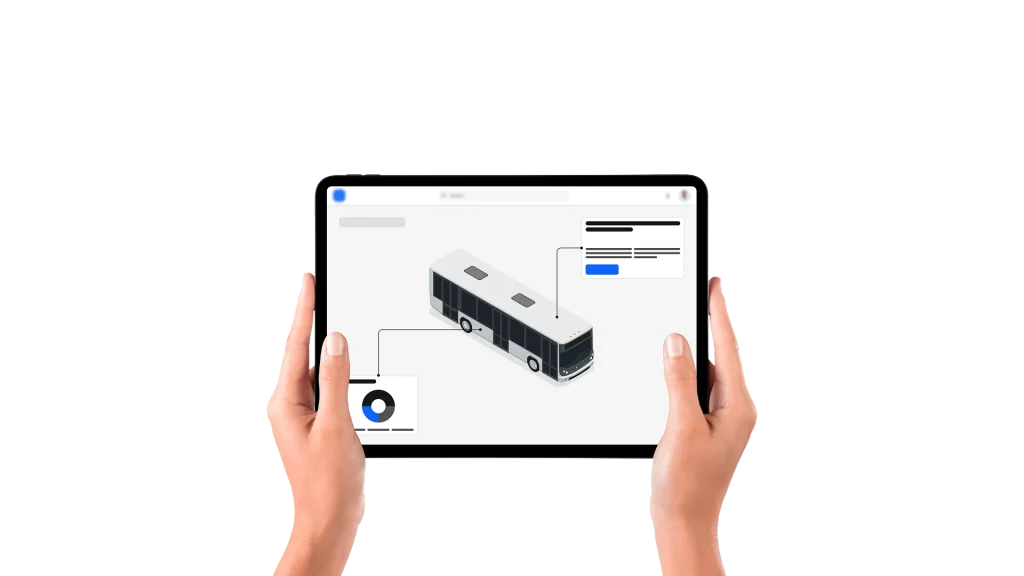
LOGISTICS & AUTOMOTIVE
End-to-End Bus Fleet Management System for an International Bus Lines Company
A bus fleet management system incorporates multiple operations in one, gathering data and streamlining data-driven business decisions.
Additional Info
Core Tech:
- .NET Framework
- C#
- ASP.NET MVC
Country:
 Netherlands



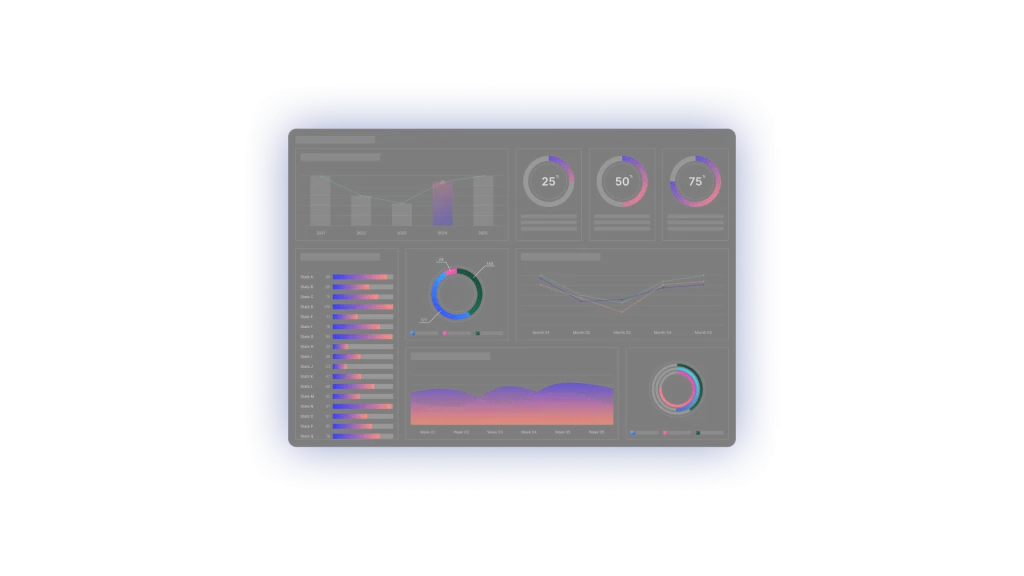
WORKFLOW MANAGEMENT
Tailored QMS Platform for Streamlined Audits and Feedback Collection
Devox Software built a custom multi-site Quality Management System for a Central European industrial-automation manufacturer with five production plants. React, Node.js on AWS, containerized via Docker/Kubernetes, led to 75% time savings in audit preparation, 30% faster issue resolution, and daily operator feedback more than doubled.
Additional Info
Core Tech:
- React
- Node.js
- PostgreSQL
- Docker
- Kubernetes
- AWS (EC2, S3, RDS)
- CI/CD (GitHub Actions)
- REST API
- Power BI Integration
Country:
 Poland
Testimonials
Testimonials



 Sweden
The solutions they’re providing is helping our business run more smoothly. We’ve been able to make quick developments with them, meeting our product vision within the timeline we set up. Listen to them because they can give strong advice about how to build good products.
Carl-Fredrik Linné
Tech Lead at
CURE Media



 United States
We are a software startup and using Devox allowed us to get an MVP to market faster and less cost than trying to build and fund an R&D team initially. Communication was excellent with Devox. This is a top notch firm.
Darrin Lipscomb
CEO, Founder at
Ferretly



 Australia
Their level of understanding, detail, and work ethic was great. We had 2 designers, 2 developers, PM and QA specialist. I am extremely satisfied with the end deliverables. Devox Software was always on time during the process.
Daniel Bertuccio
Marketing Manager at
Eurolinx


 Australia
We get great satisfaction working with them. They help us produce a product we’re happy with as co-founders. The feedback we got from customers was really great, too. Customers get what we do and we feel like we’re really reaching our target market.
Trent Allan
CTO, Co-founder at
Active Place



 United Kingdom
I’m blown up with the level of professionalism that’s been shown, as well as the welcoming nature and the social aspects. Devox Software is really on the ball technically.
Andy Morrey
Managing Director at Magma Trading



 Switzerland
Great job! We met the deadlines and brought happiness to our customers. Communication was perfect. Quick response. No problems with anything during the project. Their experienced team and perfect communication offer the best mix of quality and rates.
Vadim Ivanenko
COO at
Optherium


 United States
The project continues to be a success. As an early-stage company, we're continuously iterating to find product success. Devox has been quick and effective at iterating alongside us. I'm happy with the team, their responsiveness, and their output.


 Sweden
We hired the Devox team for a complicated (unusual interaction) UX/UI assignment. The team managed the project well both for initial time estimates and also weekly follow-ups throughout delivery. Overall, efficient work with a nice professional team.
John Boman
Product Manager at
Lexplore



 Canada
Their intuition about the product and their willingness to try new approaches and show them to our team as alternatives to our set course were impressive. The Devox team makes it incredibly easy to work with, and their ability to manage our team and set expectations was outstanding.
Tamas Pataky
Head of Product at
Stromcore



 Estonia
Devox is a team of exepctional talent and responsible executives. All of the talent we outstaffed from the company were experts in their fields and delivered quality work. They also take full ownership to what they deliver to you. If you work with Devox you will get actual results and you can rest assured that the result will procude value.
Stan Sadokov
Product Lead at
Multilogin


 United Kingdom
The work that the team has done on our project has been nothing short of incredible – it has surpassed all expectations I had and really is something I could only have dreamt of finding. Team is hard working, dedicated, personable and passionate. I have worked with people literally all over the world both in business and as freelancer, and people from Devox Software are 1 in a million.
Mark Lamb
Technical Director at M3 Network Limited
Insights
Our Experts' Insights

AI & ML
AI Solutions
Business Optimization
Legacy Modernization
Best AI Tools to Accelerate Software Development

AI Solutions
Research Paper
Designing Responsible AI Systems: Architecture Patterns for Compliance and Transparency

AI & ML
AI Solutions
Manufacturing
Revolutionizing Farming Practices with AI Technology
FAQ
Frequently Asked Questions
-
What exactly is "AI Architect as a Service"?
It is on-demand access to senior AI architects who guide your most consequential technical decisions and help your execution team build them. Most advisory offerings stop at recommendations and leave your team to figure out delivery. We do both: the architect validates the design, and a Devox delivery team can build it through to production. Bring our architects into strategy sessions, design reviews, vendor evaluations, and POC scoping early, so you can de-risk major decisions before they become expensive to fix.
-
How is this different from hiring a consultancy or building an in-house team?
Building an in-house AI team is slow and costly, and the highly specialized architecture talent you need is scarce and expensive to retain for a single initiative. Large consultancies bring scale but often bring scope creep, hidden costs, and recommendations no one implements. Our fractional model gives you senior architectural leadership on a predictable retainer. When a decision needs to be built, a Devox delivery team can join under a separate scope.
-
How does an engagement work, and how do we start?
We start with focused discovery to understand your business goals, systems, and constraints. From there, your architect embeds in your existing workflows: planning sessions, design reviews, and decision cycles, with no separate track for you to manage. Engagements run on flexible tiers sized to your stage, from lightweight advisory for teams exploring ideas to ongoing architecture-plus-execution for organizations running multiple initiatives. You can start small to validate a single decision and scale the engagement as the work grows.
-
How quickly will we see results?
Faster than a traditional build because we front-load validation. You see a working prototype tested against your KPIs before full development begins, so you validate key decisions in weeks, not quarters.
-
We are still exploring AI. Is it too early to engage you?
No, this is the ideal time. The most expensive AI mistakes are architectural ones made early and discovered late: the wrong model choice, a brittle integration, or a pilot built on a data foundation that cannot scale. Bringing architects in while options are still open is far cheaper than correcting course on a production system. When leadership wants AI progress but the team is still evaluating options, we turn open questions into a validated technical path before you commit.
-
What is the difference between a fractional and an embedded AI architect?
A fractional architect works with your team part-time and focuses on architecture decisions, reviews, and standards. An embedded architect joins full-time for the build phase and leads the AI workstream day-to-day. Many clients start with the fractional format and move to embedded when a production build begins.
-
Who owns the architecture, code, and documentation?
You do. All architecture decisions, RFCs, source code, and operational playbooks transfer to your team, and your IP stays with you throughout the engagement.
-
How involved will the architect be in our day-to-day work?
As involved as the work requires. In the Fractional format, the architect focuses on reviews and key decisions. In the Embedded format, they take part in your sprint planning, design reviews, and release decisions.
-
Should we hire a full-time AI architect instead?
A fractional architect fits while AI work is concentrated in a few initiatives. A full-time hire makes sense once AI runs across several product lines and needs someone accountable for it every day.
-
Can we start with a single decision?
Yes. Many engagements begin with one question, such as a build-vs-buy decision or a stalled pilot. The scope grows only if the first result proves useful.
-
What stays with our team when the engagement ends?
The full decision log, the architecture documentation, and the operational playbooks. Your engineers also pair with the architect on the critical components so they can extend the system on their own.
Book a call
Want to Achieve Your Goals? Book Your Call Now!
Having trouble booking? Open the booking page.
Contact Us
We Fix, Transform, and Skyrocket Your Software.
Tell us where your system needs help — we’ll show you how to move forward with clarity and speed. From architecture to launch — we’re your engineering partner.
Book your free consultation. We’ll help you move faster, and smarter.
Let's Discuss Your Project!
Share the details of your project – like scope or business challenges. Our team will carefully study them and then we’ll figure out the next move together.
Thank You for Contacting Us!
We appreciate you reaching out. Your message has been received, and a member of our team will get back to you within 24 hours.
In the meantime, feel free to follow our social.
Thank You for Subscribing!
Welcome to the Devox Software community! We're excited to have you on board. You'll now receive the latest industry insights, company news, and exclusive updates straight to your inbox.