


- Live ETA Engine. Uses vendor data (telematics, traffic, historical stop times) to automate arrival updates, so dispatchers don’t have to manually track every delay.
- Adaptive Modeling. Weekly updates ensure your delivery management software handles seasonal rushes and changes in driver behavior.
- Automatic Updates. Sends alerts via Twilio to keep customers informed, cutting down on support calls by only messaging when there is a real delay.
- Risk Scoring. Assigns confidence levels to every forecast, allowing dispatchers to prioritize manual intervention for high-risk orders.

Predictive Last-Mile Delivery Software Development Services
-
ELIMINATE DELIVERY FAILURES
Get predictive delivery software that reacts to traffic, capacity, and address changes as they happen. Reduce redelivery costs, meet your windows, and keep your customers from switching to competitors
-
GAIN TOTAL VISIBILITY
Get your fleet, carrier, and operational data into one dashboard for live oversight. Catch disruptions early, flag the errors that matter, and fix issues before they ruin a customer's day
-
OPTIMIZE EVERY MILE
Use explainable AI to forecast demand, balance your fleet, and make routes more profitable. Lower your fuel bill, get more out of your vehicles, and grow your deliveries without adding more office work
Predictive Last-Mile Delivery Software Development Services We Deliver
How We Help
Predictive last-mile delivery software is a logistics solution that uses real-time data, historical delivery patterns, route conditions, driver availability, order priority, and machine learning models to forecast delivery outcomes before problems happen. It helps logistics teams predict estimated arrival times, delivery delays, route risks, failed delivery probability, capacity issues, and customer service exceptions. We build delivery tools that actually work with your existing setup.
-
AI-Powered ETA Prediction Engine
-
Dynamic Route Optimization Platform
- Automatic Re-Routing. It recalculates stop orders and sends them straight to couriers, so dispatchers don’t get bogged down in manual changes.
- Resource Efficiency. Our delivery software helps maximize your fleet while bringing down the cost of every mile.
- Urban Stop Sequencing. Optimizes for travel time over mere distance, navigating dense transit constraints to save fuel and time.
- Load Balancing. Assigns orders based on real-time geolocation and capacity, ensuring balanced driver workloads without manual oversight.
- Profitability Metrics. Detailed dashboards track mileage and fuel by zone, identifying specific areas for margin improvement.
-
Demand and Fleet Capacity Forecasting
- Zonal Demand Forecasting. Time-series models predict peak volumes by ZIP code, enabling proactive fleet deployment before order spikes occur.
- Seasonality Modeling. Handles market shifts better than basic models, giving you a more reliable delivery solution.
- Capacity Planning. Translates forecasts into specific vehicle and personnel requirements, removing guesswork from shift planning.
- Vehicle Pre-Positioning. Tells you where to put vehicles based on expected demand to speed up the delivery cycle.
- MAPE Accuracy Tracking. Continuously validates model accuracy against outcomes to ensure planner trust in the data.
-
Last-Mile Cost-to-Serve Analytics
- Order Attribution. Shows the actual cost of every order, replacing rough estimates with real numbers.
- Failure Impact Tracking. Quantifies the hidden costs of failed attempts and links them to root causes for strategic mitigation.
- Compliance Audits. Automatically identifies undercharged zones or weight classes and monitors for potential SLA penalties.
- What-If Simulation. Models financial outcomes for changes in route density or carrier rates before implementation.
-
Last-Mile Control Tower
- Centralized Data. Puts all your operational data in one view for better decision-making.
- Real-Time Visualization. Map thousands of vehicles with zero lag, giving you a clear view of your smart last-mile operations.
- Automated Milestone Detection. Geofencing records logistics touchpoints automatically, ensuring data integrity without relying on manual courier entries.
- Visibility Links. Provides recipients with accurate, live tracking to reduce delivery friction and support volume. See how we improved fleet visibility and operational efficiency for a 600+ vehicle transportation company.
- Exception Management. Prioritizes deviations by impact severity, enabling the team to resolve critical issues first.
-
Returns and Reverse Logistics Optimization
- Reverse Flow Forecasting. Predicts return volumes so you can prevent warehouse logjams.
- Integrated Pickups. Adds returns to existing delivery routes, cutting miles and overhead.
- Recovery Routing. Directs returns to the optimal processing channel based on condition and demand velocity.
- Hub Balancing. Distributes return processing across the network to maintain flow and avoid localized overloading.
- Returns Portal. Branded self-service portal automates labeling and scheduling, providing instant visibility into reverse inventory.

WORKFLOW MANAGEMENT
Configurable Workflow Platform Built on a Low-Code ERP Stack for a U.S. Industrial Manufacturer
A low-code, rule-driven workflow platform layered beside an ERP to automate approvals, enforce SLAs, and deliver instant audit trails.
Additional Info
Core Tech:
- .NET 7
- YAML rule engine
- React 18
- PostgreSQL
- Docker Swarm
- GitLab CI/CD
- Prometheus
- Grafana
- SAML SSO
Country:
 USA
USA

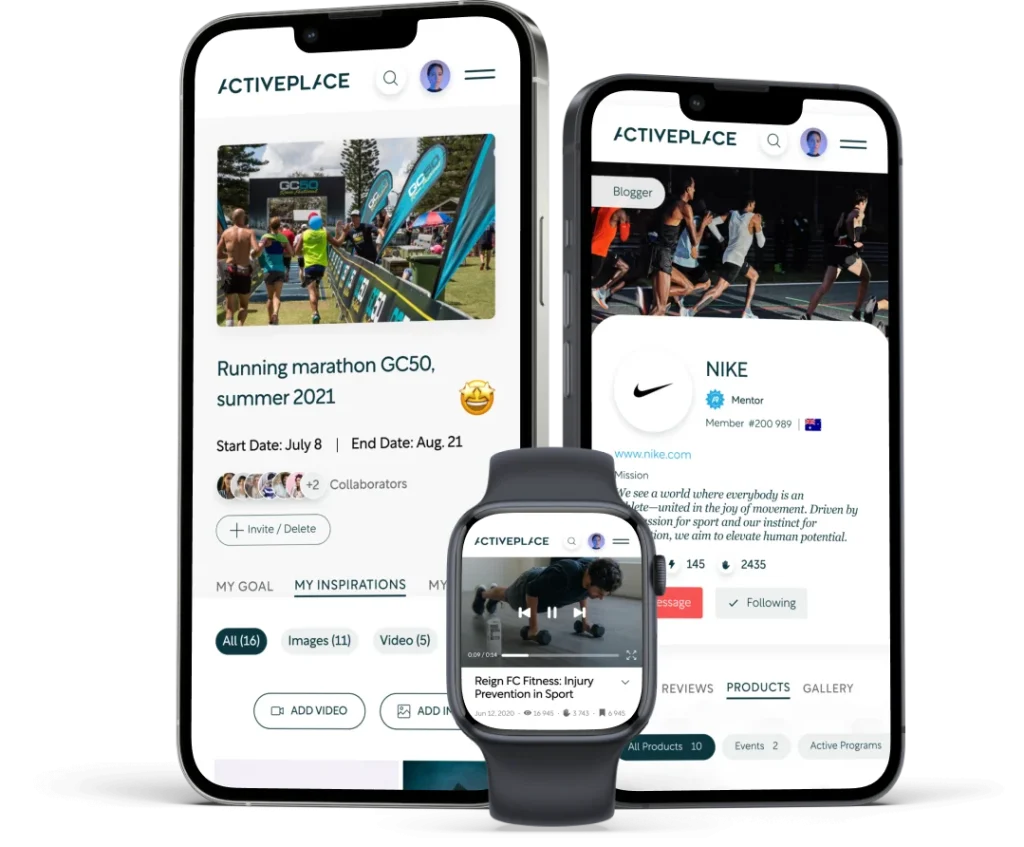



AI & ML
Configurable Document Automation Platform for Export Compliance
A configurable AI-powered platform that automates export certificate generation across 34 countries, ensuring compliance with dynamic customs regulations.
Additional Info
Core Tech:
- FastAPI
- React 18
- OCR (pytesseract, Google Gemini Pro)
- PostgreSQL
- AWS S3
- Docker
- GitHub Actions
- AWS ECS Fargate
Country:
USA
Testimonials
Testimonials



 Sweden
The solutions they’re providing is helping our business run more smoothly. We’ve been able to make quick developments with them, meeting our product vision within the timeline we set up. Listen to them because they can give strong advice about how to build good products.
Carl-Fredrik Linné
Tech Lead at
CURE Media


 United States
We are a software startup and using Devox allowed us to get an MVP to market faster and less cost than trying to build and fund an R&D team initially. Communication was excellent with Devox. This is a top notch firm.
Darrin Lipscomb
CEO, Founder at
Ferretly



 Australia
Their level of understanding, detail, and work ethic was great. We had 2 designers, 2 developers, PM and QA specialist. I am extremely satisfied with the end deliverables. Devox Software was always on time during the process.
Daniel Bertuccio
Marketing Manager at
Eurolinx


 Australia
We get great satisfaction working with them. They help us produce a product we’re happy with as co-founders. The feedback we got from customers was really great, too. Customers get what we do and we feel like we’re really reaching our target market.
Trent Allan
CTO, Co-founder at
Active Place



 United Kingdom
I’m blown up with the level of professionalism that’s been shown, as well as the welcoming nature and the social aspects. Devox Software is really on the ball technically.
Andy Morrey
Managing Director at Magma Trading



 Switzerland
Great job! We met the deadlines and brought happiness to our customers. Communication was perfect. Quick response. No problems with anything during the project. Their experienced team and perfect communication offer the best mix of quality and rates.
Vadim Ivanenko
COO at
Optherium


 United States
The project continues to be a success. As an early-stage company, we're continuously iterating to find product success. Devox has been quick and effective at iterating alongside us. I'm happy with the team, their responsiveness, and their output.


 Sweden
We hired the Devox team for a complicated (unusual interaction) UX/UI assignment. The team managed the project well both for initial time estimates and also weekly follow-ups throughout delivery. Overall, efficient work with a nice professional team.
John Boman
Product Manager at
Lexplore



 Canada
Their intuition about the product and their willingness to try new approaches and show them to our team as alternatives to our set course were impressive. The Devox team makes it incredibly easy to work with, and their ability to manage our team and set expectations was outstanding.
Tamas Pataky
Head of Product at
Stromcore



 Estonia
Devox is a team of exepctional talent and responsible executives. All of the talent we outstaffed from the company were experts in their fields and delivered quality work. They also take full ownership to what they deliver to you. If you work with Devox you will get actual results and you can rest assured that the result will procude value.
Stan Sadokov
Product Lead at
Multilogin


 United Kingdom
The work that the team has done on our project has been nothing short of incredible – it has surpassed all expectations I had and really is something I could only have dreamt of finding. Team is hard working, dedicated, personable and passionate. I have worked with people literally all over the world both in business and as freelancer, and people from Devox Software are 1 in a million.
Mark Lamb
Technical Director at M3 Network Limited
Insights
Our Experts' Insights
Custom Software Development
Industry Trends
Logistics
Top Logistics Software Development Companies for Enterprise in 2026


AI & ML
Automotive
Legacy Modernization
Logistics
Steps from Legacy TMS to AI-Orchestrated Supply Chains
FAQ
Also Asked
-
How much historical data do you need, and how accurate will the ETAs be?
Ideally 6–12 months of stop-level delivery history. That means order and stop timestamps, addresses, service time at each stop, and the outcome: delivered, failed, or rescheduled. A full year captures seasonal peaks, but you don’t need a year to start. With less history, we combine your data with live traffic and road-network data and improve the model as new deliveries come in.
How accurate it gets depends on your network: urban versus rural routes, how consistent drivers are, and how clean your address data is. So we don’t promise a number up front. In discovery, we measure your current ETA accuracy. In the pilot, we track the new model against it: the share of deliveries that arrive inside the promised window, and the average error in minutes. Every ETA also carries a confidence score, so dispatchers know which orders to watch.
-
How soon does a pilot show results?
A pilot runs in one region, depot, or lane, so we can compare results against the rest of the network. ETA and routing improvements usually show within the first few weeks of live data. Demand forecasting needs at least one full weekly cycle, and preferably a peak period, before you can judge it. A typical pilot runs 8–12 weeks from kickoff to a go/no-go decision. We agree the success criteria before launch: on-time rate, failed-delivery rate, cost per stop, and dispatcher hours. Expansion is decided on those numbers, not on impressions.
-
Which data sources do you integrate?
Whatever your operation already runs, connected through APIs or event-driven middleware:
- Telematics and GPS: vehicle location, speed, idle time, and stop dwell time.
- Traffic and maps: live and historical traffic, road restrictions, and geocoding (e.g., Google Maps Platform).
- TMS, WMS, and ERP: orders, loads, dock schedules, and inventory readiness, so ETAs account for warehouse delays and not just road time
- OMS and e-commerce platforms: order details, promised delivery windows, and customer preferences
- Carrier APIs: status and tracking events from third-party and parcel carriers for mixed networks
- Driver app and proof-of-delivery data: scans, photos, signatures, and failed-attempt reasons
- Customer messaging: Twilio or similar for SMS and email updates
- External signals, where they help: weather, holidays, and promotion calendars for demand forecasting
-
How do you handle integration with our legacy ERP/WMS without disrupting live operations?
The biggest risk in any integration is hidden in the old system: the rules no one wrote down, the timing issues your team fixed years ago, and the manual steps that keep
everything together. Teams that rush straight to connecting systems often discover this logic only when it causes problems.
We start by learning how your current system actually works in the real world. That means talking to the people using it every day, as well as a technical check.
Once we have that picture, we build the integration using event-driven middleware, running the old and new systems in parallel. Your live operations continue uninterrupted. We validate everything in that parallel state until your team feels confident, and only then do we cut over.
-
How will your team integrate with my internal engineering staff?
Most projects fail because of the handoff: an outside team builds something and then leaves. We don’t do that.
We work alongside your engineers as one Dedicated Development Team. We use your tickets and make decisions with your staff so the knowledge stays in your building.
What that means in practice: by the time we’re done, your engineers will have been running the system alongside us for months. They’ve seen how it behaves under load; they know where the edge cases live, and they’ve already made changes to it themselves. There’s no knowledge transfer meeting at the end because the knowledge never left your team in the first place.
If there are specific technologies your engineers want to get deeper on—the middleware stack or the event architecture—we build that into the engagement. Your team should come out of this stronger than they went in.
-
What is your process for handling technical debt and post-launch maintenance?
Every system accumulates debt. The question is whether you’re managing it or ignoring it until it becomes someone’s emergency.
We track debt the same way we track features—it lives in the backlog, it gets estimated, and it competes for time honestly. When we’re scoping a sprint, we’re not pretending the shortcuts we took in month two don’t exist. They’re on the board. Your team can see them. We decide together what gets addressed and when.
Post-launch, we don’t disappear. We stay on a structured retainer, not to fix things as they break, but to keep the system moving forward. That means regular architecture reviews, dependency updates before they become vulnerabilities, and someone who already knows the codebase when something unexpected happens at 11pm on a Friday.
The honest version of maintenance isn’t a support ticket queue. It’s someone who cares about the system staying healthy and has enough context to actually make that call.Return to the overview on our logistics for the full picture.
-
How do you avoid the offshore communication gap?
We close it structurally. Every engagement has an onshore lead who owns the relationship and
stays available during your business hours for unscheduled conversations where real problems surface. When your product manager has a question at 2pm on a Tuesday, there’s someone who’ll pick up. Our offshore team has a four-hour window with your engineers for daily syncs and design reviews. It’s enough time for real conversation that tools like Slack can’t replace.
Shared context is what makes the real difference. Your engineers and ours, looking at the same
problem at the same time. That’s why we keep the offshore team small and consistent—
the same people, the whole engagement. Stable composition means zero ramp-up cycles mid-project. Learn how our Autonomous Logistics Orchestration address this in more detail.
-
What makes you different from an off-the-shelf SaaS solution?
Most tools cover the common 80% of logistics. You usually manage that last 20%—your specific carriers and constraints—using spreadsheets and manual work. The deeper difference is data. With SaaS, your operational data lives across multiple vendors. With a custom system, all your data is in one place. Your predictive models have real information to work with, not just messy exports from different vendors.
Book a call
Want to Achieve Your Goals? Book Your Call Now!
Contact Us
We Fix, Transform, and Skyrocket Your Software.
Tell us where your system needs help — we’ll show you how to move forward with clarity and speed. From architecture to launch — we’re your engineering partner.
Book your free consultation. We’ll help you move faster, and smarter.
Let's Discuss Your Project!
Share the details of your project – like scope or business challenges. Our team will carefully study them and then we’ll figure out the next move together.
Thank You for Contacting Us!
We appreciate you reaching out. Your message has been received, and a member of our team will get back to you within 24 hours.
In the meantime, feel free to follow our social.
Thank You for Subscribing!
Welcome to the Devox Software community! We're excited to have you on board. You'll now receive the latest industry insights, company news, and exclusive updates straight to your inbox.