


We engineer industrial software for MES, SCADA, and production control. By integrating AI directly into your shop floor, we help you boost operational efficiency and predict equipment issues before they halt your production lines.

Nearshore Software Development Company in Europe
-
COLLABORATE IN REAL TIME
As a specialized nearshore software development company, we deliver seamless same-day collaboration, GDPR-aligned engineering standards, and deep technical expertise. Based in Central Europe, our experienced teams operate within 0-1 hours of London, Berlin, and Zurich
-
KEEP DELIVERY MOVING
Run standups and resolve blockers synchronously, with 7 hours of daily overlap across the UK and DACH time zones
-
SCALE WITH SENIOR ENGINEERS
Scale your product capacity in Central Europe. Our engineers bring experience in complex stacks, legacy modernization, and high-load systems while maintaining strict compliance with EU regulatory requirements
Workday Coverage
Time-Zone Overlap Across European Tech Hubs
We work with engineering teams in nearby countries, usually within a 0-1 hour time zone difference. For UK and European companies, teams in Central Europe can work nearly the same hours, operate under GDPR requirements, and cost 40-60% less than comparable onshore hires.
Note: We define nearshore collaboration by shared operational working hours.
| Client Location (HQ) | Client Local Time | Nearshore Hub Time (CET/CEST) | Synchronous Daily Overlap |
|---|---|---|---|
| London (GMT/BST) | 09:00 – 17:00 | 10:00 – 18:00 | 7 Hours (excluding lunch breaks) |
| Berlin / Zurich / Amsterdam (CET/CEST) | 09:00 – 17:00 | 09:00 – 17:00 | 7 Hours (excluding lunch breaks) |
Our Edge
Things That Differentiate Devox Software
01
High Workday Overlap (0-1h Time Difference)
We enable efficient nearshore software development, where our engineers and your team overlap by 7 hours each working day. Morning standups, design reviews, and architectural discussions happen synchronously—eliminating overnight delays.
02
In the Room When It Matters
When it makes sense, our Central European team can come onsite for architecture workshops and kickoff sprints.
03
Your Data Stays Where You Put It
Development runs directly inside your cloud infrastructure and repositories. Access permissions align with your security governance and GDPR compliance standards. Your security team reviews the access setup before onboarding starts.
04
Proactive Communication Practices
Our engineers work directly with your team in fluent English throughout the day, so we can address questions early rather than fixing misunderstandings later.
05
Deep Expertise in Specialized Stacks
Central Europe has a strong pool of engineers with experience in areas such as C++, embedded systems, legacy code, and AI, who can plug into the way your team already works.
06
Built for Continuity
Engineers work from Central Europe and follow documented continuity procedures. If your staffing needs change, we adjust the team and hand over context to anyone new.
Which Delivery Model Fits?
Onshore vs Nearshore vs Offshore Delivery
| Parameter | Onshore (UK / DACH) | Nearshore (Central Europe) | Offshore (Asia / LatAm) |
|---|---|---|---|
| Cost Efficiency | Baseline | Competitive | Maximized Savings |
| Time Zone Shift | 0 Hours | 0-1 Hour | 4-8+ Hours |
| Daily Overlap | 8 Hours | 7 Hours | 1-3 Hours |
| Travel Distance | Domestic | 2-3h Flight | 10+h Flight |
| Regulatory Compliance | Local Regulations | GDPR-compliant via DPA | Varies / Cross-Border Complexity |
Choosing between nearshore and offshore models depends primarily on how much real-time communication your team needs. A key part of our planning involves evaluating the impact of nearshore vs offshore software development on your project’s velocity.
Specialized Domain Experience
Proven Industry Expertise
-
Manufacturing, Industrial Systems
-
Automotive, Software-Defined Vehicles
We build full-cycle software for smart, connected vehicles—bridging the gap from embedded firmware to cloud platforms—to make your vehicles safer, smarter, and more responsive.
-
Logistics, Supply Chain
We modernize TMS and WMS platforms with real-time optimization. We help you manage logistics with greater transparency, speed, and zero friction across your entire supply chain.
-
Legacy Enterprise, Modernization
We refactor legacy monoliths and lead system migrations. Our goal is to modernize your core business operations without unexpected downtime, even in the most highly regulated industries.
-
AI-Native, Platform Engineering
We build production-ready LLM and RAG systems. From agentic workflows to internal AI platforms, we ensure your AI is powerful, scalable, and fully governed.
-
Financial Infrastructure, Payments
We architect banking and payment systems where security is paramount. Our solutions are resilient, fully compliant with strict financial standards, and audit-ready.
-
Energy, Utilities Operations
We develop grid and asset monitoring systems that converge OT and IT data. We empower operators to run infrastructure more efficiently and detect maintenance risks long before they escalate.
-
Complex Product, Platforms
We specialize in complex SaaS platforms. If you’re battling technical debt or demanding uptime requirements, we help stabilize your architecture and restore development velocity.

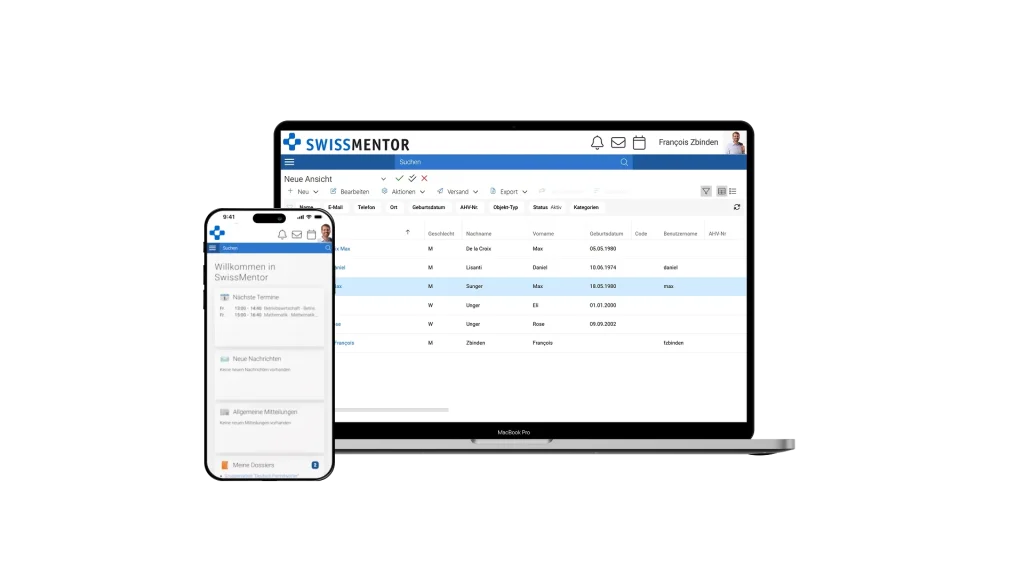

Modular LMS for Multi-Domain Learning: SwissMentor’s Enterprise-Grade Online Platform
A full-featured learning management system built to digitize education workflows, manage courses, and support online learning at scale.
Additional Info
Core Tech:
- .NET Core
- PostgreSQL
- Angular
- Docker
- Kubernetes
- Azure
- SCORM
Country:
 Switzerland

WORKFLOW MANAGEMENT
Enterprise-Scale AI Survey Engine for HR SaaS
Enterprise-scale AI survey engine for an HR SaaS platform enabling multilingual, real-time sentiment analysis, adaptive questionnaires, and actionable insights for workforce engagement.
Additional Info
Core Tech:
- React 18
- Node.js 20 (NestJS)
- GraphQL
- PostgreSQL 16
- Redis
- Apache Kafka
- OpenAI GPT-4.5 (fine-tuned)
- Hugging Face Transformers
- spaCy
- AWS ECS Fargate
Country:
 USA
USA
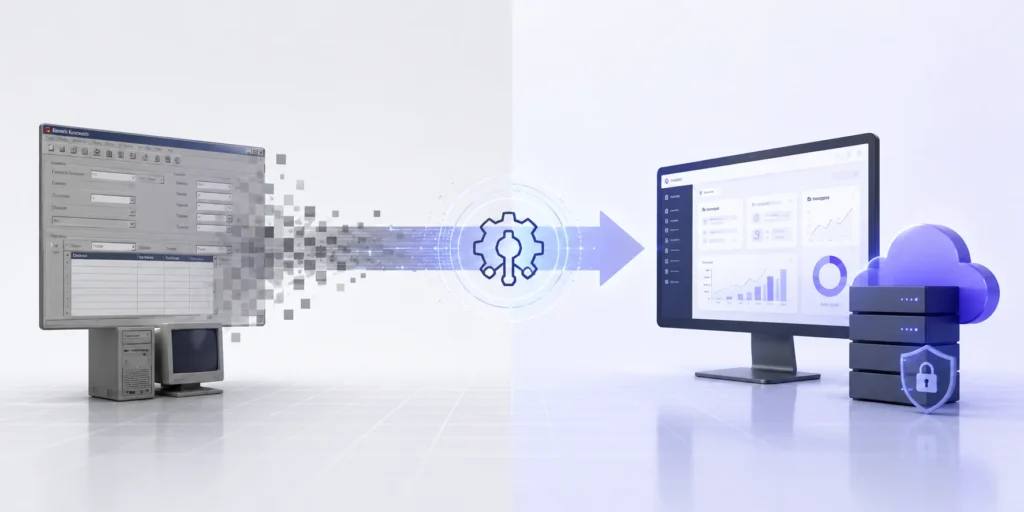
Quality Engineering / Software Testing
AI Platform That Generates QA Documentation From an Existing Test Suite
A QA lead had three weeks to prove what her test suite covered. Rebuilding it by hand exposed the bigger problem. That led to a platform that reconstructs QA documentation from the test suite, its linked tickets, and run history.
Additional Info
Core Tech:
- LLMs (local and hosted)
- RAG
- Test Suite Parsing
- AST Analysis
- Traceability Graph
- Jira & Test Management Integrations
- CI/CD Hooks
- Structured Outputs
- Vector Search
- Log Ingestion
Testimonials
Testimonials



 Sweden
The solutions they’re providing is helping our business run more smoothly. We’ve been able to make quick developments with them, meeting our product vision within the timeline we set up. Listen to them because they can give strong advice about how to build good products.
Carl-Fredrik Linné
Tech Lead at
CURE Media


 United States
We are a software startup and using Devox allowed us to get an MVP to market faster and less cost than trying to build and fund an R&D team initially. Communication was excellent with Devox. This is a top notch firm.
Darrin Lipscomb
CEO, Founder at
Ferretly



 Australia
Their level of understanding, detail, and work ethic was great. We had 2 designers, 2 developers, PM and QA specialist. I am extremely satisfied with the end deliverables. Devox Software was always on time during the process.
Daniel Bertuccio
Marketing Manager at
Eurolinx


 Australia
We get great satisfaction working with them. They help us produce a product we’re happy with as co-founders. The feedback we got from customers was really great, too. Customers get what we do and we feel like we’re really reaching our target market.
Trent Allan
CTO, Co-founder at
Active Place


 United Kingdom
I’m blown up with the level of professionalism that’s been shown, as well as the welcoming nature and the social aspects. Devox Software is really on the ball technically.
Andy Morrey
Managing Director at Magma Trading


 Switzerland
Great job! We met the deadlines and brought happiness to our customers. Communication was perfect. Quick response. No problems with anything during the project. Their experienced team and perfect communication offer the best mix of quality and rates.
Vadim Ivanenko
COO at
Optherium


 United States
The project continues to be a success. As an early-stage company, we're continuously iterating to find product success. Devox has been quick and effective at iterating alongside us. I'm happy with the team, their responsiveness, and their output.


 Sweden
We hired the Devox team for a complicated (unusual interaction) UX/UI assignment. The team managed the project well both for initial time estimates and also weekly follow-ups throughout delivery. Overall, efficient work with a nice professional team.
John Boman
Product Manager at
Lexplore



 Canada
Their intuition about the product and their willingness to try new approaches and show them to our team as alternatives to our set course were impressive. The Devox team makes it incredibly easy to work with, and their ability to manage our team and set expectations was outstanding.
Tamas Pataky
Head of Product at
Stromcore



 Estonia
Devox is a team of exepctional talent and responsible executives. All of the talent we outstaffed from the company were experts in their fields and delivered quality work. They also take full ownership to what they deliver to you. If you work with Devox you will get actual results and you can rest assured that the result will procude value.
Stan Sadokov
Product Lead at
Multilogin


 United Kingdom
The work that the team has done on our project has been nothing short of incredible – it has surpassed all expectations I had and really is something I could only have dreamt of finding. Team is hard working, dedicated, personable and passionate. I have worked with people literally all over the world both in business and as freelancer, and people from Devox Software are 1 in a million.
Mark Lamb
Technical Director at M3 Network Limited
Insights
Our Experts' Insights

Custom Software Development
Industry Trends
Outsourcing
Software Development
What Is The Average Web Developer Salary In 2022? For Fresheners And Pros [Market Research]

Custom Software Development
Outsourcing
Software Development
Startups
How To Find A Website Designer For Any Business

Custom Software Development
Outsourcing
Software Development
Startups
How Much Does It Cost To Build A Web App
FAQ
Frequently Asked Questions
-
What is nearshore development?
When you ask what is nearshore, think of the practice of partnering with engineering teams in countries with similar time zones. For companies in the UK and Western Europe, it means working with experienced teams in Central Europe who are online when you are, fully GDPR compliant, and close enough to meet in person when it makes sense.
-
Nearshore vs offshore: What's the real difference?
The primary nearshore vs offshore difference lies in working-hour overlap, travel time, and compliance requirements. Nearshore software development (e.g., UK to Central Europe) offers 7 hours of daily overlap and 2-3-hour flight access. If your team is in Europe and the developers are in Asia, there can be a 4- to 8-hour time difference, so much of the work has to happen asynchronously.
-
How does collaboration work in real time?
With only a 0- to 1-hour time difference, our engineers are online when your team is, so they can join standups, code reviews, and planning meetings during the normal workday.
-
What's the daily overlap like?
We share 7 hours of overlap in our workdays every day, allowing your team to resolve blockers and finalize decisions. Instead of relying on overnight handoffs, we work in tandem during shared hours to drive continuous project momentum.
-
How do you handle unclear requirements?
When a requirement is unclear, our engineers flag it right away.
They ask instead of guessing. An account manager helps get the question to the right person on your team quickly, so it gets resolved before it slows down the work.
-
What does onboarding look like?
The first few days are about getting up to speed.
We begin with access to your tools, repositories, and existing documentation. Your team walks us through the current priorities, coding standards, and the parts of the system that matter most right now. Our engineers spend the first few days reading the codebase and open tickets so they have the same context as your team.
By the end of week one, the engineer joins standups and starts taking on work. Questions stay in the channels your team already uses. During weeks two and three, the engineer starts working within your normal sprint cadence. The engineer follows your existing process for reviews and delivery. An account manager stays close during this period so any friction gets resolved quickly and the integration stays smooth.
-
How do you handle knowledge transfer?
We document system knowledge in your tools from day one.We document key decisions, dependencies, and architecture notes in the tools your team already uses. Our engineers document what they learn in your repositories and project tools, so the context never lives in one person’s head.
As the codebase changes, the documentation changes with it. When someone new joins the team, they can see what has already been decided and how things fit together, instead of having to figure it all out again.
-
When do you work onsite?
We work onsite when being in the same room saves the most time.
Kickoffs, architecture workshops, and the first sprint of a complex migration benefit most from being in the same room. These sessions move faster in person because the team can work through big decisions together in real time.
We handle travel and logistics. We schedule onsite visits when they will be most useful, rather than making them a fixed routine. Between visits, we keep working together every day, so we can save onsite time for the things that are better done in person.
Two or three well-timed visits a year are usually enough. The rest of the work stays remote.
-
How flexible is this model?
The team can adjust as your roadmap changes.
When priorities change, we can adjust the scope or team without losing the context already built. The engineers who already know your system can shift to the new priority. If new people join, we give them a structured handoff so the context carries over.
Because the process and documentation stay the same, the team can change direction without having to figure everything out again.
You can scale the team up or down as your needs change without losing system context.
-
How much does nearshore software development cost?
Regarding the nearshore cost, senior engineers in Central Europe typically run about € 85- € 120+ per hour, which can be 40-60% less than comparable rates in the UK or DACH. You still get GDPR compliance and teams that are online when you are.
Book a call
Want to Achieve Your Goals? Book Your Call Now!
Contact Us
We Fix, Transform, and Skyrocket Your Software.
Tell us where your system needs help — we’ll show you how to move forward with clarity and speed. From architecture to launch — we’re your engineering partner.
Book your free consultation. We’ll help you move faster, and smarter.
Let's Discuss Your Project!
Share the details of your project – like scope or business challenges. Our team will carefully study them and then we’ll figure out the next move together.
Thank You for Contacting Us!
We appreciate you reaching out. Your message has been received, and a member of our team will get back to you within 24 hours.
In the meantime, feel free to follow our social.
Thank You for Subscribing!
Welcome to the Devox Software community! We're excited to have you on board. You'll now receive the latest industry insights, company news, and exclusive updates straight to your inbox.