dApp Development Company

dApp Development Company

Get a decentralized, scalable and secure dApps development with Devox Software. Achieve your business goals faster, spice up your community, and benefit from what Web3 has to offer. Enlist our support at all stages of the software development life cycle.

Book a call
Our Services

dApp Development Services

A decentralized application, or dApp, is software that uses blockchain and smart contracts to execute part of its business logic without relying entirely on a centralized operator. Businesses use dApps to enable programmable transactions, digital ownership, transparent records, decentralized governance, tokenized assets, and direct interactions between participants. As a dApps development company, Devox Software provides a wide range of decentralized applications we can help you develop. All you have to do is voice the requirements.

  • dApp Consulting and Discovery

    We begin with your business model, users, transaction flows, governance requirements, data sensitivity, and regulatory environment. Our team then defines what belongs in smart contracts, what should remain off-chain, which blockchain is appropriate, and how wallets, APIs, identity systems, or existing enterprise software will interact with the decentralized layer.

    Discovery can cover token utility, transaction economics, custody model, multi-chain requirements, wallet architecture, infrastructure, oracles, indexing, upgradeability, and security risks.

    The output is a practical technical roadmap rather than a generic blockchain concept: recommended architecture, technology stack, delivery stages, dependencies, risk areas, and an initial project estimate.

  • dApp Porting and Upgrade

    dApp porting moves or extends an existing decentralized application to another blockchain or updates its smart contract and application architecture.

    Migration may involve adapting Solidity contracts to another EVM-compatible network, rewriting components for a non-EVM ecosystem, introducing multi-chain support, reducing transaction costs, replacing outdated dependencies, improving wallet integrations, or upgrading front-end Web3 libraries.

    We begin with an architecture and dependency review to identify what can be reused safely and what requires redesign.

    Migration is planned around contract state, user assets, liquidity, wallet addresses, integrations, indexing infrastructure, and production continuity to minimize disruption during the transition.

  • DeFi Application Development

    DeFi application development creates blockchain-based financial workflows that can operate through programmable smart contracts instead of relying entirely on centralized processing. Devox Software develops DeFi platforms for lending, borrowing, staking, asset swaps, liquidity management, tokenized assets, payment flows, and other decentralized financial use cases.

    Our engineers work on both protocol logic and the surrounding product: smart contracts, wallet connectivity, APIs, data indexing, dashboards, transaction history, admin tools, monitoring, and Web3 front ends.

    For integrations with external liquidity pools, price feeds, bridges, or protocols, we analyze dependency risks before implementation. Particular attention is paid to oracle behavior, permissions, liquidation logic, precision, transaction ordering, and emergency controls.

    Projects can launch on one blockchain first and later extend into a multi-chain architecture where the business case justifies additional operational and security complexity.

  • Decentralized Exchange (DEX) Development

    A decentralized exchange allows users to exchange blockchain-based assets directly through smart contracts while retaining control over their wallets. Develop DEX products and trading functionality around your required market model, supported networks, assets, liquidity mechanism, and user experience.

    Depending on the product, this can involve automated market maker logic, liquidity pools, routing, swaps, order management, price feeds, wallet connectivity, transaction simulation, portfolio data, analytics, fee mechanisms, and administration tools.

    For protocols involving external liquidity or cross-chain assets, we pay particular attention to oracle dependencies, bridge risks, slippage logic, permissions, contract upgradeability, and smart contract security.

  • DAO Development

    Build governance systems for Web3 communities, investment structures, protocols, digital ecosystems, and organizations that need auditable decision-making.

    Functionality can include proposal creation, token- or role-based voting, quorum and voting thresholds, delegation, multisignature treasury controls, timelocks, execution contracts, governance dashboards, and wallet authentication.

    We also help determine which decisions genuinely benefit from on-chain governance and which administrative processes should remain under conventional controls. This helps avoid over-engineering while preserving transparency where it creates value.

  • Crypto Wallet Development

    Develop custodial and non-custodial web, mobile, multi-currency, and browser-extension wallets.

    Depending on the security model, we can implement encrypted key management, recovery mechanisms, multi-signature flows, biometric authentication, transaction previews, address validation, session controls, wallet connection protocols, and support for multiple networks.

    Wallet UX is treated as part of dApp security. Clear signing flows, transaction simulation, readable permissions, and protection against accidental approvals can reduce risks that smart-contract security alone cannot address.

  • Smart Contracts Development

    Smart contract development turns business rules into deterministic blockchain logic that can execute transactions without relying on manual intermediaries. Devox Software engineers design, implement, test, and deploy contracts using Solidity, Rust, and Vyper, depending on the target ecosystem and application requirements.

    We develop smart contracts for asset issuance, token transfers, staking, vesting, escrow, lending, marketplaces, decentralized governance, liquidity mechanisms, access control, royalties, settlement, and other Web3 workflows. Architecture decisions cover contract modularity, role management, upgradeability, gas optimization, emergency controls, oracle dependencies, storage patterns, and interactions between contracts.

    Testing starts before mainnet deployment. We create unit and integration tests around expected behavior as well as edge cases, authorization failures, unusual transaction sequences, and potential economic exploits. For projects that already contain deployed contracts, we can analyze the existing architecture and extend or refactor it rather than rebuilding the entire protocol.

  • Smart Contract Security Audit

    Review blockchain code designed to identify vulnerabilities that could lead to unauthorized transactions, locked assets, manipulated protocol behavior, or loss of funds. Devox Software combines automated analysis with manual code review because scanners alone cannot reliably identify flaws in business logic or economic design. The audit can include:

    • Static analysis: automated scanning for known vulnerability patterns, unsafe calls, access-control problems, arithmetic issues, unexpected state changes, and suspicious dependencies.
    • Manual contract review: line-by-line analysis of permissions, state transitions, external calls, upgrade patterns, token handling, signature validation, and protocol-specific logic.
    • Adversarial testing: test cases designed around reentrancy, front-running or MEV exposure, oracle manipulation, flash-loan scenarios, incorrect authorization, replay attacks, denial-of-service conditions, and unexpected transaction ordering where relevant.
    • Dependency and integration review: examination of imported libraries, bridges, oracles, wallet interactions, external protocols, and administrative controls.
    • Remediation and verification: findings are prioritized by severity, documented with reproduction context, and reviewed again after fixes.
  • Metaverse Development

    Build virtual environments and integrate Web3 functionality such as wallets, digital assets, NFTs, marketplaces, tokenized access, and user-owned items. Blockchain is used only where verifiable ownership or programmable transactions provide practical value; real-time interactions, rendering, communication, and other performance-sensitive functionality can remain off-chain. This hybrid approach keeps the experience responsive without forcing unnecessary transactions onto a blockchain.

  • NFT Marketplace Development

    Build custodial and non-custodial marketplaces for digital collectibles, gaming assets, memberships, tokenized rights, sports products, entertainment, and other asset classes. We can implement minting contracts, royalty mechanisms, metadata management, IPFS or other storage integrations, wallet connections, search, collection management, auctions, fixed-price sales, transaction history, and administrative tools.

    Blockchain selection is based on expected trading activity, transaction cost, target community, interoperability requirements, and existing ecosystem integrations.

  • GameFi and Play-to-Earn Development

    Develop blockchain infrastructure for games rather than treating Web3 as an isolated token feature. We can implement NFT-based game assets, wallets, marketplaces, token economies, player inventories, trading functionality, rewards, staking mechanics, and blockchain interactions while keeping latency-sensitive gameplay off-chain where appropriate.

    The architecture can separate on-chain ownership and settlement from conventional game services, reducing unnecessary transaction costs and improving responsiveness.

    We also design controls around asset issuance, administrative privileges, contract upgrades, wallet onboarding, and abuse prevention to help keep the game’s economic layer manageable after launch.

  • Tokenization and Digital Asset Creation

    Convert your real-world assets into blockchain-based tokens, allowing for easier and more secure trading, ownership transfer, and management. We will design the tokenomics, ensure regulatory compliance, and implement smart contracts that automate transactions and enforce the rules governing the digital assets.

Benefits

Benefits of Custom dApp Development with Devox Software

Develop dApps to leverage the full promise of Web3. Regardless of the industry your business operates in, you will have a chance to enhance the operations with several criteria.

  • Unlock New Business Models

    Discover the numerous possibilities the advent of blockchain unlocks: leverage user governance with DAOs, enable faster and more secure transactions with DeFi, or engage your community better with Metaverse and NFT mechanics. Tap into the realm of more user-centric services with innovative ways to generate value and distribute earnings.

  • ISO-Certified Development Practices

    Devox Software operates with ISO 9001 quality-management and ISO 27001 information-security practices, bringing structured engineering and security processes to blockchain projects.

  • Complete Automation and Transparency

    Decentralized applications are a synonym for transparency thanks to being built on blockchain, a decentralized infrastructure, and smart contracts used to automate financial transactions and operations. Thanks to decentralization, your business will take advantage of unconditional automation and the lack of human factors where it’s most needed.

  • Safety First

    Blockchain's cryptographic encryption techniques provide enhanced security. The decentralized nature of blockchain also makes dApps more resistant to hacking and fraudulent activities, as altering any information would require overwhelming consensus from the network.

  • Reduced Costs

    Blockchain is a wholesome system that necessitates no intermediaries: this is way the operations happen instantly and its infrastructure maintenance is cheaper. Leverage this quality to reduce the prime price of your services, lowering transaction fees for various services, from financial transactions to data storage.

  • Full Legal Compliance

    It is challenging to profit completely from blockchain technology without ensuring compliance. We build products that comply entirely with US Securities and Exchange Commission guidelines, GDPR, or HIPPA, as well as any other regulations that may apply.

  • Interoperability and Programmability

    Decentralized applications are flexible in architecting: it’s possible to set different blockchains to interact with each other, as well as entrust complex processes and agreements automation to smart contracts. This programmability is fundamental to enabling sophisticated functionalities in finance, real estate, and other industries - just like extending the functionalities and reach of dApps beyond their original ecosystem.

Key Features

Key Features of Custom dApp

01

Decentralized Nature

Unlike traditional apps, which typically run on a single server or cluster of servers controlled by one entity, dApps operate on a peer-to-peer network. This network is typically powered by blockchain technology, ensuring that no single party has control over the entire network. This decentralization helps eliminate single points of failure and reduces the risk of centralized control and censorship.

02

Open Source

Most dApps are open source, meaning that their code is available for review, modification, and redistribution. This transparency is essential for building trust among users and developers, as it allows independent verification of the app's functionality and security.

03

Incentive Layer

dApps commonly use cryptographic tokens to incentivize certain behaviors within the network. These tokens can be used for various purposes, such as rewarding users for providing computational power, validating transactions, or contributing to the app's ecosystem in other ways.

04

Algorithm/Protocol Driven

The operation of dApps is governed by a consensus mechanism, which is part of the blockchain protocol. This consensus mechanism ensures that all participants in the network agree on the current state of the distributed ledger, which helps to secure and synchronize the network without the need for a central authority.

05

Immutable Records

Once data is entered into the blockchain, it cannot be altered, thanks to cryptographic hash functions and the distributed nature of the ledger. This immutability assures users that the records cannot be tampered with after the fact, providing a high level of security and trustworthiness.

06

Token-Based Economics

Tokens play a crucial role in the functioning of dApps. They can represent various rights within the ecosystem, including access rights, voting power in decentralized governance systems, or even stakes in the application. This token-based economy helps align the interests of the various stakeholders within the ecosystem.

07

Smart Contracts

Smart contracts are self-executing contracts with the terms of the agreement directly written into lines of code. They automatically execute transactions and enforce agreements based on predefined rules. This automation reduces the need for intermediaries and increases the efficiency and reliability of business processes.

08

On-Chain and Off-Chain Architecture

Not every operation belongs on a blockchain. We divide workloads between smart contracts, conventional back-end services, databases, indexing systems, and decentralized storage based on cost, security, and performance.

Our Process

Our dApp Development Process

While developing dApps, we adhere to the classic SDLC multiplied by the best practices of working with blockchain. We will gradually integrate you into the process to sync the results and ensure compliance with your requirements.

01.

01. Discovery and Architecture

We define the product model, users, transaction flows, security requirements, integrations, compliance constraints, and expected load. The team compares blockchain options and determines what should run on-chain, what belongs off-chain, and how each component communicates.

02.

02. Proof of Concept (PoC)

The proof-of-concept (POC), which can be a conceptual design or a prototype, goes through various stages of development to show the idea's practicality. The project's developers construct proposals and outline several project-related variables.

03.

03. UI/UX Design

Designing the user interface and user experience is critical in making the dApp accessible and easy to use. This is when our designers create wireframes, prototypes, and high-fidelity designs that ensure the dApp is visually appealing and functional. The design process is iterative, with adjustments made based on user feedback to optimize navigation and interaction.

04.

04. Development

This is when our engineers start developing smart contracts, select a consensus mechanism, release the token, establish a platform, and finish other tech-related tasks. Smart contracts are written and deployed to handle the business logic on the blockchain, while the front-end is developed to interact seamlessly with these contracts using blockchain-specific libraries.

05.

05. Security Testing and Testnet Validation

This stage helps identify and fix bugs before the public launch: we ensure that the code is reliable, consistent, and maintainable. The engineers carry out optimization, patch holes, and conduct technical audits if necessary. They perform unit testing, integration testing, security audits particularly focused on smart contracts, and user acceptance testing.

06.

06. Deployment and Evolution

Upon our engineers deploying the revised and improved solution from the testnet to the mainnet, your decentralized application gets live and is broadly accessible. Once the product has been put into use, after making bug repairs or after adding new features.

  • 01. Discovery and Architecture

  • 02. Proof of Concept (PoC)

  • 03. UI/UX Design

  • 04. Development

  • 05. Security Testing and Testnet Validation

  • 06. Deployment and Evolution

Awards & Certifications

Industry Contribution Awards & Certifications

Check Devox Software’s awards on rating and review platforms, recognized among the top software development companies, along with the certifications our team members hold.

  • Awards
  • Certifications
  • UpWork

    UpWork

  • Clutch

    Clutch

  • The Manifest

    The Manifest

  • DesignRush

    DesignRush

  • MC.today

    MC.today

  • Clutch

    Clutch

  • Clutch

    Clutch

  • AppFutura

    AppFutura

  • Clutch

    Clutch

  • GoodFirms

    GoodFirms

  • DesignRush

    DesignRush

  • UpWork

    UpWork

  • Professional Scrum Master™ II (PSM II)

    Professional Scrum Master™ II (PSM II)

  • Professional Scrum Product Owner™ I (PSPO I)

    Professional Scrum Product Owner™ I (PSPO I)

  • Microsoft Certified: DevOps Engineer Expert

    Microsoft Certified: DevOps Engineer Expert

  • Microsoft Certified: Azure Administrator Associate

    Microsoft Certified: Azure Administrator Associate

  • Quality Assurance ISTQB Foundation Level

    Quality Assurance ISTQB Foundation Level

  • Java Development Certified Professional

    Java Development Certified Professional

  • JavaScript Developer Certificate – W3Schools

    JavaScript Developer Certificate – W3Schools

  • Certified Artificial Intelligence Scientist (CAIS)

    Certified Artificial Intelligence Scientist (CAIS)

  • Oracle Database SQL Certified Associate

    Oracle Database SQL Certified Associate

Case Studies

Our Latest Works

View All Case Studies
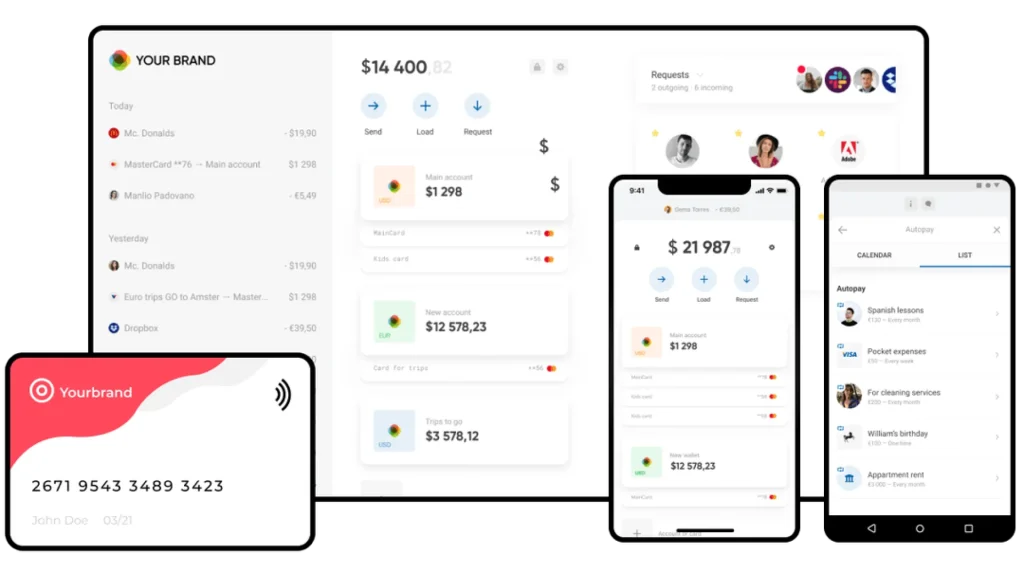
Web 3 White-label PaaS NeoBank Web 3 White-label PaaS NeoBank
  • Web3
  • Fintech

Web3 PaaS Ecosystem for Next-Gen NeoBanking, RegTech, and Secure Data Vaulting

A blockchain-powered PaaS ecosystem enabling financial providers to launch custom neobanking solutions with secure infrastructure.

Additional Info

Core Tech:
  • Blockchain
  • .NET
  • Node.js
  • AWS
  • Docker
  • PostgreSQL
  • React Native
Country:

USA USA

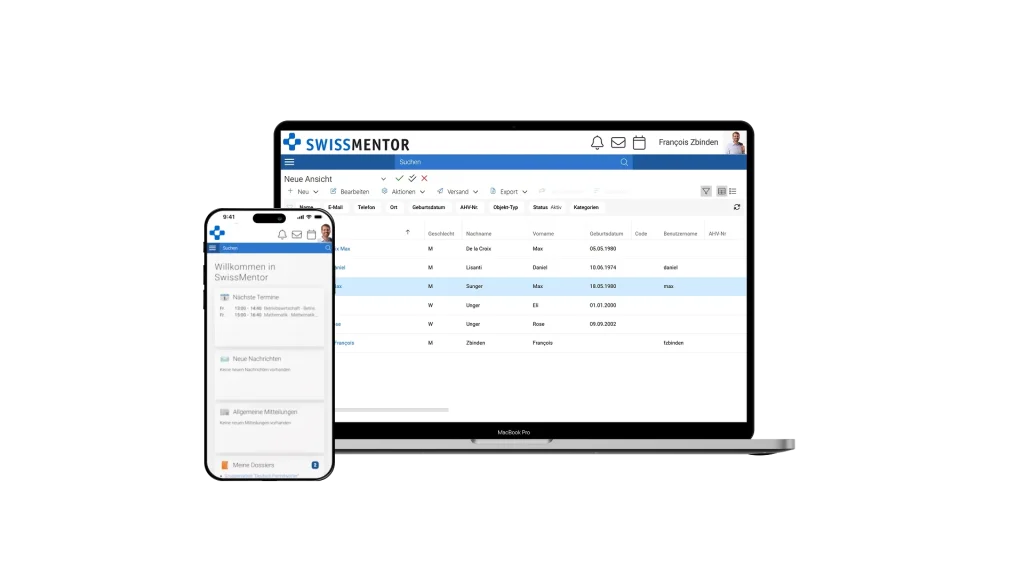
Modular LMS for Multi-Domain Learning: SwissMentor’s Enterprise-Grade Online Platform Modular LMS for Multi-Domain Learning: SwissMentor’s Enterprise-Grade Online Platform
  • Backend
  • Frontend
  • Cloud
  • E-Learning

Modular LMS for Multi-Domain Learning: SwissMentor’s Enterprise-Grade Online Platform

A full-featured learning management system built to digitize education workflows, manage courses, and support online learning at scale.

Additional Info

Core Tech:
  • .NET Core
  • PostgreSQL
  • Angular
  • Docker
  • Kubernetes
  • Azure
  • SCORM
Country:

Switzerland Switzerland

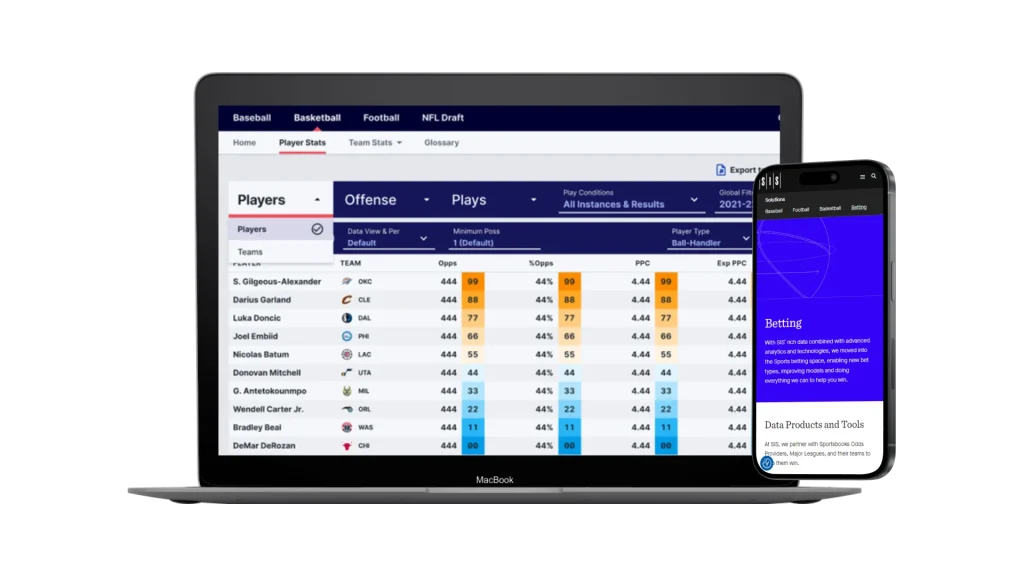
Sport Info Solution Sport Info Solution
  • Backend
  • Frontend
  • Cloud
  • Metrics & Data

Sports Info Solutions: Real-Time Sports Data Platform for Betting, Leagues & Fans

A high-performance analytics system for sports organizations to optimize team performance in real time.

Additional Info

Core Tech:
  • .NET Core​
  • MS SQL
  • ELK​
  • Vue.js
  • AWS​
  • Docker
  • DataDog​
  • R
Country:

USA USA

Trusted by

company
company
company
company
company
company
company
company
company
company
company
company
company
company
company
company
company
company
company
company
company
company
company
company
company
company
company
company
company
company
company
company
Testimonials

Testimonials

Carl-Fredrik Linné                                            Sweden

The solutions they’re providing is helping our business run more smoothly. We’ve been able to make quick developments with them, meeting our product vision within the timeline we set up. Listen to them because they can give strong advice about how to build good products.

Darrin Lipscomb Darrin Lipscomb
Darrin Lipscomb United States

We are a software startup and using Devox allowed us to get an MVP to market faster and less cost than trying to build and fund an R&D team initially. Communication was excellent with Devox. This is a top notch firm.

Daniel Bertuccio Daniel Bertuccio
Daniel Bertuccio Australia

Their level of understanding, detail, and work ethic was great. We had 2 designers, 2 developers, PM and QA specialist. I am extremely satisfied with the end deliverables. Devox Software was always on time during the process.

Trent Allan Trent Allan
Trent Allan Australia

We get great satisfaction working with them. They help us produce a product we’re happy with as co-founders. The feedback we got from customers was really great, too. Customers get what we do and we feel like we’re really reaching our target market.

Andy Morrey                                            United Kingdom

I’m blown up with the level of professionalism that’s been shown, as well as the welcoming nature and the social aspects. Devox Software is really on the ball technically.

Vadim Ivanenko Vadim Ivanenko
Vadim Ivanenko Switzerland

Great job! We met the deadlines and brought happiness to our customers. Communication was perfect. Quick response. No problems with anything during the project. Their experienced team and perfect communication offer the best mix of quality and rates.

Jason Leffakis Jason Leffakis
Jason Leffakis United States

The project continues to be a success. As an early-stage company, we're continuously iterating to find product success. Devox has been quick and effective at iterating alongside us. I'm happy with the team, their responsiveness, and their output.

John Boman John Boman
John Boman Sweden

We hired the Devox team for a complicated (unusual interaction) UX/UI assignment. The team managed the project well both for initial time estimates and also weekly follow-ups throughout delivery. Overall, efficient work with a nice professional team.

Tamas Pataky Tamas Pataky
Tamas Pataky Canada

Their intuition about the product and their willingness to try new approaches and show them to our team as alternatives to our set course were impressive. The Devox team makes it incredibly easy to work with, and their ability to manage our team and set expectations was outstanding.

Stan Sadokov Stan Sadokov
Stan Sadokov Estonia

Devox is a team of exepctional talent and responsible executives. All of the talent we outstaffed from the company were experts in their fields and delivered quality work. They also take full ownership to what they deliver to you. If you work with Devox you will get actual results and you can rest assured that the result will procude value.

Mark Lamb Mark Lamb
Mark Lamb United Kingdom

The work that the team has done on our project has been nothing short of incredible – it has surpassed all expectations I had and really is something I could only have dreamt of finding. Team is hard working, dedicated, personable and passionate. I have worked with people literally all over the world both in business and as freelancer, and people from Devox Software are 1 in a million.

Insights

Our Experts' Insights

11 Key Real Estate Technology Trends in 2023

Top Software Development Companies in Miami, Florida (2026)

How To Outsource Web Development? Tips & Tricks

FAQ

FAQ

  • What is dApp?

    A dApp (decentralized app) utilizes a blockchain ecosystem or peer-to-peer network. They link the network’s members, not having a centralized authority. For instance, DeFi lending sites let you borrow money directly from lenders. Since there are no executives, smart contracts make all transactions happen automatically.

  • How do blockchain dApps work?

    DApps work thanks to smart contracts. These computer algorithms form, manage, and provide information about digital assets, which blockchain dApp development utilizes. Smart contracts are like cars’ fuel: they keep the engine running. Thanks to this technology, dApps are always completely automated.

  • What is the best blockchain for dApp development?

    Traditionally, the best dApps blockchain for decentralized app development is considered to be Ethereum. It is also a typical one as Ethereum was a pioneer blockchain to do that. However, depending on the specific type of your dApp, the choice of the most suitable blockchain to satisfy the means may vary. The Devox team knows the details and works with many popular blockchains used today.

  • What programming languages are commonly used in dApp development?

    In dApp development, Solidity is the most widely used programming language, especially for applications built on the Ethereum blockchain. It is designed for creating and implementing smart contracts that automate transactions without the need for intermediary oversight. For the front-end development of dApps, JavaScript, along with frameworks such as React or Angular, is commonly employed. These are paired with libraries like Web3.js or Ethers.js that facilitate the interaction between the blockchain and the user interface. For off-chain components or server-side logic that interacts with the blockchain, Node.js is frequently utilized due to its efficiency and the vast support of its ecosystem.

  • What industries can benefit from dApp development?

    Various industries can benefit significantly from dApp development, each in unique ways:

    • Finance: In the financial sector, dApps can facilitate transparent and secure peer-to-peer lending, payments, and insurance services without the need for traditional banking institutions thanks to defi dapps development.
    • Healthcare: dApps can be used to create decentralized health records systems, ensuring patient data privacy and integrity while providing seamless access to authorized medical professionals.
    • Supply Chain: dApps can improve traceability and efficiency in supply chains by providing an immutable record of goods movements and transactions from origin to consumer, which helps reduce fraud and errors.
    • Real Estate: In real estate, dApps can streamline property transactions, from verifying ownership to executing rental agreements, significantly reducing the paperwork and time involved.
    • Entertainment: For the entertainment industry, dApps provide a platform for creators to directly monetize their work without intermediaries, ensuring fair compensation and copyright enforcement.
  • How to develop Ethereum dApps?

    To develop an Ethereum dApp, start by gaining a solid understanding of Ethereum and its primary language, Solidity, for writing smart contracts. Set up your development environment with tools like Truffle Suite for testing and deploying contracts, and Ganache for a personal blockchain simulator. Develop your smart contracts and create a user-friendly frontend using frameworks like React, integrating with Ethereum using Web3.js or Ethers.js to facilitate user interactions with the blockchain. Thoroughly test your dApp on Ethereum test networks like Ropsten before deploying it to the Ethereum mainnet. Regular updates and community feedback are crucial to refine functionality and ensure security.

  • How to develop dApps?

    For dApps Ethereum development, it’s necessary to select a suitable blockchain platform based on your specific requirements for speed, cost, and scalability. Design the dApp’s architecture, including smart contracts and the system for user interactions, typically involving a frontend developed with modern web technologies. Use a relevant programming language like Solidity for Ethereum or Rust for Solana to write and deploy your smart contracts. Extensive testing across various stages—unit testing, integration testing, and security auditing—is essential to ensure reliability and security. Deploy your dApp on the chosen blockchain, and engage in ongoing maintenance and community interaction to support and improve the dApp post-launch.

  • What blockchains & networks do you support?

    Choosing a blockchain affects transaction cost, confirmation time, smart contract architecture, interoperability, liquidity, and ultimately the user experience of your dApp.

    Devox develops decentralized applications across EVM and non-EVM ecosystems. We select the network based on your transaction model, security requirements, expected load, integration needs, and product economics rather than forcing every application onto the same chain.

    Last reviewed: September 2026

    Blockchain Approx. throughput* Typical transaction cost* Finality / confirmation Best suited for
    Ethereum ~15–30 TPS on L1 Variable; often higher than L2 networks ~15 min economic finality High-value DeFi, institutional applications, tokenized assets, established Web3 ecosystems
    Solana Thousands of TPS under normal workloads Usually below $0.01 for basic transactions Seconds Consumer dApps, payments, trading, GameFi, high-frequency applications
    Polygon PoS Thousands of TPS capacity Usually below $0.01 Seconds Consumer Web3, loyalty, marketplaces, gaming, scalable EVM applications
    Base Workload-dependent L2 throughput Usually cents or less Fast L2 confirmation; settlement inherited from Ethereum Consumer apps, payments, social dApps, Ethereum-compatible products
    BNB Chain High-throughput EVM network Usually cents or less Sub-second to several seconds depending on finality criteria DeFi, marketplaces, consumer Web3, high-volume applications
    Avalanche C-Chain High-throughput EVM execution Usually low, load-dependent Typically seconds Financial applications, tokenization, institutional and custom blockchain ecosystems
    Polkadot Parallelized, application-dependent throughput Network-dependent Seconds to minutes depending on architecture Cross-chain applications, specialized chains, interoperable ecosystems

    *Blockchain performance and fees change continuously and depend on transaction complexity, network congestion, protocol upgrades, and application architecture. Figures should be treated as engineering guidance rather than guaranteed production limits.

  • How do I choose the right blockchain for my dApp?

    Start with your expected transaction volume, asset value, latency requirements, smart contract complexity, target users, wallet ecosystem, and required integrations. Ethereum may suit applications prioritizing ecosystem maturity and high-value settlement, while networks such as Solana, Base, Polygon, or BNB Chain can make more sense for high-frequency consumer transactions.

  • Does Devox Software develop and audit smart contracts?

    Yes. Devox Software develops smart contracts and can perform a dedicated security review before deployment. Audit activities can include static analysis, manual code review, adversarial testing, dependency analysis, remediation recommendations, and verification of applied fixes.

Book a call

Want to Achieve Your Goals? Book Your Call Now!

Contact Us

We Fix, Transform, and Skyrocket Your Software.

Tell us where your system needs help — we’ll show you how to move forward with clarity and speed. From architecture to launch — we’re your engineering partner.

Book your free consultation. We’ll help you move faster, and smarter.

Let's Discuss Your Project!

Share the details of your project – like scope or business challenges. Our team will carefully study them and then we’ll figure out the next move together.


    By sending this form I confirm that I have read and accept the Privacy Policy

    Thank You for Contacting Us!

    We appreciate you reaching out. Your message has been received, and a member of our team will get back to you within 24 hours.

    In the meantime, feel free to follow our social.


      Thank You for Subscribing!

      Welcome to the Devox Software community! We're excited to have you on board. You'll now receive the latest industry insights, company news, and exclusive updates straight to your inbox.