



$5,000? $25,000? $100,000? If you want a focused proof of concept or maybe a complex enterprise program, the AI development cost range is so wild that it is almost useless for budgeting. Although a chatbot connected to a handful of documents or an AI-assisted modernization program all appear under the same category, they require very different approaches and ongoing operating costs.
This blog helps you define the project scope and clarify the differences based on real projects we shipped recently. Below, we break down 4 real engagements using the numbers as your guide in AI development.
Case Study 1. AI-Assisted Modernization for a Fintech Platform
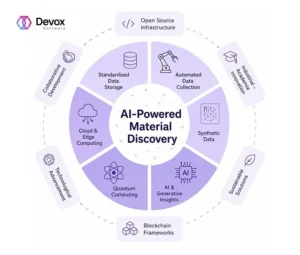
In a nutshell, a fintech modernization program was originally forecast to last 15 months. The final engagement reduced approximately 30% of the AI software development cost and was 3 months earlier. The important part is why this reduction is possible.
30% in Savings Thanks to AI Assistance
A modernization estimate always has some degree of uncertainty as opposed to greenfield projects. This is because, before making actual changes, engineers need to understand what is already there, including all application dependencies, undocumented business logic, database relationships, external integrations, obsolete components, security constraints, and so on; all of these increments have accumulated over many years.
This is why the audit phase becomes longer with a stronger emphasis on refactoring than new feature development. To accelerate this step, we apply a bunch of techniques, with AI-assisted analysis standing in the center. Looking ahead, it has greatly reduced the amount of effort required in that phase.
So instead of treating every legacy dependency as a manual investigation, feature by feature, service by service, or codeline by codeline, the team uses AI-supported discovery and analysis to accelerate reverse engineering, dependency mapping, and code assessment. Uncertainty itself has a price, so without discovery the project becomes a pig in a poke.
8 Roles Over 12 Months Instead of 15
The engagement involved 8 core roles: a delivery manager, a solution architect, a senior backend engineer, a data and ML engineer, a DevOps engineer, a QA engineer, and a business analyst. Reducing the project from 15 months to 12 removed approximately 3 months of full-team cost. This illustrates one of the most useful ways to examine an AI quote: “Team × duration × rate is often more informative than the total proposal costs.”
If 2 vendors quote $1 million and $2 million respectively, ask what exactly is behind these numbers: which team each number buys and for how long. A lower total may represent fewer people and a shorter scope. A higher total may simply include work that the lower quote has omitted.
Case Study 2. Document Intelligence for an Audit-Ready Archive
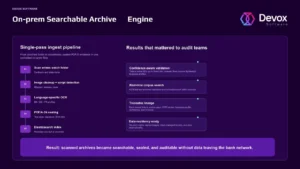
In the second project, we’ve turned a large legacy document archive into searchable, structured information suitable for operational and audit use. The engagement used 7 roles over 12 weeks. By the end of the project, approximately 96% of the archive was searchable, while manual processing effort fell by 70%.
Where the Hours Go on OCR and Retrieval
Some vendors price document intelligence projects as though the main task is simply “adding OCR.” Yet, in production, OCR is the first basic layer. In addition to it, users need multiple file sources in various document types. So the pipeline ingests them and normalizes inconsistent formats while extracting text and metadata and indexing the resulting information on the go.
Furthermore, the first hours in a document intelligence project frequently disappear even before real work on extraction begins because archives by default are rarely clean and uniform. In practice, files often have inconsistent names, duplicates, metadata is lost, or the scans are of poor quality. That’s why before retrieval quality can be evaluated, the project may require combing for source inventory, classification, indexing, metadata, and so on.
Skipping the first steps doesn’t reduce the cost. If you just push this further, it means only more data fixes in the future. This is one reason cheap AI proofs of concept become much more expensive during the further productionization stage.
So the real question is, “What team is required to turn our documents into a production workflow, and what is the AI project cost estimate?” Our recommendation is to start with the 7-role team (not exactly the full-time ones) and a 12-week duration for a start. Then summarize the costs based on the appropriate hourly or monthly rates for the delivery region.
Case Study 3: Enterprise AI Survey Engine within a 13-Person Band
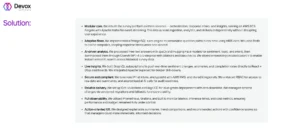
The third engagement shows what “enterprise AI platform” means in staffing terms, as this is a very different cost category from adding an AI feature to an existing product. The team consisted of 13 people, including a solution architect, 2 AI/ML engineers, 3 backend developers, 2 frontend developers, a data engineer, 2 QA engineers, a DevOps engineer, a UI/UX designer, and a product owner on the client’s side.
This project illustrates why the AI model itself accounts for the least of the cost. For instance, 2 AI/ML engineers represent only part of a 13-person delivery team. The rest of the project still needed solid backend engineering, quality assurance, and so on. The survey or AI chatbot development cost is therefore cumulative: software product development + AI engineering + data + evaluation + operations, with some nuances like the following.
Challenges: Real-Time Behavior and Role-Aware Logic
In general, the app also has requirements that simple AI prototypes do not. For instance, in this exact case, it needed to support real-time behavior and role-aware logic. Real-time processing automatically raised the stakes on latency, concurrency, reliability, and observability, adding more requirements for them. Role-aware functionality, moreover, introduced permissions, data-access restrictions, and testing across multiple user types.
This is why comparing the project with a simple AI questionnaire generator and API wrapper would be misleading even if both products were described as “AI survey platforms.”
Case Study 4: Export Certification Automation and the Role Estimates Forget
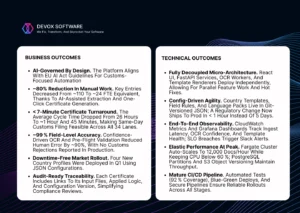
The fourth project involved automating export certification processes across a multicountry compliance environment. Among the team consisting of 7 roles, one deserves particular attention: a business analyst with export logistics and compliance expertise. Thanks to this role, the resulting system reduced manual effort by approximately 80%. Let’s break down how it went.
If clients don’t translate domain rules into technical requirements, this can add additional costs from vendors. In this case, export certification involves rules and exceptions that cannot simply be inferred from a technical specification; that’s why someone has to understand those requirements well enough to turn them into system logic.
Moreover, in terms of compliance-sensitive automation, that needs mandatory data fields and country-specific rules to be introduced as approval requirements. Without that work, a system will fail the actual business process.
How much does it cost to build an AI? Let’s synthesize what it all gives us. We had 4 similar but different projects in teams, requirements, and duration, all connected with AI development.
What These Projects Map to in Price Ranges
These 4 engagements above show why an AI development cost breakdown should start with scope and staffing. But what about expectations? According to the practical 2026 planning framework, it looks roughly like this:
| Project type | Typical scope | |
| Buy/configure | Existing AI product, limited customization | |
| Focused PoC | One defined use case, limited integrations | |
| Production AI application | Custom workflows, integrations, evaluation | |
| Enterprise/custom platform | Multiple workflows, data systems, roles, and production infrastructure |
Note that these are planning ranges, not quotes. However, these numbers won’t give you an understanding of how the AI development cost moves at scale. Let’s consider this aspect.
The Number That Decides Everything: Cost per Thousand Requests

The AI development cost of $5,000 per month (for instance) is incomplete. A useful AI operating estimate needs a denominator. In particular, for an LLM application, start with a representative request profile: Requests × average input tokens × input price + requests × average output tokens × output price. Then convert the result into a cost per 1,000 requests. Once those assumptions are visible, a budget becomes much clearer at several volumes.
For instance, at higher volume, additional requirements appear. Throughput management, caching, observability, and so on are potentially different at different model-routing strategies. This is why cost per request should be tracked alongside total monthly spend.
Furthermore, hosting can make a difference too. Firstly, API models are attractive because they remove much of the infrastructure burden. Self-hosting becomes interesting when recurring hosted-model expenditure grows large enough to offset GPU infrastructure, MLOps, and migration costs.
Conclusion
Labeling in AI development cost estimates simply doesn’t work. A chatbot is very different from a document intelligence system or an AI agent; however, the costs may be similar due to business and technical nuances.
We’ve reviewed 4 projects we had the chance to ship lately, showing that the most useful estimate comes only after a proper discovery. It includes team composition, duration, assumptions, and evaluation requirements considerations. That’s why, before approving any budget, ask what the quote actually includes.
Need a quick AI development cost estimate? Book a call
Frequently Asked Questions
-
How do you estimate an AI project before the data has been reviewed?
A short readiness or feasibility phase can inventory sources and show the real cost to implement AI in business, sample quality, test access, identify integration constraints, and establish realistic accuracy targets before the full implementation budget is committed.
-
Why can the same chatbot be quoted at $10,000 and $80,000?
Let alone AI agent development cost, one provider may describe a rule-based chatbot in a range of $2,000–$10,000, while another places apparently similar work at $50,000–$80,000, and it’s totally fine as long as they offer different scopes of work.
A $10,000 chatbot could mean a predefined interface connected to an existing API. A $250,000 conversational system might include proprietary data ingestion, retrieval infrastructure, and more. The name is the same. The product is not.
-
What does it cost to run an AI system after launch?
Budgets for hosting, storage, data pipelines, observability, evaluation, security, model updates, and engineering support is estimated per 1,000 requests at a defined token and infrastructure profile, multiplied by expected usage.
-
How much of an AI budget goes to data preparation?
There is no reliable fixed percentage because the starting condition of the data matters more than project size. A project involving scattered legacy documents and the need for identity resolution can require substantially more work than one using clean, structured data from the start.
-
Is it cheaper to use an API or to fine-tune your own model?
Not automatically. API models usually reduce infrastructure and operational work, particularly at lower volumes. Fine-tuning or self-hosting becomes attractive when specialized behavior or high recurring inference expenditure justifies the additional training and MLOps costs.


